目的 构建专业型护理硕士研究生临床实践效果评价指标体系,为促进规范化护理硕士研究生临床实践培养提供参考.方法 以柯氏模型为理论框架,通过文献分析法、Delphi专家咨询法及层次分析法,筛选指标并确定各级指标权重,构建专业型护理硕士研究生临床实践效果评价指标体系.结果 2轮咨询问卷有效回收率分别为94%、100%,专家的权威系数分别为0.805,0.821,Kendall's W系数分别为0.387,0.291,经χ2检验,均P<0.001.最终确定的专业型护理硕士研究生临床实践效果评价指标体系包括4项一级指标(反应层、学习层、行为层、结果层)、10项二级指标和40项三级指标.结论 构建的专业型护理硕士研究生临床实践效果评价指标体系可为全面评估专业型护理硕士研究生临床实践效果、不断改进临床培养模式提供量化依据.
The stress of disability significantly impacts an individual's quality of life and that of a spouse. Health empowerment, based on the idea that individuals may be successful despite disability, may be meaningful to disabled persons and their spouse carers. This cross-sectional survey study aimed to explore the effect of health empowerment on the health-related quality of life (HRQOL) of older individuals with disabilities and their spouse carers on both a personal (actor effect) and interpersonal level (partner effect). A total of 1092 dyads of older individuals with disabilities and their spouse carers residing in communities were recruited from seven provinces in China. Two separate Actor-Partner Interdependence Model analyses were conducted to examine the impact of health empowerment on the two domains of HRQOL: the Physical Component Score (PCS) and the Mental Component Score (MCS). The results revealed that health empowerment had actor effects on the PCS and MCS of older individuals with disabilities, as well as on the PCS and MCS of their spouse carers. However, no significant partner effects of health empowerment on the PCS and MCS of either the individuals with disabilities or their spouse caregivers were observed. Empowering individuals with disabilities and their spouse carers may help them enhance their own HRQOL, both physically and mentally. However, more research is required to determine the interpersonal effect of health empowerment on the HRQOL.
The aim of this study was to explore the chain mediation model of self-efficacy and health literacy between empowerment and quality of life among spousal caregivers of disabled elderly based on 'Marriage Binding'. From December 2020 to June 2022, the cross-sectional study was conducted in hospitals and communities, in Guangdong, Fujian, Sichuan, Hunan, Jiangxi, Guangxi and Yunnan provinces, China. Descriptive statistics were used to describe the demographic data and four main variables, including empowerment, self-efficacy, health literacy and quality of life. Spearman correlation analysis was used to analyze the correlation between the four main research variables. Multiple Linear Regression and bootstrap analysis were used to analyze the direct and indirect effects among them. Any two variables of spousal caregivers were correlated among empowerment, self-efficacy, health literacy and quality of life. Self-efficacy and health literacy can separately and sequentially mediate the relationship between empowerment and quality of life. To improve the quality of life of spousal caregivers of disabled elderly, the mediating role of self-efficacy, the mediating role of health literacy and the chain mediating role of self-efficacy and health literacy should take effect. In the future, some intervention studies should be taken to enhance the effects of those variables that may be beneficial for improving quality of life of spousal caregivers of disabled elderly.
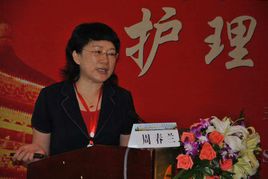 Chunlan Zhou (周春兰)合作论文数南方医科大学南方医院护理部3
 Xiuying Xiao合作论文数2YANG Ling-li (杨玲莉)合作论文数2Yanni Wu合作论文数2Run Wang合作论文数2Weixiang Luo合作论文数1Xiao-Yang Li合作论文数1LIN Xiao-lu (林晓露)合作论文数1Huihui Zhao合作论文数1JieXia Qu (区洁霞)合作论文数1YanLing Tao (陶艳玲)合作论文数1JunGui Zhou (周君桂)合作论文数1YanFang Wang (王艳芳)合作论文数1Xuan Chen (陈璇)合作论文数北京大学生命科学学院1




