Unsupervised contrastive sentence embedding models, e.g., unsupervised SimCSE, use the InfoNCE loss function in training. Theoretically, we expect to use larger batches to get more adequate comparisons among samples and avoid overfitting. However, increasing batch size leads to performance degradation when it exceeds a threshold, which is probably due to the introduction of false-negative pairs through statistical observation. To alleviate this problem, we introduce a simple smoothing strategy upon the InfoNCE loss function, termed Gaussian Smoothed InfoNCE (GS-InfoNCE). In other words, we add random Gaussian noise as an extension to the negative pairs without increasing the batch size. Through experiments on the semantic text similarity tasks, though simple, the proposed smoothing strategy brings improvements to unsupervised SimCSE.
In view of the problem that random deletion of graph nodes and edges may delete important item nodes when constructing graph structure enhancement samples in existing research work, which is not conducive to item node learning, this paper proposes a session-based recommendation method based on graph structure information enhancement. According to the importance of the nodes in the graph, the enhanced samples on the graph structure are constructed to enrich the representation of the item nodes. Firstly, our method constructs an item transfer graph according to the sequence of items interacted by the user, and then calculate the importance of the nodes and edges in the item transfer graph according to the in-degree and out-degree information of the user nodes in the graph. For important nodes and edges, we delete them with small probability. For the enhanced graph structure, we design contrastive learning on the graph structure to learn the representations of nodes on the graph. Finally, in the traditional conversation recommendation task, the auxiliary task of contrastive learning is added, and the multi-task learning framework is applied to learn the user's preference in session-based recommendation. Experimental results show that this method can effectively improve the performance of session sequence recommendation.
Session-based recommendation aims at predicting the next item given a series of historical items a user interacts with in a session. Many works try to make use of social network to achieve a better recommendation performance. However, existing works treat the weights of user edges as the same and thus neglect the differences of social influences among users in a social network, for each user’s social circle differs widely. In this work, we try to utilize an explicit way to describe the impact of social influence in recommender system. Specially, we build a heterogeneous graph, which is composed of users and items nodes. We argue that the fewer neighbors users have, the more likely users may be influenced by neighbors, and different neighbors may have various influences on users. Hence weights of user edges are computed to characterize different influences of social circles on users in a recommendation simulation. Moreover, based on the number of followers and PageRank score of each user, we introduce various computing methods for weights of user edges from a comprehensive perspective. Extensive experiments performed on three public datasets demonstrate the effectiveness of our proposed approach.
Unsupervised text style transfer aims to change the style attribute of the given unpaired texts while preserving the style-independent semantic content. In order to preserve the content, some methods directly remove the style-related words in texts. The remaining content, together with target stylized words, are fused to produce target samples with transferred style. In such a mechanism, two main challenges should be well addressed. First, due to the style-related words are not given explicitly in the original dataset, a detection algorithm is required to recognize the words in an unsupervised paradigm. Second, the compatibility between the remaining content and target stylized words should be guaranteed to produce valid samples. In this paper, we propose a multi-stage method following the working pipeline – Detection , Matching , and Generation . In the Detection stage, the style-related words are recognized by an effective joint method and replaced by mask tokens. Then, in the Matching stage, the contexts of the masks are employed as queries to retrieve target stylized tokens from candidates. Finally, in the Generation stage, the masked texts and retrieved style tokens are transformed to the target results by attentive decoding. On two public sentimental style datasets, experimental results demonstrate that our proposed method addresses the challenges mentioned above and achieves competitive performance compared with several state-of-the-art methods.
In recommender systems, the user uncertain preference results in unexpected ratings. Previous approaches (e.g., BiasMF) only adjust the rating value based on the bias vector, ignoring the uncertainty of rating. This paper makes an initial attempt in integrating the influence of user uncertain degree and user rating bias into the matrix factorization framework, simultaneously. An approach based on fuzzy set, called fuZzy Matrix Factorization (ZMF), is proposed. Specifically, a fuzzy set of like is defined for each user, and the membership function is utilized to measure the degree of an item belonging to the fuzzy set. Then, the user uncertain preference matrix is obtained, which could explain and represent the user bias and uncertainty effectively. Furthermore, to enhance the computational impact on sparse matrix, the uncertain preference is formulated as a side-information for fusion. Besides, the proposed approach could be extended to others due to independency on additional data sources. Experimental results on three datasets show that ZMF produces an effective improvement.
The task of Target-oriented Opinion Words Extraction aims to extract the corresponding opinion words for a given opinion target from the sentence. Recently, the methods based on recurrent neural networks have shown promising results for this task. However, these approaches only considered the sequential information of the sentences and ignored the syntactic structure. In this paper, we propose a novel graph convolutional network with adversarial training to extract the opinion words. We present a graph convolutional network based on dependency tree to learn the syntactic representation of the input. Besides, we train our model with the mixture of original examples and adversarial examples, which can improve the robustness of the model. We conduct experiments on four benchmarking datasets and the results illustrate that our proposed model consistently outperforms the state-of-the-art methods.
This paper proposes a novel approach to retrieve news articles related to a specific event and generate a storyline to help people understand the event evolution. First, a similarity calculation method is proposed to retrieve news articles related to the specific event, which combines textual similarity, temporal similarity and entity similarity. Then a multi-view attribute graph is constructed to represent the relationship between retrieved articles. Finally, a community detection algorithm is developed to segment and chain subevents in the graph. Experimental results on real-world datasets demonstrate that the proposed approach achieve better results than existing methods.0F0F
为解决电力数据分析系统在大数据时代面临的严重的性能与可伸缩性瓶颈,更好地满足生产、营销等系统的需求,分析了云计算技术的优势,提出了基于云计算的电力大数据分析系统体系结构及关键技术。基于分布式并行计算框架Hadoop和Hive,面向电力大数据特征,设计了多维索引、SQL自动翻译工具和支持数据更新的混合存储模型3项性能提升技术,实现对传统电力数据分析系统的升级优化。在浙江电力用电信息采集系统的实际部署经验表明,和传统电力数据分析系统相比,该系统以1/8的硬件成本,获得平均5倍的性能优势。证明了云计算技术能够显著提升电力大数据查询与分析性能并有效降低成本。
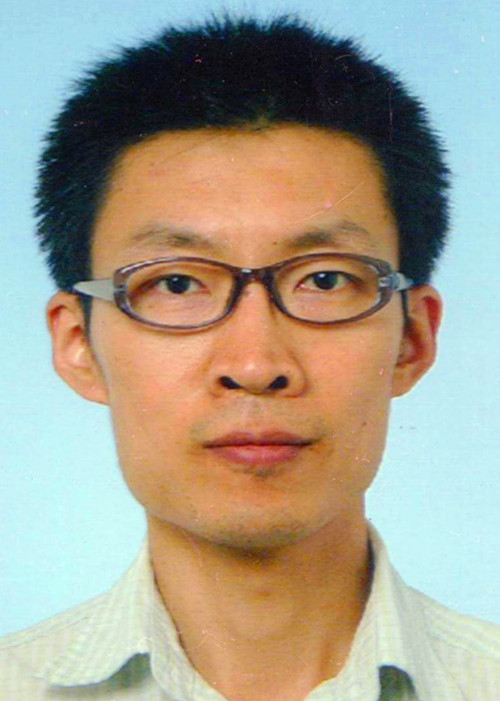 Jizhong Han (韩冀中)合作论文数University of Chinese Academy of Science6
 Songlin Hu (虎嵩林)合作论文数Institute of Information Engineering, Chinese Academy of Sciences;University of Chinese Academy of Sciences5
 WanHui Qian (钱万惠)合作论文数3
 Liangjun Zang (臧良俊)合作论文数Institute of Information Engineering, Chinese Academy of Sciences;University of Chinese Academy of Sciences2Fuqing Zhu合作论文数2Dongqin Liu合作论文数2
 Yan Zhou (周彦)合作论文数Xiangtan University2
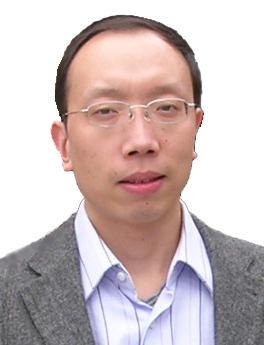 Ruixuan Li (李瑞轩)合作论文数Intelligent and Distributed Computing Laboratory, School of Computer Science and Technology, Huazhong University of Science and Technology;Institute of Parallel and Distributed Computing, Huazhong University of Science and Technology;Concordia Institute for Information Systems Engineering, Concordia University;Institute of Information Engineering, Chinese Academy of Sciences2
 Tao Guo (郭涛)合作论文数University of Chinese Academy of Sciences1Zhou Mengdi合作论文数1Mingming Li合作论文数JD.com1Yanhu Li合作论文数1Kaifeng Wu合作论文数1
 Wei Jiang合作论文数1
 Shangwen Lv合作论文数Baidu1
 Zhongyuan Wang (王仲远)合作论文数Kuaishou Technology;Beijing Academy of Artificial Intelligence1Jinzhu Yang合作论文数1
 Jiao Dai合作论文数1Zheng Xiao (肖政)合作论文数1
 Wantao Liu合作论文数Beihang University, The University of Chicago1
 Xing Wu合作论文数Institute of Information Engineering, Chinese Academy of Sciences1
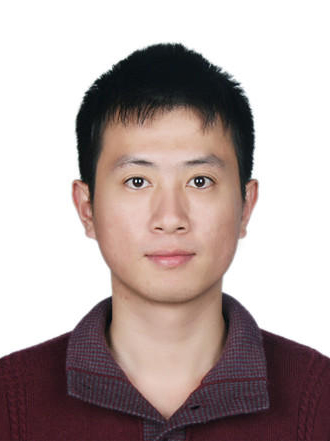 Longtao Huang (黄龙涛)合作论文数Institute of Information Engineering, Chinese Academy of Sciences;University of Chinese Academy of Sciences1




