Large language model (LLM) routing assigns each query to the most suitable model from an ensemble. We introduce LLMRouterBench, a large-scale benchmark and unified framework for LLM routing. It comprises over 400K instances from 21 datasets and 33 models. Moreover, it provides comprehensive metrics for both performance-oriented routing and performance-cost trade-off routing, and integrates 10 representative routing baselines. Using LLMRouterBench, we systematically re-evaluate the field. While confirming strong model complementarity-the central premise of LLM routing-we find that many routing methods exhibit similar performance under unified evaluation, and several recent approaches, including commercial routers, fail to reliably outperform a simple baseline. Meanwhile, a substantial gap remains to the Oracle, driven primarily by persistent model-recall failures. We further show that backbone embedding models have limited impact, that larger ensembles exhibit diminishing returns compared to careful model curation, and that the benchmark also enables latency-aware analysis. All code and data are available at https://github.com/ynulihao/LLMRouterBench.
Medical reasoning models remain constrained by parametric knowledge and are thus susceptible to forgetting and hallucinations. DeepResearch (DR) models ground outputs in verifiable evidence from tools and perform strongly in general domains, but their direct transfer to medical field yields relatively limited gains. We attribute this to two gaps: task characteristic and tool-use scaling. Medical questions require evidence interpretation in a knowledge-intensive clinical context; while general DR models can retrieve information, they often lack clinical-context reasoning and thus "find it but fail to use it," leaving performance limited by medical abilities. Moreover, in medical scenarios, blindly scaling tool-call can inject noisy context, derailing sensitive medical reasoning and prompting repetitive evidence-seeking along incorrect paths. Therefore, we propose DeepMed. For data, we deploy a multi-hop med-search QA synthesis method supporting the model to apply the DR paradigm in medical contexts. For training, we introduce a difficulty-aware turn-penalty to suppress excessive tool-call growth. For inference, we bring a monitor to help validate hypotheses within a controlled number of steps and avoid context rot. Overall, on seven medical benchmarks, DeepMed improves its base model by 9.79% on average and outperforms larger medical reasoning and DR models.
Multimodal harmful meme detection is typically formulated as image–text harmfulness classification. A model may correctly predict harmfulness while misidentifying the attacked target or its supporting evidence. We therefore extend harmful meme detection with fine-grained target identification, asking what type of target is attacked, who is targeted, and where the target appears in the meme. The model predicts harmfulness for every meme and, for harmful memes, outputs the target category, target entity, textual mention, and visual region. To support this task, we introduce Meme3W, which unifies multiple public harmful meme datasets and provides human-verified annotations for harmful instances. We further introduce Joint Record Accuracy (JRA), a strict record-level metric requiring the harmfulness label and all target-identification fields to be jointly correct. Experiments with representative multimodal large language models reveal a substantial gap between harmfulness accuracy and JRA. To narrow this gap, we propose HarmTrace, an anchor-calibrated decoupled optimization framework. HarmTrace strengthens target-entity supervision through entity-aware supervised fine-tuning. It then applies Conditional Target-identification Policy Optimization (CTPO) to decouple harmfulness and target-identification advantages, restricting target-identification optimization to label-correct responses for harmful examples. CTPO uses a Virtual Positive Anchor (VPA) as a fully correct reference for target-identification advantage normalization. HarmTrace improves both JRA and harmfulness accuracy across the evaluated backbones, with JRA on the Qwen3-VL-8B backbone increasing from 17.58% to 52.51%. Our code is publicly available at https://github.com/llly1234/HarmTrace-for-Harmful-Memes.
Model merging dramatically reduces storage and computational resources by combining multiple expert models into a single multi-task model. However, existing methods struggle to maintain performance gains as the number of merged models increases. In this paper, we investigate the key obstacles that limit the scalability of model merging. We prove that the limited effective parameter space imposes a strict constraint on the number of models that can be successfully merged. Through Gaussian Width analysis, we show that marginal benefits diminish according to a strictly concave function as more models are merged. Using Approximate Kinematics Theory, we further prove the existence of a unique optimal threshold beyond which additional models yield negligible improvements. To address this limitation, we propose a straightforward Reparameterized Heavy-Tailed method to extend the merged model’s coverage and enhance performance. Empirical results on 19 benchmarks, including both knowledge-intensive and general-purpose tasks, validate our theoretical analysis. We believe that these results spark further research beyond the current scope of model merging.
Argumentation generation has attracted substantial research interest due to its central role in human reasoning and decision-making. However, most existing argumentative corpora focus on non-interactive, single-turn settings, either generating arguments from a given topic or refuting an existing argument. In practice, however, argumentation is often realized as multi-turn dialogue, where speakers defend their stances and employ diverse argumentative strategies to strengthen persuasiveness. To support deeper modeling of argumentation dialogue, we present the first large-scale S trategic A rgumentative D ialogue dataset, SAD, consisting of 392,822 examples. Grounded in argumentation theories, we annotate each utterance with five strategy types, allowing multiple strategies per utterance. Unlike prior datasets, SAD requires models to generate contextually appropriate arguments conditioned on the dialogue history, a specified stance on the topic, and targeted argumentation strategies. We further benchmark a range of pretrained generative models on SAD and present in-depth analysis of strategy usage patterns in argumentation.
Vision-language models improve perception by feeding increasingly long visual token sequences into language backbones, but the resulting inference cost raises a basic scaling question: as multimodal models grow, how many visual tokens are actually needed, and how should they be allocated under a fixed visual token budget? Existing training-free pruning methods typically answer this with one-shot proxies such as decoder attention, visual similarity, or conditional diversity. We argue that visual token pruning is better viewed as task-conditioned evidence search, especially under aggressive compression and across model scales. We propose F^3A, a training-free router for visual token pruning that operates before the language model consumes image tokens. F^3A builds lightweight question-conditioned cues, matches them to visual-grid tokens through frozen sparse sensing heads, and allocates a fixed vision token budget via coarse evidence localization, local refinement, coverage-preserving competition, and recovery of under-covered regions. It requires no model training, no extra LLM forward pass and preserves the original multimodal prompting and decoding pipeline.
The rapid proliferation of Claude agent skills has raised the central question of how to effectively leverage, manage, and scale the agent skill ecosystem. In this paper, we propose AgentSkillOS, the first principled framework for skill selection, orchestration, and ecosystem-level management. AgentSkillOS comprises two stages: (i) Manage Skills, which organizes skills into a capability tree via node-level recursive categorization for efficient discovery; and (ii) Solve Tasks, which retrieves, orchestrates, and executes multiple skills through DAG-based pipelines. To evaluate the agent's ability to invoke skills, we construct a benchmark of 30 artifact-rich tasks across five categories: data computation, document creation, motion video, visual design, and web interaction. We assess the quality of task outputs using LLM-based pairwise evaluation, and the results are aggregated via a Bradley-Terry model to produce unified quality scores. Experiments across three skill ecosystem scales (200 to 200K skills) show that tree-based retrieval effectively approximates oracle skill selection, and that DAG-based orchestration substantially outperforms native flat invocation even when given the identical skill set.Our findings confirm that structured composition is the key to unlocking skill potential. Our GitHub repository is available at:https://github.com/ynulihao/AgentSkillOS.
Multi-turn, long-horizon tasks are increasingly common for large language models (LLMs), but solving them typically requires many sequential model invocations, accumulating substantial inference costs. Here, we study cost-aware multi-turn LLM routing: selecting which model to invoke at each turn from a model pool, given a fixed cost budget. We propose MTRouter, which encodes the interaction history and candidate models into joint history–model embeddings, and learns an outcome estimator from logged trajectories to predict turn-level model utility. Experiments show that MTRouter improves the performance–cost trade-off: on ScienceWorld, it surpasses GPT-5 while reducing total cost by 58.7%; on Humanity’s Last Exam (HLE), it achieves competitive accuracy while reducing total cost by 43.4% relative to GPT-5, and these gains even carry over to held-out tasks. Further analyses reveal several mechanisms underlying its effectiveness: relative to prior multi-turn routers, MTRouter makes fewer model switches, is more tolerant to transient errors, and exhibits emergent specialization across models.Code: https://github.com/ZhangYiqun018/MTRouter
Large language models (LLMs) often exhibit complementary strengths. Model routing harnesses these strengths by dynamically directing each query to the most suitable model, given a candidate model pool. However, routing performance relies on accurate model representations, and adding new models typically requires retraining, limiting scalability. To address these challenges, we propose a novel routing method using in-context vectors to represent model capabilities. The method proceeds in two stages. First, queries are embedded and projected into vectors, with a projector and LLM-based router trained to reconstruct the original queries, aligning vector representations with the router’s semantic space. Second, each candidate model is profiled on a query set, and the router learns---based on in-context vectors of query and model performance---to predict whether each model can correctly answer new queries. Extensive experiments demonstrate that our method achieves state-of-the-art routing performance in both in-distribution and out-of-distribution tasks. Moreover, our method allows for seamless integration of new models without retraining the router.
Deepresearch (DR) agents interact with real-world web environments through multi-turn search and visit, causing their contexts to grow rapidly over time. We observe that, even after DR Agentic Reinforcement Learning (DR-RL), 61.6% of the model’s remaining prediction errors can still be at- tributed to insufficient long-context understanding, including long-context hallucination and failures in cross-document evidence integration. It motivates us to further break the bottleneck of DR-RL by strengthening the model’s long-context ability. However, effective LongContext training requires more than simply increasing context length. To bridge the data gap, we propose ‘DR Rollouts to LongContext-QA (DR-to-Long)’. The method repurposes DR-RL trajectories, which naturally con- tain search histories, visited webpages, evidence snippets, and final-answer supervision. It then replaces the compact snippets and webpage summaries in each trajectory with the full contents of their corresponding URLs, producing substantially longer multi-document contexts while preserving the original evidence relationships. Building on DR-to-Long, we introduce DLD (DR → LongQA → DR)-RL. DLD-RL first performs a short DR-RL stage to collect rollout trajectories, which are then converted into LongQA instances at zero annotation cost. The model is subsequently optimized with LongQA-RL to strengthen LongContext ability, followed by full DR-RL to continue improving its DR capability. Experiments show that DLD-RL outperforms standard DR-RL by 7.3% on three Deepresearch benchmarks and improves performance by 13.5% on three long-context benchmarks.
Evolution, the engine behind the survival and growth of life on Earth, operates through the population-based process of reproduction. Inspired by this principle, this paper formally defines a newly emerging problem -- the population-based evolution of large language models (LLMs) -- and introduces a novel framework. Starting with a population of parent LLMs, our framework enables the population to evolve through four key operations: (i) crossover, merging the weights of different parents to create offspring LLMs, (ii) mutation, introducing small, random changes to model weights to foster diversity, (iii) selection, prioritizing high-performing models, and (iv) succession, transferring the learned experience from parent to offspring LLMs. With only 200 samples per new task, the LLM population evolves rapidly to adapt to the task at hand, without any gradients. Experiments on 12 datasets show that our framework consistently outperforms existing multi-LLM merging and adaptation methods, achieving accuracy gains of up to 54.8% over the best LLM in the initial population. Moreover, our framework allows for the evolution of LLMs across multiple new tasks simultaneously, scaling effectively with populations of up to 40 LLMs, and even zero-shot generalization to unseen held-out tasks. We have open-sourced the code on GitHub and released the weights of 10 parent LLMs, fine-tuned from gemma-2-2b-it, on HuggingFace$, enabling reproduction of our proposed framework using just a single 4090 GPU with 24GB memory, without any performance degradation.
Proprietary models are increasingly dominating the race for ever-larger language models. Can open-source, smaller models remain competitive across a broad range of tasks? In this paper, we present the Avengers---a lightweight framework that leverages the collective intelligence of these smaller models. The Avengers builds upon four lightweight operations: (i) embedding: encode queries using a text embedding model; (ii) clustering: group queries based on their semantic similarity; (iii) scoring: scores each model's performance within each cluster; and (iv) voting: improve outputs via repeated sampling and voting. At inference time, each query is embedded and assigned to its nearest cluster. The top-performing model(s) within that cluster are selected to generate the response with repeated sampling. Remarkably, with 10 open-source models (~7B parameters each), the Avengers surpasses GPT-4o, 4.1, and 4.5 in average performance across 15 diverse datasets spanning mathematics, coding, logical reasoning, general knowledge, and affective tasks. In particular, it surpasses GPT-4.1 on mathematics tasks by 18.21% and on code tasks by 7.46%. Furthermore, the Avengers delivers superior out-of-distribution generalization, and remains robust across various embedding models, clustering algorithms, ensemble strategies, data efficiency, and values of its sole parameter---the number of clusters.
Competitive debate is a complex task of computational argumentation. Large Language Models (LLMs) suffer from hallucinations and lack competitiveness in this field. To address these challenges, we introduce Agent for Debate (Agent4Debate), a dynamic multi-agent framework based on LLMs designed to enhance their capabilities in competitive debate. Drawing inspiration from human behavior in debate preparation and execution, Agent4Debate employs a collaborative architecture where four specialized agents, involving Searcher, Analyzer, Writer, and Reviewer, dynamically interact and cooperate. These agents work throughout the debate process, covering multiple stages from initial research and argument formulation to rebuttal and summary. To comprehensively evaluate framework performance, we construct the Competitive Debate Arena, comprising 66 carefully selected Chinese debate motions. We recruit ten experienced human debaters and collect records of 200 debates involving Agent4Debate, baseline models, and humans. The evaluation employs the Debatrix automatic scoring system and professional human reviewers based on the established Debatrix-Elo and Human-Elo ranking. Experimental results indicate that the state-of-the-art Agent4Debate exhibits capabilities comparable to those of humans. Furthermore, ablation studies demonstrate the effectiveness of each component in the agent structure.
Affective Computing (AC) integrates computer science, psychology, and cognitive science to enable machines to recognize, interpret, and simulate human emotions across domains such as social media, finance, healthcare, and education. AC commonly centers on two task families: Affective Understanding (AU) and Affective Generation (AG). While fine-tuned pre-trained language models (PLMs) have achieved solid AU performance, they often generalize poorly across tasks and remain limited for AG, especially in producing diverse, emotionally appropriate responses. The advent of Large Language Models (LLMs) (e.g., ChatGPT and LLaMA) has catalyzed a paradigm shift by offering in-context learning, broader world knowledge, and stronger sequence generation. This survey presents an Natural Language Processing (NLP)-oriented overview of AC in the LLM era. We (i) consolidate traditional AC tasks and preliminary LLM-based studies; (ii) review adaptation techniques that improve AU/AG, including Instruction Tuning (full and parameter-efficient methods), Prompt Engineering (zero/few-shot, chain-of-thought, agent-based prompting), and Reinforcement Learning (RL). For the latter, we summarize RL from human preferences, verifiable/programmatic rewards, and model(s) feedback, which provide preference-or rule-grounded optimization signals that can help steer AU/AG toward empathy, safety, and planning, achieving finer-grained or multi-objective control. To assess progress, we compile benchmarks and evaluation practices for both AU and AG. We also discuss open challenges-from ethics, data quality, and safety to robust evaluation and resource efficiency-and outline research directions. We hope this survey clarifies the landscape and offers practical guidance for building affect-aware, reliable, and responsible LLM systems.
Audio-language models (ALMs) often follow text that conflicts with audio, even when the audio evidence is clear. This raises a basic question: is the audio-supported answer unavailable, or is it represented but overridden by the conflicting text? We examine this question using a same-audio counterfactual that keeps the audio fixed, removes only the conflicting text, and measures the resulting shift in model preference. Across five ALMs and four conflict tasks, 64.1
Large Language Models (LLMs) have rapidly advanced, with Gemini-3-Pro setting a new performance milestone. In this work, we explore collective intelligence as an alternative to monolithic scaling, and demonstrate that open-source LLMs' collaboration can surpass Gemini-3-Pro. We first revisit LLM routing and aggregation at scale and identify three key bottlenecks: (1) current train-free routers are limited by a query-based paradigm focusing solely on textual similarity; (2) recent aggregation methods remain largely static, failing to select appropriate aggregators for different tasks; (3) the complementarity of routing and aggregation remains underutilized. To address these problems, we introduce JiSi, a novel framework designed to release the full potential of LLMs' collaboration through three innovations: (1) Query-Response Mixed Routing capturing both semantic information and problem difficulty; (2) Support-Set-based Aggregator Selection jointly evaluating the aggregation and domain capacity of aggregators; (3) Adaptive Routing-Aggregation Switch dynamically leveraging the advantages of routing and aggregation. Comprehensive experiments on nine benchmarks demonstrate that JiSi can surpass Gemini-3-Pro with only 47% costs by orchestrating ten open-source LLMs, while outperforming mainstream baselines. It suggests that collective intelligence represents a novel path towards Artificial General Intelligence (AGI).
Proprietary giants are increasingly dominating the race for ever-larger language models. Can open-source, smaller models remain competitive across a broad range of tasks? In this paper, we present the Avengers – a simple recipe that leverages the collective intelligence of these smaller models. The Avengers builds upon four lightweight operations: (i) embedding: encode queries using a text embedding model; (ii) clustering: group queries based on their semantic similarity; (iii) scoring: scores each model's performance within each cluster; and (iv) voting: improve outputs via repeated sampling and voting. At inference time, each query is embedded and assigned to its nearest cluster. The top-performing model(s) within that cluster are selected to generate the response with repeated sampling. Remarkably, with 10 open-source models ( 7B parameters each), the Avengers surpasses GPT-4o, 4.1, and 4.5 in average performance across 15 diverse datasets spanning mathematics, coding, logical reasoning, general knowledge, and affective tasks. In particular, it surpasses GPT-4.1 on mathematics tasks by 18.21
Entropy has emerged as a key organizing principle for understanding and improving Large Reasoning Models (LRMs). This survey examines how entropy shapes both their learning dynamics and test-time behaviour. On the training side, we take a mathematical perspective: casting existing RL-based reasoning algorithms into a unified objective and using this formulation to derive an entropy-centric decomposition of methods, clarifying how different approaches adjust exploration-exploitation “knobs”. On the inference side, we summarize recent work that leverages entropy-aware test-time scaling to interpret and exploit intrinsic uncertainty signals in long reasoning traces. Finally, we discuss open challenges and outline future research directions for entropy-driven design and analysis of LRMs. Our repository is available on https://github.com/wzhwzhwzh0921/ AWESOME_ENTROPY-LRM_PAPERS.
Left-behind children (LBCs), numbering over 66 million in China, face severe mental health challenges due to parental migration for work. Early screening and identification of at-risk LBCs is crucial, yet challenging due to the severe shortage of mental health professionals, especially in rural areas. While the House-Tree-Person (HTP) test shows higher child participation rates, its requirement for expert interpretation limits its application in resource-scarce regions. To address this challenge, we propose PsyDraw, a multi-agent system based on Multimodal Large Language Models that assists mental health professionals in analyzing HTP drawings. The system employs specialized agents for feature extraction and psychological interpretation, operating in two stages: comprehensive feature analysis and professional report generation. Evaluation of HTP drawings from 290 primary school students reveals that 71.03 evaluations, 26.21 system identified 31.03 demonstrating its effectiveness as a preliminary screening tool. Currently deployed in pilot schools, shows promise in supporting mental health professionals, particularly in resource-limited areas, while maintaining high professional standards in psychological assessment.
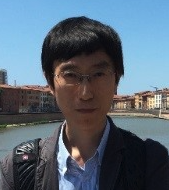 Shi Feng (冯时)合作论文数Department of Computer Science, School of Computer Science and Engineering, Northeastern University17
 Daling Wang (王大玲)合作论文数School of Computer Science and Engineering, Northeastern University14
 Xiaocui Yang合作论文数DeCLaRe Lab, Singapore University of Technology and Design12
 Yifei Zhang (张一飞)合作论文数MOE Key Laboratory of Medical Image Computing, School of Computer Science and Engineering, Northeastern University9
 Shuyue Hu合作论文数The Chinese University of Hong Kong8
 Lei Bai (白磊)合作论文数Shanghai AI Laboratory7
 Hao Li (李豪)合作论文数6
 Yongkang Liu (刘永康)合作论文数School of Computer and Communication Engineering, Northeastern University at Qinhuangdao6Peng Ye (叶鹏)合作论文数School of Information Science and Technology, Fudan University5Zihan Wang (汪子涵)合作论文数Tsinghua University4
 Kaisong Song (宋凯嵩)合作论文数Machine Intelligence Technology Lab, Zhejiang Tmall Tehchnology Co., Ltd;Institute for Aritificial Intelligence, Alibaba Group4
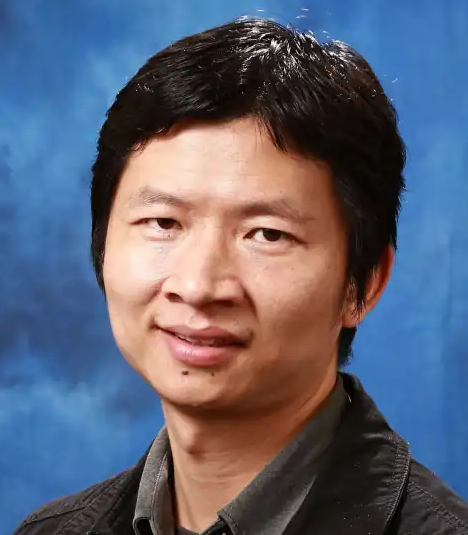 Wanli Ouyang (欧阳万里)合作论文数Shanghai Artificial Intelligence Laboratory3
 Hinrich Schütze合作论文数Fakultät Für Mathematik, Informatik Und Statistik, Ludwig-Maximilians-Universität München;Institut Für Informatik, Ludwig-Maximilians-Universität München;Data Science Lab, Ludwig-Maximilians-Universität München;Center for Information and Language Processing, Ludwig-Maximilians-Universität München3
 Xiaozhong Ji合作论文数Youtu Lab, Tencent2
 Xinrun Wang合作论文数School of Computing and Information Systems, Singapore Management University2
 Bo Zhang合作论文数Shanghai Aritifcal Intelligence Laboratory2
 Zhen Wang (王震)合作论文数School of Artifcial Intelligence, OPtics and ElectroNics, Northwestern Polytechnical University2
 Ge Yu (于戈)合作论文数College of Computer Science and Engineering, Northeastern University2Zijing Wang合作论文数Northeastern University1Tong Liu合作论文数1Lingshuai Wang合作论文数1Shuang Sun合作论文数1
 Biqing Qi (齐弼卿)合作论文数Shanghai Artificial Intelligence Laboratory1Peidong Wang合作论文数1Weihao Lin合作论文数1
 Shengji Tang (唐圣汲)合作论文数MM Lab, The Chinese University of Hong Kong1Fanheng Kong合作论文数1
 Chenxu Wang合作论文数Fudan University;Shanghai Artificial Intelligence Laboratory1
 Ercong Nie (聂耳聪)合作论文数Schuetze NLP Lab, Center for Information and Language Processing, Ludwig Maximilians University of Munich;Munich Center for Machine Learning1Qian Li合作论文数Northeastern University China(Northeastern University,Northeastern Univ.),Shenyang,China1
 Peiqin Lin (林佩勤)合作论文数Alibaba Group1
 Shufei Zhang合作论文数Liverpool University1
 Yang Chen (陈阳)合作论文数School of Computer Science, University of Auckland;Strong AI Lab, University of Auckland1
 Ping Jian (鉴萍)合作论文数School of Computer Science & Technology, Beijing Institute of Technology1
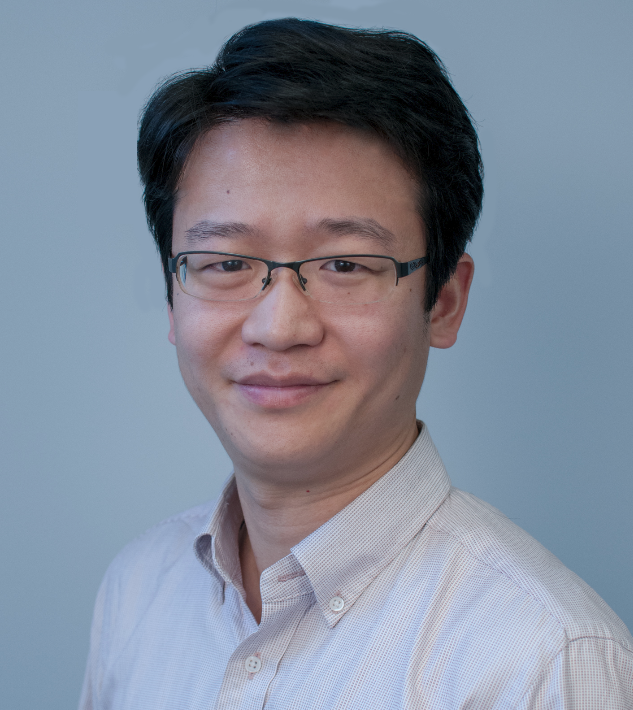 Xiaosong Wang (王潚崧)合作论文数Shanghai AI Laboratory1
 Mingyang Wang合作论文数Bosch Center for Artificial Intelligence, Ludwig-Maximilians-Universität München1
 Tao Chen (陈涛)合作论文数School of Information Science and Technology, Fudan University1




