Autonomous driving in complex traffic requires reasoning under uncertainty. Common approaches rely on prediction-based planning or risk-aware control, but these are typically treated in isolation, limiting their ability to capture the coupled nature of action and inference in interactive settings. This gap becomes especially critical in uncertain scenarios, where simply reacting to predictions can lead to unsafe maneuvers or overly conservative behavior. Our central insight is that safe interaction requires not only estimating human behavior but also shaping it when ambiguity poses risks. To this end, we introduce a hierarchical belief model that structures human behavior across coarse discrete intents and fine motion modes, updated via Bayesian inference for interpretable multi-resolution reasoning. On top of this, we develop an active probing strategy that identifies when multimodal ambiguity in human predictions may compromise safety and plans disambiguating actions that both reveal intent and gently steer human decisions toward safer outcomes. Finally, a runtime risk-evaluation layer based on Conditional Value-at-Risk (CVaR) ensures that all probing actions remain within human risk tolerance during influence. Our simulations in lane-merging and unsignaled intersection scenarios demonstrate that our approach achieves higher success rates and shorter completion times compared to existing methods. These results highlight the benefit of coupling belief inference, probing, and risk monitoring, yielding a principled and interpretable framework for planning under uncertainty.
Autonomous driving in complex traffic requires planners that generalize beyond hand-crafted rules, motivating data-driven approaches that learn behavior from expert demonstrations. Diffusion-based trajectory planners have recently shown strong closed-loop performance by iteratively denoising a full-horizon plan, but they remain difficult to certify and can fail catastrophically in rare or out-of-distribution scenarios. To address this challenge, we present PC-Diffuser, a safety augmentation framework that embeds a certifiable, path-consistent barrier-function structure directly into the denoising loop of diffusion planning. The key idea is to make safety an intrinsic part of trajectory generation rather than a post-hoc fix: we enforce forward invariance along the rollout while preserving the diffusion model's intended path geometry. Specifically, PC-Diffuser (i) evaluates collision risk using a capsule-distance barrier function that better reflects vehicle geometry and reduces unnecessary conservativeness, (ii) converts denoised waypoints into dynamically feasible motion under a kinematic bicycle model, and (iii) applies a path-consistent safety filter that eliminates residual constraint violations without geometric distortion, so the corrected plan remains close to the learned distribution. By injecting these safety-consistent corrections at every denoising step and feeding the refined trajectory back into the diffusion process, PC-Diffuser enables iterative, context-aware safeguarding instead of post-hoc repair...
Reliable navigation in cluttered environments requires perception outputs that are not only accurate but also equipped with uncertainty sets suitable for safe control. An inverse perception contract (IPC) provides such a connection by mapping perceptual estimates to sets that contain the ground truth with high confidence. Existing IPC formulations, however, instantiate uncertainty as a single ellipsoidal set and rely on deterministic trust scores to guide robot motion. Such a representation cannot capture the multi-modal and irregular structure of fine-grained perception errors, often resulting in over-conservative sets and degraded navigation performance. In this work, we introduce Gaussian Mixture-based Inverse Perception Contract (GM-IPC), which extends IPC to represent uncertainty with unions of ellipsoidal confidence sets derived from Gaussian mixture models. This design moves beyond deterministic single-set abstractions, enabling fine-grained, multi-modal, and non-convex error structures to be captured with formal guarantees. A learning framework is presented that trains GM-IPC to account for probabilistic inclusion, distribution matching, and empty-space penalties, ensuring both validity and compactness of the predicted sets. We further show that the resulting uncertainty characterizations can be leveraged in downstream planning frameworks for real-time safe navigation, enabling less conservative and more adaptive robot motion while preserving safety in a probabilistic manner.
Safe navigation for multi-robot systems requires enforcing safety without sacrificing task efficiency under decentralized decision-making. Existing decentralized methods often assume robot homogeneity, making shared safety requirements non-uniformly interpreted across heterogeneous agents with structurally different dynamics, which could lead to avoidance obligations not physically realizable for some robots and thus cause safety violations or deadlock. In this paper, we propose Capability-Aware Heterogeneous Control Barrier Function (CA-HCBF), a decentralized framework for consistent safety enforcement and capability-aware coordination in heterogeneous robot teams. We derive a canonical second-order control-affine representation that unifies holonomic and nonholonomic robots under acceleration-level control via canonical transformation and backstepping, preserving forward invariance of the safe set while avoiding relative-degree mismatch across heterogeneous dynamics. We further introduce a support-function-based directional capability metric that quantifies each robot's ability to follow its motion intent, deriving a pairwise responsibility allocation that distributes the safety burden proportionally to each robot's motion capability. A feasibility-aware clipping mechanism further constrains the allocation to each agent's physically achievable range, mitigating infeasible constraint assignments common in dense decentralized CBF settings. Simulations with up to 30 heterogeneous robots and a physical multi-robot demonstration show improved safety and task efficiency over baselines, validating real-world applicability across robots with distinct kinematic constraints.
Safe control has been widely studied in various safety-critical applications, for instance, autonomous driving. In order to ensure the autonomous vehicle does not collide with other vehicles, it is essential to obtain an accurate expectation of surrounding vehicles' behavior and react adaptively. Instead of assuming fully cooperative and homogeneous vehicles using the same safety-critical controllers, recent works have been exploring different data-driven approaches to model the neighboring vehicles' underlying controllers with observed data. However, existing works either suffer from 1) the inter-vehicle influence during the multi-vehicle interaction, which makes it hard to determine the causality of surrounding vehicles' behavior in controller modeling, or 2) being dominated by the worst-case analysis, which may lead to overly conservative behavior. In this paper, we extend the prior work on Parametric-Control Barrier Function (Parametric-CBF) to multi-robot interactions with embedded causality inference to explicitly reason over the inter-vehicle influence. Given the learned Causality-based Parametric-CBF, we present an adaptive safety-critical controller that allows the ego vehicle to safely react to surrounding vehicles with the learned expectation. We demonstrate that by leveraging the motion flexibility among multi-vehicle systems, task efficiency can be greatly improved in various interaction-intensive scenarios.
Frontier artificial intelligence (AI) models have advanced rapidly through training on internet-scale public data, yet such systems lack access to private clinical data. Neuroimaging is underrepresented in the public domain due to identifiable facial features within magnetic resonance imaging (MRI) and computed tomography (CT) scans, restricting model performance in clinical medicine. Here we show that frontier models underperform on neuroimaging tasks and that learning directly from uncurated data generated during routine clinical care at health systems, a paradigm we call 'health system learning', yields high-performance, generalist neuroimaging models. We introduce NeuroVFM, a visual foundation model trained on 5.24 million clinical MRI and CT volumes using a scalable volumetric predictive architecture. NeuroVFM learns comprehensive representations of brain anatomy and pathology, achieving state-of-the-art performance across multiple clinical tasks, including radiologic diagnosis and report generation. The model embeds MRI and CT scans into a shared neuroanatomic latent space and grounds diagnostic findings. When paired with open-source language models, NeuroVFM generates radiology reports that surpass frontier models in accuracy, clinical triage and expert preference. NeuroVFM reduces hallucinated findings and critical errors, offering safer clinical decision support. These results establish health system learning as a paradigm for building generalist medical AI and provide a scalable framework for clinical foundation models.
Decentralized safe control plays an important role in multi-agent systems given the scalability and robustness without reliance on a central authority. However, without an explicit global coordinator, the decentralized control methods are often prone to deadlock -- a state where the system reaches equilibrium, causing the robots to stall. In this paper, we propose a generalized decentralized framework that unifies the Control Lyapunov Function (CLF) and Control Barrier Function (CBF) to facilitate efficient task execution and ensure deadlock-free trajectories for the multi-agent systems. As the agents approach the deadlock-related undesirable equilibrium, the framework can detect the equilibrium and drive agents away before that happens. This is achieved by a secondary deadlock resolution design with an auxiliary CBF to prevent the multi-agent systems from converging to the undesirable equilibrium. To avoid dominating effects due to the deadlock resolution over the original task-related controllers, a deadlock indicator function using CBF-inspired risk measurement is proposed and encoded in the unified framework for the agents to adaptively determine when to activate the deadlock resolution. This allows the agents to follow their original control tasks and seamlessly unlock or deactivate deadlock resolution as necessary, effectively improving task efficiency. We demonstrate the effectiveness of the proposed method through theoretical analysis, numerical simulations, and real-world experiments.
Many real-world problems are inherently multimodal, from spoken language, gestures, and paralinguistics humans use to communicate, to force, proprioception, and visual sensors on robots. While there has been an explosion of interest in multimodal learning, these methods are focused on a small set of modalities primarily in language, vision, and audio. In order to accelerate generalization towards diverse and understudied modalities, this paper studies efficient representation learning for high-modality scenarios involving a large set of diverse modalities. Since adding new models for every new modality becomes prohibitively expensive, a critical technical challenge is heterogeneity quantification: how can we measure which modalities encode similar information and interactions in order to permit parameter sharing with previous modalities? This paper proposes two new information theoretic metrics for heterogeneity quantification: (1) modality heterogeneity studies how similar 2 modalities {X1,X2} are by measuring how much information can be transferred from X1 to X2, while (2) interaction heterogeneity studies how similarly pairs of modalities {X1,X2}, {X3,X4} interact by measuring how much information can be transferred from fusing {X1,X2} to {X3,X4}. We show the importance of these 2 proposed metrics as a way to automatically prioritize the fusion of modalities that contain unique information or interactions. The result is a single model, HighMMT, that scales up to 10 modalities (text, image, audio, video, sensors, proprioception, speech, time-series, sets, and tables) and 15 tasks from 5 research areas. Not only does HighMMT outperform prior methods on the tradeoff between performance and efficiency, it also demonstrates a crucial scaling behavior: performance continues to improve with each modality added, and it transfers to entirely new modalities and tasks during fine-tuning.
In this paper, we propose a novel decentralized control method to maintain Line-of-Sight connectivity for multi-robot networks in the presence of Guassian-distributed localization uncertainty. In contrast to most existing work that assumes perfect positional information about robots or enforces overly restrictive rigid formation against uncertainty, our method enables robots to preserve Line-of-Sight connectivity with high probability under unbounded Gaussian-like positional noises while remaining minimally intrusive to the original robots' tasks. This is achieved by a motion coordination framework that jointly optimizes the set of existing Line-of-Sight edges to preserve and control revisions to the nominal task-related controllers, subject to the safety constraints and the corresponding composition of uncertainty-aware Line-of-Sight control constraints. Such compositional control constraints, expressed by our novel notion of probabilistic Line-of-Sight connectivity barrier certificates (PrLOS-CBC) for pairwise robots using control barrier functions, explicitly characterize the deterministic admissible control space for the two robots. The resulting motion ensures Line-of-Sight connectedness for the robot team with high probability. Furthermore, we propose a fully decentralized algorithm that decomposes the motion coordination framework by interleaving the composite constraint specification and solving for the resulting optimization-based controllers. The optimality of our approach is justified by the theoretical proofs. Simulation and real-world experiments results are given to demonstrate the effectiveness of our method.
With more autonomous vehicles (AVs) sharing roadways with human-driven vehicles (HVs), ensuring safe and courteous maneuvers that respect HVs' behavior becomes increasingly important. To promote both safety and courtesy in AV's behavior, an extension of Control Barrier Functions (CBFs)-inspired risk evaluation framework is proposed in this paper by considering both noisy observed positions and velocities of surrounding vehicles. The perceived risk by the ego vehicle can be visualized as a risk map that reflects the understanding of the surrounding environment and thus shows the potential for facilitating safe and courteous driving. By incorporating the risk evaluation framework into the Model Predictive Control (MPC) scheme, we propose a Courteous MPC for ego AV to generate courteous behaviors that 1) reduce the overall risk imposed on other vehicles and 2) respect the hard safety constraints and the original objective for efficiency. We demonstrate the performance of the proposed Courteous MPC via theoretical analysis and simulation experiments.
This paper presents a novel approach to modeling human driving behavior, designed for use in evaluating autonomous vehicle control systems in a simulation environments. Our methodology leverages a hierarchical forward-looking, risk-aware estimation framework with learned parameters to generate human-like driving trajectories, accommodating multiple driver levels determined by model parameters. This approach is grounded in multimodal trajectory prediction, using a deep neural network with LSTM-based social pooling to predict the trajectories of surrounding vehicles. These trajectories are used to compute forward-looking risk assessments along the ego vehicle's path, guiding its navigation. Our method aims to replicate human driving behaviors by learning parameters that emulate human decision-making during driving. We ensure that our model exhibits robust generalization capabilities by conducting simulations, employing real-world driving data to validate the accuracy of our approach in modeling human behavior. The results reveal that our model effectively captures human behavior, showcasing its versatility in modeling human drivers in diverse highway scenarios.
In order to achieve the ultimate goal of harmonious human-robot co-existence, the key is to build autonomous robots that can safely interact with humans for collaboration and coordination, as well as demonstrate reliable behavior that is acceptable to humans. These two requirements slightly differ from each other, with the former addressing the safety and functionality of robots as task performers, and the latter emphasizing the social compliance of robots as entities in society. In this abstract, I will outline my efforts towards enhancing the safety and reliability of interactive robot autonomy from three progressively advancing perspectives, 1) self-level autonomy, aiming to develop reactive behavior that ensures safety for individual robots when encountering non-cooperative agents, 2) peer-level autonomy, emphasizing the establishment of a safe interaction mechanism within an diverse and unconnected multi-robot system, and 3) human-involved autonomy, highlighting the consideration of human factors in the decision-making process for the design of multi-robot systems.
In this study, we introduce an innovative risk-aware behavior planning framework designed for autonomous driving, with the aim of fostering socially compliant vehicle behavior in diverse mixed-traffic highway scenarios. Our objective is to empower autonomous vehicles to exhibit behavior that aligns with societal norms, thus enhancing their acceptability among human drivers. We expand the scope of Control Barrier Function-inspired risk assessment to encompass a heteroge-neous spectrum of road participants, allowing us to explicitly model varying degrees of social influences between different classes of vehicles. We also present a mathematical condition for accountability tracing, enabling the identification of responsible entities in situations where risks surge. Drawing inspiration from Isaac Asimov's “Three Laws of Robotics,” we establish social compliance conditions grounded in our unique risk concept, which seamlessly integrates with a wide range of existing safety-critical controllers, regardless of their type or design. By incorporating these conditions, which encode societal expectations, into existing safe controllers, we demonstrate that autonomous vehicles can exhibit context-aware behavior with-out compromising the safety guarantees provided by existing controllers. This approach effectively excludes behaviors that may be safe but do not align with human intuition while guaranteeing the least interference with the existing controller.
This paper proposes a novel data-driven control strategy for maintaining connectivity in networked multi-robot systems. Existing approaches often rely on a pre-determined communication model specifying whether pairwise robots can communicate given their relative distance to guide the connectivity-aware control design, which may not capture real-world communication conditions. To relax that assumption, we present the concept of Data-driven Connectivity Barrier Certificates, which utilize Control Barrier Functions (CBF) and Gaussian Processes (GP) to characterize the admissible control space for pairwise robots based on communication performance observed online. This allows robots to maintain a satisfying level of pairwise communication quality (measured by the received signal strength) while in motion. Then we propose a Data-driven Connectivity Maintenance (DCM) algorithm that combines (1) online learning of the communication signal strength and (2) a bi-level optimization-based control framework for the robot team to enforce global connectivity of the realistic multi-robot communication graph and minimally deviate from their task-related motions. We provide theoretical proofs to justify the properties of our algorithm and demonstrate its effectiveness through simulations with up to 20 robots.
In order to achieve the ultimate goal of harmonious human-robot co-existence, the key is to build autonomous robots that can safely interact with humans for collaboration and coordination, as well as demonstrate reliable behavior that is acceptable to humans. These two requirements slightly differ from each other, with the former addressing the safety and functionality of robots as task performers, and the latter emphasizing the social compliance of robots as entities in society. In this abstract, I will outline my efforts towards enhancing the safety and reliability of interactive robot autonomy from three progressively advancing perspectives, 1) self-level autonomy, aiming to develop reactive behavior that ensures safety for individual robots when encountering non-cooperative agents, 2) peer-level autonomy, emphasizing the establishment of a safe interaction mechanism within an diverse and unconnected multi-robot system, and 3) human-involved autonomy, highlighting the consideration of human factors in the decision-making process for the design of multi-robot systems.
In this paper, we consider the Line-of-Sight (LOS) connectivity maintenance under positional uncertainty for a team of robots consisting of multiple subgroups with given parallel tasks. The LOS connectivity between pairwise robots is preserved when the two robots are within the limited communication range and their LOS is occlusion-free from static obstacles over time. By unifying a control theoretic approach and a graph theoretic approach, we develop an Uncertainty Aware Line-of-Sight Minimum Spanning Tree (LOS-MST) framework to compute robots' motion that maintains only a minimally constraining set of LOS edges among robots for global and subgroup LOS connectivity, while minimizing the motion disruption to their original multi-robot behaviors. Simulation results are provided to validate the effectiveness of our proposed approach.
Pretrained language models have demonstrated extraordinary capabilities in language generation. However, real-world tasks often require controlling the distribution of generated text in order to mitigate bias, promote fairness, and achieve personalization. Existing techniques for controlling the distribution of generated text only work with quantified distributions, which require pre-defined categories, proportions of the distribution, or an existing corpus following the desired distributions. However, many important distributions, such as personal preferences, are unquantified. In this work, we tackle the problem of generating text following arbitrary distributions (quantified and unquantified) by proposing Nano, a few-shot human-in-the-loop training algorithm that continuously learns from human feedback. Nano achieves state-of-the-art results on single topic/attribute as well as quantified distribution control compared to previous works. We also show that Nano is able to learn unquantified distributions, achieves personalization, and captures differences between different individuals' personal preferences with high sample efficiency.
It is envisioned that in the near future autonomous systems such as multi-agent systems, will co-exist with humans, e.g., autonomous vehicles will share roads with human drivers. These safety-critical scenarios require formally provable safety guarantees so that the robots will never collide with humans or with each other. It is challenging to provide such guarantees in the real world due to the stochastic environments and inaccurate models of heterogeneous agents including robots and humans. My PhD research investigates decision-making algorithm design for provably-correct safety guarantees in mixed multi-agent systems.
 John M. Dolan合作论文数Institute for Complex Engineered Systems, Carnegie Mellon University;The Robotics Institute, School of Computer Science, Carnegie Mellon University;Vision and Autonomous Systems Center, Carnegie Mellon University18
 Wenhao Luo合作论文数Department of Computer Science, College of Computing and Informatics, University of North Carolina at Charlotte15
 Louis-Philippe Morency合作论文数Multimodal Communication and Machine Learning Laboratory, Language Technology Institute, School of Computer Science, Carnegie Mellon University;Human-Computer Interaction Institute, School of Computer Science, Carnegie Mellon University10
 Paul Liang合作论文数Department of Electrical Engineering and Computer Science, Massachusetts Institute of Technology9
 Ruslan Salakhutdinov合作论文数Machine Learning Department, School of Computer Science, Carnegie Mellon University9
 Xiang Fan合作论文数School of Computer Science, Carnegie Mellon University5Zihao Deng合作论文数4
 Nihal Jain合作论文数Amazon Web Services3
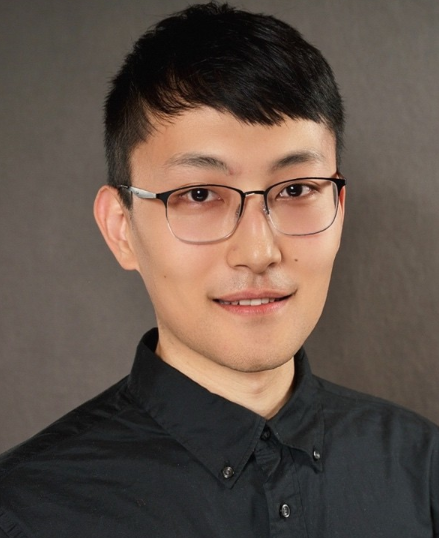 Xingbo Wang (王星博)合作论文数Bosch Center for AI3
 Gunjan Chhablani合作论文数Waymo3
 Wenli Xiao合作论文数NVIDIA;Carnegie Mellon University2Yupeng Yang合作论文数2
 Yun Cheng合作论文数2
 Shentong Mo合作论文数Sailing-MBZUAI Lab2
 Akhil Kondepudi合作论文数College of Literature, Science and the Arts, University of Michigan2
 Zhen Yu Ding合作论文数Carnegie Mellon University2Asadur Chowdury合作论文数Dept Psychiat & Behav Neurosci, Wayne State Univ2
 Todd Hollon合作论文数MLiNS Lab, Department of Neurosurgery, Medical School, University of Michigan;Michigan Institute for Data Science, University of Michigan2
 Christopher Steven Timperley合作论文数Institute for Software Research, School of Computer Science, Carnegie Mellon University2
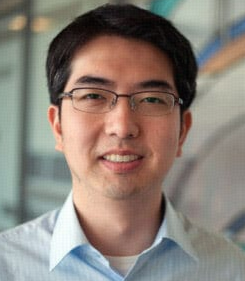 Honglak Lee合作论文数Electrical Engineering and Computer Science Department, College of Engineering, University of Michigan;LG AI Research2
 Dani Yogatama合作论文数Reka;Department of Computer Science, University of Southern California2Yang, Yupeng合作论文数1Ian Gao合作论文数1Yanze Zhang合作论文数1Ludlow Nathan合作论文数1Jo, Siwon合作论文数1
 Sha Yi (伊莎)合作论文数Advanced Agent – Robotics Technology Lab, The Robotics Institute, School of Computer Science, Carnegie Mellon University1Yudong Liu合作论文数1Hai Pham合作论文数1
 Michelle A. Lee合作论文数1Arav Agarwal合作论文数1Shuangge Wang合作论文数1Soumith Udatha合作论文数1
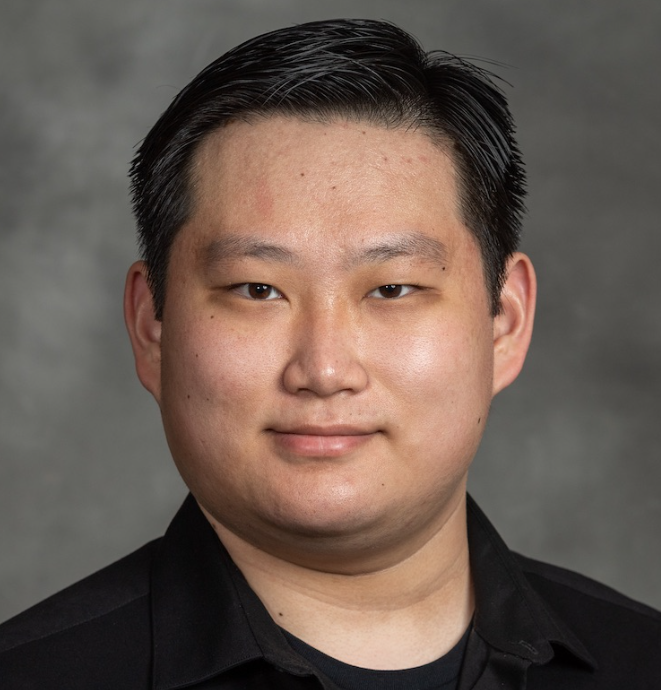 Cheng Jiang合作论文数Department of Computational Medicine and Bioinformatics, University of Michigan1
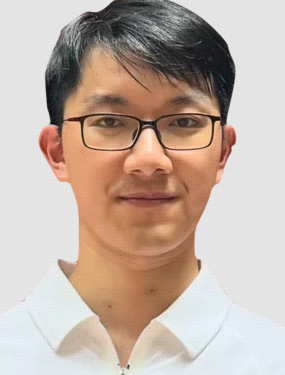 Jason Wu合作论文数Computational Interaction Design Engineering and Research Lab, Department of Computer Science, Purdue University1
 Akshay T Rao合作论文数Dept Biomed Engn, Univ Michigan1
 Fahad Raza Khan合作论文数Graduate School of Engineering, Tohoku University1Zetian Wu合作论文数Zhejiang Univ, Hangzhou, Peoples R China1Leslie Chen合作论文数1Oliver Krauss合作论文数Research Department Advanced Information Systems and Technology, University of Applied Sciences Upper Austria1Peter Wu合作论文数1Xingyu Zhou (周星宇)合作论文数1
 Ziran Zhang合作论文数1
 Jaskaran Grover合作论文数Robotics Institute, Carnegie Mellon University1Rushikesh S Joshi合作论文数1
 Aditya S. Pandey合作论文数Medical School, University of Michigan;Comprehensive Stroke Center University of Michigan1




