772–783 (2006). 18. J. Briscoe, EMBO J. 28, 457–465 (2009). 19. T. Mori et al., Glia 54, 21–34 (2006). 20. F. Long, X. M. Zhang, S. Karp, Y. Yang, A. P. McMahon, Development 128, 5099–5108 (2001). 21. B. Djukic, K. B. Casper, B. D. Philpot, L.-S. Chin, K. D. McCarthy, J. Neurosci. 27, 11354–11365 (2007). 22. R. V. Pearse 2nd, K. J. Vogan, C. J. Tabin, Dev. Biol. 239, 15–29 (2001). 23. J. Jeong, J. Mao, T. Tenzen, A. H. Kottmann, A. P. McMahon, Genes Dev. 18, 937–951 (2004). 24. A. D. R. Garcia, R. Petrova, L. Eng, A. L. Joyner, J. Neurosci. 30, 13597–13608 (2010). 25. C. C. Harwell et al., Neuron 73, 1116–1126 (2012). 26. L. E. Gonzalez-Reyes et al., Neuron 75, 306–319 (2012). 27. M. K. Cooper, J. A. Porter, K. E. Young, P. A. Beachy, Science 280, 1603–1607 (1998). 28. A. Rohner et al., Mol. Cancer Ther. 11, 57–65 (2012). 29. A. V. Molofsky et al., Nature 509, 189–194 (2014). 30. X. Tong et al., Nat. Neurosci. 17, 694–703 (2014).
Veratrum alkaloids and distal inhibitors of cholesterol biosynthesis have been studied for more than 30 years as potent teratogens capable of inducing cyclopia and other birth defects. Here, it is shown that these compounds specifically block the Sonic hedgehog (Shh) signaling pathway. These teratogens did not prevent the sterol modification of Shh during autoprocessing but rather inhibited the response of target tissues to Shh, possibly acting through the sterol sensing domain within the Patched protein regulator of Shh response.
The ∼25 kDa carboxy-terminal domain of Drosophila Hedgehog protein (Hh-C) possesses an autoprocessing activity that results in an intramolecular cleavage of full-length Hedgehog protein and covalent attachment of a cholesterol moiety to the newly generated amino-terminal fragment. We have identified a 17 kDa fragment of Hh-C (Hh-C17) active in the initiation of autoprocessing and report here its crystal structure. The Hh-C17 structure comprises two homologous subdomains that appear to have arisen from tandem duplication of a primordial gene. Residues in the Hh-C17 active site have been identified, and their role in Hedgehog autoprocessing probed by site-directed mutagenesis. Aspects of sequence, structure, and reaction mechanism are conserved between Hh-C17 and the self-splicing regions of inteins, permitting reconstruction of a plausible evolutionary history of Hh-C and the inteins.
Targeted gene disruption in the mouse shows that the Sonic hedgehog (Shh) gene plays a critical role in patterning of vertebrate embryonic tissues, including the brain and spinal cord, the axial skeleton and the limbs. Early defects are observed in the establishment or maintenance of midline structures, such as the notochord and the floorplate, and later defects include absence of distal limb structures, cyclopia, absence of ventral cell types within the neural tube, and absence of the spinal column and most of the ribs. Defects in all tissues extend beyond the normal sites of Shh transcription, confirming the proposed role of Shh proteins as an extracellular signal required for the tissue-organizing properties of several vertebrate patterning centres.
Autocatalytic processing mediated by the carboxy-terminal domain of the hedgehog (hh) protein precursor (Hh) generates an amino-terminal product that accounts for all known signaling activity. The role of autoprocessing in biogenesis of the hh signal has been unclear, since a truncated unprocessed protein lacking all carboxy-terminal domain sequences retains signaling activity. Here, we present evidence that the autoprocessing reaction proceeds via an internal thioester intermediate and results in a covalent modification that increases the hydrophobic character of the signaling domain and influences its spatial and subcellular distribution. We demonstrate that truncated unprocessed amino-terminal protein causes embryonic mispatterning, even when expression is localized to cells that normally express Hh, thus suggesting a role for autoprocessing in spatial regulation of hh signaling. This type of processing also appears to operate in the biogenesis of other novel secreted proteins.
THE secreted protein products of the hedgehog (hh) gene family are associated with local and long-range signalling activities that are responsible far developmental patterning in multiple systems, including Drosophila embryonic and larval tissues(1-8) and vertebrate neural tube, limbs and somites(9-15). In a process that is critical for full biological activity, the hedgehog protein (Hh) undergoes autoproteolysis to generate two biochemically distinct products, an 18K amino-terminal fragment, N, and a 25K carboxy-terminal fragment, C (ref. 16); mutations that block autoproteolysis impair Hh function. We have identified the site of autoproteolytic cleavage and find that it is broadly conserved throughout the hedgehog family. Knowing the site of cleavage, we were able to test the function of the N and C cleavage products in Drosophila assays. We show here that the N product is the active species in both local and long-range signalling. Consistent with this, all twelve mapped hedgehog mutations either affected the structure of the N product directly or otherwise blocked the release of N from the Hh precursor as a result of deletion or alteration of sequences in the C domain.
We have identified a novel Drosophila homeodomain gene, unplugged (unp), whose function is required for formation of the tracheal branches that penetrate the CNS. In unp mutant embryos the segmentally repeated ganglionic branches stall and fail to penetrate the CNS and the segment-specific cerebral branch and associated cerebral anastomosis fail to form. Expression of unp in the founder cells for the cerebral branch within the first tracheal metamere is repressed in posterior segments by Ubx and other bithorax complex genes. This pattern of expression and homeotic gene regulation is reproduced by an unusual 2.6 kb cis-regulatory sequence located downstream of the unp transcription unit. Since the unp protein is localized to the nucleus of tracheal precursor cells as they migrate and extend, unp protein appears to play a regulatory role in neural branching of the tracheae, and the segment-specific aspects of these neural branching patterns appear to be generated by homeotic regulation of unp expression.
The homeodomain has been implicated as a major determinant of biological specificity for the homeotic selector (HOM) genes. We compare here the DNA sequence preferences of homeodomains encoded by four of the eight Drosophila HOM proteins. One of the four, Abdominal-B, binds preferentially to a sequence with an unusual 5'-T-T-A-T-3' core, whereas the other three prefer 5'-T-A-A-T-3'. Of these latter three, the Ultrabithorax and Antennapedia homeodomains display indistinguishable preferences outside the core while Deformed differs. Thus, with three distinct binding classes defined by four HOM proteins, differences in individual site recognition may account for some but not all of HOM protein functional specificity. We further show that amino acid residues within the N-terminal arm are responsible for the sequence specificity differences between the Ultrabithorax and Abdominal-B homeodomains. Similarities and differences at the corresponding positions within the N-terminal arms are conserved in the vertebrate Abdominal-B-like HOM proteins, which play critical roles in limb specifications as well as in regional specification along the anterior-posterior axis. This and other patterns of residue conservation suggest that differential DNA sequence recognition may play a role in HOM protein function in a wide range of organisms.
We have identified a novel homeodomain gene, buttonless (btn), that is specifically expressed in 20 cells of a single type during Drosophila embryonic development, These cells, the dorsal median (DM) cells, are arranged as a single pair within each segment along the dorsal midline of the CNS, Distinctive features of the DM cells include a large cell body and a long thick process extending laterally to the muscle attachment site. In the absence of btn gene function the initial commitment to the DM cell fate is made but differentiation fails to occur and the DM cells are lost, The btn mutation thus specifically eliminates the DM cells, and this genetic ablation in turn reveals a requirement for DM cells as cellular cues for axonal guidance during transverse nerve outgrowth and bifurcation of the median nerve.
Cooperativity in binding of regulatory proteins to multiple DNA sites can heighten the sensitivity and specificity of the transcriptional response. We report here the cooperative DNA-binding properties of a developmentally active regulatory protein encoded by the Drosophila homeotic gene Ultrabithorax (Ubx). We show that naturally occurring binding sites for the Ubx-encoded protein contain clusters of multiple individual binding site sequences. Such sites can form complexes containing a dozen or more Ubx-encoded protein molecules, with simultaneous cooperative interactions between adjacent and distant DNA sites. The distant mode of interaction involves a DNA looping mechanism; both modes appear to enhance transcriptional activation in a simple yeast assay system. We found that cooperative binding is dependent on sequences outside the homeodomain, and we have identified regions predicted to form coiled coils carboxy terminal to the homeodomains of the Ubx-encoded protein and several other homeotic proteins. On the basis of our findings, we propose a multisite integrative model of homeotic protein action in which functional regulatory elements can be built from a few high-affinity sites, from many lower-affinity sites, or from sites of some intermediate number and affinity. An important corollary of this model is that even small differences in binding of homeotic proteins to individual sites could be summed to yield large overall differences in binding to multiple sites. This model is consistent with reports that homeodomain protein targets contain multiple individual binding site sequences distributed throughout sizable DNA regions. Also consistent is a recent report that sequences carboxy terminal to the Ubx homeodomain can contribute to segmental specificity.
The 61 amino acid homeodomain is conserved among members of a family of eukaryotic DNA-binding proteins that play regulatory roles in transcription and in development. We have refined a rapid method for determining optimal DNA binding sites and have applied it to a 72 amino acid peptide containing the homeodomain of the Ultrabithorax (Ubx) homeotic gene of Drosophila. The site (5'-TTAATGG-3') is tightly bound (KD approximately 7 x 10(-11) M) by the Ubx homeodomain peptide; the four central TAAT bases of this sequence play a primary role in determining the affinity of binding, with significant secondary contributions deriving from the flanking bases. Although previously defined genomic sites contain multiple TAAT sequences with flanking bases distinct from those in the optimal binding site, we have found a new binding site with seven near-perfect repeats of the optimal sequence; this site is located in the promoter region of decapentaplegic, a probable Ubx regulatory target. The presence of a TAAT motif in the binding sites for most other homeodomain proteins suggests the existence of a conserved mechanism for recognition of this core sequence, with further specificity conferred by interactions with bases flanking this core.
 PA BEACHY合作论文数11Jeffery A. Porter合作论文数6DP VONKESSLER合作论文数5Stephen C. Ekker合作论文数5
 Daniel J. Leahy合作论文数Department of Molecular Biosciences, College of Natural Sciences, The University of Texas at Austin3M. K. Cooper合作论文数2C Chiang合作论文数2Sun Bi合作论文数2
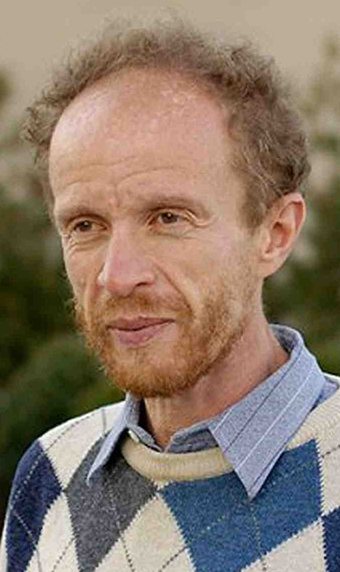 Eugene Koonin合作论文数National Center for Biotechnology Information, National Library of Medicine, National Institutes of Health2Toyoaki Tenzen合作论文数1J. Varkey合作论文数1chienhuan chen合作论文数1Yong Ma合作论文数1K Moses合作论文数1
 Jeffry Corden合作论文数Department of Molecular Biology and Genetics, School of Medicine, Johns Hopkins University1
 Marc V Fuccillo合作论文数Department of Microbiology, Perelman School of Medicine, University of Pennsylvania1
 Andrew McMahon合作论文数Division of Biology and Biological Engineering, Caltech1
 Amina S. Woods合作论文数National Institute on Drug Abuse, National Institutes of Health1
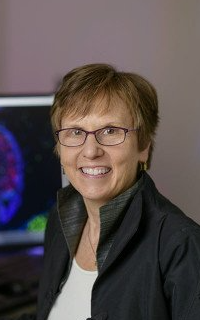 Alexandra Joyner合作论文数Memorial Sloan Kettering Cancer Center1
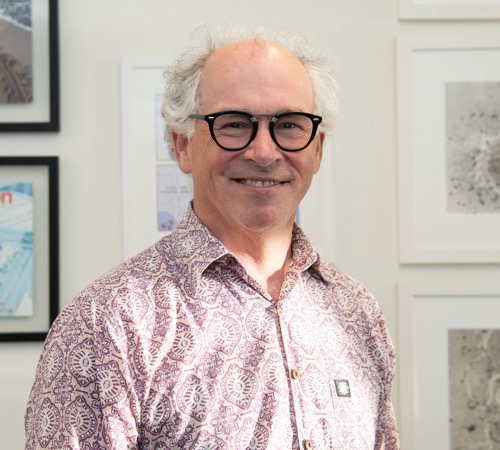 Gordon Fishell合作论文数Blavatnik Institute, Department of Neurobiology, Harvard Medical School1
 Philip Beachy合作论文数Department of Urology, School of Medicine, Stanford University1Heiner Westphal合作论文数National Institute of Child Health and Human Development, National Institutes of Health1Eric Lee合作论文数1
 Nipam Patel合作论文数The Marine Biological Laboratory, The University of Chicago;Department of Organismal Biology and Anatomy, The University of Chicago;Department of Molecular Genetics and Cell Biology, The University of Chicago1
 Ken D. Mccarthy合作论文数Department of Pharmacology, School of Medicine, University of North Carolina at Chapel Hill1
 Andreas H Kottmann合作论文数Department of Psychiatry and Genome Center, Columbia University1
 Robert J. Cotter合作论文数Johns Hopkins University School of Medicine1Kyle J. Vogan合作论文数1
 Clifford J. Tabin合作论文数Department of Genetics, Blavatnik Institute, Harvard Medical School1Doris P. Von Kessler合作论文数1
 Jin-Woo Park合作论文数Department of Anesthesiology and Pain Medicine, Seoul National University Bundang Hospital1




