Recent EMA and FDA approvals of Lu-DOTATATE and Lu-PSMA-617 have led to increased demand for radiotherapeutic ^177 Lu, due to its promising potential to treat castration-resistant neuroendocrine cancers. Conventional reactor production methods pose challenges related to cost, waste management, and local availability. In comparison, accelerators produce less waste, have lower maintenance costs, and can be directly integrated into hospital settings. In this study, we evaluate the production of radiotherapeutic ^177 Lu using a 10 mA, 18 MeV D^+ compact linear accelerator design. The design consists of a single radio-frequency quadrupole (RFQ) and seven drift tube linacs (DTLs) that achieve a beam efficiency of 98.5 12 m . Deuteron activations on a 99 ^176 Yb] Yb_2O_3 target are estimated using experimental and simulated excitation functions. A circular target with a radius of 1 cm and 0.36 mm thickness is selected to optimize the yield of ^177 Lu while minimizing the production of undesirable radioisotopes, including ^174g+m Lu and ^177m Lu. Model calculations indicate that the accelerator design can produce 11.3 μg of ^177 Lu per hour. A 5-day irradiation is expected to yield approximately 1.07 mg of ^177 Lu (4.4 TBq), while a 12-day irradiation can produce up to 1.9 mg (7.8 TBq). Following a 2-day processing period, the specific activity of the 5-day irradiated sample is projected to approach 0.6 TBq/mg, with a radiopurity of approximately 99.8 Yb_2O_3 target suggests it may be recycled and reused over multiple irradiations. The study confirms the feasibility of accelerator-based ^177 Lu production as an alternative to existing reactor-based methods. The 10 mA, 18 MeV D^+ RFQ-DTL design achieves an exceptionally high ^177 Lu radiopurity and a competitive overall yield, which can meet the dose requirements of thousands of patients.
Crossbar H-mode drift tube linear accelerator (CH-DTL) can be used to efficiently accelerate high-intensity, medium-energy charged particles. We have designed an accelerator system that uses seven CH-DTLs to accelerate deuteron beam of 10 mA to 17.9 MeV. The purpose of this accelerator is to produce the medical radioisotope Lutetium-177 (177Lu) through nuclear reactions. To expand the application range of this accelerator, facilitate user operations and save costs, we have developed a Python program called OPVEA to explore the possibility of variable energy design for the CH-DTL. We found that by changing the parameters, i.e. input phase and voltage factor of only the last cavity, the output energy of the beam can be continuously varied between 13.4 and 17.9 MeV. In this way, this accelerator system can also be applied to the production of radioactive isotopes such as 89Zr, 124I, and 186Re, and can be used as a high-flux neutron source. We have presented the working principle of OPVEA in the paper and verified its results with Tracewin and CST software, successfully proving the feasibility of variable energy design for the linear accelerator.
We use experimental and simulated excitation functions to estimate the yield of deuteron activations on a [^176Yb]Yb_2O_3 target enriched to 99 Subsequent calculations are used to determine the production of radiotherapeutic ^177Lu according to a 10 mA, 18 MeV D^+ compact linear accelerator. The design comprises a single radio-frequency quadrupole accelerator (RFQ) and seven drift tube linacs (DTLs) that achieve a beam efficiency of 99.5 5-day irradiation can yield more than 1 mg of ^177Lu, exceeding 4.4 TBq. After a 2 day processing period, it is estimated that the sample will have a radiopurity greater than 99.8 approvals of ^177Lu-DOTATATE and ^177Lu-PSMA-617, our results confirm the viability of accelerator-based ^177Lu production and provide a promising clinical alternative to reactor-based methods.
We use experimental and simulated excitation functions to estimate the yield of deuteron activations on a [$^{176}$Yb]Yb$_2$O$_3$ target enriched to 99%. Subsequent calculations are used to determine the production of radiotherapeutic $^{177}$Lu according to a 10 mA, 18 MeV $D^+$ compact linear accelerator. The design comprises a single radio-frequency quadrupole accelerator (RFQ) and seven drift tube linacs (DTLs) that achieve a beam efficiency of 99.5% over a length of $12\,\text{m}$. Our results show that a 5-day irradiation can yield more than $1$ mg of $^{177}$Lu, exceeding $4.4$ TBq. After a 2 day processing period, it is estimated that the sample will have a radiopurity greater than 99.8% (carrier-free). Given recent EMA and FDA approvals of $^{177}$Lu-DOTATATE and $^{177}$Lu-PSMA-617, our results confirm the viability of accelerator-based $^{177}$Lu production and provide a promising clinical alternative to reactor-based methods.
Abstract Background Recent EMA and FDA approvals of Lu-DOTATATE and Lu-PSMA-617 have led to increased demand for radiotherapeutic $$^{177}$$ 177 Lu, due to its promising potential to treat castration-resistant neuroendocrine cancers. Conventional reactor production methods pose challenges related to cost, waste management, and local availability. In comparison, accelerators produce less waste, have lower maintenance costs, and can be directly integrated into hospital settings. In this study, we evaluate the production of radiotherapeutic $$^{177}$$ 177 Lu using a 10 mA, 18 MeV $$D^+$$ D + compact linear accelerator design. The design consists of a single radio-frequency quadrupole (RFQ) and seven drift tube linacs (DTLs) that achieve a beam efficiency of 98.5% over a total length of $$12\,\text {m}$$ 12 m . Deuteron activations on a 99% enriched [ $$^{176}$$ 176 Yb] $$\hbox {Yb}_2\hbox {O}_3$$ Yb 2 O 3 target are estimated using experimental and simulated excitation functions. Results A circular target with a radius of 1 cm and 0.36 mm thickness is selected to optimize the yield of $$^{177}$$ 177 Lu while minimizing the production of undesirable radioisotopes, including $$^{174g+m}$$ 174 g + m Lu and $$^{177m}$$ 177 m Lu. Model calculations indicate that the accelerator design can produce 11.3 μg of $$^{177}$$ 177 Lu per hour. A 5-day irradiation is expected to yield approximately 1.07 mg of $$^{177}$$ 177 Lu (4.4 TBq), while a 12-day irradiation can produce up to 1.9 mg (7.8 TBq). Following a 2-day processing period, the specific activity of the 5-day irradiated sample is projected to approach 0.6 TBq/mg, with a radiopurity of approximately 99.8%. The minimal burn-up of the $$\hbox {Yb}_2\hbox {O}_3$$ Yb 2 O 3 target suggests it may be recycled and reused over multiple irradiations. Conclusions The study confirms the feasibility of accelerator-based $$^{177}$$ 177 Lu production as an alternative to existing reactor-based methods. The 10 mA, 18 MeV $$D^+$$ D + RFQ-DTL design achieves an exceptionally high $$^{177}$$ 177 Lu radiopurity and a competitive overall yield, which can meet the dose requirements of thousands of patients.
The coupled structure with ladder radio-frequency quadrupole (RFQ) and interdigital H-type drift tube linac (IH DTL) has been proposed to accelerate the proton beam to several MeV with high acceleration gradient and one RF feed-in system. A ladder RFQ-IH DTL coupled structure was designed to accelerate a proton beam 2.5 MeV with a peak current of 15 mA. Detailed dynamics optimization and error study were performed to achieve high transmission efficiency and small emittance growth, including ladder RFQ, coupling section and IH DTL section. The Kombinierte Null Grad Struktur (KONUS) dynamics scheme with two quadrupole doublets (QDs) was adopted in the IH-DTL section. Start-to-end beam tracking results showed that the proton beam can be accelerated to the final energy with a length of 2.11 m and a transmission efficiency above 98.5%. In addition, we performed error sensitivity analysis and the combined error study to evaluate the error tolerance limits of the ladder RFQ-IH DTL coupled structure.
Based on the design requirements proposed by the Beijing On-Line Isotope Separation project (BISOL), four Sn$^{22+}$-based,81.25MHz continuous wave (CW) drift tube linac (DTL) cavities have been designed. These DTLs are capable of accelerating Sn$^{22+}$ of 0.1 pmA from 0.5 MeV/u to 1.8 MeV/u over a length of 7 m, with an output longitudinal normalized RMS emittance of 0.35$\pi \cdot$ mm$\cdot$mrad, and transmission efficiency higher than 95%. The dynamics design adopted the KONUS (Kombinierte Null Grad Struktur Combined $0^\circ$ Structure) scheme. Comprehensive error study implies that these DTLs can accommodate a wide range of non-ideal beams and cavity alignment errors while maintaining high transmission efficiency. The electromagnetic design employed a Cross-bar H-mode (CH) structure for superior water-cooling characteristics, and a detailed tuning analysis was conducted to derive an optimal tuning scheme. The results of the multiple-physics analysis indicate that the frequency shift of each cavity is within an acceptable range. Comparing the dynamics requirements with the RF design results, similar particle output phase distribution, equivalent energy gain and consistent emittance growth are observed. Detailed designs will be presented in this manuscript.
The paper concerns a room-temperature cross-bar H-mode (CH) drift tube linac (DTL) with KONUS (Kombinierte Null Grad Struktur) [1,2] beam dynamics. To make the acceleration in DTL cell more efficient, we studied the correlation between transit time factor (TTF) and structural coefficients, first. Furthermore, we developed a new code with Python to demonstrate the longitudinal dynamics more clearly. The code computationally generates clusters, bunch centers, and emittance growth in a single figure. Thus, the stabilization region and cluster evolution at various negative phases can be studied. Based on the above studies, we designed a 162.5 MHz CH-DTL to accelerate 10 mA D+ from 2.11 MeV to 3.25 MeV in continuous-wave (CW) mode. The proposed CH-DTL is a part of the Middle Energy Neutron Source (MENS). The dynamics and RF design were iterated to make the gap voltage error lower than 1 %. The initial beam is assumed to come from a Radio Frequency Quadrupole accelerator (RFQ). The geometries of the CH-DTL are optimized by using CST. Multiparticle tracking from LEBT to RFQ is performed with TraceWin and the transmission efficiency in the CH-DTL is 100 %.
The coupled ladder RFQ-IH DTL structure is designed for transportable accelerator-based neutron source to accelerate the proton beam to 2.5 MeV with a peak current of 15 mA. The Kombinierte Null Grad Struktur (KONUS) dynamics scheme is chosen in the IH-DTL section to obtain compact structure, high transmission efficiency and small emittance growth. Three KONUS periods, including two quadrupole doublets are housed in the IH-DTL section. The field distribution of coupled structure is studied and the evaluation of the coupled field is quantified. The optimization voltage ratio and electric flatness are carried out based on three-dimension full model. In addition, the structure error analysis is performed to evaluate the acceptance of different errors. The tuning system is designed to compensate the machining and alignment errors and the field tuning strategy is proposed for the coupled cavity. The RF electromagnetic design and optimization, structure error analysis and field tuning will be comprehensively presented in this paper.
We report on 6Li neutron capture therapy (LiNCT) in anticipation of using carbon nanoparticles to deliver targeted, high linear energy transfer radiation to non-resectable tumors. Our investigations show that, compared with existing 10B neutron capture therapy (BNCT), 6Li offers similar dose potential for equal mass density (DLi∼DB when mLi=mB), for capture products that span 7 times more range and approximately three cell lengths. Consequently, 6Li-filled nanoparticles dispersed more than half-a-cell-length apart, better convey high doses and ultra-high dose-rates, as LiNCT generates substantially less γ-rays and becomes more targeted than BNCT. To this end, we propose a neutron production scheme involving laser-plasma driven protons incident on various 7Li targets, capable of producing >109 n/sr/pulse. For high repetition frequency, efficient neutron moderation, and ideal 6Li concentration, the modality offers greater precision than existing neutron capture therapy.
Superconducting (SC) radio-frequency quadrupoles (RFQs) have exhibited outstanding performance in transmitting and accelerating high-current continuous-wave (CW) ion beams. They can complete beam acceleration at a much higher gradient and with much lower power consumption compared with normal conducting (NC) RFQs. In this study, we introduce a novel SC RFQ scheme operating at 162.5 MHz to accelerate 10 mA proton beams from 30 keV to 2.5 MeV. It will be used as a crucial component for a neutron source dedicated to Boron Neutron Capture Therapy (BNCT) and neutron imaging projects. For efficient transmission of proton beams, we selected a relatively high inter-vane voltage of 240 kV, and the beam dynamics design yielded satisfactory results. Subsequently, RF design and multi-physics analysis were carried out to validate the reliability of the design. A 30-centimeter-long cavity was specifically designed for the vertical test and allowed for a thorough evaluation of the performance of the SC RFQ after post-treatments. Additionally, the tuning design of the 30 cm cavity was also carried out.
A transportable accelerator-driven neutron source is under development in Xi'an Jiaotong University (X-TANS), aiming at realizing various outdoor applications, such as on-site degradation diagnosis of concrete infrastructures and analysis of raw materials. To downsize the accelerator cavity for X-TANS, we coupled the Ladder RFQ and an Interdigital H-type Drift tube linac (IH-DTL) into a single cavity to combine the strength of the RFQ's efficient bunching efficiency and DTL's high accelerating gradient and to distantly reduce the weight and size of the linac. To achieve electromagnetic resonance between two structures and a high coupling factor, a novel coupled structure was adopted by adjusting the last supporting plate at the exit of RFQ. The mode separation between 0mode and & pi;-mode was expanded to 7.96 MHz. Consequently, the 15 mA proton beam can be accelerated to 2.5 MeV with a length of 1.73 m and the effective transmission of above 90%. The dissipated cavity power was 96.87 kW with an operation frequency of 200 MHz and a duty factor of 3%. The design concept of the coupled structure and the results of the beam dynamics design, electromagnetic simulation and multi-physics will be comprehensively presented in this paper.
The Accelerator-based Boron Neutron Capture Therapy (AB-BNCT) is being established worldwide as a future modality to start an era of in-hospital facilities. The most popular reaction for AB-BNCT is 7 Li(p, n) 7 Be and high-flux neutron beams can be produced by bombarding lithium targets with low-energy proton beams. We chose the combined acceleration structure of Radio Frequency Quadrupole linac (RFQ) and Cross-bar H-mode DTL (CH-DTL) considering the compactness of the structure and the adjustment of output energy. The CW proton beam could be accelerated to 1.8 MeV by one RFQ cavity, and then to the final energy by one CH-DTL cavity. The output beam energy can be adjusted in the range of 2.2 MeV to 3.0 MeV with small beam loss and high beam quality, which could be achieved by controlling the feed power and RF phase of the CH-DTL. The variation of beam energy can meet requirements of the BNCT in treating tumors of different depths without adjusting structure of beam shaping assembly (BSA). The beam dynamics of the RFQ and DTL were completed to meet all requirements and the energy stability and adjustment method of output beam were investigated. In addition, we also performed the start-to-end beam tracking and error sensitivity analysis at last.
The radio frequency quadrupole (RFQ) accelerator is a common linear accelerator placed directly after the ion source for low energy ion acceleration. In 1994 and 1999, the RFQ research group of Peking University, led by Academician Chen Jiaer, first proposed and developed the heavy ion integral split ring (ISR) 300 keV N+ and 1 MeV O+ RFQ accelerators. Because of the simultaneous transverse focusing and longitudinal bunching in a cavity, an RFQ accelerator is considered to be the most suitable linear accelerator for the acceleration of low energy and high current beams. However, a long RFQ cavity will decrease the efficiency of RF power. To improve the acceleration efficiency of ions, separated-function radio frequency quadrupole (SFRFQ) was proposed for the first time, and the prototype of the structure was developed and the beam experiments were completed. A new idea of accelerating positive and negative ions simultaneously using RFQ accelerators was proposed for the first time. The process of beam bunching and acceleration of positive and negative ions was simulated and the microscopic beam waveforms of positive and negative oxygen ions were observed successfully with a coaxial fast Faraday cup. Beam experiments were completed on two existing RFQ accelerators. The equipartitioned design scheme of RFQ is developed, and the first neutron imaging facility based on RFQ (Peking University Neutron Imaging Facility, PKUNIFTY) is developed in China. The four-rod D+ RFQ accelerator is the one with the highest frequency in the world so far. In cooperation with the Institute of High Energy Physics of the Chinese Academy of Sciences and the China Institute of Atomic Energy, the 352 MHz proton RFQ model cavity was developed, which effectively boosted the development of China's first proton ADS RFQ accelerator, and won the Beijing Science and Technology Achievement Award in 2008. Peking University and Institute of Modern Physics of the Chinese Academy of Sciences have designed and built a high charge state heavy ion U-238(34+) CW RFQ accelerator, which has successfully accelerated many kinds of heavy ion beams and has been in stable operation for 8 years. In cooperation with Institute of Modern Physics of the Chinese Academy of Sciences, the world's first 162.5 MHz window-type RFQ accelerator was developed, and the CW H-2(+) current intensity was successfully accelerated to 1.95 mA, and the transmission efficiency was 90%. In cooperation with Southwestern Institute of Physics, a 162.5 MHz D+ four-vane RFQ accelerator was designed and tested, beam experiments on the RFQ accelerator indicated that the maximum accelerated beam current could reach 10 mA with a duty factor of 1%. The development direction of RFQ accelerators in the future is the high power accelerators with high current intensity and high duty factor. The above work lays a good foundation for the development of high power RFQ accelerators. High current continuous wave radio quadrupole accelerator (CW RFQ) is widely used as an injector in many big science projects, such as accelerator driven sub-critical clean nuclear energy system (ADS), isotope separation online analysis, International Fusion Materials Irradiation Facility (IFMIF). The most common component of accelerating the low energy segment is also widely used as an independent accelerator application device, it has a very broad application prospect in neutron imaging, boron neutron capture for cancer treatment (BNCT) and other fields.
This paper presents the design of a high-intensity 10 mA deuteron RFQ accelerator that generates a 2.1 MeV beam in a continuous wave (CW) mode. The operation frequency is 162.5 MHz. The results of beam dynamics simulations demonstrate excellent output beam quality, achieving a transmission efficiency of 98.63%. The beam tracking results indicate that the RFQ is capable of managing errors within reasonable tolerances. In addition, the RF electromagnetic design and optimization are based on an RFQ model. Multiphysics simulations are then performed for the CW mode. Vacuum calculations suggest that the RFQ requires four 1200 L/s vacuum pumps and one 440 L/s ion pump to attain a vacuum pressure of 10−6 Pa.
The Compact Laser Plasma Accelerator (CLAPA-I) is a laser accelerator device comprised of a 200-TW laser system, an optical path transmission system, a target field system, a proton beamline system, an experimental terminal, and a control system, among other components. Its main application is in fundamental research, focusing on areas like the laser plasma acceleration mechanism and ion irradiation applications. This article delves into the upgrade process of the control system for laser accelerators. Initially, building on the foundation of the CLAPA-I system, we developed a distributed control system employing the Experimental Physics and Industrial Control System (EPICS) control architecture, enhanced by programmable logic controller (PLC), LabVIEW, and Python. This integration allowed for a unified equipment interface capable of managing complex logic. Furthermore, this article distinguishes between the operational and control aspects of laser accelerators and their traditional counterparts, offering appropriate solutions. A reasonable and effective electromagnetic shielding scheme was proposed to counter the pronounced magnetic interference encountered during laser-target interactions. This advancement not only boosts the CLAPA-I control system's performance but also broadens the applicability of EPICS in the laser accelerator domain, shedding light on the practical deployment of EPICS-based control systems.
Understanding moisture transport is an important step in the study of the durability of cement-based materials. A neutron imaging detection method for water transport in cement-based materials, based on a compact neutron source is provided. We visualize the moisture transport and obtain the capillarity coefficients for different cement-based materials using PKUNIFTY.
In order to figure out the migration and deposition of impurities on the first wall of HL-2A/2M tokamak, Peking University and Southwestern Institute of Physics are co-developing a deuteron RFQ as part of the in situ ion-beam diagnostic for the material. The RFQ, which operates at 162.5 MHz, is designed to accelerate a 10-mA deuteron beam from 40 keV up to 1.5 MeV. Key design considerations and the final design parameters are presented. The RFQ has been conditioned at a 1% duty factor for 80 h at RF cavity power of 55 kW. The specific shunt impedance of the cavity is 221 kΩ·m by measuring the bremsstrahlung spectrum. The intrinsic Q-value after the high-power tests measured by the Ring-Down method is 13,780. Beam commissioning has been taken place during the first half of 2021, and the beam measurements include beam current and energy of 2H+ ion. A 10 mA 2H+ beam was successfully accelerated through the RFQ.
Peking University and Southwestern Institute of Physics are jointly developing a new deuteron RFQ to study the migration and deposition of impurities on the first wall of a tokamak facility. This RFQ will accelerate a 10-mA deuteron beam from 40 keV up to 1.5 MeV at a duty factor of 1%. In this paper, the detailed design of the prototype control system based on a Siemens PLC and EPICS/CSS software environment for the RFQ accelerator is presented. The system is composed by many kinds of sub-systems developed using different hardware solutions. The interlock protection mechanism is introduced into the control system. The EPICS Archiver Appliance is used to provide the service of data archiving and retrieval. The system has been successfully implemented for RF conditioning and beam commissioning.
 Zhiyu Guo (郭之虞)合作论文数School of Physics, Peking University98
 Xueqing Yan (颜学庆)合作论文数Compact Laser Plasma Accelerator Laboratory, School of Physics, Peking University;State Key Laboratory of Nuclear Physics and Technology, Peking University;Center for Applied Physics and Technology, College of Engineering, Peking University95
 Kun Zhu (朱昆)合作论文数Institute of Heavy Ion Physics, School of Physics, Peking University90
 Zhi Wang (王智)合作论文数School of Physics, Peking University67
 Jiaer Chen (陈佳洱)合作论文数School of Physics, Peking University;Chinese Academy of Sciences;University of Chinese Academy of Sciences57
 Shixiang Peng (彭士香)合作论文数Institute of Heavy lon Physics, School of Physics, Peking University30
 Yuan He (何源)合作论文数Institute of Modern Physics, Chinese Academy of Sciences;University of Chinese Academy of Sciences27
 Jiaxun Fang合作论文数26Yubin Zou (邹宇斌)合作论文数Institute of Heavy Ion Physics, Peking University25Jx Fang合作论文数23J. E. Chen合作论文数23Sl Gao合作论文数17Qi Fu合作论文数17C. E. Chen合作论文数16Pingping Gan合作论文数16
 Jiawen Xia (夏佳文)合作论文数Institute of Modern Physics, Chinese Academy of Sciences;University of Chinese Academy of Sciences16
 Youjin Yuan (原有进)合作论文数Institute of Modern Physics, Chinese Academy of Sciences15
 Xuejun Yin (殷学军)合作论文数Institute of Modern Physics, Chinese Academy of Sciences;University of Chinese Academy of Sciences15
 Chen Lin (林晨)合作论文数Institute of Heavy Ion Physics, School of Physics, Peking University15H. P. Li合作论文数14
 Haipeng Li合作论文数13
 Minglei Kang合作论文数New York Proton Center13
 John Easton合作论文数School of Engineering, College of Engineering and Physical Sciences, University of Birmingham13
 Shuli Gao (高书丽)合作论文数Business College of Beijing Union University13li hang合作论文数11Jie Zhao合作论文数10Ge Liu合作论文数10
 Yaqing Yang (杨雅清)合作论文数Institute of Modern Physics, Chinese Academy of Sciences10
 Haitao Ren (任海涛)合作论文数Michigan State University10
 Hongwei Zhao (赵红卫)合作论文数Institute of Modern Physics, Chinese Academy of Sciences;University of Chinese Academy of Sciences10Guoyou Tang合作论文数10Meiyun Han合作论文数9Qiuyun Tan合作论文数9
 Yueqiu Tan (谭跃球)合作论文数Xiangya School of Basic Medical Sciences, Central South University9Weiwei Wen合作论文数9
 Zhijun Wang (王志军)合作论文数University of Chinese Academy of Sciences;Institute of Modern Physics, Chinese Academy of Sciences8Wang Sheng合作论文数8Tianhao Wei合作论文数8Heng Du合作论文数8JuFang Guo (郭菊芳)合作论文数8
 Junxia Wu (武军霞)合作论文数Institute of Modern Physics, Chinese Academy of Sciences8
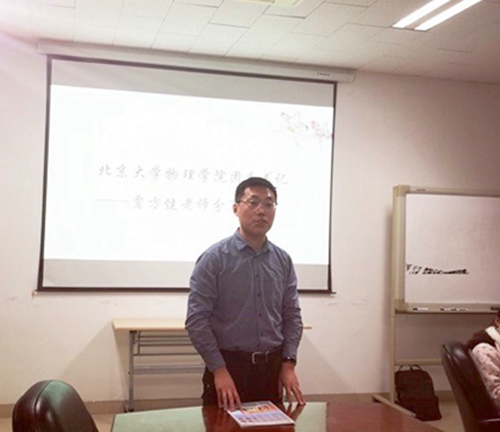 Fangjian Jia (贾方健)合作论文数School of Physics,Peking University8
 Xiaoni Li (李小妮)合作论文数Institute of Modern Physics, Chinese Academy of Sciences;University of Chinese Academy of Sciences8Jeffrey Xu Yu合作论文数8Shu Gao合作论文数7Hu Wang合作论文数7WeiGuo Li (李纬国)合作论文数7




