While text-to-video generation shows state-of-the-art results, fine-grained output control remains challenging for users relying solely on natural language prompts. In this work, we present FACTOR for fine-grained controllable video generation. FACTOR provides an intuitive interface where users can manipulate the trajectory and appearance of individual objects in conjunction with a text prompt. We propose a unified framework to integrate these control signals into an existing text-to-video model. Our approach involves a multimodal condition module with a joint encoder, control-attention layers, and an appearance augmentation mechanism. This design enables FACTOR to generate videos that closely align with detailed user specifications. Extensive experiments on standard benchmarks and user-provided inputs demonstrate a notable improvement in controllability by FACTOR over competitive baselines.
Generative models have made significant impacts across various domains, largely due to their ability to scale during training by increasing data, computational resources, and model size, a phenomenon characterized by the scaling laws. Recent research has begun to explore inference-time scaling behavior in Large Language Models (LLMs), revealing how performance can further improve with additional computation during inference. Unlike LLMs, diffusion models inherently possess the flexibility to adjust inference-time computation via the number of denoising steps, although the performance gains typically flatten after a few dozen. In this work, we explore the inference-time scaling behavior of diffusion models beyond increasing denoising steps and investigate how the generation performance can further improve with increased computation. Specifically, we consider a search problem aimed at identifying better noises for the diffusion sampling process. We structure the design space along two axes: the verifiers used to provide feedback, and the algorithms used to find better noise candidates. Through extensive experiments on class-conditioned and text-conditioned image generation benchmarks, our findings reveal that increasing inference-time compute leads to substantial improvements in the quality of samples generated by diffusion models, and with the complicated nature of images, combinations of the components in the framework can be specifically chosen to conform with different application scenario.
Generative models have made significant impacts across various domains, largely due to their ability to scale during training by increasing data, computational resources, and model size, a phenomenon characterized by the scaling laws. Recent research has begun to explore inference-time scaling behavior in Large Language Models (LLMs), revealing how performance can further improve with additional computation during inference. Unlike LLMs, diffusion models inherently possess the flexibility to adjust inference-time computation via the number of denoising steps, although the performance gains typically flatten after a few dozen. In this work, we explore the inference-time scaling behavior of diffusion models beyond increasing denoising steps and investigate how the generation performance can further improve with increased computation. Specifically, we consider a search problem aimed at identifying better noises for the diffusion sampling process. We structure the design space along two axes: the verifiers used to provide feedback, and the algorithms used to find better noise candidates. Through extensive experiments on class-conditioned and text-conditioned image generation benchmarks, our findings reveal that increasing inference-time compute leads to substantial improvements in the quality of samples generated by diffusion models, and with the complicated nature of images, combinations of the components in the framework can be specifically chosen to conform with different application scenario.
We tackle the challenge of generating long-take videos encompassing multiple non-repetitive yet coherent events. Existing approaches generate long videos conditioned on single input guidance, often leading to repetitive content. To address this problem, we develop a framework that uses multiple guidance sources to enhance long video generation. The main idea of our approach is to decouple video generation into keyframe generation and frame interpolation. In this process, keyframe generation focuses on cre-ating multiple coherent events, while the frame interpolation stage generates smooth intermediate frames between keyframes using existing video generation models. A novel mask attention module is further introduced to improve co-herence and efficiency. Experiments on challenging real-world videos demonstrate that the proposed method outper-forms prior methods by up to 9.5% in objective metrics.
Training diffusion models for audiovisual sequences allows for a range of generation tasks by learning conditional distributions of various input-output combinations of the two modalities. Nevertheless, this strategy often requires training a separate model for each task which is expensive. Here, we propose a novel training approach to effectively learn arbitrary conditional distributions in the audiovisual space. Our key contribution lies in how we parameterize the diffusion timestep in the forward diffusion process. Instead of the standard fixed diffusion timestep, we propose applying variable diffusion timesteps across the temporal dimension and across modalities of the inputs. This formulation offers flexibility to introduce variable noise levels for various portions of the input, hence the term mixture of noise levels. We propose a transformer-based audiovisual latent diffusion model and show that it can be trained in a task-agnostic fashion using our approach to enable a variety of audiovisual generation tasks at inference time. Experiments demonstrate the versatility of our method in tackling cross-modal and multimodal interpolation tasks in the audiovisual space. Notably, our proposed approach surpasses baselines in generating temporally and perceptually consistent samples conditioned on the input. Project page: neurips13025.github.io
This paper presents instruct-imagen, a model that tackles heterogeneous image generation tasks and generalizes across unseen tasks. We introduce *multi-modal instruction* for image generation, a task representation articulating a range of generation intents with precision. It uses natural language to amalgamate disparate modalities (e.g., text, edge, style, subject, etc.), such that abundant generation intents can be standardized in a uniform format. We then build instruct-imagen by fine-tuning a pre-trained text-to-image diffusion model with a two-stage framework. First, we adapt the model using the retrieval-augmented training, to enhance model's capabilities to ground its generation on external multimodal context. Subsequently, we fine-tune the adapted model on diverse image generation tasks that requires vision-language understanding (e.g., subject-driven generation, etc.), each paired with a multi-modal instruction encapsulating the task's essence. Human evaluation on various image generation datasets reveals that instruct-imagen matches or surpasses prior task-specific models in-domain and demonstrates promising generalization to unseen and more complex tasks.
This work tackles the challenge of generating long videos, which entails producing videos that surpass the output length of video generation models. Due to computational constraints, video generation models are restricted to generating relatively short video clips compared to the length of real-world videos. Existing approaches employ a sliding window technique to generate long videos during inference, but this method is often restricted to homogeneous content and recurring events. To generate long videos that encompass diverse content and multiple events, we propose utilizing additional guidance to steer the video generation process. We further introduce a multi-stage approach to address this challenge, enabling us to leverage existing video generation models to produce high-quality videos within a limited time window while holistically modeling the long video based on the provided guidance. Our method complements existing video generation efforts. Extensive experiments on challenging real-world videos demonstrate the advantages of the proposed method, which outperforms the state-of-the-art by up to 9.5\% in objective metrics and is preferred by users over 80\% of the time. The source code and trained models will be released to the public.
Recent advances in text-to-image generation have improved the quality of synthesized images, but evaluations mainly focus on aesthetics or alignment with text prompts. Thus, it remains unclear whether these models can accurately represent a wide variety of realistic visual entities. To bridge this gap, we propose KITTEN, a benchmark for Knowledge-InTensive image generaTion on real-world ENtities. Using KITTEN, we conduct a systematic study of the latest text-to-image models and retrieval-augmented models, focusing on their ability to generate real-world visual entities, such as landmarks and animals. Analysis using carefully designed human evaluations, automatic metrics, and MLLM evaluations show that even advanced text-to-image models fail to generate accurate visual details of entities. While retrieval-augmented models improve entity fidelity by incorporating reference images, they tend to over-rely on them and struggle to create novel configurations of the entity in creative text prompts.
This paper proposes a method for generating images of customized objects specified by users. The method is based on a general framework that bypasses the lengthy optimization required by previous approaches, which often employ a per-object optimization paradigm. Our framework adopts an encoder to capture high-level identifiable semantics of objects, producing an object-specific embedding with only a single feed-forward pass. The acquired object embedding is then passed to a text-to-image synthesis model for subsequent generation. To effectively blend a object-aware embedding space into a well developed text-to-image model under the same generation context, we investigate different network designs and training strategies, and propose a simple yet effective regularized joint training scheme with an object identity preservation loss. Additionally, we propose a caption generation scheme that become a critical piece in fostering object specific embedding faithfully reflected into the generation process, while keeping control and editing abilities. Once trained, the network is able to produce diverse content and styles, conditioned on both texts and objects. We demonstrate through experiments that our proposed method is able to synthesize images with compelling output quality, appearance diversity, and object fidelity, without the need of test-time optimization. Systematic studies are also conducted to analyze our models, providing insights for future work.
Many applications can benefit from personalized image generation models, including image enhancement, video conferences, just to name a few. Existing works achieved personalization by fine-tuning one model for each person. While being successful, this approach incurs additional computation and storage overhead for each new identity. Furthermore, it usually expects tens or hundreds of examples per identity to achieve the best performance. To overcome these challenges, we propose an encoder-based approach for personalization. We learn an identity encoder which can extract an identity representation from a set of reference images of a subject, together with a diffusion generator that can generate new images of the subject conditioned on the identity representation. Once being trained, the model can be used to generate images of arbitrary identities given a few examples even if the model hasn't been trained on the identity. Our approach greatly reduces the overhead for personalized image generation and is more applicable in many potential applications. Empirical results show that our approach consistently outperforms existing fine-tuning based approach in both image generation and reconstruction, and the outputs is preferred by users more than 95% of the time compared with the best performing baseline.
An authentic face restoration system is becoming increasingly demanding in many computer vision applications, e.g., image enhancement, video communication, and taking portrait. Most of the advanced face restoration models can recover high-quality faces from low-quality ones but usually fail to faithfully generate realistic and high-frequency details that are favored by users. To achieve authentic restoration, we propose IDM, an Iteratively learned face restoration system based on denoising Diffusion Models (DDMs). We define the criterion of an authentic face restoration system, and argue that denoising diffusion models are naturally endowed with this property from two aspects: intrinsic iterative refinement and extrinsic iterative enhancement. Intrinsic learning can preserve the content well and gradually refine the high-quality details, while extrinsic enhancement helps clean the data and improve the restoration task one step further. We demonstrate superior performance on blind face restoration tasks. Beyond restoration, we find the authentically cleaned data by the proposed restoration system is also helpful to image generation tasks in terms of training stabilization and sample quality. Without modifying the models, we achieve better quality than state-of-the-art on FFHQ and ImageNet generation using either GANs or diffusion models.
The one-shot talking-head synthesis task aims to animate a source image to another pose and expression, which is dictated by a driving frame. Recent methods rely on warping the appearance feature extracted from the source, by using motion fields estimated from the sparse keypoints, that are learned in an unsupervised manner. Due to their lightweight formulation, they are suitable for video conferencing with reduced bandwidth. However, based on our study, current methods suffer from two major limitations: 1) unsatisfactory generation quality in the case of large head poses and the existence of observable pose misalignment between the source and the first frame in driving videos. 2) fail to capture fine yet critical face motion details due to the lack of semantic understanding and appropriate face geometry regularization. To address these shortcomings, we propose a novel method that leverages the rich face prior information, the proposed model can generate face videos with improved semantic consistency (improve baseline by $7\%$ in average keypoint distance) and expression-preserving (outperform baseline by $15 \%$ in average emotion embedding distance) under equivalent bandwidth. Additionally, incorporating such prior information provides us with a convenient interface to achieve highly controllable generation in terms of both pose and expression.
An authentic face restoration system is becoming increasingly demanding in many computer vision applications, e.g., image enhancement, video communication, and taking portrait. Most of the advanced face restoration models can recover high-quality faces from low-quality ones but usually fail to faithfully generate realistic and high-frequency details that are favored by users. To achieve authentic restoration, we propose $\textbf{IDM}$, an $\textbf{I}$teratively learned face restoration system based on denoising $\textbf{D}$iffusion $\textbf{M}$odels (DDMs). We define the criterion of an authentic face restoration system, and argue that denoising diffusion models are naturally endowed with this property from two aspects: intrinsic iterative refinement and extrinsic iterative enhancement. Intrinsic learning can preserve the content well and gradually refine the high-quality details, while extrinsic enhancement helps clean the data and improve the restoration task one step further. We demonstrate superior performance on blind face restoration tasks. Beyond restoration, we find the authentically cleaned data by the proposed restoration system is also helpful to image generation tasks in terms of training stabilization and sample quality. Without modifying the models, we achieve better quality than state-of-the-art on FFHQ and ImageNet generation using either GANs or diffusion models.
We tackle the long video generation problem, i.e.~generating videos beyond the output length of video generation models. Due to the computation resource constraints, video generation models can only generate video clips that are relatively short compared with the length of real videos. Existing works apply a sliding window approach to generate long videos at inference time, which is often limited to generating recurrent events or homogeneous content. To generate long videos covering diverse content and multiple events, we propose to use additional guidance to control the video generation process. We further present a two-stage approach to the problem, which allows us to utilize existing video generation models to generate high-quality videos within a small time window while modeling the video holistically based on the input guidance. The proposed approach is complementary to existing efforts on video generation, which focus on generating realistic video within a fixed time window. Extensive experiments on challenging real-world videos validate the benefit of the proposed method, which improves over state-of-the-art by up to 9.5% in objective metrics and is preferred by users more than 80% of time.
A model that can authentically restore a low-quality face image to a high-quality one can benefit many applications. While existing approaches for face restoration make significant progress in generating high-quality faces, they often fail to preserve facial features that compromise the authenticity of reconstructed faces. Because the human visual system is very sensitive to faces, even minor changes may significantly degrade the perceptual quality. In this work, we argue that the problems of existing models can be traced down to the two sub-tasks of the face restoration problem, i.e. face generation and face reconstruction, and the fragile balance between them. Based on the observation, we propose a new face restoration model that improves both generation and reconstruction. Besides the model improvement, we also introduce a new evaluation metric for measuring models' ability to preserve the identity in the restored faces. Extensive experiments demonstrate that our model achieves state-of-the-art performance on multiple face restoration benchmarks, and the proposed metric has a higher correlation with user preference. The user study shows that our model produces higher quality faces while better preserving the identity 86.4% of the time compared with state-of-the-art methods.
This work presents a UV-polymerization scheme that forms 3D semipermeable structures with high water permeability and selectivity. Photoresins based on bisphenol A ethoxylate diacrylate (BPA-EDA) are UV cured using DLP (Digital Light Processing) based projection stereolithography processes. More specifically, highly permeable hydrogel diaphragms supported by rigid frames are utilized to realize rapid osmotic pumping. The demonstrated semipermeable diaphragms can achieve high water crossing velocity up to 2 μm/s and sustain pressure up to 15 kPa. As such, they can function as portable flow driving sources to power a variety of microfluidic chips.
Visual 2.5D perception involves understanding the semantics and geometry of a scene through reasoning about object relationships with respect to the viewer. However, existing works in visual recognition primarily focus on the semantics. To bridge this gap, we study 2.5D visual relationship detection (2.5VRD), in which the goal is to jointly detect objects and predict their relative depth and occlusion relationships. Unlike general VRD, 2.5VRD is egocentric, using the camera's viewpoint as a common reference for all 2.5D relationships. Unlike depth estimation, 2.5VRD is object-centric and does not only focus on depth. To enable progress on this task, we construct a new dataset consisting of 220K human-annotated 2.5D relationships among 512K objects from 11K images. We analyze this dataset and conduct extensive experiments including benchmarking multiple state-of-the-art VRD models on this task. Experimental results show that existing models largely rely on semantic cues and simple heuristics to solve 2.5VRD, motivating further research on models for 2.5D perception. We will make our dataset and source code publicly available.
This article summarizes technical advances contained in the fifth major release of the Q-Chem quantum chemistry program package, covering developments since 2015. A comprehensive library of exchange-correlation functionals, along with a suite of correlated many-body methods, continues to be a hallmark of the Q-Chem software. The many-body methods include novel variants of both coupled-cluster and configuration-interaction approaches along with methods based on the algebraic diagrammatic construction and variational reduced density-matrix methods. Methods highlighted in Q-Chem 5 include a suite of tools for modeling core-level spectroscopy, methods for describing metastable resonances, methods for computing vibronic spectra, the nuclear-electronic orbital method, and several different energy decomposition analysis techniques. High-performance capabilities including multithreaded parallelism and support for calculations on graphics processing units are described. Q-Chem boasts a community of well over 100 active academic developers, and the continuing evolution of the software is supported by an "open teamware" model and an increasingly modular design.
Image composition plays an important role in the quality of a photo. However, not every camera user possesses the knowledge and expertise required for capturing well-composed photos. While post-capture cropping can improve the composition sometimes, it does not work in many common scenarios in which the photographer needs to adjust the camera view to capture the best shot. To address this issue, we propose a deep learning-based approach that provides suggestions to the photographer on how to adjust the camera view before capturing. By optimizing the composition before a photo is captured, our system helps photographers to capture better photos. As there is no publicly-available dataset for this task, we create a view adjustment dataset by repurposing existing image cropping datasets. Furthermore, we propose a two-stage semi-supervised approach that utilizes both labeled and unlabeled images for training a view adjustment model. Experiment results show that the proposed semi-supervised approach outperforms the corresponding supervised alternatives, and our user study results show that the suggested view adjustment improves image composition 79% of the time.
 Xuhui Jia合作论文数Google DeepMind11
 Winston H. Hsu (徐宏民)合作论文数Department of Computer Science and Information Engineering, College of Electrical Engineering & Computer Science, National Taiwan University;MobileDrive Netherlands B.V.;Thingnario10
 Fan-Tien Cheng合作论文数national cheng kung university7
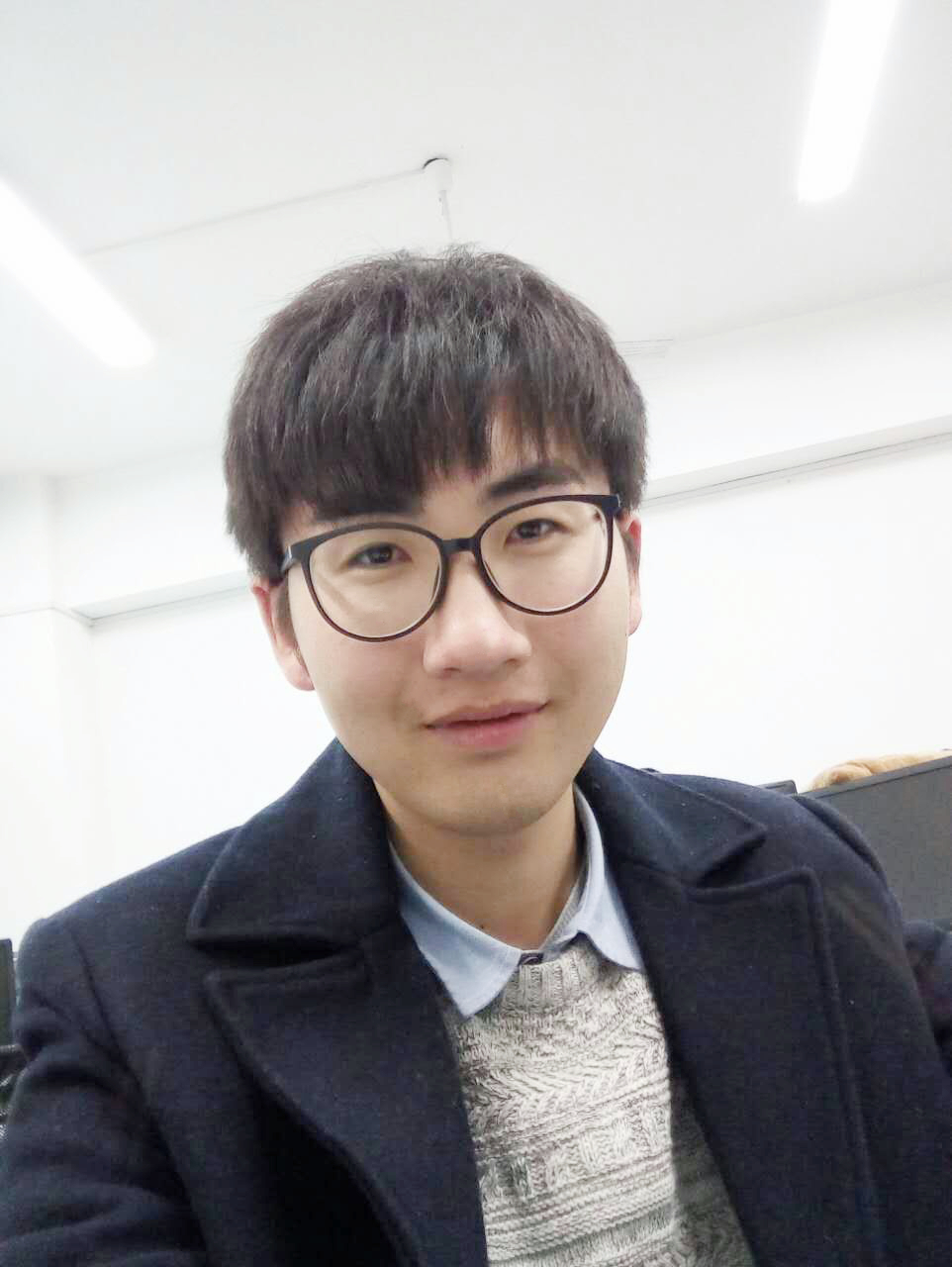 Yandong Li (李延东)合作论文数Google DeepMind7
 Ming-Hsuan Yang合作论文数Vision and Learning Lab, University of California, Merced;Google DeepMind7
 Liwei Lin (林立伟)合作论文数Berkeley Sensor & Actuator Center;Tsinghua Berkeley Shenzhen Institute;Department of Mechanical Engineering, University of California, Berkeley6
 Kelvin C.K. Chan合作论文数Google DeepMind5
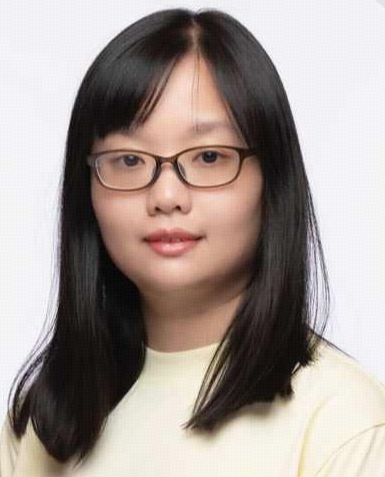 Hsin-Ping Huang合作论文数Vision and Learning Lab, University of California, Merced5
 Yang Zhao合作论文数Google5
 Tzu-Hsuan Chiu合作论文数5
 Min-Hsiung Hung合作论文数4
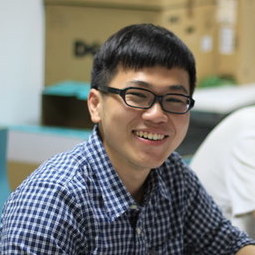 Hexiang (Frank) Hu合作论文数Google Deepmind4Guan-Long Wu合作论文数4
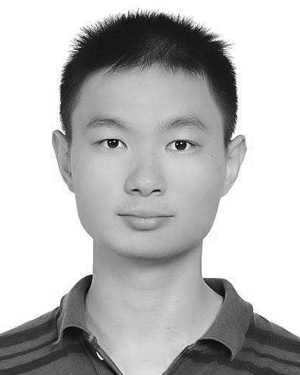 Chun-Yen Yeh合作论文数4
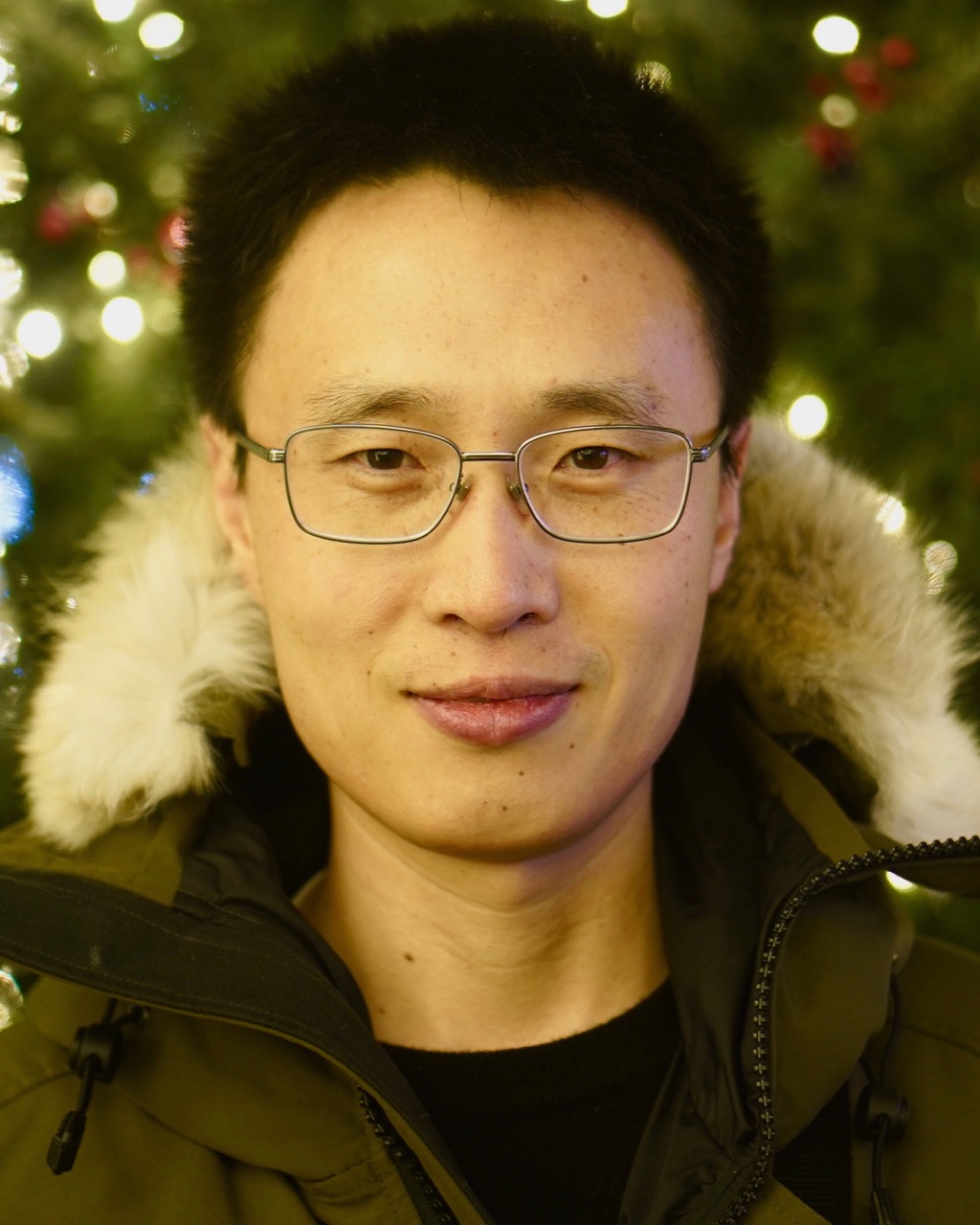 Boqing Gong合作论文数Google3
 Ming-Wei Chang合作论文数Google Deepmind3Hsin-Fu Huang合作论文数3
 Jonathan Chang合作论文数Facebook3
 H. Lee Woodcock合作论文数Department of Chemistry, College of Arts and Sciences, University of South Florida2Yves A Bernard合作论文数2Zachary C Holden合作论文数2Benjamin Kaduk合作论文数2
 Gaurav Singh Tomar合作论文数Google DeepMind2Simon A Maurer合作论文数2shanping mao合作论文数2Huisheng Wang合作论文数2Jaehoon Kim合作论文数2
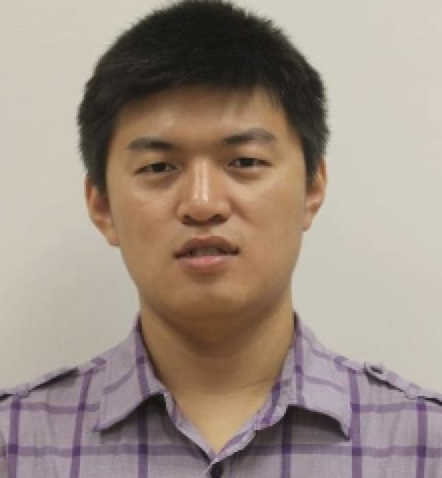 Han Zhang合作论文数Reve AI2Dirk R Rehn合作论文数2
 David Small合作论文数Department of Geography, Faculty of Social Sciences & Health, Durham University2Chun-Te Chu合作论文数Google Research2Kristina D. Closser合作论文数2
 Eric Berquist合作论文数Q-Chem, Inc.2FengLai Liu (刘奉来)合作论文数2
 Robert A. DiStasio Jr.合作论文数The College of Arts and Sciences, Cornell University2
 Joseph Subotnik合作论文数Department of Chemistry, Princeton University;Department of Chemistry, College of Arts & Sciences, University of Pennsylvania;School of Arts & Sciences, University of Pennsylvania2
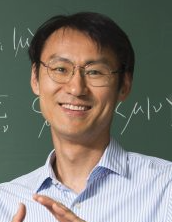 Yousung Jung合作论文数Department of Chemical and Biological Engineering, Seoul National University2
 Fatehi Shervin合作论文数Department of Chemistry, University of California2
 Lyudmila Slipchenko合作论文数Dept Chem, Purdue Univ2Do Hainam合作论文数2
 Sundstrom Eric J合作论文数Department of Chemistry, University of California2
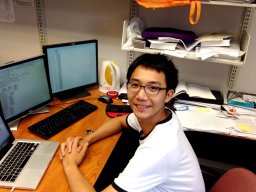 Lao Ka Un合作论文数Department of Chemistry, The Ohio State University2
 You Zhi-Qiang合作论文数Taiwan International Graduate Program, Academia Sinica2Alguire Ethan合作论文数2Zuev Dmitry合作论文数Department of Chemistry, University of Southern California2
 Yonatan Bitton合作论文数Google Research2




