Catalytic site-selective functionalization of distal C-H bonds represents a formidable challenge in organic synthesis. Particularly, the precise functionalization of distal aromatic C(sp2)-H bonds remains largely unexplored. Here we present a highly para-selective acylation strategy to target ultraremote aryl C(sp2)-H bonds, eight chemical bonds away from an activated functionality, through radical N-heterocyclic carbene organocatalysis. This method is developed on the basis of a unique single-electron pathway involving the site-selective activation of aryl C-H bonds by a nitrogen-centred radical generated in situ. Importantly, this organocatalytic approach shows potential for the functionalization of drugs, amino acids and peptides, thus highlighting its importance for medicinal chemistry. Our investigation encompassed meticulous mechanistic studies, including control experiments and density functional theory calculations, to unravel the intricacies behind the observed site selectivity and shed light on the mechanism of radical N-heterocyclic carbene organocatalysis. The precise functionalization of distant aromatic C(sp2)-H bonds remains largely unexplored. Here the authors report a para-selective acylation strategy to target remote aryl C(sp2)-H bonds away from an activated functionality through radical N-heterocyclic carbene organocatalysis.
We report here a stereoselective [3+2] cyclization of 5-alkenyl thiazolones and ketimines that allows the assembly of three diastereoisomers through the combination of stereodivergent organocatalysis and the following diastereoselective transformation of products. A broad spectrum of pyrrolidinyl spirooxindoles featuring stereochemical diversity has been synthesized through organocatalytic formal 1,3-dipolar cycloadditions with up to 98% yield, >20:1 dr and 99:1 er.
A practical one-pot isoindolinone synthesis enabled by RhIII catalysis was developed. The advantage of this protocol is that it does not require pre-preparation of amide substrates, because RhIII participates in two reactions independently. This mild, operationally multicomponent process transforms a wide variety of commercially available aldehydes into the corresponding γ-lactams in good yields, thereby demonstrating that N-pyridin-2-yl benzamide is an effective directing group. Notably, the anxiolytic drugs pagoclone and pazinaclone can be directly prepared by this methodology.
AbstractFluorinated ketones are widely prevalent in numerous biologically interesting molecules, and the development of novel transformations to access these structures is an important task in organic synthesis. Herein, we report the multicomponent radical acylfluoroalkylation of a variety of olefins in the presence of various commercially available aromatic aldehydes and fluoroalkyl reagents through N‐heterocyclic carbene organocatalysis. With this protocol, over 120 examples of functionalized ketones with diverse fluorine substituents have been synthesized in up to 99 % yield with complete regioselectivity. The generality of this catalytic strategy was further highlighted by its successful application in the late‐stage functionalization of pharmaceutical skeletons. Excellent diastereoselectivity could be achieved in the reactions forging multiple stereocenters. In addition, preliminary results have been achieved on the catalytic asymmetric variant of the olefin difunctionalization process.
Die Mehrkomponenten-Acylfluoralkylierung von Olefinen durch NHC-Organokatalyse (NHC=N-heterocyclisches Carben) wird im Forschungartikel von J.-L. Li, B. Han, Q.-Z. Li et al. auf S. 1879 vorgestellt. Eine große Bandbreite von Olefinen, darunter Styrole, cyclische Alkene, Indole, Vinylether, Vinylester und nichtaktivierte Alkene, ist kompatibel mit diesem System. Die Allgemeingültigkeit der Methode wird durch die Modifizierung pharmazeutischer Gerüste in späten Synthesestadien unterstrichen.
A Rh(III)-catalyzed one-pot reaction of N-phenoxyacetamides, ketones, and hydrazines for a facile access to disubstituted and trisubstituted ethylenes is reported. In this method, various ketones are transformed into donor-donor diazo compounds, which engage in insertion with N-phenoxyacetamides, following β-H elimination under Rh(III) catalysis to generate (E)-polyaryl-substituted olefins. This chemistry features simple starting materials, mild reaction conditions, and good functional group tolerance.
A Rh(III)-catalyzed C-H activation-desymmetrization of diazabicycles with o-vinylphenols as an efficient approach to alkenyl-substituted aminocyclopentenes is reported. This protocol represents another classic example for direct C-H activation of terminal alkenes using enol as directing group. The reaction features the ease of the preparation of starting materials, fast and high efficiency, broad substrate scope and 100% atom economy, thus provides a valuable entry to synthesize novel substituted cyclopentenes. (C) 2018 Elsevier Ltd. All rights reserved.
An efficient method to construct tetracyclic isoquinolinium salts via C–H activation and [4 + 2] annulation reactions in ethanol is described.
 Jun-Long Li合作论文数5
 qingzhu li合作论文数4Haijun Leng合作论文数3Wen-Lin Zou合作论文数3Yue Liu合作论文数3Zhang Yan合作论文数3Xin-Xin Kou合作论文数2Lisha Li合作论文数2
 Jiahong Li (李加洪)合作论文数School of Life Science and Engineering, Southwest Jiaotong University2
 Rong Zeng (曾荣)合作论文数School of Chemistry & Chemical Engineering, Shaanxi Normal University2
 Bo Han (韩波)合作论文数School of Pharmacy, Chengdu University of Traditional Chinese Medicine2
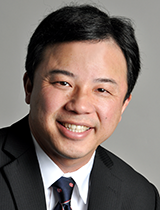 Xiang Zhang (张翔)合作论文数Department of Physics, Faculty of Science, The University of Hong Kong;Department of Electrical and Electronic Engineering, Faculty of Engineering, The University of Hong Kong;Department of Mechanical Engineering, College of Engineering, University of California, Berkeley2
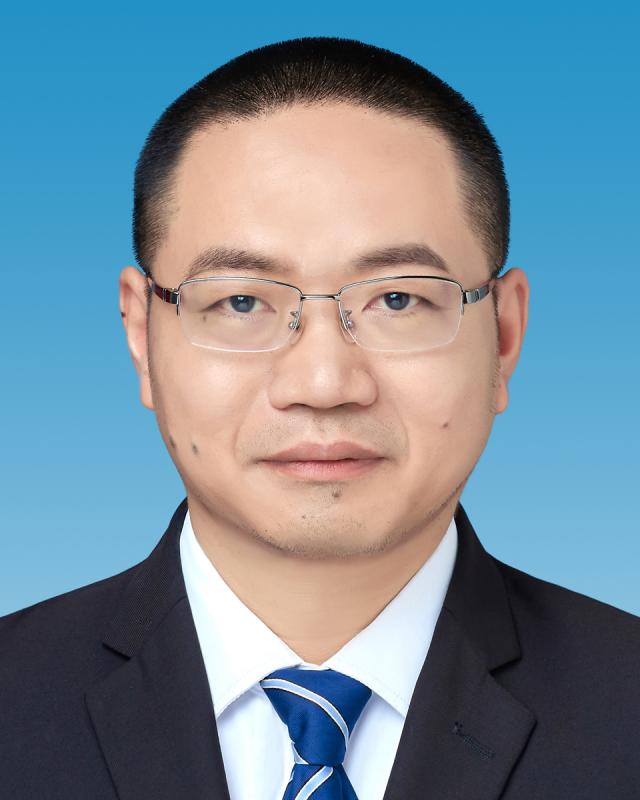 Gangguo Zhu (朱钢国)合作论文数Zhejiang Normal University2Zhao-Yuan Yu合作论文数1Qi Hu合作论文数1Haiqian Zhu合作论文数1Xiao-Zong Li合作论文数1Tianbo Shang合作论文数1Xinxin Dang合作论文数1Dan Lin合作论文数1Yu Liu合作论文数1Mingming Ji合作论文数1
 Cheng Peng (彭成)合作论文数School of Pharmacy, Chengdu University of Traditional Chinese Medicine1Meng Li合作论文数1
 Yi-Hang Wen合作论文数1
 Yanqing Liu (刘延庆)合作论文数Northern Jiangsu People's Hospital;Showa University1
 Xianli Zhou (周先礼)合作论文数College of Life Science and Engineering,Southwest Jiaotong University1
 Hezhong Jiang (蒋合众)合作论文数School of Life Science and Engineering, Southwest Jiaotong University1




