An exocyclic supramolecular building block through O–H⋯N hydrogen bonding interaction for the assembly of di-sidearm dibenzo-diazacrown ethers bearing a flexibility sidearm with PTA acid.
Two 1,3-alternate thiacalix[4]arene derivatives bearing amide groups, 1,3-alternate p-tert-butylthiacalix[4]arene tetraamide (4), and 1,3-alternate p-H-thiacalix[4]arene tetraamide (6) were prepared, and their crystal structures were determined by single-crystal X-ray diffraction method. The steric hindrances posed by tert-butyl groups play an important part in the synthesis and the self-assembly of the two compounds. Compound 6 was synthesized from the corresponding ester, which was obtained by the reaction of acid chloride with ammonia. In the crystal structure, compound 4 presents a highly symmetric molecular structure, while for compound 6, because of absence of tert-butyl groups, it presents a more flexible molecular structure.
The self-assembly behavior of 1,3-alternate p-tert-butylthiacalix[4]arene tetra-methyleneoxycarboxylic acid (I) and 1,3-alternate p-H-thiacalix[4]arene tetra-methyleneoxycarboxylic acid (II) in ethanol, acetone and in the existence of 4,4′-bipyridine were studied by single-crystal X-ray diffraction methods. Compound I maintains almost the same tubular shape molecular structure and the unique water inclusion property ([I ∩ 2H2O]) in the three different crystallization media because of the steric hindrance posed by the t-butyl groups. While for compound II, its molecular structure and water inclusion property are susceptible to the crystallization medium due to the absence of the t-butyl groups.
Five 1,3-alternate thiacalix[4]arene derivatives bearing carboxylic acid and/or urea hydrogen-bonding groups were prepared and their crystal structures were determined by single-crystal X-ray diffraction methods. In compound 1, where the pendant arms are all adorned with carboxylic acid groups, the pendants all orientate along the base of the molecular axis. An interesting three-dimensional network of "endo-inclusion" aquatubes is formed by stacking the water contained cavities of 1 up and down. While concerning to the other four compounds to which the urea groups are introduced, their pendant arms either orientate towards the inner side of the cavities, or orientate towards the outside, depending on the types of hydrogen-bonding groups and the position of these groups. When the urea groups are in the same side (compounds 2, 4 and 5), the opposite chains in the molecule will locate away from each other which may be due to the steric repulsions. But when the urea group and carboxylic acid group are in the same side (compounds 3 and 4), the opposite chains all orientate inwards because of the intramolecular, inter-chain hydrogen bonds between the opposite chains. Although these four compounds can also self-assemble through the cavity stacking motif, the inwardly orientated pendant arms which protrude into the thiacalixarene cavity obstruct the channels.
To construct the self-assembly of metal-ion-induced well-ordered architectures based on calixcrowns, isomeric thiacalix[4]benzocrowns-4 1 and 2 with rigid and small crown units were employed as the new scaffolds. They all show remarkable selectivity for Ag(+) and their complexation ability towards Ag(+) results in two novel dimeric aggregates of calixcrowns, which were first evidenced by ESI-MS, (1)H and DOSY-NMR spectra. Ultimately, X-ray diffraction experiments confirmed unambiguously the existence of the two metal-ion-induced dimers in lower rim/lower rim mode, and showed that dimerization of calixcrown 1 or 2 in the presence of Ag(+) could form dimeric supramolecular cavity with a small inner room. Moreover, the positional isomerism of their crown units (o-benzocrown unit for ligand 1 and m-benzocrown unit for 2) led to a dramatic change in the configuration of the two dimeric cavities 1·Ag(+) and 2·Ag(+). For dimeric cavity 1·Ag(+), two silver centers seamed two thiacalix[4]crown molecules together and resided at the edge of the dimeric self-assembling cavity; for dimeric cavity 2·Ag(+), one Ag(+) stitched two thiacalixcrowns together and was encapsulated in the center of the self-assembling cavity, while the other Ag(+) is tied down to one end of the dimer. Consequently, as a result of the different construction of dimeric cavities 1·Ag(+) and 2·Ag(+) the extended structures of the complexes are also different. The neighbour self-assembling cavities 1·Ag(+) are mutually oriented side-by-side and form a 1-D rectilineal polymeric chain. While, the neighbour self-assembling cavities 2·Ag(+) arrange themselves in a typical head-to-tail fashion to form a zig-zag polymeric chain.
Regioisomers of calixarenes can be either produced in the reaction process with the same reactants or derived from the isomeric nucleophilic reagents. This article reviews the syntheses, different complexation abilities and self-assembly behaviors of the regioisomers in calixarenes.
A novel mono-ionizable receptor 2 possessing three aminopyridyl and one carboxylic group in 1,3-alternate conformation based on thiacalix[4]arene, confirmed by single crystal X-ray analysis, was prepared. For competitive solvent extraction of alkali metal (Na+, K+ and Cs+) and some transition metal (Cu2+, Zn2+, TI+, Ag+) cations from aqueous solutions into chloroform, it was found that the introduction of proton-ionizable group (carboxylic acid moiety) into the aminopyridyl-thiacalix[4]arene derivative could further improve its Ag+ extractability with high selectivity.
By reacting mono-substituted or 1,3-bi-substituted [2-(p-formylphenyloxy)ethyloxy]-p-tert-butylcalix[4]arene (3 or 4) with hydrazine hydrate in ‘1+2’ or ‘2+2’ condensation mode, novel benzalazine-bridging biscalix[4]arenes 5 and 7 were conveniently obtained in the yields of 76 and 81%, respectively. Condensation of compound 4 and salicylide hydrazone gave a novel calix[4]arene benzalazine derivative 6 in the yield of 85%. The structures and conformations of all new compounds were characterised by elemental analyses, ESI-MS, 1H NMR and 1H–1H COSY techniques. Biscalix[4]arene 7 adopts a symmetrical cone conformation with tube cavity. The liquid–liquid extraction experiment showed that all new hosts possessed excellent complexation abilities towards soft metal cations. Compound 7 exhibited high complexation selectivity towards Ag+. The Ag+/Na+ and Ag+/Hg2+ extraction percentages of host 7 were as high as 73.1 and 54.9, respectively. The UV–vis spectra complexation experiments revealed that the complexation constant of receptor 7 with Ag+ was 1.9 × 10⁵ M− 1 and the 1:1 stoichiometry of receptor 7–Ag+ complex was formed. The 1H NMR spectra complexation experiments suggested that Ag+ was bound in a cavity composed of two benzalazine groups on bridging chains.
Three derivatived calix[4]crowns were condensed with calixarene segments: 2,6-bis(bromomethyl)-4-methyl-anisole (BBA) to afford their telomers TCA[4] in rational yields. The binding sites may complex metal ions or amino acids selectively. The telomers shows different metal ions selectivity in comparison with their monomers, which suggests that calixarene segment bridges play an important role in ion-binding. The liquid-liquid extraction experiment showed that telomer TCA[4]-III was excellent receptor for zwitterionic α-amino acids and soft cations Ag+ and Pb2+. The extraction percentage of tryptophan and histidine was as high as 87.9% and 91.5%, respectively.
A series of 1,3-alternate conformation thiacalix[4]arenes containing different isomeric aminopyridyl pendent arms have been synthesized. It was found that their self-assembly behaviors and complexation properties strongly depended on the structures of aminopyridyl pendent arms. The crystal structures demonstrate that tetra(meta-aminopyridyl)-thiacalix[4]arene motif is capable of forming intramolecular hydrogen bondings between the sp2 nitrogen donors in the meta position of the aminopyridyl groups and the facing amide N–H of the adjacent aminopyridyl groups, and self-assembles via C–H⋯O weak hydrogen bondings and C–H⋯π interaction to generate a double stranded rectilineal networks. By contrast, in the case of tetra(para-aminopyridyl)-thiacalix[4]arene, the presence of para-aminopyridyl units enables the formation of N–H⋯N strong hydrogen bondings between the individual molecules leading to the solid-state structure with water-bridged double strands. Their complexation properties had been also studied by measurement of the stability constants for their complexation in a range of metal cations and investigation of their binding models via 1H NMR titration and ESI-MS experiments. It was found that the three ligands exhibited high and selective extractability toward Ag+, and their stoichiometry of ligand to Ag+ was 1:1, while the meta-aminopyridyl derivative showed the best extraction capacity and possessed the most efficient binding sites.
A novel Ag+ ionophore, p-tert-butyl-tetrakis(hydrazinocarbonylmethoxy)thiacalix[4]arene in 1,3-alternate conformation (thiacalix[4]arene tetrahydrazide, 1) was synthesized. Its binding properties towards alkali and transition metal cations were studied by noncompetitive liquid-liquid extraction of alkali metal (Li+, Na+, K+ and Cs+) and transition metal (Co2+, Ni2+, Cu2+, Zn2+, Ag+) picrates. It was found that the thiacalix[4]arene tetrahydrazide exhibited high extractability towards Ag+, lower percent extraction towards Cu2+, and little or no extraction ability towards the others. The selectivity towards Ag+ was further evaluated by competitive Ag+ extraction experiments in the mixture of the above-mentioned nine cations, the concentration of which was monitored with ICP-OES. 1H NMR titration experiments and ESI-MS proved the stoichiometry of 1 to Ag+ was 1:1, and the ′N-Ag+′ interaction with the assistance of thiacalixarene skeleton was primarily involved in the complexation.
Upon an increase of the medium polarity, the morphology of the aggregates of calix[6]crowns TAC evolves from vesicles to the coexistence of vesicles and nanotubles, and finally to nanotubes only. Meanwhile, nanohybrids were constructed by the incorporation of caesium ions into the TAC nanotubles.
All the conformers(cone,partial cone,1,2-alternate and 1,3-alternate) of tetrakis(ethoxycarbonylmethyl)-p-tert-butylcalix[4]arene were synthesized by the reaction of p-tert-butylcalix[4]arene with ethyl bromoacetate.Their tetraamide derivatives were obtained in quantitative yields by aminolysis of corresponding p-tert-butylcalix[4]arene tetraethylacetate with NH3 in the solution of methanol.The aggregating behavior of calixarene amide derivatives in different conformations was studied by 1H NMR.The conic p-tert-butylcalix[4]arene tetraamide is very soluble in CHCl3,all proton resonance signals of the compound were clear and sharp peaks in 1H NMR spectrum in pure CDCl3;1,2-alt p-tert-butylcalix[4]arene tetraamide was sparingly soluble in CHCl3,after minor CF3COOH being added,the obvious signals appeared.This indicated that there was strong intermolecular interaction between the molecules.1,3-alt p-tert-butylcalix[4]arene tetraamideis could aggregete in high concentration;when in low concentration or after minor CF3COOH being added,it existed in monomer.
The reaction of 1,3-dipropyn-2-yloxycalix[4]arene with mercury(II) acetate could give mercury-containing alkynyl calixarene polymer. The extraction behavior of 1,3-dipropyn-2-yl-oxycalix[4]arene towards mercury(II) ion was examined. When the mole ratio of Hg2+/calixarene was 1:1, the extractive percent can reach to 99.1%, and the extraction capacity was up to 431 mg/g. It could also decrease the Hg2+ concentration from 5 to 0.85 mg/L, which was only 17% of the national standard of effluent and satisfied the national standard of drinking water. The extraction process included chemical reaction.
The reaction of 4′-hydroxy-4-methyl azobenzene (1) and 1,6-dibromohexane afforded 6-bromo-1-((4-((4-met hylphenyl)azo)phenyl)oxy)hexane (2), which further reacted with p-tert-butylcalix[4]arene to give the calix[4]arene derivative (3) whose lower rim had been modified by the azobenzene photochromic group. The structure of 3 was characterized by 1H-nuclear magnetic resonance (NMR) and electrospray ionization-mass spectrometry (ESI-MS). The fluorescence intensity of compound 3 was two to four times higher than that of compounds 1 and 2 as the azobenzene group concentration in the range of 1.6 × 10⁻⁵ to 8.0 × 10⁻⁴ mol/L, indicating that the fluorescence quantum yield of the azobenzene group had been improved through being attached to the calix[4]arene skeleton. The liquid crystalline behavior of compound 3 was studied by polarized microscopy (POM) and differential scan calorimeter (DSC). Compound 3 exhibited the enchased texture of a smectic liquid crystal from 209.4°C to 219.5°C on heating, while 2 exhibited a liquid crystalline phase from 87.4 to 83.2°C on cooling. It was found that the calix[4]arene skeleton was a good platform for conformation immobilization of azobenzene photochromic group and the formation of liquid crystalline.
A series of polyether– or polyester–polyurethanes based on tetrahydrofuran–propylene oxide copolyether diol (PTMG/PPG) or poly(ethylene terephthalate) diol (PET), toluene diisocyanate (TDI), and three kinds of chain extenders including two calix[4]arene derivatives and 3,3´-dichloro-4,4´-diaminodiphenylmethane (MOCA) were synthesized in toluene. The thermal stability and mechanical properties of solvent-type polyurethanes were investigated. Incorporation of calixarenes into polyurethane backbones improved the thermal properties of the polyurethane as a result of the residual phenol hydroxy groups of the calix[4]arene units. Compared with polyurethane chain-extended by MOCA, the polyurethanes with calix[4]arene derivatives had higher elongation at break, lower elastic modulus, and lower yield strength, as a result of the larger steric cubage of calix[4]arene units and relatively large free volume of the polymer.
p-tert-Butylcalix[4]diazacrown-4 telomer, which contains hard and soft ion binding sites, was synthesized. It exhibited high selectivity toward cesium ions. The binding sites may complex alkali metal ions selectively.
Biscalixarene is an important member of calixarene family, composed of two calixarene moieties linked at their upper (head) or lower (tail) rim through various spacers with more complicated structures and colorful properties as compared to mono calixarene. It can be divided into three basic types commonly known as head-to-head, tail-to-tail, and head-to-tail bridged biscalixarene. Biscalixarene containes two same or different recognition sites and can complex two same or different guests. Moreover, it has some high-level properties such as stronger inclusion ability, allosteric effects, oscallation between the two metal-binding sites and so on due to cooperative effect. Here, a survey of biscalixarene chemistry and recent research progress are reviewed according to the type of calixarene subunits. The syntheses of the biscalix[4] arene with various linked types are emphatically described, and some special biscalixarenes are described in detail as well. The prospect of biscalixarene chemistry is also discussed.
The recent progress in fluorescent molecular sensors based on calixarene and their selectively sensing properties towards cations are reviewed according to the type of fluorophores.
Two novel polysiloxanes with pendant hand-basket type calix[6]-1,3-crown-3 and calix[6]-1,4-crown-4 were prepared by hydrosilylation of p-tert-butylcalix[6]-(2′-allyloxymethyl)-1,3-crown-3 (CA[6]C3) and p-tert-butylcalix[6]-[2′-(ω″-undecenyloxymethyl)]-1,4-crown-4 (CA[6]C4) followed by condensation reaction with silanol-terminated polydimethylsiloxane. The monomeric calix[6]crowns and two calix[6]crown-based polysiloxanes were used as carriers in a bulk membrane. All carriers showed the transport rate of the cations decreased in the order Li+<Na+<K+. The flux of K+ for the monomeric calix[6]crown was higher than that for polymeric carrier. In comparison with other carriers, the transport rate of calix[6]crown-4-functionalized polysiloxanes (CA[6]C4PS) towards cesium ions were increased greatly. Competitive transport experiments known to be more useful in industrial fields also revealed to give high cesium transfer rate.
 Shuling Gong (龚淑玲)合作论文数College of Chemistry and Molecular Sciences, Wuhan University67
 Xueran Lu合作论文数35Xr Lu合作论文数25
 Haibing Li (李海兵)合作论文数华中师范大学农药与化学生物学教育部重点实验室21Lingzhi Meng (孟令芝)合作论文数21
 Chi Huang (黄驰)合作论文数College of Chemistry and Molecular Sciences, Wuhan University20
 Zhenlin Zhong (钟振林)合作论文数College of Chemistry and Molecular Sciences, Wuhan University20
 Fafu Yang (杨发福)合作论文数College of Chemistry and Materials Science, Fujian Normal University19
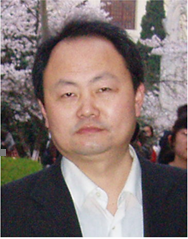 Pengfei Fang (方鹏飞)合作论文数School of Physics and Technology, Wuhan University19
 Qiong Zheng合作论文数18
 Guangyong Xie (谢光勇)合作论文数15
 Wei Wang (王巍)合作论文数Key Laboratory of Combinatorial Biosynthesis and Drug Discovery, School of Pharmaceutical Sciences, Wuhan University13Qin Zheng合作论文数10Chongwen Xu合作论文数10Chun-Lei Zhang (张春雷)合作论文数10JS Li合作论文数10Xubo Hu合作论文数9Wei-Ping Yang合作论文数9Zhaorui Zeng合作论文数9CaiYing Wu (吴采樱)合作论文数8Yongbing He (何永炳)合作论文数8Zhenjiao Tian合作论文数6
 Zhinong Gao (高志农)合作论文数College of Chemistry and Molecular Sciences, Wuhan University6Qiyong Han合作论文数5Chuan-qing DU (杜传青)合作论文数5GaoQing Chen合作论文数5
 Xiaojun Wu (吴晓军)合作论文数College of Chemistry and Molecular Sciences, Wuhan University5Xiong Li (黎雄)合作论文数5
 Ying Liu (刘英)合作论文数College of Chemistry and Molecular Sciences, Wuhan University;Core Facility, Wuhan University5
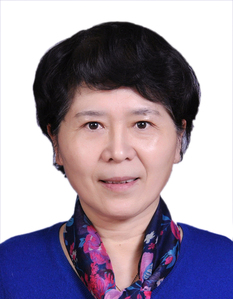 Shen Lin (林深)合作论文数College of Chemistry and Materials Science, Fujian Normal University4Qingsheng Liu合作论文数4Zhi-Yang Luo合作论文数4
 Jingxian Yu合作论文数4Changfa Wang合作论文数Research Institute of Donkey High-Efficiency Breeding and Ecological Feeding, College of Agronomy, Liaocheng University4Minhua Feng (冯敏华)合作论文数3xiuyun xiao (肖修云)合作论文数3Lifeng Zhang合作论文数3YANG Yezhi (杨业智)合作论文数3Linbo Gong合作论文数3Li Xinhong合作论文数3Heping Duan (端和平)合作论文数3GuoZhen Li (李国珍)合作论文数3YiSui Zhou合作论文数3Aiqing Ke合作论文数3
 Chunya Li (李春涯)合作论文数School of Chemistry and Material Science, South-Central University for Nationalities3Rong Guo合作论文数3Hui Yan合作论文数3Yan Jin合作论文数3




