Artificial intelligence is entering biological laboratories not only as a computational tool but as a co-experimenter that proposes, selects, and learns from interactions with living matter. As models increasingly steer protein engineering, material morphogenesis, and bioart, design decisions and feedback loops become distributed across humans, algorithms, and organisms. This panel stages a focused debate around three questions for HCI: Who designs these hybrid workflows? Where does responsibility lie when outcomes emerge from coupled human–algorithm–organism systems? What counts as interaction when learning unfolds simultaneously in code, cells, and infrastructures? Panelists from design research, computational biology, ethics, and art offer contrasting provocations grounded in cases from automated wet labs, living interfaces, and critical biodesign. Through case-based debate and moderated audience discussion, the session introduces the algorithmic wet lab as a new locus of interaction, offering attendees an expanded vocabulary of material intelligence and contested directions for AI × Biodesign within HCI.
HCI research increasingly engages with relational notions of ethics, such as care, felt and transcorporeal ethics, as new paradigms for design. Here, we discuss these relational notions in the context of multispecies design, extending it to incorporate Acampora’s concept of Corporal Compassion, which grounds ethics on a shared sense of livingness and vulnerabilities across beings. In order to elicit corporal compassion towards microorganisms, we designed a dining-theatre intervention, which invited participants to ingest and assign moral values to dishes prepared with speculative human-microbial hybrid cells originated from beings exposed to similar levels of bodily distress. Tried with 47 participants in 7 sessions, the work surfaced the idiosyncrasies behind participants’ moral frameworks, and how socialised prescriptive frameworks of ethics sometimes acted as closure towards relational approaches. We discuss how HCI could rethink traditional frameworks of ethics in ways that support relationality, while calling for researchers to make space for moral hesitation.
Efforts to integrate living organisms in the design of new technologies are often motivated by prospects of greater sustainability and increased connection with more-than-human worlds. In this paper, we critically discuss these motivations by analysing the vast and mostly hidden ecologies of more-than-human organisms implicated in a biodesign lab experiment. Through the lenses of labour theory, we investigate the extent to which organisms’ bodily functions and relationships can be subsumed into capitalist modes of production. In order to help reveal and map out the network of more-than-human contributors to biodesign, we develop a workshop method and a labour provenance analytical framework that identifies five types of more-than-human labourers, stretching from the centre to the periphery of biodesign. We conclude by discussing how sustainable approaches should account for wider more-than-human ecologies, and how the labour lens could help stress conflicting goals, implicit anthropocentric agendas and ways of improving organismal welfare in biological design and HCI.
Recent work in HCI has called for deeper ethical considerations when engaging with more-than-human organisms in design. In this paper, we introduce Microbial Revolt, a provocative method to support reflection on the perspectives of organisms involved in HCI and design practice. By asking participants to consider the reality of a chosen organism in feral and lab environments and to redesign lab tools in order to account for their “non-participation”, we identified the manifestation of key epistemic differences between approaches to care and ecologies in typical design and biology research - as well as the potential for design and HCI to creatively redefine power dynamics in the lab. Further interviews revealed specific challenges and opportunities that designers and HCI researchers face in adapting practices to lab standards, and lab equipment to their practices, calling for a redefinition of tools, spaces and guidance to accommodate phenomenological perspectives and multiple modes of interaction with living organisms.
This one-day workshop brings together HCI researchers, designers, and practitioners to engage with more-than-human temporalities in the context of designing with care. We invite participants to experiment and think with more-than-human time experiences as a starting point to integrate emergent methodologies and practices for more-than-human discourses in design. By using living and once-living media (e.g., fungi, plant and insect specimens, biodesigned artefacts) as starting points for investigating more-than-human temporalities, participants will discuss how a pluralistic temporal approach can offer to the discourse of designing-with nonhuman entities, and how this aligns with emerging HCI research trajectories and concerns.
The Karma Kettle game allows people to experience critical scenarios of distributed energy transactions, which rely on networked batteries and algorithmic transactions. The connected kettles allow individuals to visualise the state of a local grid and choose to use, store or push energy back to the grid, receiving or losing karma points according to the degree in which their actions contribute to balancing the state of a local grid. The points, however, fluctuate according to each player's profile, which is defined based on the UK Census for energy consumption, which breaks down energy expenditure by parameters such as income, ethnicity, region, and sex. Join us to understand opportunities and critical issues raised by these systems but be careful not to get into negative Karma!
The objective of this work is to support co-creation of novel ideas in biodesign during fast-paced and facilitated workshops. We created a card-based tool which simultaneously provides knowledge on both ‘science’ and ‘context’. The tool was used to trigger and inspire collaborative ideation in two biodesign workshops in which participants from scientific and design backgrounds produced ideas for healthcare-related innovations. To understand the perception of the tool and the mechanism of scientific knowledge integration in ideation, we conducted post-workshop interviews with 10 participants. Our qualitative analysis shows that the exposure to contextualised scientific knowledge provided by the tool enabled participants to generate ideas that cover a wide spectrum from the micro-scale of bioscience to the macro-scale of socio-political contexts, and thus supported the acceleration of ideation in biodesign workshops.
This workshop invites participants interested in biodesign to build new connections and crossovers between diverse disciplines. The aim of the workshop is to collaboratively investigate and reflect on alternative design modes (transdisciplinary and interdisciplinary design) that are rooted in biological materials, systems, experiences, and interactions. This investigation is necessary, to enable practitioners in addressing complex contemporary societal challenges from alternative perspectives. This workshop provides a complementary perspective to previous initiatives by focusing on the process of biodesign(ing). Participants explore state-of-the-art biodesign tools, strategies, methods and approaches to showcase and build narratives in biodesign. The workshop consists of brief inspirational talks by the organisers and interactive facilitated sessions where participants explore, discuss and produce their own narratives. Biodesign narratives aim to support design practitioners and researchers in gaining an overview of the field for carrying out further work, getting insights into the field, building connections and demystifying biodesign for new members of the community. By bringing focus on new and alternative narratives of biodesign, the workshop will challenge existing paradigms that position ‘Human’ in the centre of the design process. We explore and propose alternative modes for biodesign that reflect its potential to create impact on larger-than-human scale through integration of temporal factors, alternative (to human) perspectives and contexts. The workshop offers and questions biodesign support tools, processes and methods available now and possibly in the future. These will be summarised to incite future research on biodesign processes. The organisers welcome participants from diverse backgrounds and levels of expertise. Previous experience with biodesign and narrative building is useful, but not essential.
This paper reports a series of idea generation workshops in which bioengineers took part. The workshops were facilitated with ‘Design and Science’ (DxS) ideation cards created by the authors. The analysis of post-workshop interviews with 5 bioengineers shows that the use of DxS cards enabled the contextualisation of scientific research. In particular, the combination of ‘Context cards’ (developed around the United Nations Sustainable Development Goals) and ‘Science cards’ (developed around novel scientific advancements) enabled bioengineers to build new narratives, speculate and imagine possible futures. ‘Design and Science’ ideation cards make designerly approaches available for bioengineers and have the potential to support interdisciplinary creativity in the emerging field of biodesign.
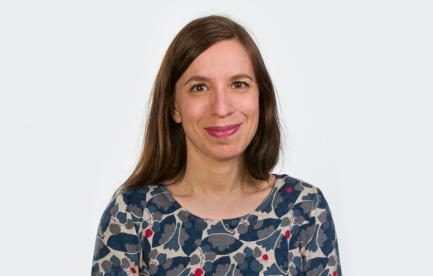 Larissa Pschetz合作论文数School of Design, Edinburgh College of Art, The University of Edinburgh6
 Sander Välk合作论文数3
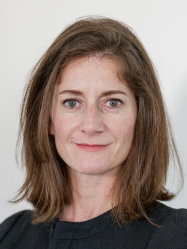 Celine Mougenot合作论文数Dyson School of Design Engineering, Faculty of Engineering, Imperial College London3
 Carolina Ramirez-Figueroa合作论文数Newcastle Univ Newcastle Upon Tyne3
 Raphael Kim合作论文数Delft University of Technology2Elise Cachat合作论文数1
 Jiwei Zhou合作论文数Studio Jiwei1Youngsil Lee合作论文数1Esteban Serrano合作论文数1
 Yuta Ikeya (池谷宥太)合作论文数Tech & Biz Development Division, CHITOSE Group1
 Ayn Sayuti合作论文数1Livia Mariadaria Kalossaka合作论文数Dyson Sch Design Engn, Imperial Coll London1
 Iohanna Nicenboim合作论文数Delft Univ Technol, Dept Ind Design, Delft, Netherlands1
 Billy Dixon合作论文数University of Edinburgh, Edinburgh, United Kingdom1
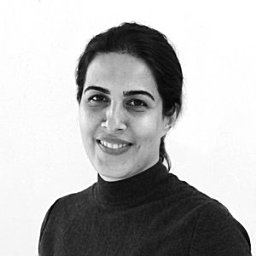 Bahareh Barati合作论文数Delft Univ Technol, Dept Design Engn, Delft, Netherlands1
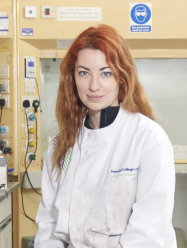 Elena Dieckmann合作论文数Dyson School of Design Engineering, Faculty of Engineering, Imperial College London1
 Lee Minha合作论文数Department of Diagnostic Imaging, Hospital for Sick Children1
 Bjorn Sommer合作论文数University of Bielefeld1
 Martyn Dade-Robertson合作论文数School of Architecture, Planning, and Landscape, University of Newcastle1




