Recently, domain adaptation (DA)-based fault diagnosis approaches have been actively studied in chemical processes to build a reliable fault diagnosis model for a new operating mode (i.e., target domain) by making use of labeled data from a historical mode (i.e., source domain). However, this raises privacy concerns, such as data leakage, since industrial data contains sensitive production information. Moreover, preprocessed source and target data used to train an effective target model will result in additional computational costs. Therefore, it is crucial to develop a novel privacy preserving DA-based fault diagnosis approach that can improve the diagnosis performance for a new mode and protect the privacy of a historical mode simultaneously. To this end, fault diagnosis is formulated as the source-free DA problem and proposes a temporal attention source-free adaptation (TASFA) algorithm, which only utilizes the pretrained source model and unlabeled target data to learn a diagnosis model. Specifically, for the time-series process, an attention mechanism is designed to capture and leverage the temporal correlations between source and target domains by extracting the most transferable information from the target time series. Empirical results on both the Tennessee Eastman process and the continuous stirred tank reactor demonstrate the effectiveness and efficiency of TASFA.
Making available a large size of training data for deep learning models and preserving data privacy are two ever-growing concerns in the machine learning community. Multi-source domain adaptation (MDA) leverages the data information from different domains and aggregates them to improve the performance in the target task, while the privacy leakage risk of publishing models under malicious attacker for membership or attribute inference is even more complicated than the one faced by single-source domain adaptation. In this paper, we tackle the problem of effectively protecting data privacy while training and aggregating multi-source information, where each source domain enjoys an independent privacy budget. Specifically, we develop a differentially private MDA (DPMDA) algorithm to provide domain-wise privacy protection with adaptive weighting scheme based on task similarity and task-specific privacy budget. We evaluate our algorithm on three benchmark tasks and show that DPMDA can effectively leverage different private budgets from source domains and consistently outperforms the existing private baselines with a reasonable gap with non-private state-of-the-art.
Despite the significant progress in unsupervised domain adaptation (UDA), the performance of UDA methods is still far inferior to that of the fully supervised ones. In practical scenarios, it is usually feasible to acquire labels on a small portion of the target data through active learning (AL), which aims to train an effective model with as few queried instances as possible. However, due to the domain shift, the instances selected by existing AL algorithms can be uninformative, redundant, or outlying. To address this issue, we propose a novel approach, namely, clustering environment-aware learning (CEAL), for active domain adaptation (ADA). CEAL selects potentially the most valuable instances under domain shift by exploring the informativeness and representativeness of target samples in a clustering environment-aware manner. Specifically, for the informativeness, we not only leverage the knowledge of individual points but also their nearby neighbors, by measuring the proposed clustering environment aware informativeness score (CEAIS), thus ensuring that the selected samples are highly informative. For the representativeness, we design two schemes called point distance release (PDR) and informativeness score difference exclusion (ISDE) to guarantee the diversity and validity of the selected samples. Furthermore, we fully utilize the large amount of unlabeled data from target domain via pseudo labeling and adopt information maximization to improve the reliability of the target pseudo labels, thereby further improving the performance of the model. The effectiveness of our method is empirically verified on various benchmark datasets against recent state-of-the-art algorithms.
While deep neural network (DNN)-based fault diagnosis methods can monitor the faults that occur on the operating modes, they cannot perform well on the modes that are never experienced before. This limitation makes it challenging to ensure the production safety of chemical processes. In this article, this issue is formulated as domain generalization (DG), which aims to learn a universal fault diagnosis model from historical operating modes that can generalize well to unseen modes. Many existing DG approaches focus on learning a domain-invariant representation by aligning marginal distributions between domains, which ignore the conditional relationships and label information. Recently, some researches start to reduce the discrepancy of the class conditional distributions across domains, while the theoretical justifications of that are still missing. To address this issue, the theoretical analysis of DG is developed to investigate how to minimize the unseen domains’ risk, which is a theoretical guarantee that the DG methods can generalize well over unseen domains. This theory reveals that the unseen domain error can be bounded by the shift of the label and class conditional distributions across source domains. Then, this result motivates a novel labeling and class progressive adversarial learning (LCPAL) algorithm for fault diagnosis, which simultaneously controls the errors weighted based on label information and aligns the class conditional distributions between different historical operating modes, as well as reducing the adverse effect of the domain-specific feature. Empirical results on both the numerical example and the Tennessee Eastman process (TEP) demonstrate the effectiveness of the LCPAL approach.
One challenge faced by data-driven fault diagnosis methods is that they may perform well over the operating modes where the historical data are collected, but fail to generalize to unseen modes that have never appeared before. That is one of the root causes that have prevented many advanced fault diagnosis methods from being widely accepted by the chemical industry. Consequently, it is significant to develop a novel fault diagnosis method, which can build a model to determine the type of faults occurred on unseen modes. On the other hand, one chemical process generally experiences multiple operating modes, from which common knowledge of these modes can be extracted and be applied to an unseen mode. To this end, a novel weighted conditional discriminant analysis (WCDA) algorithm is proposed by adopting the context of domain generalization (DG) approaches to leverage and distill the knowledge from historical modes for unseen modes of fault diagnosis. Specifically, a novel variable weighting scheme is developed based on the Kullback–Leibler divergence between features of different modes. Then, a fault diagnosis model is constructed by learning a classifier and invariant feature representation simultaneously. Moreover, WCDA is extended to the context of domain adaptation (DA), where the performance of the fault diagnosis model is further improved by leveraging the unlabeled data collected from a new mode. Empirical results on a numerical example, the Tennessee Eastman process, and continuous stirred tank chemical reactor demonstrate the effectiveness of our method.
Fault diagnosis plays a significant role in chemical processes to avoid serious accidents that challenge production safety. In practice, however, to establish fault diagnosis models, it is expensive to collect labeled fault data, since a fault is a small probability event in a chemical process. Consequently, it is challenging to build a reliable fault diagnosis model, if a process has a small amount of fault data. On the other hand, we may have sufficient data collected from other processes, which can be leveraged using domain adaptation techniques. However, traditional domain adaptation approaches use only samples to align the statistical distribution without using the label information, and focus only on aligning the input features of the data to improve their transferability yet ignoring their discriminability. As a result, the model trained using such an approach may still have poor performance. To address this issue, we propose a novel adaptive manifold discriminative distribution alignment (AMDDA) approach to align the statistical distribution between domains in manifold space based on the discriminative conditional probability, in which the transferability and discriminability are captured simultaneously. In addition, by leveraging the clustering assumption of domain adaptation, AMDDA adopts an adaptive pseudo-label updating strategy to improve the quality of pseudo-label during the training process. Empirical results of both the numerical example and the Tennessee Eastman process demonstrate the effectiveness and efficiency of our method.
In modern industrial processes, the production process includes multiple operating modes, due to changes in production goals and conditions. And the data generated in this process is a mixture of Gaussian and non-Gaussian distributions. Therefore, the data distribution of multimode processes is uncertain and complex. It is difficult to monitor multimode processes accurately by using traditional Multivariate Statistical Process Monitoring (MSPM) methods. In this case, the absence of labeled data is considered more valuable. This paper proposes a new unsupervised domain adaptive method called the Distribution Adaptation Local Outlier Factor (DALOF). This method can extract useful information from multimode data through domain adaptation, which can reduce the distribution difference of training data and improve the accuracy of modeling. In the DALOF model, data from different modes in the training set are defined as the source domain and the target domain. Weight the training data according to their correlation, and then project these data into a low-dimensional subspace. In this space, the distribution distance between the source and target domain is minimum. To solve the nonlinear characteristics of multimode data, this paper uses LOF to build a model and formed a density-based monitoring index. Numerical examples and Tennessee Eastman (TE) process simulation demonstrate the effectiveness of DALOF.
 Yang Tao (陶阳)合作论文数School of Information Science and Engineering, East China University of Science and Technology5
 Boyu Wang合作论文数Department of Computer Science, Middlesex College, Western University5
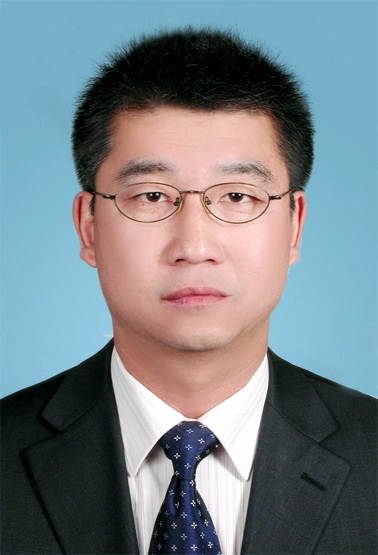 Hongbo Shi (侍洪波)合作论文数School of Information Science and Engineering, East China University of Science and Technology5
 Shuai Tan (谭帅)合作论文数School of Information Science and Engineering, East China University of Science and Technology;Key Laboratory of Smart Manufacturing in Energy Chemical Process, Ministry of Education, East China University of Science and Technology4
 Bing Song (宋冰)合作论文数School of Information Science and Engineering, East China University of Science and Technology4
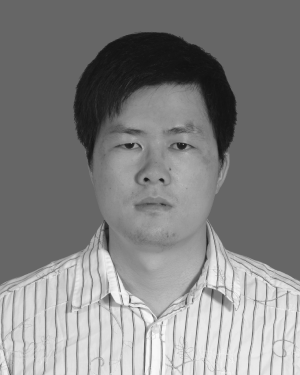 Jian Zhu合作论文数School of Computer Science, Guangdong University of Technology, Guangzhou, China2
 Shuwen Chai合作论文数Northwestern University1QinTai Hu (胡钦太)合作论文数1
 Yuan Zhou (周圆)合作论文数School of Electrical and Information Engineering, Tianjin University1
 Bin Sheng (盛斌)合作论文数Visual Media and Data Management Lab, Institute of Computer Application, Department of Computer Science and Engineering, Shanghai Jiao Tong University1
 Feng Liu (刘峰)合作论文数School of Computing and Information Systems, Faculty of Engineering and Information Technology, The University of Melbourne1
 C. L. Philip Chen (陈俊龙)合作论文数School of Computer Science & Engineering, South China University of Technology;International Center for informatics Research, Beijing Jiaotong University1




