Vision-Language Models (VLMs) have demonstrated strong performance on textbook-style physics problems, yet they frequently fail when confronted with dynamic real-world scenarios that require temporal consistency and causal reasoning across frames. We identify two fundamental challenges underlying these failures: (1) spatio-temporal identity drift, where objects lose their physical identity across successive frames and break causal chains, and (2) volatility of inference-time insights, where a model may occasionally produce correct physical reasoning but never consolidates it for future reuse. To address these challenges, we propose PhysNote, an agentic framework that enables VLMs to externalize and refine physical knowledge through self-generated "Knowledge Notes." PhysNote stabilizes dynamic perception through spatio-temporal canonicalization, organizes self-generated insights into a hierarchical knowledge repository, and drives an iterative reasoning loop that grounds hypotheses in visual evidence before consolidating verified knowledge. Experiments on PhysBench demonstrate that PhysNote achieves 56.68
Open-set 3D object retrieval (3DOR) aims to learn discriminative and generalizable embeddings for unseen categories of 3D objects. However, attaining this objective typically requires the costly acquisition of large-scale 3D object datasets and associated resources for model training. Building upon the strong open-world representation capabilities of CLIP, we introduce CLIP-AdaM, which, to our knowledge, represents the first attempt to adapt a CLIP model for open-set 3DOR with minimal effort. We first find that a pretrained CLIP already delivers a surprisingly acceptable performance on multi-view images. To further unleash its potential, we design a customized adapter for learning to aggregate and adapt its pretrained features towards better 3D embeddings. For aggregation, it learns two sets of view scores to weigh the contributions of view images for fusion. One is learned by a tiny view-score network at the instance level, and the other is learned implicitly at the dataset level, aiding generalization to unseen categories. The adaptation component comprises only a basic linear layer yet yields superior results. During training, the adapter with such a small amount of parameters can be efficiently fine-tuned with limited 3D closed-set data, effectively mitigating the overfitting issue while harnessing the prior knowledge from pretrained models. Without bells and whistles, CLIP-AdaM attains state-of-the-art performance on four open-set 3DOR benchmarks. Additionally, it demonstrates strong extensibility to broader scenarios, including zero-shot, few-shot, and seen/unseen 3D representation learning.
Graph neural networks (GNNs) have achieved remarkable success in various domains, yet they often struggle with domain adaptation due to significant structural distribution shifts and insufficient exploration of transferable patterns. One of the main reasons behind this is that traditional approaches do not treat global and local patterns discriminatingly so that some local details in the graph may be violated after multi-layer GNN. Our key insight is that domain shifts can be better understood through spectral analysis, where low-frequency components often encode domain-invariant global patterns, and high-frequency components capture domain-specific local details. As such, we propose FracNet (Frequency Aware Contrastive Graph Network) with two synergic modules to decompose the original graph into high-frequency and low-frequency components and perform frequency-aware domain adaption. Moreover, the blurring boundary problem of domain adaptation is improved by integrating with a contrastive learning framework. Besides the practical implication, we also provide rigorous theoretical proof to demonstrate the superiority of FracNet. Extensive experiments further demonstrate significant improvements over state-of-the-art approaches.
The presence of cracks reduces egg quality and safety, and can easily cause food safety hazards to consumers. Machine vision-based methods for cracked egg detection have achieved significant success on in-domain egg data. However, the performance of deep learning models usually decreases under practical industrial scenarios, such as the different egg varieties, origins, and environmental changes. Existing researches that rely on improving network structures or increasing training data volumes cannot effectively solve the problem of model performance decline on unknown egg testing data in practical egg production. To address these challenges, a novel and robust detection method is proposed to extract max domain-invariant features to enhance the model performance on unknown test egg data. Firstly, multi-domain egg data are built on different egg origins and acquisition devices. Then, a multi-domain trained strategy is established by using Maximum Mean Discrepancy with Normalized Squared Feature Estimation (NSFE-MMD) to obtain the optimal matching egg training domain. With the NSFE-MMD method, the original deep learning model can be applied without network structure improvements, which reduces the extremely complex tuning process and hyperparameter adjustments. Finally, robust cracked egg detection experiments are carried out on several unknown testing egg domains. The YOLOV5 (You Only Look Once v5) model trained by the proposed multi-domain training method with NSFE-MMD has a detection mAP of 86.6% on the unknown test Domain 4, and the YOLOV8 (You Only Look Once v8) model has a detection mAP of 88.8% on Domain 4, which is an increase of 8% and 4.4% compared to the best performance of models trained on a single domain, and an increase of 4.7% and 3.7% compared to models trained on all domains. In addition, the YOLOV5 model trained by the proposed multi-domain training method has a detection mAP of 87.9% on egg data of the unknown testing Domain 5. The experimental results demonstrate the robustness and effectiveness of the proposed multi-domain training method, which can be more suitable for the large quantity and variety of egg detection production.
Machine learning has emerged as a powerful tool for scientific discovery, enabling researchers to extract meaningful insights from complex datasets. For instance, it has facilitated the identification of disease-predictive genes from gene expression data, significantly advancing healthcare. However, the traditional process for analyzing such datasets demands substantial human effort and expertise for the data selection, processing, and analysis. To address this challenge, we introduce a novel framework, a Team of AI-made Scientists (TAIS), designed to streamline the scientific discovery pipeline. TAIS comprises simulated roles, including a project manager, data engineer, and domain expert, each represented by a Large Language Model (LLM). These roles collaborate to replicate the tasks typically performed by data scientists, with a specific focus on identifying disease-predictive genes. Furthermore, we have curated a benchmark dataset to assess TAIS's effectiveness in gene identification, demonstrating our system's potential to significantly enhance the efficiency and scope of scientific exploration. Our findings represent a solid step towards automating scientific discovery through large language models.
In the field of computer graphics, the use of vector graphics, particularly Scalable Vector Graphics (SVG), represents a notable development from traditional pixel-based imagery. SVGs, with their XML-based format, are distinct in their ability to directly and explicitly represent visual elements such as shape, color, and path. This direct representation facilitates a more accurate and logical depiction of graphical elements, enhancing reasoning and interpretability. Recognizing the potential of SVGs, the machine learning community has introduced multiple methods for image vectorization. However, transforming images into SVG format while retaining the relational properties and context of the original scene remains a key challenge. Most vectorization methods often yield SVGs that are overly complex and not easily interpretable. In response to this challenge, we introduce our method, Simple-SVG-Generation (S\textsuperscript{2}VG\textsuperscript{2}). Our method focuses on producing SVGs that are both accurate and simple, aligning with human readability and understanding. With simple images, we evaluate our method with reasoning tasks together with advanced language models, the results show a clear improvement over previous SVG generation methods. We also conducted surveys for human evaluation on the readability of our generated SVGs, the results also favor our methods.
 Haoyang Liu合作论文数2
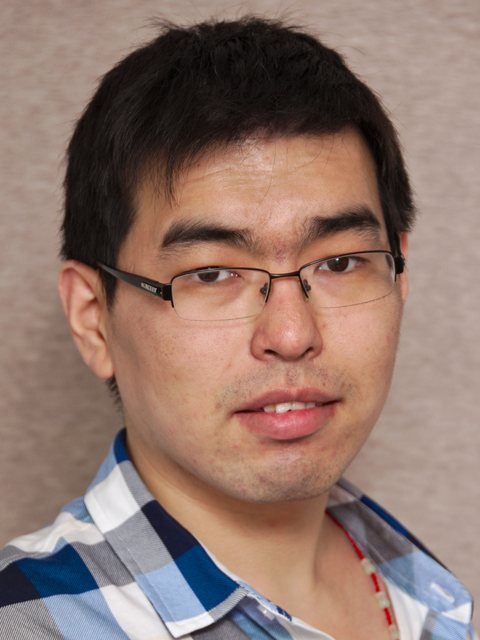 Haohan Wang (汪浩瀚)合作论文数School of Information Sciences, University of Illinois Urbana-Champaign;Department of Computer Science, University of Illinois Urbana-Champaign;Carl R. Woese Institute for Genomic Biology, University of Illinois Urbana-Champaign;National Center for Supercomputing Applications, University of Illinois Urbana-Champaign2Yulong Wang合作论文数1Zhichuan Wang合作论文数1Liang Ma合作论文数1
 Xinwei He (何新卫)合作论文数College of Informatics, Huazhong Agricultural University1Tong Zhang合作论文数1Jingjing Zhang合作论文数1
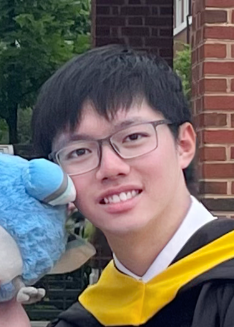 Yijiang (William) Li (黎羿江)合作论文数University of California San Diego;Johns Hopkins University1
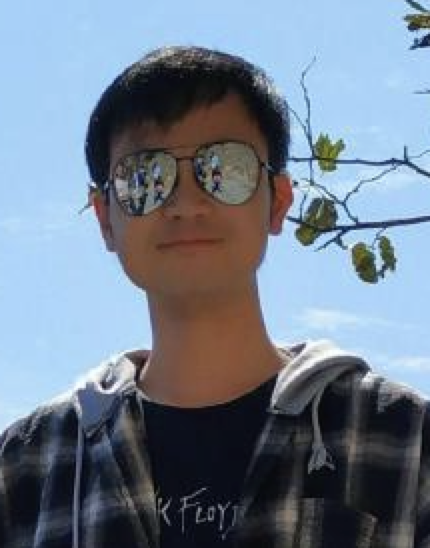 Yifan Zhang (张异凡)合作论文数Department of Computer Science, City University of Hong Kong1
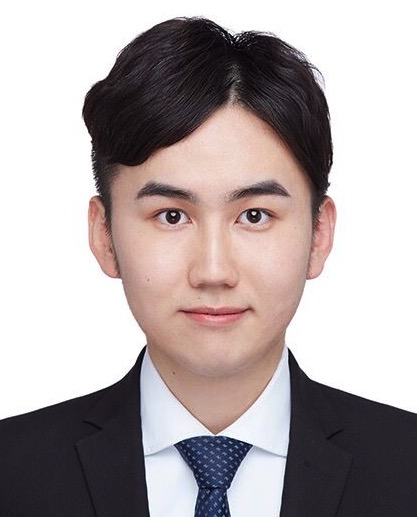 Peiyan Zhang合作论文数Hong Kong University of Science and Technology1Jianrong Lu合作论文数School of Cyber Science and Engineering, Huazhong University of Science and Technology, Wuhan, China1
 Wenqi Fan (范文琦)合作论文数Department of Computing, Faculty of Engineering, The Hong Kong Polytechnic University;Department of Management and Marketing, Business School, The Hong Kong Polytechnic University1
 Yang Zhou (周漾)合作论文数College of Computer Science & Software Engineering, Shenzhen University1Yuhao Zhang (张宇浩)合作论文数1Wei Fan (范维)合作论文数College of Engineering, Huazhong Agricultural University1
 Qiaohua Wang (王巧华)合作论文数华中农业大学工学院1
 Xiang Bai (白翔)合作论文数School of Artificial Intelligence and Automation, Huazhong University of Science and Technology;School of Software Engineering, Huazhong University of Science and Technology1




