We investigate experimentally and theoretically the behavior of the confined dark exciton in an InAs/GaAs semiconductor quantum dot, under the application of an external magnetic field in a Voigt configuration. We show that by varying the magnitude and direction of the external field one can accurately control the dark-exciton fine-structure splitting. In addition, we show that the dark-exciton spin state is approximately polarized along the cubic crystallographic directions [100] or equivalents. By comparing our experimental results with a model for the exchange and Zeeman interactions, we find the conditions for nullifying the fine-structure splitting between the two eigenstates of the dark exciton, thereby stopping its qubit precession.
We present magneto-optical studies of a self-assembled semiconductor quantum dot in neutral and positively charged states. The diamagnetic shifts and Zeeman splitting of many well-identified optical transitions are precisely measured. Remarkably, a pronounced negative diamagnetic shift is observed for spectral lines resulting from a doubly positively charged excitonic complex. We use the Hartree-Fock approximation for describing the direct Coulomb and exchange interactions between the quantum dot confined carriers in various configurations. A simple harmonic potential model, which we extend to capture the influence of an externally applied magnetic field in Faraday configuration, is then used to quantitatively account for all the measured diamagnetic shifts. We show that the negative shift is due to the change in the hole-hole exchange interaction energy induced by the magnetic field. Using this model and the measured shifts we extract the dielectric constant of the quantum dot material and get a decent estimate of the quantum dot dimensions. Further, the measured Zeeman splitting of the various spectral lines are also explained by a simple model using algebraic sums and differences of the g factors of the confined charge carriers in their respective first and second discrete energy levels. Finally, the obtained values of the electronic g factor and that of the dielectric constant are independently used to determine the effective composition (x) of the ternary InxGa1-xAs quantum dot. Both agree to within the experimental uncertainties.
Following the emergence of quantum computing, the subsequent quantum revolution will be that of interconnecting individual quantum computers at global level. In the same way that classical computers only realised their full potential with the emergence of the internet, a fully realised quantum internet is the net stage of evolution for quantum computation. This work examines in detail how the quantum internet would evolve in practice, focusing not only on the technology itself but also on the implications it will have economically and politically. We present both original ideas, as well as an extensive review of relevant and related background material. This work begins with a description of classical networks before introducing the key concepts behind quantum networks, such as quantum internet protocols, quantum cryptography, and cloud quantum computing. The work is divided into technical sections (requiring only a basic knowledge of the notation of quantum mechanics), for those interested in mathematical details, as well as non-technical sections for those seeking a more general understanding. We target this work very broadly at quantum and classical computer scientists, classical computer systems, software and network engineers, physicists, economists, artists, musicians, and those just generally curious about the future of quantum technologies and what they might bring to humanity.
Cluster states are key resources for measurement-based quantum information processing. Photonic cluster and graph states, in particular, play indispensable roles in quantum network and quantum metrology. We demonstrate a semiconductor quantum dot based device in which the confined hole spin acts as a needle in a quantum knitting machine producing continuously and deterministically at sub-Gigahertz repetition rate single indistinguishable photons which are all polarization entangled to each other and to the spin in a one dimensional cluster state. By projecting two nonadjacent photons onto circular polarization bases we disentangle the spin from the photons emitted in between. This way we demonstrate a novel way for producing deterministic and continuous all-photonic cluster states. We use polarization tomography on four sequentially detected photons to demonstrate and to directly quantify the robustness of the cluster's entanglement and the determinism in its photon generation.
Entanglement between particles is a basic concept of quantum sciences. The ability to produce entangled particles in a controllable manner is essential for any quantum technology. Entanglement between light particles (photons) is particularly crucial for quantum communication due to light's non-interactive nature and long-lasting coherence. Resources producing entangled multiphoton cluster states will enable communication between remote quantum nodes, as the inbuilt redundancy of cluster photons allows for repeated local measurements-compensating for losses and probabilistic Bell measurements. For feasible applications, the cluster generation should be fast, deterministic and, most importantly, its photons indistinguishable, which will allow measurements and fusion of clusters by interfering photons. Here, using periodic excitation of a semiconductor quantum-dot-confined spin, we demonstrate a multi-indistinguishable photon cluster, featuring a continuously generated string of photons at deterministic gigahertz generation rates, and an optimized entanglement length of about ten photons. The indistinguishability of the photons opens up new possibilities for scaling up the cluster's dimensionality by fusion, thus building graph states suited for measurement-based photonic quantum computers and all-photonic quantum repeaters.
Berry curvature is a fundamental element to characterize topological quantum physics, while a full measurement of Berry curvature in momentum space was not reported for topological states. Here we achieve two-dimensional Berry curvature reconstruction in a photonic quantum anomalous Hall system via Hall transport measurement of a momentum-resolved wave packet. Integrating measured Berry curvature over the two-dimensional Brillouin zone, we obtain Chern numbers corresponding to -1 and 0. Further, we identify bulk-boundary correspondence by measuring topology-linked chiral edge states at the boundary. The full topological characterization of photonic Chern bands from Berry curvature, Chern number, and edge transport measurements enables our photonic system to serve as a versatile platform for further in-depth study of novel topological physics.
We investigate experimentally and theoretically the temporal evolution of the spin of the conduction band electron and that of the valence band heavy hole, both confined in the same semiconductor quantum dot. In particular, the coherence of the spin purity in the limit of a weak externally applied magnetic field, comparable in strength to the Overhauser field due to fluctuations in the surrounding nuclei spins. We use an all-optical pulse technique to measure the spin evolution as a function of time after its initialization. We show for the first time that the spin purity performs complex temporal oscillations which we quantitatively simulate using a central spin model. Our model encompasses the Zeeman and the hyperfine interactions between the spin and the external and Overhauser fields, respectively. Our novel studies are essential for the design and optimization of quantum-dot-based entangled multi-photon sources. Specifically, cluster and graph states, which set stringent limitations on the magnitude of the externally applied field.
On demand generated Noon state is used for optical phase measurement with precision which is better than the standard noise limit, depending only on the detectors’ efficiency.
Measurement-based quantum communication relies on the availability of highly entangled multi-photon cluster states. The inbuilt redundancy in the cluster allows communication between remote nodes using repeated local measurements, compensating for photon losses and probabilistic Bell-measurements. For feasible applications, the cluster generation should be fast, deterministic, and its photons - indistinguishable. We present a novel source based on a semiconductor quantum-dot device. The dot confines a heavy-hole, precessing in a finely tuned external weak magnetic field while periodically excited by a sequence of optical pulses. Consequently, the dot emits indistinguishable polarization-entangled photons, where the field strength optimizes the entanglement. We demonstrate Gigahertz rate deterministic generation of >90 indistinguishable photons in a cluster state with more than 10 photons characteristic entanglement-length.
We propose a new method to directly measure a general multi-particle quantum wave function, a single matrix element in a multi-particle density matrix, by quantum teleportation. The density matrix element is embedded in a virtual logical qubit and is nondestructively teleported to a single physical qubit for readout. We experimentally implement this method to directly measure the wavefunction of a photonic mixed quantum state beyond a single photon using a single observable for the first time. Our method also provides an exponential advantage over the standard quantum state tomography in measurement complexity to fully characterize a sparse multi-particle quantum state.
Semiconductor quantum dots are probably the preferred choice for interfacing anchored, matter spin qubits and flying photonic qubits. While full tomography of a flying qubit or light polarization is in general straightforward, matter spin tomography is a challenging and resource-consuming task. Here we present a novel all-optical method for conducting full tomography of quantum-dot-confined spins. Our method is applicable for electronic spin configurations such as the conduction-band electron, the valence-band hole, and for electron-hole pairs such as the bright and the dark exciton. We excite the spin qubit using short resonantly tuned, polarized optical pulse, which coherently converts the qubit to an excited qubit that decays by emitting a polarized single-photon. We perform the tomography by using two different orthogonal, linearly polarized excitations, followed by time-resolved measurements of the degree of circular polarization of the emitted light from the decaying excited qubit. We demonstrate our method on the dark exciton spin state with fidelity of 0.94, mainly limited by the accuracy of our polarization analyzers.
Precision measurements of optical phases have many applications in science and technology. Entangled multiphoton states have been suggested for performing such measurements with precision that significantly surpasses the shot-noise limit. Until recently, such states have been generated mainly using spontaneous parametric down-conversion-a process which is intrinsically probabilistic, counteracting the advantages that the entangled photon states might have. Here we use a semiconductor quantum dot to generate entangled multiphoton states in a deterministic manner, using periodic timed excitation of a confined spin. This way we entangle photons one by one at a rate which exceeds 300 MHz. We use the resulting multiphoton state to demonstrate super-resolved optical phase measurement. Our results open up a scalable way for realizing genuine quantum enhanced supersensitive measurements in the near future.
We use a multiphoton Greenberger-Horne-Zeilinger state to demonstrate optical phase measurement with sensitivity that beats the standard quantum limit. The state is produced deterministically at a rate of 76 MHz from a single point source.
A central theme in quantum information science is to coherently control an increasing number of quantum particles as well as their internal and external degrees of freedom (DoFs), meanwhile maintaining a high level of coherence. The ability to create and verify multiparticle entanglement with individual control and measurement of each qubit serves as an important benchmark for quantum technologies. To this end, genuine multipartite entanglement have been reported up to 14 trapped ions, 10 photons, and 10 superconducting qubits. Here, we experimentally demonstrate an 18-qubit Greenberger-Horne-Zeilinger (GHZ) entanglement by simultaneous exploiting three different DoFs of six photons, including their paths, polarization, and orbital angular momentum (OAM). We develop high-stability interferometers for reversible quantum logic operations between the photon's different DoFs with precision and efficiencies close to unity, enabling simultaneous readout of 262,144 outcome combinations of the 18-qubit state. A state fidelity of 0.708(16) is measured, confirming the genuine entanglement of all the 18 qubits.
Entangled-photon sources with simultaneously near-unity heralding efficiency and indistinguishability are the fundamental elements for scalable photonic quantum technologies. We design and realize a degenerate telecommunication wavelength entangled-photon source from an ultrafast pulsed laser pumped spontaneous parametric down-conversion (SPDC), which shows simultaneously 97% heralding efficiency and 96% indistinguishability between independent single photons without narrow-band filtering. Such a beamlike and frequency-uncorrelated SPDC source allows generation of the first 12-photon genuine entanglement with a state fidelity of 0.572±0.024. We further demonstrate a blueprint of scalable scattershot boson sampling using 12 SPDC sources and a 12×12 mode interferometer for three-, four-, and five-boson sampling, which yields count rates more than 4 orders of magnitude higher than all previous SPDC experiments.
Quantum Fourier transforms (QFTs) have gained increased attention with the rise of quantum walks, boson sampling, and quantum metrology. Here, we present and demonstrate a general technique that simplifies the construction of QFT interferometers using both path and polarization modes. On that basis, we first observe the generalized Hong-Ou-Mandel effect with up to four photons. Furthermore, we directly exploit number-path entanglement generated in these QFT interferometers and demonstrate optical phase supersensitivities deterministically.
Bell's theorem shows a profound contradiction between local realism and quantum mechanics on the level of statistical predictions. It does not involve directly Einstein-Podolsky-Rosen (EPR) correlations. The paradox of Greenberger-Horne-Zeilinger (GHZ) disproves directly the concept of EPR elements of reality, based on the EPR correlations, in an all-versus-nothing way. A three-qubit experimental demonstration of the GHZ paradox was achieved nearly twenty years ago, and followed by demonstrations for more qubits. Still, the GHZ contradictions underlying the tests can be reduced to three-qubit one. We show an irreducible four-qubit GHZ paradox, and report its experimental demonstration. The reducibility loophole is closed. The bound of a three-setting per party Bell-GHZ inequality is violated by $7\sigma$. The fidelity of the GHZ state was around $81\%$, and an entanglement witness reveals a violation of the separability threshold by $19\sigma$.
自从进入大数据时代,人们对于数据处理速度的需求越来越大,但是经典计算的发展却逐渐达到瓶颈,越来越难以满足这种需求.由于并行性,量子计算在诸多问题的处理上可以达到指数加速效果,有巨大的信息处理潜力,正好能满足人类对于数据处理速度的需求,被公认为是下一代信息技术的核心技术.围绕量子计算,最近实验演示了2种具有指数加速效果的量子算法:求解线性方程组量子算法和机器学习量子算法;其次介绍了最新实现的多自由度量子隐形传态.量子隐形传态是可扩展的线性光学KLM方案的重要组成部分.多自由度量子隐形传态实验打破了国际学术界从1997年以来只能传输粒子单一自由度的局限,为发展可扩展的量子计算奠定了基础.
It was suggested in Ref. [Phys. Rev. Lett. 114, 170802] that optical networks with relatively inexpensive overhead---single photon Fock states, passive optical elements, and single photon detection---can show significant improvements over classical strategies for single-parameter estimation, when the number of modes in the network is small (n < 7). A similar case was made in Ref. [Phys. Rev. Lett. 111, 070403] for multi-parameter estimation, where measurement is instead made using photon-number resolving detectors. In this paper, we analytically compute the quantum Cram\'er-Rao bound to show these networks can have a constant-factor quantum advantage in multi-parameter estimation for even large number of modes. Additionally, we provide a simplified measurement scheme using only single-photon (on-off) detectors that is capable of approximately obtaining this sensitivity for a small number of modes.
To date, blind quantum computing demonstrations require clients to have weak quantum devices. Here we implement a proof-of-principle experiment for completely classical clients. Via classically interacting with two quantum servers that share entanglement, the client accomplishes the task of having the number 15 factorized by servers who are denied information about the computation itself. This concealment is accompanied by a verification protocol that tests servers' honesty and correctness. Our demonstration shows the feasibility of completely classical clients and thus is a key milestone towards secure cloud quantum computing.
 Chao-Yang Lu (陆朝阳)合作论文数Division of Quantum Physics and Quantum Information, University of Science and Technology of China;Shanghai Institute for Advanced Studies, University of Science and Technology of China17
 Jian-Wei Pan (潘建伟)合作论文数Division of Quantum Physics and Quantum Information, University of Science and Technology of China14
 David Gershoni合作论文数Physics Department, Technion - Israel Institute of Technology;Solid State Institute, Technion - Israel Institute of Technology10
 Naile Liu (刘乃乐)合作论文数Division of Quantum Physics and Quantum Information, University of Science and Technology of China10
 Xilin Wang (汪喜林)合作论文数School of Physics, Nanjing University10
 He-Liang Huang (黄合良)合作论文数Henan Key Laboratory of Quantum Information and Cryptography, Information Engineering University9
 Mingcheng Chen (陈明城)合作论文数Shanghai Institute for Advanced Studies, University of Science & Technology of China;Division of Quantum Physics and Quantum Information, University of Science & Technology of China8
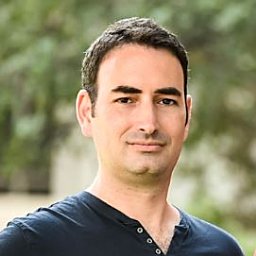 Dan Cogan合作论文数6
 Ding Xing合作论文数Centre for Excellence and Synergetic Innovation Centre in Quantum Information and Quantum Physics, University of Science and Technology of China6
 Dian Wu合作论文数East China Normal University6
 Li Li (李力)合作论文数中国科学技术大学合肥微尺度物质科学国家研究中心6
 Giora Peniakov合作论文数Physics Department and Solid State Institute, Technion–Israel Institute of Technology5
 XinDong Cai (蔡昕东)合作论文数5Jian Qin合作论文数Dept Modern Phys, Univ Sci & Technol China5
 Sven Höfling合作论文数Gottfried-Landwehr-Labor fuer Nanotechnologien, University of Würzburg5Oded Kenneth合作论文数4Beck Ayal合作论文数4
 Yu He (贺煜)合作论文数Institute for Quantum Science and Engineering, Southern University of Science and Technology4
 Yuming He (何玉明)合作论文数Hefei National Laboratory for Physical Sciences at the Microscale, University of Science and Technology of China4
 Hui Wang (王辉)合作论文数Shanghai Institute for Advanced Studies, University of Science & Technology of China4
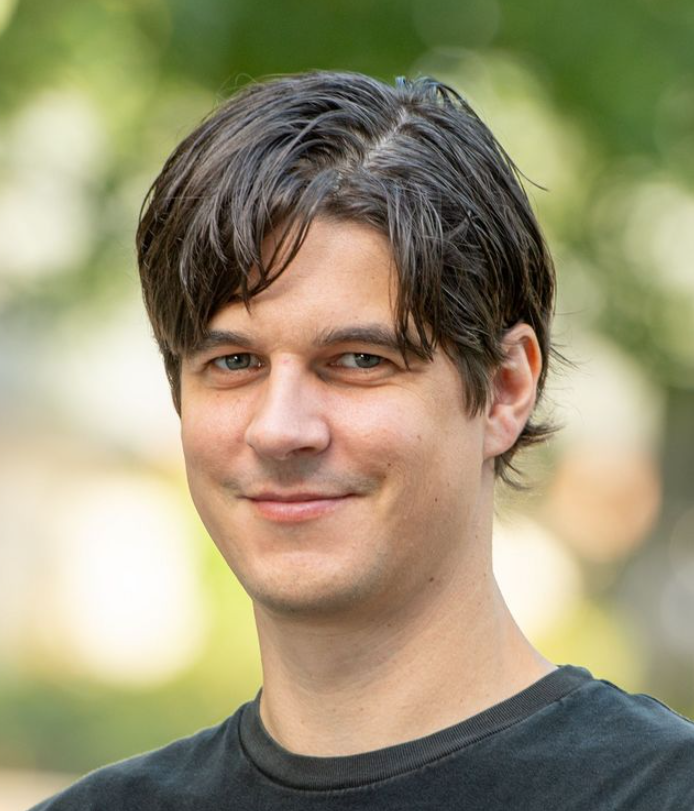 Christian Schneider合作论文数Institute of Physics, Carl von Ossietzky Universität Oldenburg4
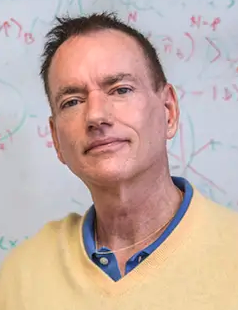 Jonathan Dowling合作论文数Department of Physics & Astronomy, College of Science, Louisiana State University4
 Martin Kamp合作论文数Microstructure Laboratory, Universität Würzburg4Bo Li合作论文数3Jinpeng Li合作论文数3
 Yu-Huai Li (李宇怀)合作论文数Division of Quantum Physics and Quantum Information, Shanghai Institute for Advanced Studies, University of Science and Technology of China3
 Chengzhi Peng (彭承志)合作论文数Shanghai Institute for Advanced Studies, University of Science and Technology of China3Chao Chen (陈超)合作论文数3
 Tim Byrnes合作论文数East China Normal University3
 Yuxi Chi合作论文数2Chenyu Zhang合作论文数2
 Sushovit Adhikari合作论文数2
 Margarite LaBorde合作论文数Pennington Biomed Res Ctr2
 Corey T. Matyas合作论文数Hearne Institute for Theoretical Physics, Louisiana State University2Run-Ze Liu合作论文数Shanghai Res Ctr Quantum Sci2
 Ido Schwartz合作论文数Dept. of Phys., Technion - Israel Inst. of Technol.;c;Dept. of Phys., Technion - Israel Inst. of Technol.2
 Olson Jonathan P合作论文数Department of Physics &, Hearne Institute for Theoretical Physics;Astronomy, Louisiana State University;Hearne Institute for Theoretical Physics and Department of Physics & Astronomy, Louisiana State University2
 Chenglong You合作论文数Qingdao University, Qingdao University2
 Xiao Jiang (江晓)合作论文数Division of Quantum Physics and Quantum Information;University of Science and Technology of China2
 Tao Yang (杨涛)合作论文数University of Science and Technology of China2
 Barry Cyril Sanders合作论文数Department of Physics and Astronomy, Faculty of Science, University of Calgary;European Organization for Nuclear Research2
 Peter P. Rohde合作论文数Centre for Quantum Computer Technology;Department of Physics;University of Queensland;Centre for Quantum Computer Technology, University of Queensland2
 Hao Li (李浩)合作论文数1L. Wang合作论文数1
 Wei Li (李炜)合作论文数Changchun Institute of Optics, Fine Mechanics and Physics, Chinese Academy of Sciences;University of Chinese Academy of Sciences1
 Weijun Zhang (张伟君)合作论文数Center for ExcelleNce in Superconducting Electronics, Shanghai Institute of Microsystem and Information Technology, Chinese Academy of Sciences;University of Chinese Academy of Sciences1Boaz Taitler合作论文数1
 Han-Sen Zhong (钟翰森)合作论文数Shanghai Artificial Intelligence Laboratory1
 Sebastian Unsleber合作论文数Bosch Rexroth AG1




