An overview of the two FEBUKO aerosol-cloud interaction field experiments in the Thuringer Wald (Germany) in October 2001 and 2002 and the corresponding modelling project MODMEP is given. Experimentally, a variety of measurement methods were deployed to probe the gas phase, particles and cloud droplets at three sites upwind, downwind and within an orographic cloud with special emphasis on the budgets and interconversions of organic gas and particle phase constituents. Out of a total of 14 sampling periods within 30 cloud events three events (El, Ell and EIII) are selected for detailed analysis. At various occasions an impact of the cloud process on particle chemical composition such as on the organic compounds content, sulphate and nitrate and also on particle size distributions and particle mass is observed. Moreover, direct phase transfer of polar organic compound from the gas phase is found to be very important for the understanding of cloudwater composition.For the modelling side, a main result of the MODMEP project is the development of a cloud model, which combines a complex multiphase chemistry with detailed microphysics. Both components are described in a fine-resolved particle/drop spectrum. New numerical methods are developed for an efficient solution of the entire complex model. A further development of the CAPRAM mechanism has lead to a more detailed description of tropospheric aqueous phase organic chemistry. In parallel, effective tools for the reduction of highly complex reaction schemes are provided. Techniques are provided and tested which allow the description of complex multiphase chemistry and of detailed microphysics in multidimensional chemistry-transport models. (c) 2005 Elsevier Ltd. All rights reserved.
The parcel model SPACCIM is applied to investigate the effect of multiphase cloud processing of tropospheric aerosol particles and trace gases resulting from a passage through an orographic cloud at Mt. Schmücke (Germany) during the joint research project FEBUKO. The applied model combines a complex microphysical and a detailed multiphase chemistry model with about 261 gas phase and 776 aqueous phase reactions. The chemical multiphase model incorporates a detailed description of the inorganic and organic multiphase chemistry based on time-dependent size-resolved aerosol/cloud spectra. The data measured at the upwind site provided the basis for the chemical and physical model initialisation under real environmental conditions. The simulation results were compared to experimental cloud water composition data at Schmücke summit site as well as gas and aerosol measurements at downwind site in order to interpret the experimental data and to evaluate the model results. To this end, a detailed analysis of the chemical multiphase system was performed including source and sinks studies with special emphasis on aqueous phase oxidants and S(IV) to S(VI) conversion. A central objective of the study has been to assess in-cloud oxidations of organic compounds and results for important C2 and C3 oxidation subsystems are presented. This modelling study shows that the observed multiphase chemistry is strongly affected by dynamic microphysical processes. Furthermore, a significant cloud condensation nuclei (CCN) modification with sizes up to about 400nm, mass productions up to about 0.7μgm−3 and acidification caused by cloud processing was identified in the model in agreement with the experimental findings. However, for organic compounds with low solubilities the cloud water measurements show considerably higher concentrations than expected from both (i) their Henry solubilities and (ii) the complex multiphase modelling as performed by the model.
CAPRAM 3.0 is the latest development of the chemical aqueous phase radical mechanism (CAPRAM) series which is incorporating CAPRAM 2.4 (Ervens et al., 2003a, Journal of Geophysical Research-Atmospheres 108) and a new extended reaction mechanism for atmospherically relevant hydrocarbons containing more than two and up to six carbon atoms. The chemistry of organics containing three and four carbon atoms is now described in detail. Almost 400 new reactions are now implemented considering the chemistry of organic compounds containing different functional groups, i.e. alcohols, carbonyl compounds, mono- and dicarboxylic acids, polyfunctional compounds as well as some esters and one heterocyclic compound.The aqueous chemistry has been coupled to the gas phase mechanism RACM (regional atmospheric chemistry modeling) (Stockwell et al., 1997, Journal of Geophysical Research-Atmpspheres 102, 25847-25879), and phase exchange is treated using the resistance model of Schwartz (1986. In: Jaeschke, W. (Ed.), Chemistry of Multiphase Atmospheric Systems, NATO ASI Series, Springer, Berlin, pp. 415-471). The CAPRAM remote scenario which was chosen as the standard scenario showed that the introduction of the higher organic chemistry has a relevant influence on the standard subsystems. The diurnal peak concentration of OH radical in the droplets decreases with about 40% and the reactions of OH with hydrocarbons containing 3 or 4 carbon atoms account for about 10% out of the total sinks of OH in the droplets. A slightly stronger acidification of the aqueous phase in comparison to CAPRAM 2.4 is observed.The simulations for the standard scenario showed that there is an increase of organic mass within the droplets where the organic compounds containing 4 carbon atoms represent the 67.5% of the total mass, whereas in the urban and in the marine scenario the contribution of two carbon atom compounds is dominating. The formation and accumulation of substituted mono- and dicarboxylic acids such as tartaric, mesoxalic and acetic acid in the aqueous phase are also observed. (c) 2005 Elsevier Ltd. All rights reserved.
Box model studies have been performed to study the role of aqueous phase chemistry with regard to halogen activation for marine and urban clouds and the marine aerosol as well. Different chemical pathways leading to halogen activation in diluted cloud droplets and highly concentrated sea salt aerosol particles are investigated. The concentration of halides in cloud droplets is significantly smaller than in sea-salt particles, and hence different reaction sequences control the overall chemical conversions. In diluted droplets radical chemistry involving OH, NO(3), Cl/Cl(2)(-)/ClOH(-), and Br/Br(2)(-)/BrOH(-) gains in importance and pH independent pathways lead to the release of halogens from the particle phase whereas the chemistry in aerosol particles with high electrolyte concentrations is controlled by non-radical reactions at high ionic strengths and relatively low pH values. For the simulation of halogen activation in tropospheric clouds and aqueous aerosol particles in different environments a halogen module was developed including both gas and aqueous phase processes of halogen containing species. This module is coupled to a base mechanism consisting of RACM (Regional Atmospheric Chemistry Mechanism) and the Chemical Aqueous Phase Radical Mechanism CAPRAM 2.4 (MODAC-mechanism). Phase exchange is described by the resistance model by Chemistry of Multiphase Atmospheric Systems, NATO ASI Series, 1986. It can be shown that under cloud conditions the bromine atom is mainly produced by OH initiated reactions, i.e. its concentration maximum is reached at noon. In contrast, the concentration level of chlorine atoms is linked to NO(3) radical chemistry leading to a smaller amplitude between day and night time concentrations. The contribution of radical processes to halogen atom formation in the particle phase is evident, e.g. by halogen atoms which undergo direct phase transfer. Furthermore, the application of the multiphase model for initial concentrations for sea-salt aerosols shows that the particle phase can act as a main source of halogen containing molecules (Cl(2), BrCl, Br(2)) which are photolysed in the gas phase to yield halogen atoms (about 70% of all Cl sources and more than 99% for Br).
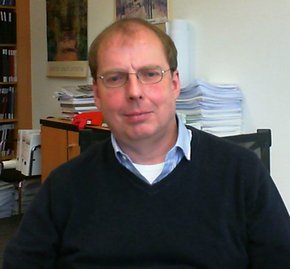 Hartmut Herrmann合作论文数Atmospheric Chemistry Department, Leibniz Institute For Tropospheric Research;Department of Environmental Science and Engineering, Fudan University;School of Environmental Science and Engineering, Shandong University6
 Andreas Tilgner合作论文数Fakultat fur Physik, University of Göttingen;Institute of Geophysics, University of Göttingen5
 Paolo Barzaghi合作论文数3a m sehili合作论文数2
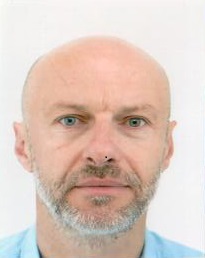 Sasho Gligorovski合作论文数State Key Laboratory of Organic Geochemistry, Guangzhou Institute of Geochemistry, Chinese Academy of Sciences;University of Chinese Academy of Sciences2Ralf Wolke合作论文数2
 Laurent Poulain合作论文数Leibniz Institute for Tropospheric Research2Anne Monod合作论文数UMR 6264: Laboratoire Chimie Provence, Universités d’Aix-Marseille I, II et III–CNRS2Simmel Martin合作论文数2D Hofmann合作论文数1D. Galgon合作论文数1W. Jaeschke合作论文数1gunther mauersberger合作论文数1k alex muller合作论文数1katrin lehmann合作论文数1e bruggemann合作论文数1Barbara Ervens合作论文数CNRS, Univ Clermont Auvergne1Bächmann Knut合作论文数1Sabine Wurzler合作论文数1
 Andreas Nowak合作论文数1
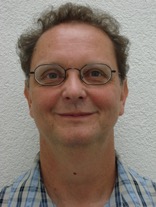 Alfred Wiedensohler合作论文数Department of Atmospheric Microphysics, Leibniz Institute for Tropospheric Research;Calibration Centre, Leibniz Institute for Tropospheric Research;Department of Experimental Aerosol and Cloud Microphysics, Leibniz Institute for Tropospheric Research1
 Wolfram Birmili合作论文数Leibniz Institute for Tropospheric Research1D. Weise合作论文数1K. Acker合作论文数1Andreas Massling合作论文数1D. Van Pinxteren合作论文数1Detlef Hinneburg合作论文数1Oswald Knoth合作论文数1
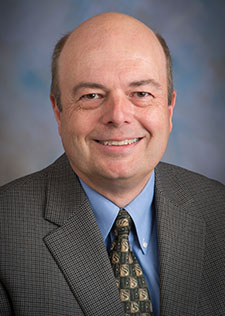 Jeffrey L. Collett Jr.合作论文数Department of Atmospheric Science, Colorado State University1Frank Müller合作论文数1Andrzej Plewka合作论文数1Kathrin Schwirn合作论文数1Thomas Gnauk合作论文数1
 Stephan Mertes合作论文数Leibniz-Institute for Tropospheric Research1Karoline Diehl合作论文数1
 Bernd Heinold合作论文数1




