The pure rotational spectrum of a minor isotopologue of ytterbium fluoride, 171YbF, in the X2Σ+ (v=0) state has been recorded using Fourier transform microwave (FTMW) spectroscopy and pump/probe microwave optical double resonance (PPMODR) spectroscopy. The pure rotational spectra and precisely measured splittings in the (0,0) A2Π1/2←X2Σ+ band were analyzed to produce an improved set of fine and magnetic hyperfine parameters for the X2Σ+ (v=0) state of 171YbF. A comparison with theoretical predictions is made.
A known Urysohn’s result shows that there exists a universal metric space, i.e., a metric space into every other (separable) metric space can be isomorphically embedded. Moreover, this universal metric space can be selected to be ultrahomogeneous – every isomorphism of its two finite subsets can be extended to the isomorphism of the whole space. Starting with Einstein’s theories of Special and General relativity, space-times are described by a different type of structure – a set (of events) equipped with the proper time (a;b) between points a and b; such spaces are known as space-times with kinematic metric, or k-space-times. In this paper, we show that Urysohn’s result can be extended to k-space-times – namely, that there exists an ultra-homogeneous universal k-space-time.
 Donald P Fahey合作论文数3
 Anh T. Le合作论文数2
 Jens-Uwe Grabow合作论文数Institute of Physical Chemistry and Electrochemistry, Faculty of Natural Sciences, Leibniz University Hannover2
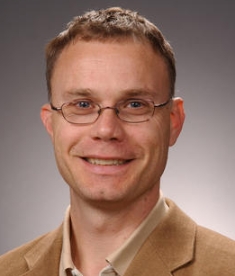 Eite Tiesinga合作论文数Laser Cooling and Trapping Group, Physical Measurement Laboratory, National Institute of Standards and Technology2Richard J. Mawhorter合作论文数2Timothy C. Steimle合作论文数2
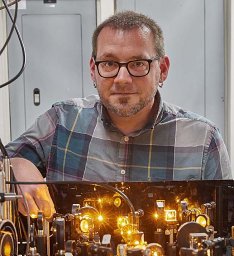 Arne Schwettmann合作论文数Center for Nonlinear Science, University of North Texas2
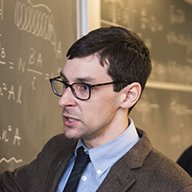 Ryan M. Wilson合作论文数Department of Physics;University of Colorado;Department of Physics, University of Colorado2Jonathan Wrubel合作论文数1Donald P. Fahey合作论文数1Jamie Luskin合作论文数1Alexander Impertro合作论文数LMU1
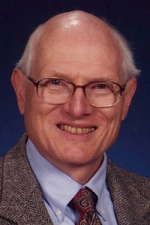 Paul S. Julienne合作论文数Department of Physics, College of Computer, Mathematical, & Natural Sciences, University of Maryland;National Institute of Standards and Technology1
 Vladik Kreinovich合作论文数Department of Computer Science, University of Texas at El Paso1G. S. Summy合作论文数Department of Physics;Oklahoma State University;Department of Physics, Oklahoma State University1
 Asuman G. Aksoy合作论文数Department of Mathematics, Claremont McKenna College1
 Olga M. Kosheleva合作论文数STEM Education Division, Department of Teacher Education, University of Texas at El Paso;Department of Electrical and Computer Engineering, University of Texas at El Paso1
 Paul D. Lett合作论文数Joint Quantum Institute|National Institute of Standards and Technology|University of Maryland1




