Infrastructure systems are the backbone of modern society, and their timely recovery following natural hazards is vital for safeguarding human well-being and economic stability. However, the recovery process is inherently complex and involves dynamic interactions between multiple sectors, uncertainties in decision-making, and constraints in resource allocation. As artificial intelligence (AI) continues to advance, machine learning (ML) has emerged as a powerful approach for enhancing understanding and supporting data-driven decisions in infrastructure recovery. Despite the growing interest, existing studies on ML applications in this context remain fragmented. To address this gap, this study conducted a systematic review of the literature on ML applications in infrastructure recovery from natural hazards, following the guidelines of Preferred Reporting Items for Systematic reviews and Meta-Analyses (PRISMA). The review identifies key application areas, categorizes ML techniques across learning paradigms, and highlights common challenges. By synthesizing current developments, this work aims to provide a comprehensive overview of the field and offer insights for researchers and practitioners seeking to leverage ML for more effective, adaptive, and resilient recovery strategies. It also outlines future directions to advance ML integration in this emerging domain and promote its broader application in disaster recovery research and practice.
Natural hazards pose significant threats to housing infrastructure worldwide. Governments play a pivotal role in post-disaster housing reconstruction (PDHR). However, existing research often fails to distinguish between factors that governments can realistically manage and those beyond their control. This oversight limits the availability of practical guidance for effective policy-making. This study addresses this gap by identifying and evaluating Key Government-manageable Factors (KGMFs) to enhance the effectiveness of government-led reconstruction efforts, using recent flood events in China as a case study. A sequential qualitative approach was employed, which began with a comprehensive literature review to identify an initial pool of KGMFs. These factors were then refined and evaluated for their importance and implementation difficulty through in-depth interviews with government officials across three flood-affected case study sites. The study identifies 28 KGMFs across five dimensions, including policy framework, resource management, stakeholder coordination, quality supervision, and housing adaptation. Systemic implementation barriers were identified, including financial rigidity, inter-departmental coordination silos, policy ambiguity, and fragmented communication, which undermine the translation of policy intent into effective practice at the community level. This research contributes a novel analytical framework centered on “government-manageability” and provides a practical tool for policymakers to strategically allocate resources. By delineating actionable levers for intervention, the study offers crucial insights for improving the governance of post-disaster reconstruction in China and other contexts with significant state involvement.
Urban flooding increasingly disrupts transportation networks, requiring efficient coordination of repair operations. This paper addresses how to optimize post-flood road restoration scheduling as a scattered repetitive project in a sophisticated, real-time decision-making environment. The proposed framework integrates agent-based modeling with deep learning, where autonomous repair crews dynamically prioritize tasks based on real-time accessibility predictions from a neural network proxy model. The Beijing case study demonstrated that the accessibility-driven strategy significantly improved recovery of network functionality compared to nearest-first and random approaches, particularly during critical early restoration phases. This improvement matters for emergency managers and infrastructure operators who must rapidly restore community access to vital facilities such as hospitals after disasters. Future research can extend this framework to other hazards and infrastructure systems, incorporating advanced uncertainty quantification, climate-informed risk assessments, and adaptive decision-making mechanisms for enhanced disaster planning.
Extreme weather events increasingly threaten critical infrastructure, necessitating rapid and accurate assessment of transportation network damage for effective emergency response. However, such assessments are challenged by sparse and unevenly distributed post-disaster observation data. While data-driven and physics-based approaches offer possible solutions, they often face difficulties in integrating diverse domain knowledge and generalizing effectively under data-scarce conditions. This study proposes a Markov Random Field (MRF) framework to infer probabilistic flood inundation states from sparse observations. The model integrates geospatial information on elevation, physical principles governing hydrological flows, and topological characteristics of intersection vulnerability within a unified energy-based framework. Evaluation on Hurricane Harvey’s impact to Houston’s highway system indicates that the MRF model achieves consistently high predictive performance across varying levels of data sparsity. Specifically, with 40% observational data, the integration of hydrological and topological priors yielded an Intersection over Union (IoU) of 0.747, significantly surpassing the baseline elevation-only model (IoU = 0.517). The model also supports sequential updating of state estimates and parameters via Markov chain Monte Carlo sampling, allowing continuous refinement of inference results as new observational data becomes available. Furthermore, the probabilistic outputs support flexible, threshold-based risk classification, enabling adaptive decision-making for emergency resource allocation and laying the groundwork for digital twin applications. This work offers a transferable, knowledge-aware methodology for infrastructure resilience assessment under uncertainty.
Repair sequence scheduling is a critical step in the recovery planning of interdependent critical infrastructure systems (CIS) in the aftermath of a disaster. It is an important but challenging task that forms the basis for recovery planning and repair resources allocation by CIS managers. Despite the increasing number of studies analyzing repair sequence scheduling of CIS, existing approaches often struggle to model the complex behavior of CIS accurately under the dynamic impact of repair sequence. Consequently, they fail to fully utilize the detailed operational data of the system, hindering the solving efficiency of repair sequence decision-making models (RSDMMs). To overcome these limitations, this study proposes a new framework for solving RSDMMs. This framework introduces an advanced genetic algorithm-based method (GABM) which incorporates three rules that utilize detailed operational data of the damaged CIS. To obtain the detailed operational data needed to support the improvements in the advanced GABM, the framework leverages a high-level architecture (HLA)-based cosimulation approach to model the recovery process of CIS in detail. The cosimulation approach integrates domain-specific CIS models to capture the interdependencies among CIS and the detailed recovery process data of CIS under the dynamic impact of the repair sequence. To evaluate the effectiveness of the proposed framework, a case study involving two interdependent power and water systems was conducted. The results demonstrated that the proposed cosimulation approach can accurately model the dynamic impact of the repair sequence on the state of CIS. Furthermore, the advanced GABM exhibits significant advantages in terms of convergence speed and identification of the optimal repair sequence. Overall, the proposed framework enhances the ability to solve the RSDMM and supports CIS managers in efficiently responding to disasters.
China is highly susceptible to natural disasters, which cause widespread residential displacement and have long-lasting consequences on affected communities, emphasizing the importance of effective post-disaster housing reconstruction. This study aims to explore the barriers affecting post-disaster housing reconstruction in China. The research objectives include: (1) establishing a framework for the reconstruction process, (2) identifying and analyzing the barriers through a comprehensive literature review, and (3) categorizing the barriers based on the reconstruction framework. The workflow of post-disaster housing reconstruction is divided into five stages: disaster prevention and mitigation in pre-disaster areas, housing damage assessment, post-disaster housing reconstruction planning, coordination, and implementation. This research contributes to a more comprehensive understanding of the factors influencing post-disaster housing reconstruction in China, ultimately promoting resilience and sustainable development in affected areas. The findings will assist decision-makers in identifying key barriers and success factors that significantly influence the recovery process, thereby improving the overall efficiency and effectiveness of post-disaster housing reconstruction efforts in China.
Healthcare systems play a key role in providing emergency medical services during earthquake events. However, the healthcare systems themselves are also subjected to the impact of earth-quakes. Assessing and enhancing the seismic resilience of healthcare systems contributes to the improved performance of medical rescue during earthquakes. Despite many studies in this field, a methodology for resilience assessment that considers both the pre-and in-hospital rescue phases is still lacking, which makes it challenging to assess the seismic resilience of a healthcare system comprehensively. This paper addresses the gaps by proposing mathematical expressions for the indicators of healthcare system functionalities, developing a hybrid model to simulate and com-pute the functionalities, and providing methods for resilience assessment. A case study is carried out in China to demonstrate the effectiveness of the proposed approach. This paper contributes to the body of knowledge to understand and model the functionality of a healthcare system after an earthquake better. The proposed approach can serve as an effective tool for decision-makers to assess the seismic resilience of a healthcare system comprehensively and to compare the efficacy of different resilience enhancement measures.
The pre-hospital emergency services (PES) play a vital role in improving the survival and recovery rates of the injured after an earthquake, which, however, may also be interrupted during the earthquake. Appropriate quantitative approaches for assessing pre-hospital seismic resilience (PSR) are lacking, making it challenging to take resilience enhancement measures. This study proposes a new assessment approach for PSR based on agent-based modeling. The pre-hospital functionality is mathematically defined and simulated, of which the functionality curve is then applied to assess its PSR. The proposed approach is validated through a case study in China. This study advances the existing research to understand the influencing factors and the evolution of PSR and allows quantitative assessment of PSR. The outcomes will also contribute to developing effective resilience enhancement measures for decision-makers.
Infrastructure systems play a crucial role in ensuring the safety of cities and the well-being of residents after earthquakes. Meanwhile, infrastructure systems are vulnerable to earthquakes and may fail to provide necessary services, highlighting the significant need to improve seismic emergency performance. Nevertheless, the seismic emergency performance of infrastructure systems still lacks effective enhancement strategies and optimization models, which makes it challenging to devise and benchmark appropriate emergency enhancement actions. This study proposes an emergency performance optimization model for infrastructure systems against earthquakes. The model aims at maximizing the effects of resistance actions and short-term recovery actions on infrastructure systems with consideration of residents' expectations of infrastructure performance after earthquakes. The efficacy of the proposed model is tested by a case study in China. Experiments and results illustrate advantages of the seismic emergency performance optimization and prioritize resistance and short-term recovery activities within constraints set by available resources.
Hospitals play a crucial role in providing badly needed medical care after earthquakes. Meanwhile, hospitals are likely to find themselves subject to earthquake impacts and may fail to function, which highlights that there is significant need for enhancing their resilience to earthquakes. Nevertheless, effective assessment of hospital seismic resilience is lacking, which makes devising and benchmarking appropriate resilience enhancement measures challenging. This study proposes a new functionality-based assessment approach of hospital resilience to earthquakes. A new indicator of hospital functionality is proposed, and a system dynamics model of hospital functionality after earthquakes (SD-HFE) is developed to simulate hospital functionality. The resilience assessment can then be conducted based on the functionality curve, which considers both the loss and the recovery of hospital functionality. Based on a case study in China, the efficacy of the proposed approach is tested. The proposed approach advances understanding of how hospital functionality evolves after an earthquake, and allows quantitative assessment of hospital seismic resilience. The outcomes of this study will contribute to the development of informed policies and effective engineering measures to enhance the seismic resilience of hospitals. (C) 2020 American Society of Civil Engineers.
Since the COVID-19 outbreak, Wuhan has adopted three methods of admitting patients for treatment: designated hospitals, newly built temporary hospitals and Fangcang shelter hospitals. It has been proven that converting large-scale public venues such as stadiums and exhibition centres into Fangcang shelter hospitals, which serve as hospitals for isolation, treatment and disease monitoring of patients with mild symptoms, is the most effective way to control virus transmission and reduce mortality. This paper presents some experiences learnt from treating COVID-19 in Wuhan, the first city to report the outbreak and which suffered from a shortage of emergency supplies, heavy workload among staff and a shortage of hospital beds during the early stages of the pandemic. The experiences include location, accessibility, spacious outdoor area, spacious indoor space, power supply, architectural layout design and partition isolation, ventilation, sewage, and problems in the construction and management of Fangcang shelter hospitals. During the COVID-19 pandemic, traditional approaches to disaster preparedness have demonstrated intrinsic problems, such as poor economic performance, inefficiency and lack of flexibility. Converting large-scale public venues into Fangcang shelter hospitals is an important means to rapidly improve the function of the city’s healthcare system during a pandemic. This valuable experience in Wuhan will help other countries in their battle against the current COVID-19 pandemic and will also contribute to disaster preparedness and mitigation in the future.
Hospitals play a crucial role in providing emergency medical care to the local community immediately after an earthquake. While the impact of an earthquake may damage critical systems and medical facilities, the effective response of hospitals depends heavily on the capability of the medical personnel to continue delivering medical services to an increasing number of casualties. Previous studies have emphasized the need to improve hospital preparedness, but it does not explain how hospital preparedness predicts the response readiness of the medical personnel for disaster emergencies. The roles of leadership and group integration on influencing the response readiness have often been overlooked. Hence, to improve the disaster response effectiveness, this study aims to explore the impact of disaster management preparedness, leadership, and group integration on the response readiness for an earthquake. Questionnaires were developed and validated through expert interviews, in which a total of 121 valid survey responses were received from four hospitals in Mianzhu City, Sichuan Province, China. The hierarchical component modeling was performed and achieved a model fit on the measurement and structural models. Results revealed that disaster management preparedness has a significantly positive impact on response readiness. Leadership also affected group integration, which significantly mediated the relationship between management preparedness and response readiness. This study addressed the knowledge gap on the mechanism that affects disaster response readiness, thus developing a valid measurement tool. These findings offer the hospital management a guideline with which to assess the hospital response capability and further improve their response performance.
Hospitals play a crucial role in the mitigation and recovery of earthquake-hit regions, which are expected to be resilient enough so as to provide medical care that is badly needed in the aftermath of earthquakes. Nevertheless, there lack appropriate quantitative assessment approaches of hospital earthquake resilience, which makes it challenging for devising and benchmarking resilience enhancement measures. In this paper, a quantitative assessment approach of hospital resilience to earthquakes considering the physical damage and the recovery of hospital functionality is proposed. A system dynamics (SD) model is developed to simulate the hospital functionality hence enabling quantification of hospital resilience to earthquakes. The efficacy of the proposed approach is validated in a case study. The proposed approach can provide a tool for hospitals to quantitatively assess their resilience to earthquakes so as to propose targeted resilience enhancement measures for future earthquakes.
Extreme weather events (EWEs), due to their high uncertainty, massive scale, irreversibility and destructiveness, may significantly impact cities, including causing notable perturbation to urban human mobility. Recent research has substantially advanced the knowledge on general human mobility patterns in cities, primarily about the spatiotemporal characteristics of trajectories of urban population, but has rarely examined the perturbation of these mobility patterns during EWEs. To quantitatively assess human mobility perturbation, this study proposes to measure both the instantaneous perturbation at any given moment during an EWE, and the accumulated perturbation over the entire timespan of the EWE. Using two metrics that are developed for the above purpose, a case study is conducted in Nanjing, a major city in China, which recently experienced record-breaking rainstorm and snowstorm events. Based on trajectories of all taxies and buses in Nanjing during these events, the case study quantitatively assesses the perturbation of human mobility in the city, compares it between two EWEs and between two modes of transport, and analyzes the geographical distribution of the perturbation within the city boundary. Based on the results, further insights into the impacts of EWEs on urban human mobility are discussed in the paper.
Natural,technical and man-made disasters pose enormous threats on both cities and their citizens worldwide.The concept of "urban resilience",which is defined as the ability of an urban system and all its constituent sub-systems to maintain the necessary functions during disturbance,rapidly recover in the aftermath of the disturbance,and adapt to uncertainties in the future,brings about a new perspective of understanding disaster prevention and reduction in urban systems.In this paper,the authors propose to view a city as a system of systems in trio spaces (physical,societal and cyber spaces),and illustrate the connotation and properties of urban resilience using several sub-systems of a city and their interactions as an example.Moreover,the concept of "resilience management" is proposed,and it is advocated that only by optimal allocation of resources among different sub-systems as well as different phases of resilience (resistance,recovery and adaptation) can urban resilience be ensured and enhanced in the most effective manner.
 Dongping Fang (方东平)合作论文数Department of Construction Management, School of Civil Engineering, Tsinghua University15
 Nan Li (李楠)合作论文数Department of Construction Management, School of Civil Engineering, Tsinghua University7
 Huey Wen Lim合作论文数School of Property, Construction and Project Management, RMIT University4
 Shengjie Pan合作论文数3
 Yanjiang Long (龙彦江)合作论文数School of Public Policy and Administration, Chongqing University2
 Zeyu Zhao合作论文数Department of Construction Management, Tsinghua University2
 Gian Paolo Cimellaro合作论文数Department of Structural, Building & Geotechnical Engineering, Politecnico di Torino2Di Gan合作论文数1Sheng Bai合作论文数1Ting Yuan合作论文数1
 Lin-Hai Han (韩林海)合作论文数Department of Civil Engineering, School of Civil Engineering, Tsinghua University1Zhongmin Liu合作论文数1Joseph Jonathan Magoua合作论文数1
 Wenying Ji合作论文数1
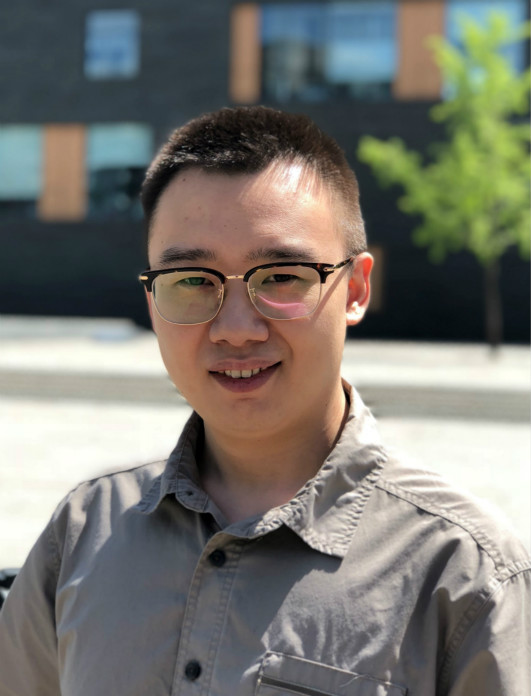 Yuecheng Huang (黄玥诚)合作论文数Department of Construction Management, School of Civil Engineering, Tsinghua University1
 Xiaoli Lu (吕孝礼)合作论文数School of Public Policy and Management, Tsinghua University1
 Zhao Chen合作论文数1
 Wang Tao (汪涛)合作论文数School of Public Policy and Administration, Chongqing University1
 Zhen Xu (许镇)合作论文数Research Institute of Urbanization and Urban Safety, University of Science and Technology Beijing;School of Civil and Resource Engineering, University of Science and Technology Beijing1
 Xinzheng Lu (陆新征)合作论文数Institute of Disaster Prevention and Mitigation, Department of Civil Engineering, School of Civil Engineering, Tsinghua University1
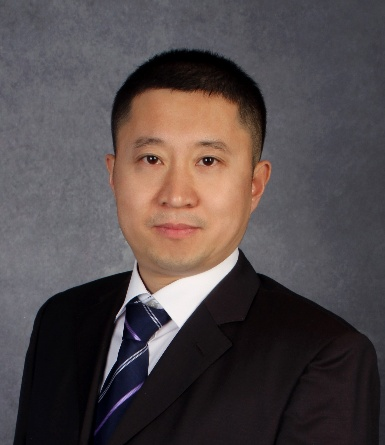 Xiangming Kong (孔祥明)合作论文数Institute of Building Materials, Department of Civil Engineering, School of Civil Engineering, Tsinghua University1




