In this paper, the signal recovery problem of incomplete ocean data based on graph signal processing is studied. In order to properly process the sparse and inhomogeneous data, the ocean data set is defined as a graph signal and its spatio-temporal characteristics is analyzed. The data are analyzed using the spatial smoothness of the signal based on topology, the correlation of time-varying signals over time, and the low-rank nature of the signal. Based on that, a signal recovery optimization problem is established and the optimization problem is solved via the alternating optimization and alternating direction method of multipliers (ADMM) framework. Simulations based on real-world dataset are performed to reveal the performance gain of the proposed approach.
In this work, the signal recovery problem regarding incomplete and noisy spatio-temporal signals is studied. A spatio-temporal signal is considered as a time-varying graph signal and a diffusion-induced first-order Markov signal model is developed to incorporate both the spatial structure and temporal correlation into the underlying graph. With this model, prior knowledge on spatial smoothness and temporal correlation is revisited, and the connections between the graph structure and differential temporal smoothness are revealed. The authors then accordingly formulate a spatio-temporal signal recovery method by jointly exploiting the spatial smoothness, low rank and refined differential temporal smoothness. The formulated recovery problem is solved by a block coordinate descent-based algorithm, which iteratively optimises the recovery accuracy and temporal correlation matrix. The experiments on three real-world datasets reveal the high signal recovery accuracy of the proposed algorithm.
In this paper the topology learning for time-varying graph signals with incremental data is studied. In order to learn the topology which is slowly time-varying during data collection, we separate the data of observation into multiple groups by time, and for each group we model the topology learning as a sparse optimization problem, in which the penalty function is designed to consider both the incremental data and previous topology information for graph learning. Moreover, a correction function for dynamic topology is developed by considering a priori information of topology changes. Based on that, by solving the optimization problem we then propose a dynamic topology learning and tracking algorithm to learn as well as track the varying graph topology. Simulations on synthetic and real-world dataset are performed to reveal the performance gain of the proposed algorithm.
In this paper the massive access problem in IoT networks is studied from the perspective of graph signal processing (GSP). First, we reveal the connections of massive access in IoT networks and the sampling of a graph signal, and model the massive access problem as a graph-based random sampling problem. Second, inspired by the restricted isometry property (RIP) condition in compressed sensing, we derive the RIP condition for random sampling on band-limited graph signals, showing at the first time that band-limited graph signals can be recovered from randomly-selected noisy samples in a given probability. Based on the proposed RIP condition, the sampling probability of each sensing device is optimized through minimizing the Chebyshev or Gaussian approximations of mean square error between the original and the recovered signals. Experiments on the Bunny and Community graphs verify the stability of random sampling, and show the performance gain of the proposed random sampling solutions.
 Shiyu Zhai合作论文数3
 Guobing Li (李国兵)合作论文数School of Information and Communications Engineering, Faculty of Electronic and Information Engineering, Xi’an Jiaotong University3
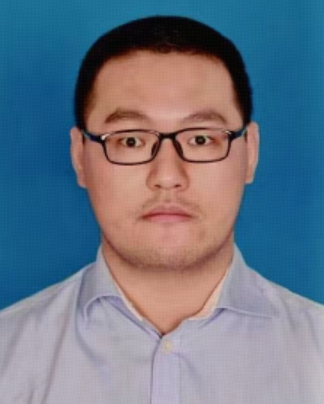 Ang Li (李昂)合作论文数School of Information and Communications Engineering, Faculty of Electronic and Information Engineering, Xi'an Jiaotong University1
 Xuewen Liao (廖学文)合作论文数Faculty of Electronic and Information Engineering, Xi'an Jiaotong University1
 Guomei Zhang (张国梅)合作论文数西安交通大学电子与信息工程学院1




