•Kānuka smoke was generated with a lab-scale generator in a controllable manner.•Phenols, ketones and aldehydes dominated the volatile composition of Kānuka smoke.•Temperature affected Kānuka smoke volatile composition more than atmosphere.•Results demonstrated the possibility of tuning smoke to achieve target profiles.
Management of post-traumatic stress disorder (PTSD) is complicated by the overlapping symptoms of its comorbidities. A comprehensive understanding of molecular pathophysiology of PTSD could facilitate unbiased biomarker-driven next-generation intervention strategies. In this study, epigenomic profiles were characterized as to the implications for behavior, immune response, nervous system development, and relevant PTSD comorbidities such as cardiac health and diabetes.
A lab-scale smoke generator was developed to enable smoke to be generated and collected in a controlled manner to analyze smoke from Manuka wood, a hardwood species indigenous to New Zealand. The impact of smoke generation parameters, including temperature and atmosphere, on the generation of aroma compounds and polycyclic aromatic hydrocarbons (PAHs) was investigated. Volatile organic compounds (VOCs) were trapped using stir-bar sorptive extraction (SBSE), and analyzed using gas chromatography-mass spectrometry (GC-MS). Manuka wood smoke was generated at two temperatures (280 degrees C and 480 degrees C) under either air or nitrogen. The VOCs in Manuka smoke varied depending on the smoke generation conditions, demonstrating the possibility of smoke manipulation. Eight PAHs with molecular weight no greater than 202 Da were detected. Higher temperature produced higher levels of PAHs, while the impact of atmosphere composition varied in a compound-specific manner.
Trauma is one of the main causes of hospitalization. Time is of the essence in diagnosis and treatment of trauma patients with severe injuries. To assist in decision-making, we propose a hidden Markov model for identification of disease states through which patients progress. An important property of our model is that it is based on features which are routinely collected in hospital trauma centers. Using a hidden Markov model based on fifteen features, six different patient states are identified. The resulting Markov model can be useful in identifying patients' states to assist in diagnosis and treatment.
Emerging knowledge suggests that post-traumatic stress disorder (PTSD) pathophysiology is linked to the patients’ epigenetic changes, but comprehensive studies examining genome-wide methylation have not been performed. In this study, we examined genome-wide DNA methylation in peripheral whole blood in combat veterans with and without PTSD to ascertain differentially methylated probes. Discovery was initially made in a training sample comprising 48 male Operation Enduring Freedom (OEF)/Operation Iraqi Freedom (OIF) veterans with PTSD and 51 age/ethnicity/gender-matched combat-exposed PTSD-negative controls. Agilent whole-genome array detected ~5600 differentially methylated CpG islands (CpGI) annotated to ~2800 differently methylated genes (DMGs). The majority (84.5%) of these CpGIs were hypermethylated in the PTSD cases. Functional analysis was performed using the DMGs encoding the promoter-bound CpGIs to identify networks related to PTSD. The identified networks were further validated by an independent test set comprising 31 PTSD+/29 PTSD− veterans. Targeted bisulfite sequencing was also used to confirm the methylation status of 20 DMGs shown to be highly perturbed in the training set. To improve the statistical power and mitigate the assay bias and batch effects, a union set combining both training and test set was assayed using a different platform from Illumina. The pathways curated from this analysis confirmed 65% of the pool of pathways mined from training and test sets. The results highlight the importance of assay methodology and use of independent samples for discovery and validation of differentially methylated genes mined from whole blood. Nonetheless, the current study demonstrates that several important epigenetically altered networks may distinguish combat-exposed veterans with and without PTSD.
Data mining techniques have been proposed to predict mortality for ICU patients using their demographic data, measurements and notes from doctors and nurses. Most of these techniques suffer from two main drawbacks. First, they model the mortality prediction problem as a binary classification problem, while ignoring the time of death as continuous values. Second, they use topic models to analyze the notes, while ignoring the relationship between measurements, notes and mortality/discharge outcomes. In this paper we propose a novel model called the survival topic model (SVTM), which models patients' measurements, notes and mortality/discharge jointly, and predicts the probability of mortality/discharge as functions of time. The idea is that each patient has a latent distribution of disease conditions, which we call topics. These conditions generate the measurements and notes and determine the patients' mortality. We derive a mean-field variational inference algorithm for this model. We fitted the SVTM with two outcomes on Medical Information Mart for Intensive Care III (MIMIC III) trauma patients data and obtained some important topics. Also, we demonstrated the relationships between these topics.
Accurate classification of biological phenotypes is an essential task for medical decision making. The selection of subjects for classifier training and validation sets is a crucial step within this task. To evaluate the impact of two approaches for subject selection—randomization and clinical balancing, we applied six classification algorithms to a highly replicated publicly available breast cancer data set. Using six performance metrics, we demonstrate that clinical balancing improves both training and validation performance for all methods on average. We also observed a smaller discrepancy between training and validation performance. Furthermore, a simple analytical argument is presented which suggests that we need only two metrics from the class of metrics based on the entries of the confusion matrix. In light of our results, we recommend: 1) clinical balancing of training and validation data to improve signal-to-noise ratio and 2) the use of multiple classification algorithms and evaluation metrics for a comprehensive evaluation of the decision making process.
Management of post‐traumatic stress disorder (PTSD) is complicated by the overlapping symptoms of its co morbidities and the diagnostic reliance on self‐report and time consuming psychological evaluation. A more comprehensive understanding of molecular pathophysiology of PTSD could facilitate an unbiased biomarker‐driven next‐generation intervention strategy. Herein, we cast light on the epigenomic consequences of combat elicited PTSD. In this study, hypermethylated genes were investigated as to the implications for behavior, immune response, nervous system development, and relevant PTSD co‐morbidities such as cardiac health and diabetes. 52 PTSD‐positive male veterans of US Operation Iraqi Freedom (OIF) and Operation Enduring Freedom (OEF) were matched to 52 controls by age and ethnicity. PTSD diagnosis was determined by a clinician‐administered PTSD scale (CAPS), score >40, while the control group demonstrated a CAPS <10. Methylation status of DNA extracted from whole blood was assayed using high density arrays (Agilent, Inc.). 5,000 probes were statistically differentially methylated (FDR < 0.1), representing approximately 3,600 unique genes. Chromosome 4 and 18 imprints a significantly large portion of the methylated probes, including those which control emotional and cognition process, and glucocorticoid deficiency. Interestingly, a significant number of genes facilitating telomere maintenance and insulin reception were hypermethylated at both promoter and gene body sites; therefore the DNA methylation status in these genes could be prevailing. Nearly 85% of the differentially methylatedprobes were hypermethylated in PTSD patients. The majority of these probes encode the candidate proteins responsible for transcription regulation and enzymaticactions. Genes involved in memory consolidation, emotion/aggressive behavior, and perturbed circadian rhythm were preferentially hypermethylated. PTSD epigenetically perturbed both the cellular and humoral immune system; in addition the morphologies of two brain regions known to control PTSD symptoms, namely cerebral cortex and hippocampus were perturbed. Genes involved in several PTSD comorbidities, such as cardiomyopathy and poor insulin management, were also hypermethylated. Integration of the epigenomic observations with other omics outcomes is underway, as well as validation of these findings in an independent cohort.
Background Trauma is the leading cause of death between the ages of 1 to 44 in the United States. Blood loss is the primary cause of these deaths. The discrimination of states through which patients transition would be helpful in understanding the disease process, and in identification of critical states and appropriate interventions. Even though these states are strongly associated with patients’ blood composition data, there has not been a way to directly identify them. Statistical tools such as hidden Markov models can be used to infer the discrete latent states from the blood composition data. Methods We applied a hidden Markov model to time-series multivariate patient measurements from the UCSF/ San Francisco General Hospital and Trauma Center. Ten blood factor related measurements were used to identify the model: factors II, V, VII, VIII, IX, X, antithrombin III, protein C, prothrombin time and partial thromboplastin time. Missing data in the time-series dataset was considered in the hidden Markov model. The number of states was determined by minimizing the Bayesian information criterion across different numbers of states. Results After preprocessing, 1090 patients with a total number of 2176 time point measurements were included in the analysis. The hidden Markov model identified 6 disease states and 3 stages. We analyzed their relationships to the blood composition data and the coagulation cascade. The states are very indicative of the disease progression status of patients. Conclusions Six disease states and 3 stages associated with Coagulopathy in trauma were identified in our study. The hidden Markov model can be useful in identifying latent states by using patients’ time-series multivariate data. The information obtained from the states and stages can be useful in the clinical setting.
Post-traumatic stress disorder (PTSD) is a psychological disorder affecting individuals that have experienced life-changing traumatic events. The symptoms of PTSD experienced by these subjects-including acute anxiety, flashbacks, and hyper-arousal-disrupt their normal functioning. Although PTSD is still categorized as a psychological disorder, recent years have witnessed a multi-directional research effort attempting to understand the biomolecular origins of the disorder. This review begins by providing a brief overview of the known biological underpinnings of the disorder resulting from studies using structural and functional neuroimaging, endocrinology, and genetic and epigenetic assays. Next, we discuss the systems biology approach, which is often used to gain mechanistic insights from the wealth of available high-throughput experimental data. Finally, we provide an overview of the current computational tools used to decipher the heterogeneous types of molecular data collected in the study of PTSD.
The Cox model has been widely used in time-to-outcome predictions, particularly in studies of medical patients, where prediction of the time of death is desired. In addition, the cure model has been proposed to model times of death for discharged patients. However, neither the Cox model nor the cure model allow explicit cure information and prediction of patient cure times (discharge times). In this paper we propose a new model, the "cure time model", which models the static data for dying patients, surviving patients, and their death/cure times jointly. It models (1) mortality via logistic regression and (2) death and discharge times via Cox models. We extend the cure time model to situations with censored data, where neither time of death nor discharge time are known, as well as to multiple (>2) outcomes. In addition, we propose a joint log-odds ratio which can predict the mortality of patients using the information from both the logistic regression and Cox models. We compare our model with the Cox and cure models on a trauma patient dataset from UCSF/San Francisco General Hospital. Our results show that the cure time model more accurately predicts both mortality and time-to-mortality for patients from these datasets.
Post-traumatic stress disorder (PTSD) is a psychological disorder affecting individuals that have experienced life-changing traumatic events. The symptoms of PTSD experienced by these subjects-including acute anxiety, flashbacks, and hyper-arousal-disrupt their normal functioning. Although PTSD is still categorized as a psychological disorder, recent years have witnessed a multi-directional research effort attempting to understand the biomolecular origins of the disorder. This review begins by providing a brief overview of the known biological underpinnings of the disorder resulting from studies using structural and functional neuroimaging, endocrinology, and genetic and epigenetic assays. Next, we discuss the systems biology approach, which is often used to gain mechanistic insights from the wealth of available high-throughput experimental data. Finally, we provide an overview of the current computational tools used to decipher the heterogeneous types of molecular data collected in the study of PTSD.
Trauma is the leading cause of death between the ages of 1 to 44. A large number of these deaths occur within days of the arrival of the patient at the hospital. Accurate prediction of the outcomes of trauma patients and the identification of a few key predictors would be highly valuable. In this paper we focus on (1) the prediction of mortality within any given time frame after arrival, and (2) the selection of key predictors. We consider that patients have both static and temporal data, and that a large number of missing values is inevitable in this type of dataset. We propose a novel mortality prediction model, which extends the logistic regression with elastic net to accommodate large numbers of missing values as well as highly-correlated time-course data. Specifically, we formulate the prediction of mortality as a logistic regression with elastic net regularization by employing static data and all temporal measurements up to the current time. We include an impact function in the weights of each group of time measurements to reduce the correlation across different time points. The impact function is a function of time, which can be adjusted to emphasize earlier or later measurements. We also include a scaled missing value indicator function, which allows us to accommodate variable numbers of missing values. Our method preserves the sparsity property of the elastic net while extending its applicability to time course data with numerous missing values. We compare our method to unmodified logistic regression with elastic net run on either the first or the last time point measurements in the dataset.
Modern communication technologies are steadily advancing the physical layer (PHY) data rate in wireless LANs, from hundreds of Mbps in current 802.11n to over Gbps in the near future. As PHY data rates increase, however, the over head of media access control (MAC) progressively degrades data throughput efficiency. This trend reflects a fundamental aspect of the current MAC protocol, which allocates the channel as a single resource at a time.This paper argues that, in a high data rate WLAN, the channel should be divided into separate subchannels whose width is commensurate with PHY data rate and typical frame size. Multiple stations can then contend for and use subchannels simultaneously according to their traffic demands, there by increasing over all efficiency. We introduce FICA, a fine-grained channel access method that embodies this approach to media access using two novel techniques. First, it proposes a new PHY architecture based on OFDM that retains orthogonality among subchannels while relying solely on the coordination mechanisms in existing WLAN, carrier-sensing and broadcasting. Second, FICA employs a frequency-domain contention method that uses physical layer RTS/CTS signaling and frequency domain back off to efficiently coordinate subchannel access. We have implemented FICA, both MAC and PHY layers, using a software radio platform, and our experiments demonstrate the feasibility of the FICA design. Further, our simulation results suggest FICA can improve the efficiency ratio of WLANs by upto 400% compared to existing 802.11.
Today's WiFi access points (APs) are ubiquitous, and provide critical connectivity for a wide range of mobile networking devices. Many management tasks, e.g. optimizing AP placement and detecting rogue APs, require a user to efficiently determine the location of wireless APs. Unlike prior localization techniques that require either specialized equipment or extensive outdoor measurements, we propose a way to locate APs in real-time using commodity smartphones. Our insight is that by rotating a wireless receiver (smartphone) around a signal-blocking obstacle (the user's body), we can effectively emulate the sensitivity and functionality of a directional antenna. Our measurements show that we can detect these signal strength artifacts on multiple smartphone platforms for a variety of outdoor environments. We develop a model for detecting signal dips caused by blocking obstacles, and use it to produce a directional analysis technique that accurately predicts the direction of the AP, along with an associated confidence value. The result is Borealis, a system that provides accurate directional guidance and leads users to a desired AP after a few measurements. Detailed measurements show that Borealis is significantly more accurate than other real-time localization systems, and is nearly as accurate as offline approaches using extensive wireless measurements.
Worked with Dr. Ranveer Chandra on designing energy-‐‑ efficient techniques for Wi-‐‑ Fi connectivity. Performed detailed power measurements, and built an emulator to validate the system design. 6/10 – 9/10 Research Intern Collaborated with Dr. Stratis Ioannidis and Dr. Laurent Massoulié to study content sharing across multiple BitTorrent swarms. Analyzed the stability and optimality properties, and designed content exchange algorithm to yield the optimal state.
 Daigle Bernie J合作论文数Department of Computer Science, University of California Santa Barbara8
 Linda Petzold合作论文数Department of Mechanical Engineering and Computer Science, University of California, Santa Barbara8
 Ruoting Yang合作论文数Washington University in St. Louis6
 Rasha Hammamieh合作论文数Division of Pathology, Walter Reed Army Institute of Research5
 Marti Jett合作论文数Department of Molecular Pathology, Walter Reed Army Institute of Research5
 Frank Doyle合作论文数Harvard John A. Paulson School of Engineering and Applied Sciences, Harvard University4Dean Kelsey R合作论文数3
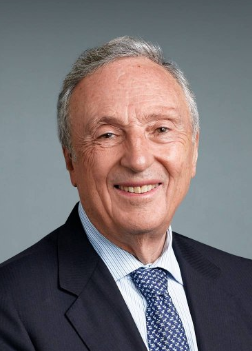 Charles R. Marmar合作论文数Department of Psychiatry, Grossman School of Medicine, New York University3
 Graham Eyres合作论文数CSIRO Food and Nutritional Sciences3
 Gunjan Thakur合作论文数Department of Mechanical Engineering, University of California3
 Jim R. Jones合作论文数Institute of Technology and Engineering, Massey University3Mitchell J. Cohen合作论文数3
 Nabarun Chakraborty合作论文数Division of Pathology, Walter Reed Army Institute of Research3Seid Muhie合作论文数Department of Chemistry, Georgetown University3
 Patrick Silcock合作论文数Department of Food Science, University of Otago3Duncan E. Donohue合作论文数Krasnow Institute for Advanced Study, George Mason University3Tie Bo Wu合作论文数2
 Ben Y. Zhao合作论文数SAND Lab, University of Chicago;Department of Computer Science, University of Chicago2
 Aarti Gautam合作论文数Integrative Systems Biology, US Army Center for Environmental Health Research2Abu-Amara Duna合作论文数2
 Maria Rodriguez-Fernandez合作论文数The Human Communication and Interaction Research Group, University of Oviedo2
 Rachel Yehuda合作论文数Department of Psychiatry, Icahn School of Medicine at Mount Sinai2
 Weile Zhang (张渭乐)合作论文数School of Information and Communications Engineering, Faculty of Electronic and Information Engineering, Xi'an Jiaotong University2
 Janine D Flory合作论文数Icahn School of Medicine at Mount Sinai2Haitao Zheng合作论文数1R Yehuda合作论文数1Linda Petzhold合作论文数1
 Ji Fang合作论文数1
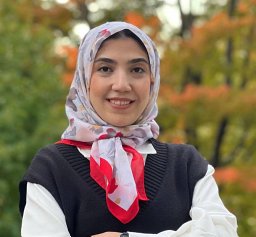 Mahnaz Koupaee合作论文数SUNY Stony Brook1Richard M Jiang合作论文数1
 Kun Tan (谭琨)合作论文数School of Environment and Spatial Informatics, China University of Mining and Technology1Qian Meng合作论文数1
 Xia Zhou合作论文数Department of Computer Science, Columbia University1Palma Joseph合作论文数1Xiaogang Wu合作论文数1
 Leroy Hood (莱诺·伊·胡德)合作论文数Department of Immunology, University of Washington;The Hood-Price Lab for Systems Biomedicine, Institute for Systems Biology;Providence St. Joseph Health;Department of Microbiology & Immunology, University of British Columbia;Keck Graduate Institute of Applied Life Sciences1
 Gang Wang合作论文数1
 Zengbin Zhang合作论文数1
 Yongguang Zhang (张永光)合作论文数Microsoft Research1
 Synthia Mellon合作论文数Center for Reproductive Sciences, Department of Obstetrics, Gynecology and Reproductive Sciences, University of California San Francisco1Taek-Kyun Kim合作论文数1
 Amitabh Gautam合作论文数Brown Medical School, Rhode Island Hospital1
 Zhenhui Tan (谈振辉)合作论文数School of Electronic and Information Engineering, Beijing Jiaotong University1
 Stacy-Ann Miller合作论文数1
 Jiansong Zhang (张健松)合作论文数China University of Petroleum1
 Lixin Shi合作论文数Apple1
 Owen M. Wolkowitz合作论文数University of California San Francisco1Inyoul Lee合作论文数Department of Molecular Biotechnology, University of Washington1




