Supplementary Table 3: Basic Clinical Information of Patients from External Test Cohort 2
The peritumoural adipose tissue (PAT) is a key contributor to cancer therapy resistance, yet its role in regulating ferroptosis remains unclear. Here we demonstrate that PAT confers ferroptosis resistance to cancer cells by upregulating ferritin (FTH1/FTL) and sequestering intracellular iron. PAT-derived kynurenine (KYN) was identified as the principal mediator. KYN is taken up by cancer cells and metabolized to 3-hydroxykynurenine, which directly binds to nuclear receptor coactivator 4 (NCOA4). This interaction inhibits NCOA4-mediated ferritinophagy, preventing ferritin degradation and limiting the free iron pool required for ferroptosis. In murine models, pharmacological inhibition of the KYN pathway synergized with PD-1 blockade to overcome ferroptosis resistance and suppress tumour progression. These findings reveal a PAT-KYN-ferritinophagy axis that promotes ferroptosis resistance, highlighting the potential of targeting adipose-tumour cross-talk to enhance immunotherapy in PAT-associated tumours.
Supplementary Table 4: Basic Clinical Information of Patients from External Test Cohort 3
Figure S8 Additional information of tumor response after SAC and I3C administration and safety assessment
Supplementary Table 1: Basic Clinical Information of Patients collected from the ESCORT-1st trial
Figure S5 Identification of optimal long PFS cutoff to distinguish long and short term responders and key metabolite differences and predictive performance of on-treatment model
Methionine metabolism generates the substrate S-adenosylmethionine (SAM), which regulates epigenetic modifications crucial for various cellular processes, particularly tumorigenesis. However, whether methionine metabolism involves epigenetic mechanisms independent of SAM and what roles such mechanisms play in tumorigenesis remain unclear. We show here that the adenosylhomocysteinase (AHCY)–adenosine complex increases mRNA m6A levels in a non-global manner, promoting fatty acid synthesis and tumorigenesis. Adenosine increases mRNA m6A levels by binding to the methionine metabolism enzyme AHCY to form a complex, rather than depending on adenosine receptors. The AHCY–adenosine complex facilitates AHCY dimerization, with adenosine being crucial for dimer stability. AHCY dimers hinder the binding of fat mass and obesity-associated protein (FTO) at the Q86 site to RNA containing the VWDRACH motif, increasing m6A levels and upregulating lipogenesis genes, especially ACACA and SCD1, thus leading to reprogramming of lipid metabolism. Conversely, AHCY mutants that have lost dimerization or FTO-binding ability but retain hydrolase activity suppress lipogenesis and tumor growth without significantly affecting methionine catabolism mediated by AHCY. Loss of AHCY in mice and disruption of AHCY dimerization in tumor cells and patient-derived xenograft models restricted tumor growth. Our findings demonstrate a key SAM-independent link between methionine metabolism and mRNA m6A modification that affects demethylase substrate specificity. This novel link between the methionine cycle and lipid metabolism suggests new strategies for anticancer therapy.
Supplementary Table 2: Basic Clinical Information of Patients from External Test Cohort 1
Esophageal squamous cell carcinoma (ESCC) exhibits heterogeneous responses to chemoimmunotherapy, with only a minority achieving durable benefit, necessitating dynamic precision monitoring. Through longitudinal plasma metabolomics of 541 serial samples from 252 ESCORT-1st trial patients receiving chemoimmunotherapy plus 3 independent cohorts of 288 samples, we established an integrated risk assessment framework spanning the entire therapeutic continuum: (i) a baseline predictor for initial responders based on metabolite signatures; (ii) an on-treatment predictor in prognosticating long-term responders among initial ones based on treatment-induced metabolic shift patterns; and (iii) a real-time model based on dual alteration of sphingolipid and glycerophospholipid dynamically stratifying progression risk. Meanwhile, 2 dietary metabolites, garlic-derived S-allyl-L-cysteine and cruciferous vegetable-derived indole-3-carbinol, were confirmed to improve outcomes by promoting NK-cell infiltration and reversing CD8+ T-cell exhaustion. In conclusion, we provide the first metabolomic roadmap for precision chemoimmunotherapy in ESCC, unifying baseline prediction, longitudinal surveillance, and dietary modulation into a clinically actionable paradigm. SIGNIFICANCE:We established a large-scale plasma metabolomic database from patients with ESCC undergoing chemoimmunotherapy, defining the first noninvasive, comprehensive, and precise monitoring framework for treatment response prediction and risk assessment. Our findings reveal clinically actionable dietary metabolites that may serve as readily accessible adjuvants to enhance chemoimmunotherapy efficacy.
Figure S3 Baseline metabolite model performance validation and clinical prognostic analysis
Supplementary Table 6: Prediction Result of On-Treatment Metabolite Model for Long-Term Responder
Supplementary Table 5: Prediction Result of Baseline Metabolite Model of Each Cohort
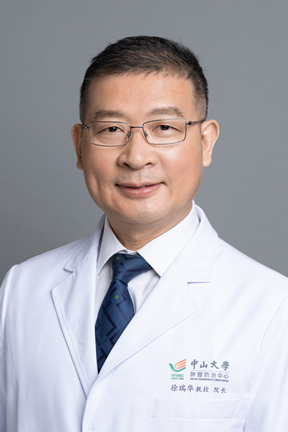 Ruihua Xu (徐瑞华)合作论文数Sun Yat-sen University Cancer Center129
 Huai-Qiang Ju (鞠怀强)合作论文数Department of Experiment Research, Sun Yat-sen University Cancer Center;State Key Laboratory of Oncology in South China, Sun Yat-sen University74
 Qinian Wu合作论文数63
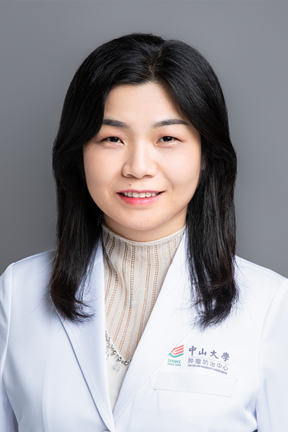 Hui-Yan Luo (骆卉妍)合作论文数State Key Laboratory of Oncology in South China, Sun Yat-Sen University Cancer Center59Jia-Huan Lu合作论文数39
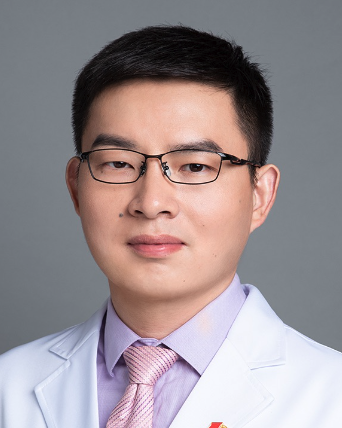 Ze-Xian Liu (刘泽先)合作论文数Sun Yat-sen University Cancer Center37
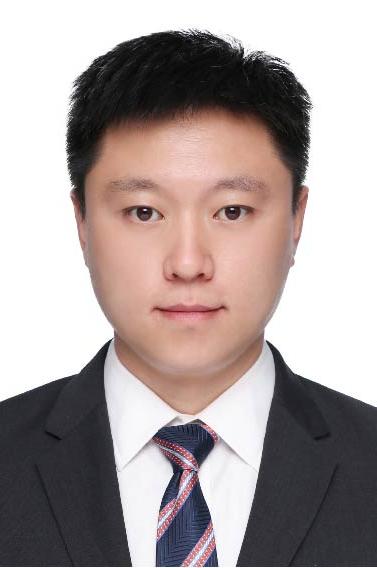 Jia Liu (刘佳)合作论文数School of Life Science and Technology, ShanghaiTech University30Lu Yun-Xin合作论文数29
 De-Shen Wang合作论文数Department of Medical Oncology, Sun Yat-sen University Cancer Center27
 Dong-Liang Chen合作论文数27Mingming He合作论文数26Qi Zhao (赵奇)合作论文数吉林大学24
 Dan Xie (谢丹)合作论文数Cancer Center, Sun Yat-sen University;State Key Laboratory of Oncology In South China23
 Miaozhen Qiu (邱妙珍)合作论文数Sun Yat-Sen University Cancer Center22
 Peng Huang (黄蓬)合作论文数Sun Yat-sen University Cancer Center21Hai-Yu Mo合作论文数20Yun Wang合作论文数Sun Yat Sen Univ, Sch Publ Hlth, Dept Nutr, Guangzhou 510080, Guangdong, Peoples R China20Hui Sheng合作论文数20
 Zhanhong Chen (陈展洪)合作论文数Third Affiliated Hospital, Sun Yat-Sen University20Zheng-Yu Qian合作论文数19Zhiqiang Wang (王志强)合作论文数19
 Yuhong Li (李宇红)合作论文数Sun Yat-sen University Cancer Center19Feng Wang (王峰)合作论文数18
 Fenghua Wang (王风华)合作论文数Cancer Center, Sun Yat-sen University18Pei-Shan Hu合作论文数17
 Baoqing Chen (陈宝清)合作论文数Sun Yat-sen University Cancer Center17Mian Xi合作论文数17
 Dongsheng Zhang (张东生)合作论文数State Key Laboratory of Oncology in South China, Collaborative Innovation Center for Cancer Medicine, Sun Yat-sen University Cancer Center16
 Yanxing Chen合作论文数15Heng-Ying Pu合作论文数Sun Yat Sen Univ, Collaborat Innovat Ctr Canc Med, State Key Lab Oncol South China, Canc Ctr, Guangzhou 510060, Guangdong, Peoples R China15Chao Ren合作论文数Sun Yat-Sen University Cancer Center, Sun Yat-Sen University Cancer Center15
 Jing Yang (杨静)合作论文数School of Materials Science and Engineering, Sun Yat-sen University15
 Anthony W.H. Chan合作论文数The Chinese University of Hong Kong;IPath Laboratory Limited14
 Ka-fai To (杜家輝)合作论文数Department of Anatomical and Cellular Pathology, Faculty of Medicine, Chinese University of Hong Kong;State Key Laboratory in Oncology, Chinese University of Hong Kong14
 Sze Lok Alfred Cheng (鄭詩樂)合作论文数School of Biomedical Sciences, Faculty of Medicine, The Chinese University of Hong Kong14Yang Weiqin合作论文数14
 Lung Raymond W M合作论文数Prince of Wales Hospital, The Chinese University of Hong Kong14Zhou Jingying合作论文数14
 Wei Kang (康巍)合作论文数School of Bioengineering, Dalian University of Technology14Xiao-Jing Luo合作论文数13Jin Ying合作论文数13Tong Man合作论文数Department of Anatomy, The University of Hong Kong13Minjie Mao (毛敏杰)合作论文数13Jing Wang合作论文数12Jingya Wang合作论文数MedImmune LLC, Gaithersburg, MD USA12
 Wang Zixian合作论文数12Huanxin Lin合作论文数12Kun Chen合作论文数12




