Hypersonic reentry vehicles face strict aerothermal constraints and severe environmental uncertainties. This paper addresses the problem of robust online tracking under double uncertainty: significant initial state injection errors combined with extreme atmospheric density mismatches. It is first demonstrated mathematically that traditional coupled estimation schemes are ill-conditioned for this task due to instantaneous unobservability and extrapolation error amplification. To overcome these theoretical limitations, a decoupled architecture is proposed, comprising a kinematic extended Kalman filter (EKF) and a dedicated density scale factor (DSF) estimator. This multi-rate estimation scheme feeds a reduced-order model predictive controller (MPC) that tracks an offline-generated robust reference trajectory. By leveraging the inherent probabilistic safety margins of the reference trajectory, verified via Cantelli’s inequality, the proposed MPC maintains thermal safety without the computational risk of active online constraint management. Extensive Monte Carlo simulations verify the effectiveness of this architecture. While a baseline controller relying on nominal atmospheric models produces large terminal deviations with mean altitude errors exceeding 4 km, the proposed architecture provides improved tracking performance with a mean error of approximately −63.8 m. Crucially, no statistically significant difference was detected between this performance and that of a theoretical system with perfect atmospheric knowledge (mean error ≈−56.2 m). These results indicate that the decoupled framework isolates kinematic noise from parameter bias, providing a viable path for safe, autonomous hypersonic flight.
Excessive reliance on inter-agent communication is a core issue in current multi-agent collective navigation, which restricts its application in communication-constrained environments. To enhance the navigation performance of multi-agent swarms under such conditions, we propose a distributed collective navigation framework to guide multi-agent swarms from a starting point to a target region in unknown environments. Our approach employs local visual perception with a limited Field of View (FOV) to replace the explicit inter-agent communication. This enables agents to rely solely on onboard sensors to perceive nearby neighbors and the external environment, thereby achieving autonomous decision-making and motion coordination without external communication. To improve the accuracy of the relative state estimation for neighboring agents, we propose a Learning-based Variable Structure Multiple Model (DL-VSMM) estimation algorithm to fuse relative motion predictions with visual observations. Furthermore, an obstacle avoidance mechanism based on optimal feasible directions is integrated into the flocking algorithm, assisting the swarm in identifying the maximum safety gap for traversing obstacles. Simultaneously, an adaptive migration term is introduced to dynamically balance navigation efficiency with obstacle avoidance safety. The simulation results demonstrate that the proposed method significantly enhances the visual relative localization accuracy. It also exhibits effective swarm cohesion, obstacle avoidance, and goal migration in communication-constrained environments.
Collective navigation is inspired by the long-distance migrations of biological swarms, which maintain stable collective behavior in the whole journey. Inspired by these biological navigation mechanisms, multi-agent systems can implement such strategies to eliminate their reliance on inter-agent communication. However, existing bio-inspired collective navigation methods often rely on noisy relative positioning measurements and lack sufficient fault tolerance for absolute positioning failures. To address these issues, we propose a robust bio-inspired collective navigation method for drone swarms based on information fusion and adaptive fault tolerance. At the perception level, an interactive multiple model-based fusion framework integrates kinematic predictions with visual positioning measurements, thereby suppressing sensor noise and improving relative positioning accuracy. At the decision level, we develop an adaptive fault-tolerant bio-inspired swarm decision-making algorithm, which consists of (1) a dual-gradient proximal term that enables rapid collision avoidance and swarm aggregation and (2) an adaptive migration term that allows agents to dynamically adjust decision weights based on their positioning confidence. During positioning failures, agents reduce reliance on the migration term and increase their dependence on neighbors. Numerical simulations and real-world flight experiments demonstrate that the proposed method significantly enhances visual relative positioning precision and maintains stable collective performance during positioning failures, thereby improving the collective navigation robustness.
Existing collective navigation systems for drone swarms typically rely on the communication between drones, which limits the application in specific mission scenarios and reduces the robustness against interference. To address this challenge, a communication-free collective navigation method enhanced by relative state estimation is proposed in this study. It consists of three key components: visual perception localization, relative state estimation, and swarm motion decision. First, visual sensors are employed to detect nearby drones in real time and calculate their relative positions. Second, an optimized model set adaptive interacting multiple model filtering algorithm is proposed to fuse the predicted states from the relative motion model with visual measurements to achieve continuous and high-precision relative positioning. The fused relative states are then fed back into the swarm motion decision algorithm for high-level control. Finally, the effectiveness of the proposed method is validated through numerical simulations and real-world flight experiments. The results demonstrate that the proposed relative state estimation algorithm significantly enhances the accuracy of visual relative localization and improves the performance of the swarm motion decision algorithm, enabling cohesive and collision-free navigation in communication-denied environments.
Perching maneuvers are a kind of landing mode of unmanned aerial vehicles (UAVs) mimicking the movement of birds, which involve highly dynamics nonlinear and a series of constraints on the states and inputs. To address these challenges, a novel integrated strategy of trajectory optimization and control design for UAV perching maneuvers is proposed. Unlike the previous approaches that necessitate a pre-determined reference trajectory, the data-driven iterative learning model predictive control (ILPMC) strategy does not rely on a prescribed reference trajectory. Instead, it iteratively improves the control performance based on historical data, starting with a single feasible initial trajectory. This approach is adaptable to varying scene settings, including different landing point positions, and is capable of handling model uncertainty and initial deviation. The simulation results show that the control strategy proposed in this paper can solve the optimal problem of perching maneuvers with aerodynamic uncertainty and initial error.
Considering the nonlinearity and unknown dynamics of fixed-wing unmanned aerial vehicles in perched landing maneuvers, an event-based online guidance and incremental control scheme is proposed. The guidance trajectory for perched landing must be dynamically feasible therefore an event-based trapezoidal collocation point optimization method is proposed. Introduction of the triggering mechanism for the rational use of computing resources to improve PL accuracy. Furthermore, a filter-based incremental nonlinear dynamic inverse (F-INDI) control with state transformation is proposed to achieve robust trajectory tracking under high angle of attack (AOA). The F-INDI uses low-pass filters to obtain incremental dynamics of the system, which simplifies the design process. The state transformation strategy is to convert the flight-path angle, AOA and velocity into two composite dynamics, which avoids the sign reversal problem of control gain under high AOA. The stability analysis shows that the original states can be controlled only by controlling the composite state. Simulation results show that the proposed scheme achieves high perched landing accuracy and a reliable trajectory tracking control.
This paper investigates the design and aerodynamic performance analysis of a bionic morphing albatross-inspired aircraft, aiming to achieve efficient and enduring flight in wind conditions. The aircraft utilizes morphing techniques, including variable sweep angle of the wingtip and synchronous extension and retraction of the tail, to meet various aerodynamic performance requirements. The effects of the morphing scheme on the lift and drag aerodynamic characteristics are studied, addressing the issue of increased wind resistance during headwind flight. Furthermore, taking inspiration from bird’s rolling methods, this study investigates the enhancement of aerodynamic performance during rolling maneuvers through asymmetrical wing pitching and single-sided wingtip sweeping. Through FLUENT calculations and flight simulations, the optimal wingtip sweep angle configuration under different flight conditions is analyzed, and the aerodynamic performance of the aircraft with morphing wings is verified.
Data-driven discovery of dynamics via machine learning has become the frontier work of modeling and control, and also provides great help for expanding the application range of model-based control methods. However, many machine learning methods need huge training data, and the generalization ability outside the training area is limited. These factors impede the development of machine learning in fields such as aerospace. To solve this problem, a new interpretable learning algorithm for aircraft systems is studied, which can consider the influence of control input and be implemented online to respond quickly to the system changes. Simulation results show that compared with the conventional neural network method, the proposed algorithm has higher performance, fewer data demands, and higher computational efficiency. Finally, the model identified online by the proposed algorithm is used in the model-based controller to further verify the effectiveness of this algorithm.
Considering the strong nonlinearity of Unmanned Aerial Vehicles (UAVs) resulting from high Angle of Attack (AOA) and fast maneuvering, we present a multi-model predictive control strategy for UAV maneuvering, which has a small amount of online calculation. Firstly, we divide the maneuver envelope of UAV into several sub-regions on the basis of the gap metric theory. A novel algorithm is then developed to determine the ploytopic model for each sub-region. According to this, a Robust Model Predictive Control based on the Idea of Comprehensive optimization (ICE-RMPC) is proposed. The control law is designed offline and optimized online to reduce the computational expense. Then, the ICE-RMPC method is applied to design the controllers of sub-regions. In addition, to guarantee the stability of whole closed-loop system, a multi-model switching control strategy based on guardian maps is put forward. Finally, the tracking performance of proposed control strategy is demonstrated by an illustrative example.
针对固定翼飞行器栖落机动的纵向运动,研究了栖落机动轨迹跟踪控制设计与吸引域优化计算方法.首先,根据栖落动力学模型和栖落过程中各个状态量的约束,用广义伪谱法生成标称轨迹,以此为基础设计了分段线性轨迹跟踪控制律.然后,在平方和(SOS)算法的基础上计算出栖落轨迹的吸引域,以保证吸引域内的飞行器能最终栖落在目标区域.最后,进一步改进吸引域的迭代优化计算方法以扩大吸引域范围.仿真结果验证了栖落机动轨迹跟踪控制律的有效性,并表明运用所设计的吸引域优化计算方法可以获得更大的吸引域.
This paper mainly studies the integrated attitude and orbit control of spacecraft under external interference when landing asteroid. Firstly, assuming that only one orbital engine is equipped on the spacecraft, based on the relative orbital dynamic model expressed in the landing point coordinate system and relative attitude dynamics model expressed in the system of proprio-coordinate, an integrated attitude and orbit dynamic model is established. Secondly, based on the filtering Backstepping idea, the nonlinear part of the integrated attitude and orbit model is transformed, the integrated attitude-orbit control law with certain disturbance suppression ability is designed, and the stability analysis of the closed-loop system is given. Finally, the proposed control scheme is simulated by numerical simulation, and compared with the traditional separated attitude and orbit control, the effectiveness and superiority of the integrated attitude and orbit control are verified.
In this work, a method has been presented to analyze the influence of control saturation and structural flexibility on the stable radius of highly flexible aircraft. A dynamic model of aircraft is constructed followed by the analysis of kinetic characteristics. In this paper, the closed-loop stability boundary of highly flexible aircraft with open-loop instability is studied. The amplitude limit and bandwidth limit of the control signal are considered in the closed-loop stability boundary calculation. Our analysis shows that the boundary is related to the left eigenvector corresponding to the unstable poles and the amplitude constraint of the control signals. Stability of the boundary of feedback control system further reduces the limitation of the bandwidth of actuators. Focused on the phugoid instability of highly flexible aircraft, computational formulation of the closed-loop stable boundary is achieved. The Monte Carlo analysis has been employed to validate the stable region, under the LQR controller. Both the theory and simulations have nice correlations with each other which verify the stability of the closed-loop system, restricted by the open-loop system, and the influence of control signal bandwidth constraints.
无人机(Unmanned aerial vehicle,UAV)的栖落机动是一种大幅度的俯仰运动,易引起升降舵操纵力矩饱和.本文以变体方式增强无人机的俯仰操纵能力,并研究其对应的控制设计方法.首先对栖落机动建立了纵向动力学模型,并通过采用轨迹线性化和张量积变换方法转换得到T-S模糊模型.基于Lyapunov稳定理论和平方和方法,设计了满足控制输入约束的栖落机动多项式模糊控制器.对非变体与变体下的栖落机动控制过程进行了仿真,结果验证了控制律的有效性,并且表明变体辅助的无人机具有更强的操纵性能,能提高栖落机动中升降舵的抗饱和能力.
基于滑模控制策略,研究了折叠翼飞行器辅助机动问题.分析了系统折叠角与气动参数的关系,把机翼折叠角看成额外的控制输入,构造了包含折叠辅助机动的飞行器动力学模型.针对非线性系统,加入混合干扰,设计了非奇异动态终端滑模控制(NDTSMC)器,能够较好地抑制折叠翼飞行器的不确定性,同时完成姿态跟踪控制.仿真结果表明,NDTSMC改善了折叠翼飞行器的控制精度和鲁棒性能,具有较好的抖振消除效果.与传统飞行器相比,加入折叠辅助机动的折叠翼飞行器拥有更高的机动性和抗干扰能力.
This paper proposes a new method utilizing both inter-satellite ranging and relative direction measurements to realize autonomous ephemeris update of navigation satellites. The relative direction from one satellite to another is determined by utilizing a normal star sensor. A GPS satellite is equipped with a beacon which can produce a light beam. The light beacon is of sufficient apparent magnitude to be imaged by the star sensor mounted on the following GPS satellite in the same orbital plane. Only the software of star sensor needs to be improved to detect the stars and the light beacon simultaneously. Firstly, the light power consumption is analyzed, and the station keeping requirements are derived from the geometrical relationship between the light beam angle and orbit phase error. Secondly, a preprocessing procedure utilizing the Gauss-Newton iteration method is developed to determine the relative direction by using all the visible stars in the field-of-view of star sensor. Thirdly, an extended Kalman filter is developed to estimate the positions of all the GPS satellites by using both the ranging and the relative direction measurements. Finally, numerical simulations are executed to verify the validity of the proposed method.
针对固定翼无人机栖落机动过程的纵向运动,研究了一种在线计算量小的栖落机动鲁棒预测控制方法.首先将飞行器栖落机动动力学模型沿参考轨迹建立分段线性切换系统模型.考虑外部风扰动,进一步建立张量积模型.然后,利用渐近稳定的椭圆不变集的概念,采用"离线设计、在线综合"的方法设计了在线计算量较小的栖落轨迹跟踪控制律;结合鲁棒预测控制和切换系统全局稳定分析方法分析了系统稳定性.最后,对外部风扰动下的固定翼无人机栖落机动过程进行了仿真.仿真结果表明所设计的跟踪控制器在线计算量小并具有良好的控制效果.
A fault tolerant control (FTC) scheme based on adaptive sliding mode control technique is proposed for manipulator with actuator fault. Firstly, the dynamic model of manipulator is introduced and its actuator faulty model is established. Secondly, a fault tolerant controller is designed, in which both the parameters of actuator fault and external disturbance are estimated and updated by online adaptive technology. Finally, taking a two-joint manipulator as example, simulation results show that the proposed fault tolerant control scheme is effective in tolerating actuator fault; meanwhile it has strong robustness for external disturbance.
Aerodynamic modeling and trajectory optimization in longitudinal direction of a type of mor-phing fixed-wing unmanned aerial vehicle(UAV)for perching maneuvers were investigated.The eleva-tor was inefficient due to the low speed and high angle of attack in the later phase of perching maneuver. To solve this problem,a morphing UAV which could change the position of wing was developed.The indoor experiment was carried out,and the flight data was obtained by the motion capture system. Based on this and flat plate theory of aerodynamics,aerodynamic model and longitudinal dynamic mode were established.Using general pseudo-spectral optimization software(GPOPS)optimization tool to de-sign the trajectory of the UAV model.The optimization results show that compared with conventional fixed wing UAVs,morphing parts can significantly improve the UAV′s attitude control efficiency and maneuverability.
针对固定翼无人机栖落过程的纵向运动,研究栖落轨迹跟踪控制问题及其相应的吸引域计算方法。首先将飞行器栖落机动过程的动力学模型沿参考轨迹线性化,并建立分段线性切换系统模型。在此基础上,结合最优控制理论与切换系统全局稳定分析方法,设计了栖落轨迹跟踪切换控制律。然后,为确定局部稳定区域从而保证飞行器能在预期时间内准确地栖落在目标区域,设计相应的平方和优化算法,计算了切换控制下的栖落轨迹吸引域。最后,对固定翼飞行器的栖落过程进行了仿真,仿真结果验证了所设计的跟踪控制器的有效性与所计算的吸引域的正确性。
A control strategy which consists of model predictive control and active disturbance rejection is proposed for the trajectory tracking problem of fixed-wing unmanned aerial vehicles under disturbances. Considering the longitudinal motion dynamic model, a constrained predictive controller is designed for trajectory tracking control while ADRC is designed to estimate and compensate disturbances. In this article, an augmented state-space model is established for predictive controller design and Hildreth's Quadratic Programming Procedure is used to solve constrained problem. In terms of ADRC, the linear extended state observer (LESO) is established to deal with disturbances. The performance of the proposed control strategy is demonstrated by simulation.
 Yuping Lu (陆宇平)合作论文数College of Automation Engineering, Nanjing University of Aeronautics and Astronautics32
 Feng Yu (郁丰)合作论文数College of Astronautics, Nanjing University of Aeronautics and Astronautics12
 Yanbin Liu (刘燕斌)合作论文数College of Astronautics, Nanjing University of Aeronautics and Astronautics6
 Liang Xu (徐亮)合作论文数College of Aerospace Engineering, Nanjing University of Aeronautics and Astronautics5
 Ming Yin合作论文数4Zijun ZHOU (周紫君)合作论文数4
 Rui Cao合作论文数4
 Jing Zhao (赵静)合作论文数College of Automation, Nanjing University of Posts and Telecommunications4
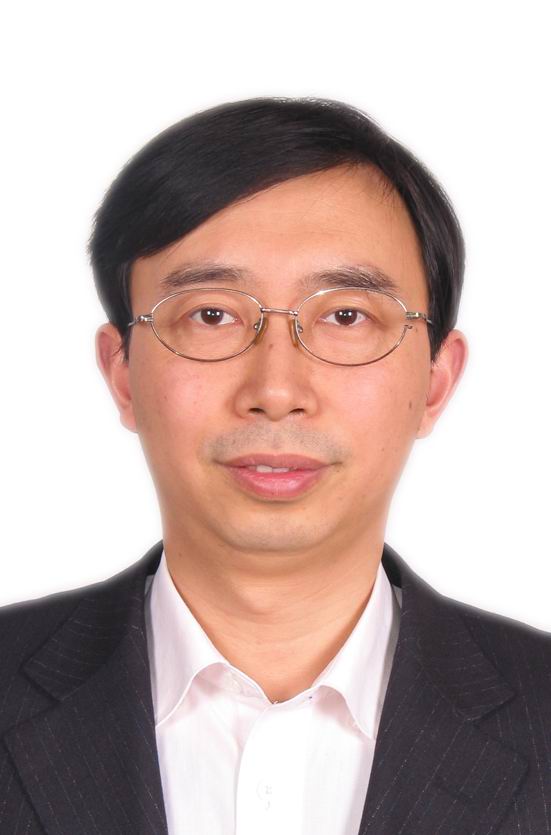 Bin Jiang (姜斌)合作论文数College of Automation Engineering, Nanjing University of Aeronautics and Astronautics3Yu Xiaoting合作论文数3Hui-wen WAN (万慧雯)合作论文数2Xiaozhi Yu合作论文数2WANG Wutian (王无天)合作论文数2YUE Cheng (岳珵)合作论文数2Liang YUAN (袁亮)合作论文数2WANG Yue (王月)合作论文数2Rong-rong LV (吕蓉蓉)合作论文数2GuangYi Xu (徐广毅)合作论文数2
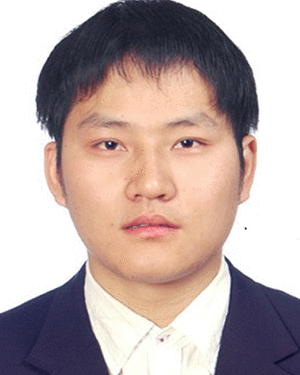 Hui Xie合作论文数2Da Li合作论文数Department of Electrical Engineering, Zhejiang University2
 Xiaolin Zhang (张晓林)合作论文数Electronic Information Engineering, Beihang University2
 Zehui Mao (冒泽慧)合作论文数College of Automation Engineering, Nanjing University of Aeronautics and Astronautics2Keming Yao合作论文数2
 Haidong Shen (沈海东)合作论文数College of Astronautics, Nanjing University of Aeronautics and Astronautics1Yingying Kan合作论文数1Na Xu合作论文数1Zheng Chengjun合作论文数1Yansui Song合作论文数1Shaoshan Sun合作论文数1Feiteng Jin合作论文数1
 Chen Boyi合作论文数Nanjing Univ Aeronaut & Astronaut, Coll Astronaut, Nanjing 210016, Jiangsu, Peoples R China1Zhou-yi HU (胡舟逸)合作论文数1Sen Jiang合作论文数1Chenggang Tao合作论文数1YAO Xiaosong (姚小松)合作论文数1Xue CHEN (陈雪)合作论文数1Hongwei Li (李宏伟)合作论文数1ChengJun Zheng (郑成军)合作论文数1Jun Wu (吴俊)合作论文数1
 Bing Hua (华冰)合作论文数College of Astronautics, Nanjing University of Aeronautics and Astronautics1
 Yunhua Wu (吴云华)合作论文数College of Astronautics, Nanjing University of Aeronautics and Astronautics1
 Bing Qiao (乔兵)合作论文数College of Astronautics, Nanjing University of Aeronautics and Astronautics1
 Chunying Gong (龚春英)合作论文数College of Automation Engineering, Nanjing University of Aeronautics and Astronautics1
 Chuntao Li (李春涛)合作论文数College of Automation Engineering, Nanjing University of Aeronautics and Astronautics1Chunsheng Liu (刘春生)合作论文数College of Automation Engineering, Nanjing University of Aeronautics and Astronautics1
 Bin Xu (许斌)合作论文数School of Automation, Northwestern Polytechnical University1Zheng Manman合作论文数1Jian Fu (付剑)合作论文数School of Mechanical Engineering and Automation, Beihang University1




