Blind face restoration is a highly ill-posed problem due to the lack of necessary context. Although existing methods produce high-quality outputs, they often fail to faithfully preserve the individual's identity. In this paper, we propose a personalized face restoration method, FaceMe, based on a diffusion model. Given a single or a few reference images, we use an identity encoder to extract identity-related features, which serve as prompts to guide the diffusion model in restoring high-quality and identity-consistent facial images. By simply combining identity-related features, we effectively minimize the impact of identity-irrelevant features during training and support any number of reference image inputs during inference. Additionally, thanks to the robustness of the identity encoder, synthesized images can be used as reference images during training, and identity changing during inference does not require fine-tuning the model. We also propose a pipeline for constructing a reference image training pool that simulates the poses and expressions that may appear in real-world scenarios. Experimental results demonstrate that our FaceMe can restore high-quality facial images while maintaining identity consistency, achieving excellent performance and robustness.
Image segmentation tasks aim to separate the image into masks that represent different objects or regions, where deep-learning-based methods have become mainstream. In the common practice, researchers utilize large-scale datasets including images along with their annotations to train their models, and evaluate the predictions with evaluation metrics. However, to our knowledge, no metrics have been proposed to assess the quality of the segmentation annotations, which will bring benefits to both the labeling and experimental process. In this paper, we fill this research gap and propose the first no-reference segmentation annotation quality assessment named SAQ. Based on our observation, we utilize the normal gradients of pixels on the annotation contours to represent the degree of fitting the real contours, which reflect the annotation accuracy. To alleviate the image differences, we adopt the gradient ranking score rather than directly using the gradient value. The multi-scale strategy is introduced to accommodate annotations of objects with different structures. Extensive experiments on datasets for various segmentation tasks have demonstrated the rationality of our proposed SAQ, and the assessment results of their annotation quality can serve as significant references for researchers.
Volumetric rendering-based methods, like NeRF, excel in HDR view synthesis from RAW images, especially for nighttime scenes. They suffer from long training times and cannot perform real-time rendering due to dense sampling requirements. The advent of 3D Gaussian Splatting (3DGS) enables real-time rendering and faster training. However, implementing RAW image-based view synthesis directly using 3DGS is challenging due to its inherent drawbacks: 1) in nighttime scenes, extremely low SNR leads to poor structure-from-motion (SfM) estimation in dis- tant views; 2) the limited representation capacity of the spherical harmonics (SH) function is unsuitable for RAW linear color space; and 3) inaccurate scene structure hampers downstream tasks such as refocusing. To address these issues, we propose LE3D (Lighting Every darkness with 3DGS). Our method proposes Cone Scatter Initialization to enrich the estimation of SfM and replaces SH with a Color MLP to represent the RAW linear color space. Additionally, we introduce depth distortion and near-far regularizations to improve the accuracy of scene structure for down- stream tasks. These designs enable LE3D to perform real-time novel view synthesis, HDR rendering, refocusing, and tone-mapping changes. Compared to previous vol- umetric rendering-based methods, LE3D reduces training time to 1% and improves rendering speed by up to 4,000 times for 2K resolution images in terms of FPS. Code and viewer can be found in https://srameo.github.io/projects/le3d.
Existing dehazing approaches struggle to process real-world hazy images owing to the lack of paired real data and robust priors. In this work, we present a new paradigm for real image dehazing from the perspectives of synthesizing more realistic hazy data and introducing more robust priors into the network. Specifically, (1) instead of adopting the de facto physical scattering model, we rethink the degradation of real hazy images and propose a phenomenological pipeline considering diverse degradation types. (2) We propose a Real Image Dehazing network via high-quality Codebook Priors (RIDCP). Firstly, a VQGAN is pre-trained on a large-scale high-quality dataset to obtain the discrete codebook, encapsulating high-quality priors (HQPs). After replacing the negative effects brought by haze with HQPs, the decoder equipped with a novel normalized feature alignment module can effectively utilize high-quality features and produce clean results. However, although our degradation pipeline drastically mitigates the domain gap between synthetic and real data, it is still intractable to avoid it, which challenges HQPs matching in the wild. Thus, we recalculate the distance when matching the features to the HQPs by a controllable matching operation, which facilitates finding better counterparts. We provide a recommendation to control the matching based on an explainable solution. Users can also flexibly adjust the enhancement degree as per their preference. Extensive experiments verify the effectiveness of our data synthesis pipeline and the superior performance of RIDCP in real image dehazing. Code and data are released at https://rqwu.github.io/projects/RIDCP.
Interactive image segmentation is an essential tool in pixel-level annotation and image editing. To obtain a high-precision binary segmentation mask, users tend to add interaction clicks around the object details, such as edges and holes, for efficient refinement. Current methods regard these repair clicks as the guidance to jointly determine the global prediction. However, the global view makes the model lose focus from later clicks, and is not in line with user intentions. In this paper, we dive into the view of clicks' eyes to endow them with the decisive role in object details again. To verify the necessity of focus view, we design a simple yet effective pipeline, named FocusCut, which integrates the functions of object segmentation and local refinement. After obtaining the global prediction, it crops click-centered patches from the original image with adaptive scopes to refine the local predictions progressively. Without user perception and parameters increase, our method has achieved state-of-the-art results. Extensive experiments and visualized results demonstrate that FocusCut makes hyper-fine segmentation possible for interactive image segmentation.
Objects with thin structures remain challenging for current image segmentation techniques. Their outputs often do well in the main body but with thin parts unsatisfactory. In practical use, they inevitably need post-processing. However, repairing them is time-consuming and laborious, either in professional editing applications (e.g. PhotoShop) or by current interactive image segmentation methods (e.g. by click, scribble, and polygon). To refine the thin parts for unsatisfactory pre-segmentation, we propose an efficient interaction mode, where users only need to draw a line across the mislabeled thin part like cutting with a knife. This low-stress and intuitive action does not require the user to aim deliberately, and is friendly when using the mouse, touchpad, and mobile devices. Additionally, the line segment provides a contrasting prior because it passes through both the foreground and background regions and there must be thin part pixels on it. Based on the interaction idea, we propose KnifeCut, which offers the users two results, where one only focuses on the target thin part and the other provides the refinements for all thin parts that share similar features with the target one. To our best knowledge, KnifeCut is the first method to solve interactive thin structure refinement pertinently. Extensive experiments and visualized results further demonstrate its friendliness, convenience, and effectiveness. The project page is available on http://mmcheng.net/knifecut/.
 Chunle Guo (郭春乐)合作论文数College of Computer Science, Nankai University5
 Chongyi Li (李重仪)合作论文数College of Computer Science, Nankai University3
 Zheng Lin (林铮)合作论文数Tsinghua University3
 Zhao Zhang (张钊)合作论文数Smart City Group, SenseTime2
 Ming-Ming Cheng (程明明)合作论文数Department of Computer Science and Technology, College of Computer Science, Nankai University2
 Zikun Liu合作论文数1Hyunhee Park合作论文数1Jiayi Fu合作论文数1Jia OuYang合作论文数1
 Siyu Liu (刘思语)合作论文数Nankai University1Peng-Yi Jiao合作论文数1
 Xuying Zhang (张旭迎)合作论文数College of Computer Science, Nankai University1
 Xin Jin (靳鑫)合作论文数College of Computer Science, Nankai University1Zhi Chai合作论文数1Xingchao Yang合作论文数1
 Rui-Qi Wu (武睿祺)合作论文数College of Computer Science, Nankai University;MeiGen-AI, Meituan1
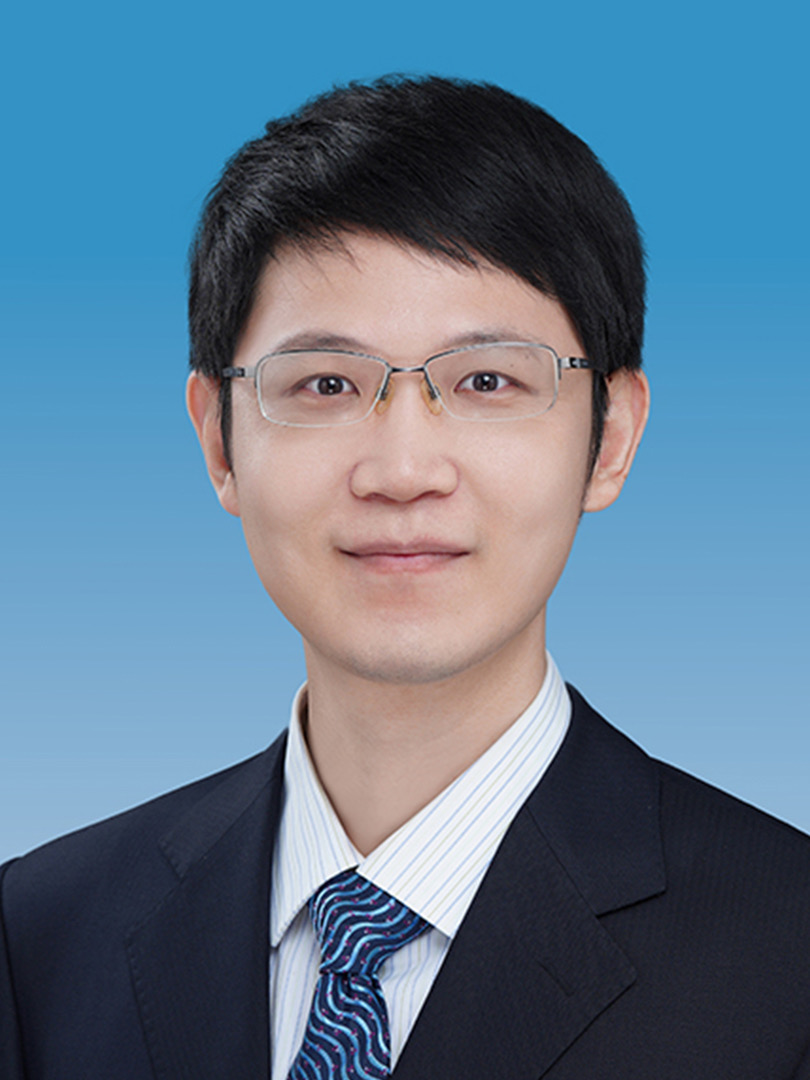 Bo Ren (任博)合作论文数Department of Computer Science and Technology, College of Computer Science, Nankai University1
 Luojun Lin (林洛君)合作论文数College of Computer and Data Science, Fuzhou University1




