AI judges offer a scalable, low-cost alternative to human evaluation, but their outputs can be biased relative to human preferences and highly item-dependent, varying across judges, tasks, and domains. When uncalibrated AI evaluations are used for model ranking, item scoring, or population-level quality reporting, these biases can directly distort downstream decisions. We propose BACON, a four-stage pipeline that combines budgeted human calibration with multiple AI-judge outputs to produce more accurate annotations. BACON constructs full-coverage auxiliary features for every item, including multi-judge scores, token-level uncertainty statistics, and contextual embeddings. It then collects human labels for a small sampled subset and trains a cross-fitted outcome model to generate calibrated item-level surrogate predictions. These predictions support two use cases: population-level estimation of summary metrics, such as means or quantiles, using an augmented estimating-equation estimator with valid confidence intervals; and individual-level surrogate scoring for item ranking and annotation. BACON treats AI judges as auxiliary measurements rather than ground truth: human labels provide the calibration anchor, while AI-derived signals improve efficiency. Across diverse tasks, domains, and labeling budgets, BACON improves predictive accuracy and ranking consistency, and reduces bias and variance relative to raw AI outputs and purely human-label-based methods. These results show that BACON offers a practical, statistically grounded framework for scalable evaluation with limited human annotation.
Active Learning (AL) has been a powerful paradigm for improving model efficiency and performance by selecting the most informative data points for labeling and training. In recent active learning frameworks, Large Language Models (LLMs) have been employed not only for selection but also for generating entirely new data instances and providing more cost-effective annotations. Motivated by the increasing importance of high-quality data and efficient model training in the era of LLMs, we present a comprehensive survey on LLM-based Active Learning. We introduce an intuitive taxonomy that categorizes these techniques and discuss the transformative roles LLMs can play in the active learning loop. We further examine the impact of AL on LLM learning paradigms and its applications across various domains. Finally, we identify open challenges and propose future research directions. This survey aims to serve as an up-to-date resource for researchers and practitioners seeking to gain an intuitive understanding of LLM-based AL techniques and deploy them to new applications.
Conversational assistants often require a question rewriting algorithm that leverages a subset of past interactions to provide a more meaningful (accurate) answer to the user's question or request. However, the exact rewriting approach may often depend on the use case and application-specific tasks supported by the conversational assistant, among other constraints. In this paper, we systematically investigate two different approaches, denoted as rewriting and fusion, on two fundamentally different generation tasks, including a text-to-text generation task and a multimodal generative task that takes as input text and generates a visualization or data table that answers the user's question. Our results indicate that the specific rewriting or fusion approach highly depends on the underlying use case and generative task. In particular, we find that for a conversational question-answering assistant, the query rewriting approach performs best, whereas for a data analysis assistant that generates visualizations and data tables based on the user's conversation with the assistant, the fusion approach works best. Notably, we explore two datasets for the data analysis assistant use case, for short and long conversations, and we find that query fusion always performs better, whereas for the conversational text-based question-answering, the query rewrite approach performs best.
MOTIVATION:The biosecurity issue arises as the capability of deep-learning-based protein design has rapidly increased in recent years. Current regulation procedures for DNA synthesizing focus on the biosecurity but ignore the data privacy. RESULTS:We propose a general framework for adding watermarks to protein sequences designed by various autoregressive deep-learning models. Compared to current regulation procedures, watermarks also ensure robust traceability to achieve biosecurity but maintain privacy of designed sequences by local verification. Benchmarked with other watermarking techniques, the watermark detection efficiency of our method is substantially increased to be more practical in real-world scenarios. Moreover, it provides a convenient way for researchers to claim their own intellectual property since the designer's information could be embedded into the sequence with our framework. AVAILABILITY AND IMPLEMENTATION:The implementation of the protein watermark framework is freely available to noncommercial users at https://github.com/poseidonchan/ProteinWatermark.
Chain-of-thought (CoT) reasoning enables large language models (LLMs) to break down complex problems into interpretable intermediate steps, significantly enhancing model transparency and performance in reasoning tasks. However, conventional CoT methods rely on heuristic sampling without structured modeling of reasoning transitions, constraining their ability to systematically explore and discover diverse and effective reasoning trajectories. In this work, we introduce CTRLS, a framework that formulates CoT reasoning as a Markov decision process (MDP) with latent state transitions, enabling principled and state-aware exploration via distributional reinforcement learning. By modelling reasoning actions as explicit probability distributions in latent space, our approach explicitly models epistemic uncertainty, facilitating robust exploration of the reasoning space. As part of our framework, we introduce an on-policy reinforcement learning strategy incorporating epsilon-greedy exploration and entropy-based regularization to iteratively refine latent state transitions without requiring additional fine-tuning of the underlying LLM. Theoretical analyses provide evidence lower bounds (ELBO), theoretically grounding our transition-aware modeling of latent reasoning dynamics. Further experiments demonstrate improvements in reasoning accuracy, diversity, and exploration efficiency across benchmark reasoning tasks.
MOTIVATION:Predicting single-cell perturbation responses requires mapping between two unpaired single-cell data distributions. Optimal transport (OT) theory provides a principled framework for constructing such mappings by minimizing transport cost. Recently, Wasserstein-2 (W2) neural optimal transport solvers (e.g. CellOT) have been used for this prediction task. However, W2 OT relies on the general Kantorovich dual formulation, which involves optimizing over two conjugate functions, leading to a complex min-max optimization problem that converges slowly. RESULTS:To address these challenges, we propose a novel solver based on the Wasserstein-1 (W1) dual formulation. Unlike W2, the W1 dual simplifies the optimization to a maximization problem over a single 1-Lipschitz function, thus eliminating the need for time-consuming min-max optimization. While solving the W1 dual only reveals the transport direction and does not directly provide a unique optimal transport map, we incorporate an additional step using adversarial training to determine an appropriate transport step size, effectively recovering the transport map. Our experiments demonstrate that the proposed W1 neural optimal transport solver can mimic the W2 OT solvers in finding a unique and "monotonic" map on 2D datasets. Moreover, the W1 OT solver achieves performance on par with or surpasses W2 OT solvers on real single-cell perturbation datasets. Furthermore, we show that W1 OT solver achieves 25∼45× speedup, scales better on high dimensional transportation task, and can be directly applied on single-cell RNA-seq dataset with highly variable genes. AVAILABILITY AND IMPLEMENTATION:Our implementation and experiments are open-sourced at https://github.com/poseidonchan/w1ot.
Small Language Models (SLMs) have become increasingly important due to their efficiency and performance to perform various language tasks with minimal computational resources, making them ideal for various settings including on-device, mobile, edge devices, among many others. In this article, we present a comprehensive survey on SLMs, focusing on their architectures, training techniques, and model compression techniques. We propose a novel taxonomy for categorizing the methods used to optimize SLMs, including model compression, pruning, and quantization techniques. We summarize the benchmark datasets that are useful for benchmarking SLMs along with the evaluation metrics commonly used. Additionally, we highlight key open challenges that remain to be addressed. Our survey aims to serve as a valuable resource for researchers and practitioners interested in developing and deploying small yet efficient language models.
Large Language Models (LLMs) have become an indispensable part of natural language processing tasks. However, autoregressive sampling has become an efficiency bottleneck. Multi-Draft Speculative Decoding (MDSD) is a recent approach where, when generating each token, a small draft model generates multiple drafts, and the target LLM verifies them in parallel, ensuring that the final output conforms to the target model distribution. The two main design choices in MDSD are the draft sampling method and the verification algorithm. For a fixed draft sampling method, the optimal acceptance rate is a solution to an optimal transport problem, but the complexity of this problem makes it difficult to solve for the optimal acceptance rate and measure the gap between existing verification algorithms and the theoretical upper bound. This paper discusses the dual of the optimal transport problem, providing a way to efficiently compute the optimal acceptance rate. For the first time, we measure the theoretical upper bound of MDSD efficiency for vocabulary sizes in the thousands and quantify the gap between existing verification algorithms and this bound. We also compare different draft sampling methods based on their optimal acceptance rates. Our results show that the draft sampling method strongly influences the optimal acceptance rate, with sampling without replacement outperforming sampling with replacement. Additionally, existing verification algorithms do not reach the theoretical upper bound for both without replacement and with replacement sampling. Our findings suggest that carefully designed draft sampling methods can potentially improve the optimal acceptance rate and enable the development of verification algorithms that closely match the theoretical upper bound.
Graphical User Interface (GUI) agents, powered by Large Foundation Models, have emerged as a transformative approach to automating human-computer interaction. These agents autonomously interact with digital systems or software applications via GUIs, emulating human actions such as clicking, typing, and navigating visual elements across diverse platforms. Motivated by the growing interest and fundamental importance of GUI agents, we provide a comprehensive survey that categorizes their benchmarks, evaluation metrics, architectures, and training methods. We propose a unified framework that delineates their perception, reasoning, planning, and acting capabilities. Furthermore, we identify important open challenges and discuss key future directions. Finally, this work serves as a basis for practitioners and researchers to gain an intuitive understanding of current progress, techniques, benchmarks, and critical open problems that remain to be addressed.
We present PersonaConvBench, a large-scale benchmark for evaluating personalized reasoning and generation in multi-turn conversations with large language models (LLMs). Unlike existing work that focuses on either personalization or conversational structure in isolation, PersonaConvBench integrates both, offering three core tasks: sentence classification, impact regression, and user-centric text generation across ten diverse Reddit-based domains. This design enables systematic analysis of how personalized conversational context shapes LLM outputs in realistic multi-user scenarios. We benchmark several commercial and open-source LLMs under a unified prompting setup and observe that incorporating personalized history yields substantial performance improvements, including a 198 percent relative gain over the best non-conversational baseline in sentiment classification. By releasing PersonaConvBench with evaluations and code, we aim to support research on LLMs that adapt to individual styles, track long-term context, and produce contextually rich, engaging responses.
Speculative Sampling (SpS) has been introduced to speed up inference of large language models (LLMs) by generating multiple tokens in a single forward pass under the guidance of a reference model, while preserving the original distribution. We observe that SpS can be derived through maximum coupling on the token distribution. However, we find that this approach is not optimal as it applies maximum coupling incrementally for each new token, rather than seeking a global maximum coupling that yields a faster algorithm, given the tree-space nature of LLM generative distributions. In this paper, we shift our focus from distributions on a token space to those on a tree space. We propose a novel class of Tree Monte Carlo (TMC) methods, demonstrating their unbiasedness and convergence. As a particular instance of TMC, our new algorithm, Accelerated Speculative Sampling (ASpS), outperforms traditional SpS by generating more tokens per step on average, achieving faster inference, while maintaining the original distribution.
In the context of transcriptional dynamics modeled by ordinary differential equations (ODEs), the RNA level in a single cell is controlled by specific RNA kinetics parameters, which include transcription rate, splicing rate, and degradation rate. Investigating these single-cell RNA kinetics rates is pivotal for understanding RNA metabolism and the heterogeneity of complex tissues. Although metabolic labeling is an effective method to estimate these kinetics rates experimentally, it is not suitable for current large-scale conventional single-cell RNA sequencing (scRNA-seq) data. Moreover, existing methods for scRNA-seq often either neglect certain specific kinetics parameters or use inappropriate ways to fit the parameters. To address these issues, we introduce scRNAkinetics, a parallelized method that fits the kinetics parameters of the ODE for each cell using pseudo-time derived from various biological priors (e.g. cell lineage tree and differentiation potential). This approach allows for the estimation of the relative kinetics of each cell and gene in a scRNA-seq dataset. Validated on simulated datasets, scRNAkinetics can accurately infer the kinetics rates of transcription boosting, multi-branch, and time-dependent RNA degradation systems. Nevertheless, the inferred kinetics trends are concordant with previous studies on metabolic labeling and conventional scRNA-seq datasets. Furthermore, we show that scRNAkinetics can provide valuable insights into different regulatory schemes and validate the coupling between transcription and splicing in RNA metabolism. The open-source implementation of scRNAkinetics is available at https://github.com/poseidonchan/scRNAkinetics. ### Competing Interest Statement The authors have declared no competing interest.
Authorship attribution aims to identify the origin or author of a document. Traditional approaches have heavily relied on manual features and fail to capture long-range correlations, limiting their effectiveness. Recent advancements leverage text embeddings from pre-trained language models, which require significant fine-tuning on labeled data, posing challenges in data dependency and limited interpretability. Large Language Models (LLMs), with their deep reasoning capabilities and ability to maintain long-range textual associations, offer a promising alternative. This study explores the potential of pre-trained LLMs in one-shot authorship attribution, specifically utilizing Bayesian approaches and probability outputs of LLMs. Our methodology calculates the probability that a text entails previous writings of an author, reflecting a more nuanced understanding of authorship. By utilizing only pre-trained models such as Llama-3-70B, our results on the IMDb and blog datasets show an impressive 85% accuracy in one-shot authorship classification across ten authors. Our findings set new baselines for one-shot authorship analysis using LLMs and expand the application scope of these models in forensic linguistics. This work also includes extensive ablation studies to validate our approach.
Watermarking techniques offer a promising way to secure data via embedding covert information into the data. A paramount challenge in the domain lies in preserving the distribution of original data during watermarking. Our research extends and refines existing watermarking framework, placing emphasis on the importance of a distribution-preserving (DiP) watermark. Contrary to the current strategies, our proposed DiPmark preserves the original token distribution during watermarking (stealthy), is detectable without access to the language model API or weights (efficient), and is robust to moderate changes of tokens (resilient). This is achieved by incorporating a novel reweight strategy, combined with a hash function that assigns unique \textit{i.i.d.} ciphers based on the context. The empirical benchmarks of our approach underscore its stealthiness, efficiency, and resilience, making it a robust solution for watermarking tasks that demand impeccable quality preservation.
Reinforcement Learning (RL) problem with general utility is a powerful decision making framework that covers standard RL with cumulative cost, exploration problems, and demonstration learning. Existing works on RL with general utility do not consider the robustness under environmental perturbation, which is important to adapt RL system in the real-world environment that differs from the training environment. To train a robust policy, we propose a robust RL framework with general utility, which subsumes many existing RL frameworks including RL, robust RL, RL with general utility, constrained RL, robust constrained RL, pure exploration, robust entropy regularized RL, etc. Then we focus on popular convex utility functions, with which our proposed learning framework is a challenging nonconvex-nonconcave minimax optimization problem, and design a two-phase stochastic policy gradient type algorithm and obtain its sample complexity result for gradient convergence. Furthermore, for convex utility on a widely used polyhedral ambiguity set, we design an algorithm and obtain its convergence rate to a global optimal solution.
Watermarking techniques offer a promising way to identify machine-generated content via embedding covert information into the contents generated from language models. A challenge in the domain lies in preserving the distribution of original generated content after watermarking. Our research extends and improves upon existing watermarking framework, placing emphasis on the importance of a Distribution-Preserving (DiP) watermark. Contrary to the current strategies, our proposed DiPmark simultaneously preserves the original token distribution during watermarking (distribution-preserving), is detectable without access to the language model API and prompts (accessible), and is provably robust to moderate changes of tokens (resilient). DiPmark operates by selecting a random set of tokens prior to the generation of a word, then modifying the token distribution through a distribution-preserving reweight function to enhance the probability of these selected tokens during the sampling process. Extensive empirical evaluation on various language models and tasks demonstrates our approach's distribution-preserving property, accessibility, and resilience, making it a effective solution for watermarking tasks that demand impeccable quality preservation.
Large language models are probabilistic models, and the process of generating content is essentially sampling from the output distribution of the language model. Existing watermarking techniques inject watermarks into the generated content without altering the output quality. On the other hand, existing acceleration techniques, specifically speculative sampling, leverage a draft model to speed up the sampling process while preserving the output distribution. However, there is no known method to simultaneously accelerate the sampling process and inject watermarks into the generated content. In this paper, we investigate this direction and find that the integration of watermarking and acceleration is non-trivial. We prove a no-go theorem, which states that it is impossible to simultaneously maintain the highest watermark strength and the highest sampling efficiency. Furthermore, we propose two methods that maintain either the sampling efficiency or the watermark strength, but not both. Our work provides a rigorous theoretical foundation for understanding the inherent trade-off between watermark strength and sampling efficiency in accelerating the generation of watermarked tokens for large language models. We also conduct numerical experiments to validate our theoretical findings and demonstrate the effectiveness of the proposed methods.
Language model (LM) watermarking techniques inject a statistical signal into LM-generated content by substituting the random sampling process with pseudo-random sampling, using watermark keys as the random seed. Among these statistical watermarking approaches, distortion-free watermarks are particularly crucial because they embed watermarks into LM-generated content without compromising generation quality. However, one notable limitation of pseudo-random sampling compared to true-random sampling is that, under the same watermark keys (i.e., key collision), the results of pseudo-random sampling exhibit correlations. This limitation could potentially undermine the distortion-free property. Our studies reveal that key collisions are inevitable due to the limited availability of watermark keys, and existing distortion-free watermarks exhibit a significant distribution bias toward the original LM distribution in the presence of key collisions. Moreover, achieving a perfect distortion-free watermark is impossible as no statistical signal can be embedded under key collisions. To reduce the distribution bias caused by key collisions, we introduce a new family of distortion-free watermarks--beta-watermark. Experimental results support that the beta-watermark can effectively reduce the distribution bias under key collisions.
Multimodal Large Language Models (MLLMs) have become increasingly important due to their state-of-the-art performance and ability to integrate multiple data modalities, such as text, images, and audio, to perform complex tasks with high accuracy. This paper presents a comprehensive survey on personalized multimodal large language models, focusing on their architecture, training methods, and applications. We propose an intuitive taxonomy for categorizing the techniques used to personalize MLLMs to individual users, and discuss the techniques accordingly. Furthermore, we discuss how such techniques can be combined or adapted when appropriate, highlighting their advantages and underlying rationale. We also provide a succinct summary of personalization tasks investigated in existing research, along with the evaluation metrics commonly used. Additionally, we summarize the datasets that are useful for benchmarking personalized MLLMs. Finally, we outline critical open challenges. This survey aims to serve as a valuable resource for researchers and practitioners seeking to understand and advance the development of personalized multimodal large language models.
The recent advancements in large language models (LLMs) have sparked a growing apprehension regarding the potential misuse. One approach to mitigating this risk is to incorporate watermarking techniques into LLMs, allowing for the tracking and attribution of model outputs. This study examines a crucial aspect of watermarking: how significantly watermarks impact the quality of model-generated outputs. Previous studies have suggested a trade-off between watermark strength and output quality. However, our research demonstrates that it is possible to integrate watermarks without affecting the output probability distribution with appropriate implementation. We refer to this type of watermark as an unbiased watermark. This has significant implications for the use of LLMs, as it becomes impossible for users to discern whether a service provider has incorporated watermarks or not. Furthermore, the presence of watermarks does not compromise the performance of the model in downstream tasks, ensuring that the overall utility of the language model is preserved. Our findings contribute to the ongoing discussion around responsible AI development, suggesting that unbiased watermarks can serve as an effective means of tracking and attributing model outputs without sacrificing output quality.
 Heng Huang合作论文数Department of Computer Science, Brendan Iribe Center for Computer Science and Engineering, University of Maryland, College Park;Department of Electrical and Computer Engineering, A. James Clark School of Engineering, University of Maryland, College Park26
 Xidong Wu合作论文数University of Pittsburgh;Bosch Center for Artificial Intelligence9
 Tong Yu合作论文数Adobe Research8
 Yihan Wu合作论文数Meta7
 Ruiyi (Roy) Zhang (张瑞祎)合作论文数Adobe Research6
 Ryan A. Rossi合作论文数Adobe Research6
 Junda Wu合作论文数University of California San Diego;Adobe6
 Yanshuo Chen合作论文数5
 Nesreen K. Ahmed合作论文数Intel Research Labs5
 Sungchul Kim合作论文数Adobe Research5
 Xiang Chen合作论文数Adobe Research5
 Franck Dernoncourt合作论文数Adobe Research5
 Yu Xia (夏羽)合作论文数University of California San Diego;Adobe4
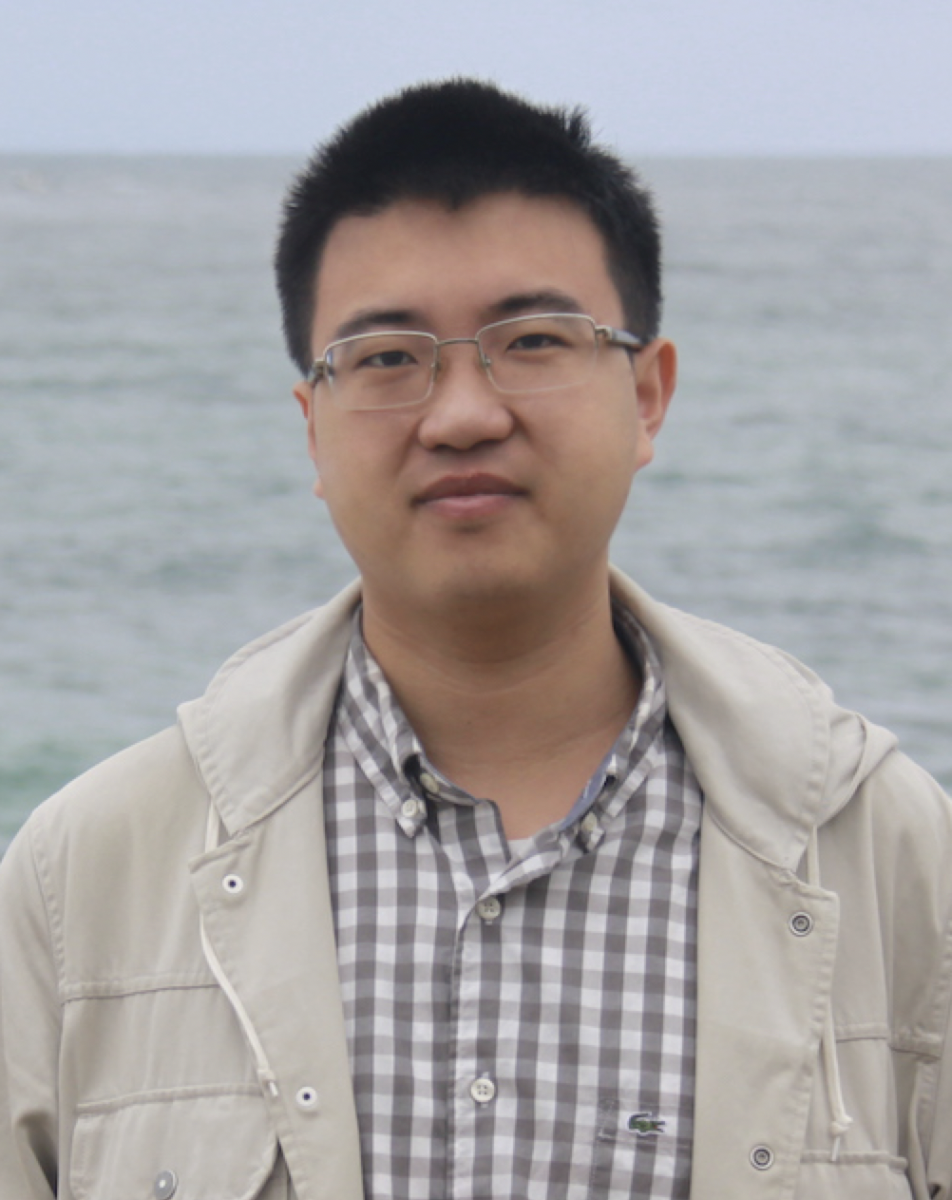 Hongyang Zhang (张弘扬)合作论文数David R. Cheriton School of Computer Science, Faculty of Mathematics, University of Waterloo;Vector Institute for AI4
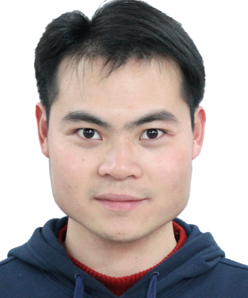 Feihu Huang (黄飞虎)合作论文数College of Computer Science and Technology, Nanjing University of Aeronautics and Astronautics4
 Namyong Park合作论文数Meta AI4
 Hongjie Chen合作论文数Dolby Laboratories3
 Yu Wang (王宇)合作论文数Department of Computer Science, College of Arts and Sciences, University of Oregon;School of Computer and Data Sciences, University of Oregon3
 Joe Barrow合作论文数College Pk, Univ Maryland3
 Hanieh Deilamsalehy合作论文数Dept Elect & Comp Engn, Michigan Technol Univ3
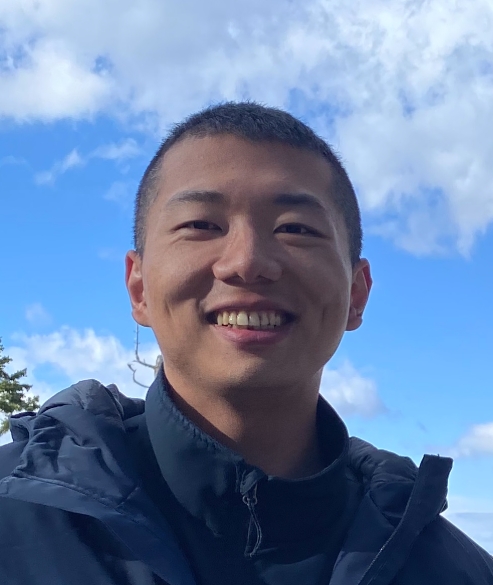 Hanjia Lyu合作论文数Department of Computer Science, University of Rochester;Meta AI3
 Zhehao Zhang合作论文数The Ohio State University3
 Ruibo Chen (陈睿博)合作论文数University of Maryland, College Park3
 Thien Huu Nguyen合作论文数Department of Computer Science, College of Arts and Sciences, University of Oregon;Amazon3
 Xintong Li (李昕同)合作论文数Apple3
 Jiuxiang Gu (顾久祥)合作论文数Document Intelligence Lab, Adobe Research3
 Nedim Lipka合作论文数Big Data Experience Lab, Adobe Research3
 Branislav Kveton合作论文数Adobe Research3
 Julian Mcauley合作论文数Department of Computer Science & Engineering, Jacobs School of Engineering, University of California, San Diego;NICTA3Zichao Wang合作论文数2
 Zhouhang Xie合作论文数University of California, San Diego2
 Lichang Chen (陈力畅)合作论文数Department of Computer Science, University of Maryland, College Park;Google DeepMind2
 Wei Chen合作论文数2
 Jian Chen合作论文数Department of Computer Science and Engineering, University at Buffalo2
 Samyadeep Basu合作论文数Center for Machine Learning, University of Maryland2
 Subhojyoti Mukherjee合作论文数Adobe2
 Yue Zhao (赵越)合作论文数Thomas Lord Department of Computer Science, Viterbi School of Engineering, University of Southern California2
 Jianhui Sun合作论文数Meta Platforms2
 Ziyi Chen (陈子壹)合作论文数Department of Computer Science, University of Maryland2
 Puneet Mathur合作论文数Adobe Research2
 Junfeng Guo (国珺峰)合作论文数Center for Bioinformatics and Computational Biology, Institute for Advanced Computer Studies, University of Maryland2
 Jiebo Luo (罗杰波)合作论文数Department of Computer Science, Hajim School of Engineering & Applied Sciences, University of Rochester2
 Aidong Zhang合作论文数Department of Biomedical Engineering, School of Engineering and Applied Science, University of Virginia;School of Data Science, University of Virginia;Department of Computer Science and Engineering, School of Engineering and Applied Sciences, University at Buffalo;The State University of New York2Saayan Mitra合作论文数Iowa State University2
 David Seunghyun Yoon合作论文数Adobe Research2
 Ritwik Sinha合作论文数From the Department of Epidemiology and Biostatistics, Case Western Reserve University2Tong Zheng合作论文数1Yan Wen合作论文数1




