Multi-modal fusion serves as a cornerstone for successful depth map super-resolution. However, commonly used fusion strategies, such as addition and concatenation, fall short of effectively bridging the modal gap. As a result, guided image filtering methods have been introduced to mitigate this issue. Nevertheless, it is observed that their filter kernels usually encounter significant texture interference and edge inaccuracy. To tackle these two challenges, we introduce a Scene Prior Filtering network, SPFNet, which utilizes the priors’ surface normal and semantic map from large-scale models. Specifically, we propose an All-in-one Prior Propagation that computes similarity between multi-modal scene priors, i.e., RGB, normal, semantic, and depth, to reduce the texture interference. Besides, we design a One-to-one Prior Embedding that continuously embeds every single modal prior into depth using Mutual Guided Filtering, further alleviating texture interference while enhancing edge representations. Our SPFNet has been extensively evaluated on both real-world and synthetic datasets, achieving state-of-the-art performance. Project page: https://yanzq95.github.io/projectpage/SPFNet/index.html .
The task of vision-based 3D occupancy prediction aims to reconstruct 3D geometry and estimate its semantic classes from 2D color images, where the 2D-to-3D view transformation is an indispensable step. Most previous methods conduct forward projection, such as BEVPooling and VoxelPooling, both of which map the 2D image features into 3D grids. However, the current grid representing features within a certain height range usually introduces many confusing features that belong to other height ranges. To address this challenge, we present Deep Height Decoupling (DHD), a novel framework that incorporates explicit height prior to filter out the confusing features. Specifically, DHD first predicts height maps via explicit supervision. Based on the height distribution statistics, DHD designs Mask Guided Height Sampling (MGHS) to adaptively decouple the height map into multiple binary masks. MGHS projects the 2D image features into multiple subspaces, where each grid contains features within reasonable height ranges. Finally, a Synergistic Feature Aggregation (SFA) module is deployed to enhance the feature representation through channel and spatial affinities, enabling further occupancy refinement. On the popular Occ3D-nuScenes benchmark, our method achieves state-of-the-art performance even with minimal input frames. Source code is released at https://github.com/yanzq95/DHD.
Depth super-resolution (DSR) aims to restore high-resolution (HR) depth from low-resolution (LR) one, where RGB image is often used to promote this task. Recent image guided DSR approaches mainly focus on spatial domain to rebuild depth structure. However, since the structure of LR depth is usually blurry, only considering spatial domain is not very sufficient to acquire satisfactory results. In this paper, we propose structure guided network (SGNet), a method that pays more attention to gradient and frequency domains, both of which have the inherent ability to capture high-frequency structure. Specifically, we first introduce the gradient calibration module (GCM), which employs the accurate gradient prior of RGB to sharpen the LR depth structure. Then we present the Frequency Awareness Module (FAM) that recursively conducts multiple spectrum differencing blocks (SDB), each of which propagates the precise high-frequency components of RGB into the LR depth. Extensive experimental results on both real and synthetic datasets demonstrate the superiority of our SGNet, reaching the state-of-the-art (see Fig. 1). Codes and pre-trained models are available at https://github.com/yanzq95/SGNet.
In recent years, thanks to the inherent powerful feature representation and learning abilities of the convolutional neural network (CNN), deep CNN-steered single image super-resolution approaches have achieved remarkable performance improvements. However, these methods are often accompanied by large consumption of computing and memory resources, which is difficult to be adopted in real-world application scenes. To handle this issue, we design an efficient Feature De-redundancy and Self-calibration Super-resolution network (FDSCSR). In particular, a Feature De-redundancy and Self-calibration Block (FDSCB) is proposed to reduce the repetitive feature information extracted by the model and further enhance the efficiency of the model. Then, based on FDSCB, a Local Feature Fusion Module is presented to elaborately utilize and fuse the feature information extracted by each FDSCB. Abundant experiments on benchmarks have demonstrated that our FDSCSR achieves superior performance with relatively less computational consumption and storage resource than other state-of-the-art approaches. The code is available at https://github.com/IVIPLab/FDSCSR .
Single-image super-resolution (SISR) has achieved significant breakthroughs with the development of deep learning. However, these methods are difficult to be applied in real-world scenarios since they are inevitably accompanied by the problems of computational and memory costs caused by the complex operations. To solve this issue, we propose a Lightweight Bimodal Network (LBNet) for SISR. Specifically, an effective Symmetric CNN is designed for local feature extraction and coarse image reconstruction. Meanwhile, we propose a Recursive Transformer to fully learn the long-term dependence of images thus the global information can be fully used to further refine texture details. Studies show that the hybrid of CNN and Transformer can build a more efficient model. Extensive experiments have proved that our LBNet achieves more prominent performance than other state-of-the-art methods with a relatively low computational cost and memory consumption. The code is available at https://github.com/IVIPLab/LBNet.
Recently, the single image super-resolution (SISR) approaches with deep and complex convolutional neural network structures have achieved promising performance. However, those methods improve the performance at the cost of higher memory consumption, which is difficult to be applied for some mobile devices with limited storage and computing resources. To solve this problem, we present a lightweight multi-scale feature interaction network (MSFIN). For lightweight SISR, MSFIN expands the receptive field and adequately exploits the informative features of the low-resolution observed images from various scales and interactive connections. In addition, we design a lightweight recurrent residual channel attention block (RRCAB) so that the network can benefit from the channel attention mechanism while being sufficiently lightweight. Extensive experiments on some benchmarks have confirmed that our proposed MSFIN can achieve comparable performance against the state-of-the-arts with a more lightweight model.
 Guangwei Gao (高广谓)合作论文数Institute of Advanced Technology, Nanjing University of Posts and Telecommunications4
 Zhiqiang Yan合作论文数National University of Singapore3
 Juncheng Li (李俊诚)合作论文数School of Computer Science and Technology, East China Normal University3
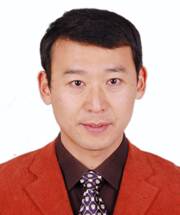 Jian Yang (杨健)合作论文数Department of Computer Science and Technology, College of Computer Science, Nankai University;School of Computer Science and Engineering, Nanjing University of Science and Technology3
 Huimin Lu (陆慧敏)合作论文数School of Automation, Southeast University2
 Yi Yu合作论文数Graduate School of Advanced Science and Engineering, Hiroshima University;Education and Research Center for Artificial Intelligence and Data Innovation, Hiroshima University2
 Yuan Wu (吴渊)合作论文数Jiangsu Key Lab of Image and Video Understanding for Social Security, School of Computer Science and Engineering, Nanjing University of Science and Technology1
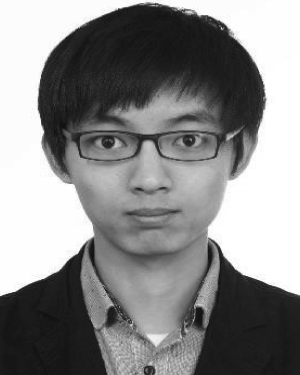 Wenjie Li合作论文数Beijing Univ Posts & Telecommun, Sch Automat, Beijing 100876, Peoples R China1
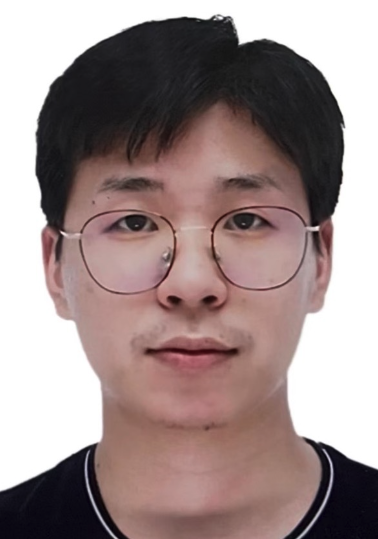 Ying Tai (邰颖)合作论文数School of inteligence Science and Technology, Nanjing University(Suzhou Campus)1
 Le Hui (惠乐)合作论文数School of Electronics and Information, Northwestern Polytechnical University1
 Xiang Li (李翔)合作论文数College of Computer Science, Nankai University1
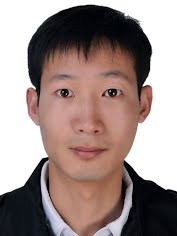 Jinshan Pan (潘金山)合作论文数School of Computer Science and Engineering, Nanjing University of Science and Technology1
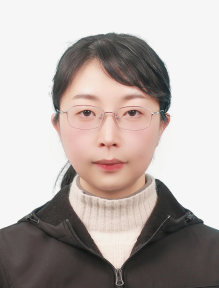 Hui Yan (严慧)合作论文数School of Computer Science and Engineering, Nanjing University of Science & Technology1
 Tieyong Zeng (曾鐵勇)合作论文数Department of Mathematics, Chinese University of Hong Kong;Center for Mathematical Artificial Intelligence, Chinese University of Hong Kong1
 Ming-Hsuan Yang合作论文数Vision and Learning Lab, University of California, Merced;Google DeepMind1
 Hao Zheng合作论文数Computer Science Department, Nanjing University1




