China Mobile operates the world’s largest 5G network, with the most significant user base globally. With the application of 5G network technology and Internet of Things (IoT) scenarios becomes more widespread, a large number of devices will connect to China Mobile’s 5G network for communication, interaction and data processing. In computation-intensive scenarios, China Mobile applies edge computing as a supplemental method, offloading user tasks to edge servers to alleviate issues like high latency and bandwidth limitations existent in cloud computing. However, continuous task flows generated by users pose considerable challenges to the limited computation resource of edge servers. In this paper, we investigate dynamic task scheduling oriented towards user perception in 5G edge computing networks. With constraints on computational resources, we have converted the original problem into a user perception quality maximization problem based on the Markov Decision Process (MDP). Considering the uncertainty and dynamics of the state space, we propose a deep reinforcement learning (DRL) based user perception optimization (DUPO) algorithm, introducing an autonomous intelligent decision-making strategy between task computation and cache matching to handle a continuous influx of user tasks. Extensive simulation results indicate DUPO can dynamically adjust the task execution strategy according to random task demand and the system environment, effectively enhancing user perception.
As the growing network deployment of Unmanned Aerial Vicheles (UAVs), traffic offloading has been widely used to mitigate UAV's problem of limited bandwidth in communications due to limited battery capacity. Existing work on traffic offloading has focused on reducing the average delay of the system without considering the fairness issue, and assumed that data transmission follows line-of-sight propagation which contradicts with the realistic situations in both urban and suburban areas. Achieving both fairness and system efficiency with non-line-of-sight user-UAV communication requires to solve a complex non-convex optimization problem. This paper proposes an effective algorithm (NAPPO) for joint UAV navigation and user traffic allocation by applying deep reinforcement learning (DRL). Our NAPPO applies DRL to collect user information (position, data rate and traffic demand) and dynamically adjusts the UAV position and traffic allocation ratio to minimize the maximum delay and hence improve the fairness (i.e., variation in delay between users). We show that our proposed approach of minimizing maximum delay is more effective than minimizing average delay for achieving fairness while preserving the total delay at a reasonable level. The results of the simulation experiments show that NAPPO achieves an impressive performance on the maximum delay, i.e., 49. 82
Driven by Internet of Things (IoT) and 5G communication technologies, the paradigm of mobile computing has changed from centralized mobile cloud computing to distributed mobile edge computing (MEC). Narrowing the gap between high quality of service (QoS) requirements and limited computing resources, and improving the utilization of computing resources between IoT devices and edge servers have become key issues. In this paper, we formulate a stochastic optimization problem involving dynamic offloading and resource scheduling between the local devices, base station (BS) and the back-end cloud. The goal is to minimize the consumption of energy and computing resources in the MEC system with energy harvesting (EH) devices, while meeting the QoS requirements of IoT devices. In order to solve this stochastic optimization problem, we convert it into a deterministic optimization problem, and propose an online dynamic offloading and resource scheduling algorithm (DORS) based on Lyapunov optimization theory. It is proved that the DORS algorithm can effectively balance the relationship between scheduling cost and MEC system’s performance. The comparison experiments show the effectiveness of the DORS algorithm in reducing the energy consumption.
Nowadays, driven by the rapid development of smart mobile equipments and 5G network technologies, the application scenarios of Internet of Things (IoT) technology are becoming increasingly widespread. The integration of IoT and industrial manufacturing systems forms the industrial IoT (IIoT). Because of the limitation of resources, such as the computation unit and battery capacity in the IIoT equipments (IIEs), computation-intensive tasks need to be executed in the mobile edge computing (MEC) server. However, the dynamics and continuity of task generation lead to a severe challenge to the management of limited resources in IIoT. In this article, we investigate the dynamic resource management problem of joint power control and computing resource allocation for MEC in IIoT. In order to minimize the long-term average delay of the tasks, the original problem is transformed into a Markov decision process (MDP). Considering the dynamics and continuity of task generation, we propose a deep reinforcement learning-based dynamic resource management (DDRM) algorithm to solve the formulated MDP problem. Our DDRM algorithm exploits the deep deterministic policy gradient and can deal with the high-dimensional continuity of the action and state spaces. Extensive simulation results demonstrate that the DDRM can reduce the long-term average delay of the tasks effectively.
The rapid development of Internet of things (IoT) technology has promoted the densification of network infrastructure. Ultra-dense networks (UDN) will become a key technology in 5G networks. We investigated the dynamic resource allocation problem over 5G UDN. We considered the energy efficiency (EE) and spectral efficiency (SE) of the network. Therefore, the resource allocation problem at different moments was expressed as a joint optimization problem. Considering the dynamic nature of the environment, the EE and SE were dynamically weighted. In order to guarantee the long-term performance of UDN system, the joint optimization problem was described as a markov decision process (MDP). In view of the fact that the densification of the network makes the space explosion of MDP and makes it difficult to solve by traditional methods, the dueling deep Q network (Dueling DQN) method was proposed. Simulation results showed that compared with traditional Q-learning and DQN, this algorithm has obvious performance improvement.
Driven by the vision of 5G communication, the demand for mobile communication services has increased explosively.Ultra-dense networks (UDN) is a key technology in 5G.The combination of mobile edge computing (MEC) and UDN can not only cope with access from mass communication devices, but also provide powerful computing capacity for users at the edge of wireless networks.The UDN based on MEC can effectively process computation-intensive and data-intensive tasks.However, when a large number of users offload tasks to the edge server, both the network load and transmission interference would increase.In this paper, the problem of task offloading and channel resource allocation based on MEC in 5G UDN is studied.Specifically, we formulate task offloading as an integer nonlinear programming problem.Due to the coupling of decision variables, we propose an efficient task offloading and channel resource allocation scheme based on differential evolution algorithm.Simulation results show that the proposed scheme can obviously reduce energy consumption and has good convergence.
A label-free DNA hybridization electrochemical sensor for the detection of Klebsiella pneumoniae was developed, which could be helpful in the diagnosis of bacterial infections. Indole-5-carboxylic acid (ICA) and graphene oxide (GO) were electrodeposited on a glassy carbon electrode, and the resulting reduced GO (rGO)-ICA hybrid film served as a platform for immobilizing oligonucleotides on a single-stranded DNA (ssDNA) sequence. The conditions were optimized, with excellent electrochemical performance. A significant change was observed after hybridization of ssDNA with the target probe under optimum conditions. Hybridization with complementary, noncomplementary, one-base mismatched, and three-base mismatched DNA targets was studied effectively by differential pulse voltammetry. The proposed strategy could detect target DNA down to 3 × 10-11 M, with a linear range from 1 × 10⁻⁶ M to 1 × 10⁻¹⁰ M, showing high sensitivity. This electrochemical method is simple, free from indicator, and shows good selectivity. Hence, electrochemical biosensors are successfully demonstrated for the detection of K. pneumoniae.
The assembly of quantum dots (QDs) in a simply method opens up opportunities to obtain access to the full potential of assembled QDs by virtue of the collective properties of the ensembles. In this study, quantum dots CdTe and graphene (Gr) nanocomposite was constructed for the simultaneous determination of uric acid (UA) and dopamine (DA). The CdTe QDs-Gr nanocomposite was prepared by ultrasonication and was characterized with microscopic techniques. The nanocomposite modified electrode was characterized by cyclicvoltammetry (CV), differential pulse voltammetry (DPV) and electrochemical impedance spectroscopy (EIS). Due to the synergistic effects between CdTe QDs and Gr, the fabricated electrode exhibited excellent electrochemical catalytic activities, good biological compatibility and high sensitivity toward the oxidation of UA and DA. Under optimum conditions, in the co -existence system the linear calibration plots for UA and DA were obtained over the range of 3-600 M and 1-500 M with detection limits of 1.0 M and 0.33 M. The fabricated biosensor also exhibits the excellent repeatability, reproducibility, storage stability along with acceptable selectivity. (C) 2016 Published by Elsevier Inc.
 Ying Chen (陈莹)合作论文数College of Computer Science, Beiing Information Science and Technology University4
 Xin Chen (陈昕)合作论文数Computer School, Beijing Information Science and Technology University4
 Dong CHANG (常东)合作论文数2Guang-Cai Wan合作论文数2Jing-Hui Jiang合作论文数2Hongwei Yu合作论文数2Ze Zhang合作论文数2
 Hongzhi Pan (潘洪志)合作论文数Shanghai University of Medicine & Health Sciences2
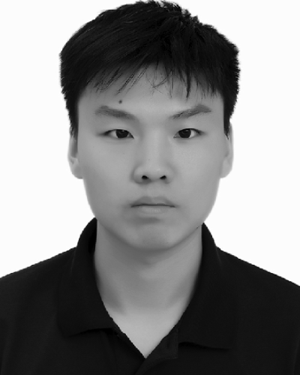 Yongchao Zhang合作论文数2
 Li Zhuo合作论文数2Bowei Pu合作论文数1
 Fengjun Zhao合作论文数1na wang合作论文数1DeXiang Meng (孟德香)合作论文数1
 Lian Zhao合作论文数Department of Electrical, Computer, and Biomedical Engineering, Faculty of Engineering and Architectural Science, Toronto Metropolitan University1
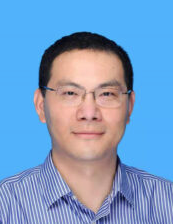 Yuan Wu (吳遠)合作论文数State Key Lab of Internet of Things for Smart City, Department of Computer and Information Science, Faculty of Science and Technology, University of Macau1Liang Tong合作论文数1
 Hong Shen (沈鸿)合作论文数School of Computer Science, University of Adelaide1




