In this paper, an individual 3D face reconstruction method is proposed. A 3D facial model is constructed from a static or captured image from video camera, by procedures like face region detection, feature points detection, blink detection, feature points matching and 3D facial texture mapping. In order to improve performance of reconstruction, a pattern-based blink detection method is proposed in this paper. During the reconstruction, once blink is detected, further computing will be skipped. CANDIDE-3 model, which is just a parameterization grid, lacks ability to determine blink, blink detection is significant. Compared with blink detection base on Otsu, the blink detection method in this paper has higher performance and stronger flexibility toward various illumination conditions. Experimental results show that there are good results of 3D face reconstruction.
The promising trend of digital home-based service enables more and more software to be embedded into set-top boxes. The visualization technology for textiles facilitates home consumers to approach and access both market information and application guidelines with easy means such as a remote controller, therefore, may help to promote the home textile consumptions significantly. This paper analyses the system requirement involved and develops a prototype to demonstrate the framework of the set-top box embedded simulation system for functional textile products consumption.
The development of technology and improvement of living quality lead to the increase in demand for the diversity of functions of set-top box (STB). In this paper, a service of virtual experience of wearing clothes is introduced to the STB, which aims at offering a subjective perception of dynamic thermal comfort to the customers who want to buy clothes through STB. The implementation of this service is by simulating the heat and moisture transferring in textiles on the basis of the theory of PDTC simulation. Additionally, we adopted linking method rather than traditional embedding method to append our service to the STB, because embedding the functional module into the middleware of STB would cause a series of compatibility problems due to the high complexity of the module of PDTC simulation. Finally, the application of the whole system is presented.
 Ruomei Wang (王若梅)合作论文数School of Software Engineering, Sun Yat-Sen University3
 Jianwen Xie (谢建文)合作论文数Akool USA1
 Weigang Jiang (蒋卫刚)合作论文数1
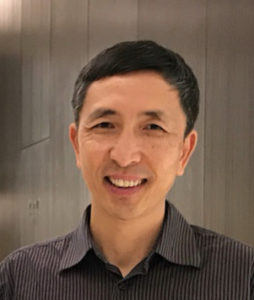 Ping Li (李平)合作论文数Department of Chinese and Bilingual Studies, Faculty of Humanities, The Hong Kong Polytechnic University;Brain, Language, and Computation Laboratory, The Hong Kong Polytechnic University1Zhong Wang合作论文数1
 Jian Huang (黄健)合作论文数Department of Chemical Biology, School of Pharmaceutical Sciences, Peking University1




