Programmable-payment protocols such as x402 enable per-request micropayments, but they do not determine which payable service an autonomous agent should buy under a finite wallet. We formulate this buyer-side problem as agent-native payment decision-making: contextual provider selection under wallet pressure, chosen-only paid feedback, and changing market conditions. We propose 402Pilot, a protocol-agnostic buyer-side decision layer between autonomous agents and payment execution that implements purchasing policies for selecting among payable providers. We instantiate it with PA-DCT, a payment-aware discounted contextual Thompson-sampling policy that adapts purchasing decisions under wallet pressure while learning from post-payment feedback. To evaluate buyer-side payment policies, we introduce 402Pilot-Bench, a frozen-replay benchmark spanning 823 tasks, five heterogeneous provider pipelines, and three market regimes, each evaluated over 30 paired seeds. PA-DCT achieves the strongest fixed-wallet adaptive trade-off among non-oracle policies: it maintains competitive service quality while spending only 39 to 43 percent of the wallet and reallocates spending as market conditions change. It attains the best non-oracle PA-gap/T under the price shock and the best mean and worst-case ranks across the nine scenario-metric combinations of quality, ROI, and PA-gap/T. Comparisons with learning baselines and component ablations further support the effectiveness and design of the proposed decision policy. These results suggest that programmable payment must be complemented by buyer-side decision-making capable of learning service value and adapting purchasing decisions accordingly.
Spatial prediction tasks are often limited by a lack of high-quality labelled ground-truth observations. To overcome this challenge, self-supervised pre-training is a possible solution, with contrastive learning dominant for location encoders. Those approaches usually align geographic coordinates with just one additional modality. We propose two multimodal contrastive learning architectures: Multimodal Embedding via Location Tying (MELT) and Sequential Alternating Location Training (SALT). These architectures expand this framework beyond two modalities by utilising unpaired geospatial data. Both methods are technically viable and match the performance of the strongest two-modality baseline (SATCLIP) across four downstream tasks. However, increasing the number of modalities does not consistently improve performance, suggesting that the chosen location encoder is the main limitation - the contrastive objective reaches its peak early, regardless of modality diversity or pre-training volume. MELT provides more stable training than SALT and presents a stronger foundation for future scaling.
Urban heat islands (UHIs) are intensifying under climate change, exacerbating thermal exposure risks. Their two primary observations, land surface temperature UHI (LST-UHI) and near-surface air temperature UHI (AirT-UHI), capture physically distinct aspects of urban heat. However, most studies rely on a single source, and substituting one for the other can substantially bias the magnitude and spatial variability of human heat exposure. Accurate UHI modeling also requires dynamic meteorological drivers and static urban morphology features, but spatiotemporal incompatibilities hinder their alignment. Cloud gaps in LST observations and sparse AirT station networks further limit dual-source UHI modeling, motivating cross-city transfer across diverse climates. To bridge these gaps, we introduce UHI-Bench, the first UHI benchmark for dual-source UHI modeling that integrates dynamic and static environmental context. Following a unified signal, mechanism, and transfer framework, it evaluates over 20 baselines from four model families on five tasks across 20 cities and nine Köppen climate classes. Results show that no model is uniformly best, although foundation models remain consistently competitive and stable. Environmental covariates generally improve performance, but their utility varies across sources and tasks. Cross-city transferability is better explained by overlap in UHI regimes than by climate-zone similarity. With the dataset and standardized pipeline, our work provides practical guidance for urban heat modeling, promotes climate data equity, and supports future advances in climate research.
Recent advancements in Text-to-SQL (Text2SQL) emphasize stimulating the large language models (LLM) on in-context learning, achieving significant results. Nevertheless, they face challenges when dealing with verbose database information and complex user intentions. This paper presents a two-stage framework to enhance the performance of current LLM-based natural language to SQL systems. We first introduce a novel prompt representation, called reference-enhanced representation, which includes schema information and randomly sampled cell values from tables to instruct LLMs in generating SQL queries. Then, in the first stage, question-SQL pairs are retrieved as few-shot demonstrations, prompting the LLM to generate a preliminary SQL (PreSQL). After that, the mentioned entities in PreSQL are parsed to conduct schema linking, which can significantly compact the useful information. In the second stage, with the linked schema, we simplify the prompt's schema information and instruct the LLM to produce the final SQL. Finally, as the post-refinement module, we propose using cross-consistency across different LLMs rather than self-consistency within a particular LLM. Our methods achieve new SOTA results on the Spider benchmark, with an execution accuracy of 87.6
Adaptive patching is a recent and compelling proposal for time-series Transformers: allocate finer patches where the sequence looks locally informative. This paper asks under what conditions a content-adaptive patching operator should outperform a tuned uniform one. Local heterogeneity alone is not enough: under pointwise forecasting losses, a complex-looking region is not automatically one where finer patching reduces the loss. We model patching as a budgeted bitrate allocation and derive an explicit threshold that a dynamic patching rule must satisfy to beat a well-tuned uniform baseline, then bound the achievable improvement both locally (a quadratic surrogate) and globally (a strong-convexity bound under the model's assumptions). Two structural results follow: without a coupling constraint, scalar local complexity cannot produce a non-uniform optimum under a common loss landscape; and once the backbone is trained to its representation-aware optimum, the alignment gain collapses around a well-tuned uniform patch size. To test these predictions, we run a controlled isolation study on three representative architectures, replacing each adaptive mechanism with a uniform patch-size sweep while keeping the backbone, data, and training protocol fixed. On standard long-horizon forecasting benchmarks, the validation-selected uniform baseline is competitive with the dynamic counterpart, with per-setting effects concentrated near zero and no consistent directional advantage once results are aggregated by dataset. The larger gains we do observe are method- and dataset-specific. Adaptive patching should therefore be evaluated against a tuned uniform baseline; its value depends on whether a cheap and reliable routing signal can identify where finer patches actually reduce forecasting loss.
Lifelong learning aims to preserve knowledge acquired from previous tasks while incorporating knowledge from a sequence of new tasks. However, most prior work explores only streams of homogeneous tasks (e.g., only classification tasks) and neglects the scenario of learning across heterogeneous tasks that possess different structures of outputs. In this work, we formalize this broader setting as lifelong heterogeneous learning (LHL). Departing from conventional lifelong learning, the task sequence of LHL spans different task types, and the learner needs to retain heterogeneous knowledge for different output space structures. To instantiate the LHL, we focus on LHL in the context of dense prediction (LHL4DP), a realistic and challenging scenario. To this end, we propose the Heterogeneity-Aware Distillation (HAD) method, an exemplar-free approach that preserves previously gained heterogeneous knowledge by self-distillation in each training phase. The proposed HAD comprises two complementary components, including a distribution-balanced heterogeneity-aware distillation loss to alleviate the global imbalance of prediction distribution and a salience-guided heterogeneity-aware distillation loss that concentrates learning on informative edge pixels extracted with the Sobel operator. Extensive experiments demonstrate that the proposed HAD method significantly outperforms existing methods in this new scenario.
Existing multimodal RAG methods often flatten structured documents into isolated text and image units, weakening the source organization and local text-image logic needed for faithful evidence selection and placement. We propose HAM-RAG, a Hierarchy-Aware Multimodal RAG framework for structure-faithful interleaved generation. HAM-RAG uses document hierarchy as a grounding signal across retrieval and generation, contextualizing textual and visual evidence and preserving source position and local text-image relations in the prompt. We further introduce HAM-Bench, covering Wukong, Wiki, arXiv, and Recipe across game walkthroughs, web pages, scientific papers, and step-wise recipe documents. Across multiple backbones, HAM-RAG improves the main multimodal average by 17.3
Training multimodal models to align time series with language runs into a self-supervision trap. The usual recipe asks an LLM to read a series and write a description, so label quality is capped by the perceptual skill the model is supposed to learn. The data can never teach more than the labeler already knows. A second gap makes this worse: most datasets use a single variable, but the patterns that matter (cross-channel correlation, lead-lag structure, co-occurring anomalies) appear only with several variables, right where the labeling LLM's limits are most exposed. These two problems create a trilemma: existing methods are reliable, realistic, or scalable, but none achieves all three. We resolve this by decoupling perception from description. Deterministic code computes a set of statistics from real, open-source multivariate series; the LLM verbalizes those precomputed facts. Perception, which LLMs do poorly, is handled by computation, while the LLM handles expression. This produces CGTime, our 4B-parameter computation-grounded time-series-language model. CGTime outperforms far larger general-purpose models on multivariate understanding tasks: it attains the best multivariate fact score on our held-out benchmark (0.283 vs. 0.173 for GPT-4o-mini and 0.203 for GPT-5.4-nano), a gap that survives Holm-corrected paired significance tests against every baseline. It also states verifiable numerical facts in generated captions more accurately and covers a broader range of statistical properties.
Accurate medical time series (MedTS) classification is essential for effective clinical diagnosis, yet remains challenging due to complex multi-channel temporal dependencies, information redundancy, and label scarcity. While transformer-based models have shown promise in time series analysis, most are designed for forecasting tasks and fail to fully exploit the unique characteristics of MedTS. In this paper, we introduce MedSpaformer, a transformer-based framework tailored for MedTS classification. It incorporates a sparse token-based dual-attention mechanism that enables global context modeling and token sparsification, allowing dynamic feature refinement by focusing on informative tokens while reducing redundancy. This mechanism is integrated into a multi-granularity cross-channel encoding scheme to capture intra- and inter-granularity temporal dependencies and inter-channel correlations, enabling progressive refinement of task-relevant patterns in medical signals. The sparsification design allows our model to flexibly accommodate inputs with variable lengths and channel dimensions. We also introduce an adaptive label encoder to extract label semantics and address cross-dataset label space misalignment. Together, these components enhance the model's transferability across heterogeneous medical datasets, which helps alleviate the challenge of label scarcity. Our model outperforms 13 baselines across 7 medical datasets under supervised learning. It also excels in few-shot learning and demonstrates zero-shot capability in both in-domain and cross-domain diagnostics. These results highlight MedSpaformer's robustness and its potential as a unified solution for MedTS classification across diverse settings.
Recently spatial-temporal intelligence of Visual-Language Models (VLMs) has attracted much attention due to its importance for Autonomous Driving, Embodied AI and General Artificial Intelligence. Existing spatial-temporal benchmarks mainly focus on egocentric perspective reasoning with images/video context, or geographic perspective reasoning with graphics context (eg. a map), thus fail to assess VLMs' geographic spatial-temporal intelligence with both images/video and graphics context, which is important for areas like traffic management and emergency response. To address the gaps, we introduce Geo-Temporal Reasoning benchmark (GTR-Bench), a novel challenge for geographic temporal reasoning of moving targets in a large-scale camera network. GTR-Bench is more challenging as it requires multiple perspective switches between maps and videos, joint reasoning across multiple videos with non-overlapping fields of view, and inference over spatial-temporal regions that are unobserved by any video context. Evaluations of more than 10 popular VLMs on GTR-Bench demonstrate that even the best proprietary model, Gemini-2.5-Pro (34.9\%), significantly lags behind human performance (78.61\%) on geo-temporal reasoning. Moreover, our comprehensive analysis on GTR-Bench reveals three primary deficiencies of current models for geo-temporal reasoning. (1) VLMs' reasoning is impaired by an imbalanced utilization of spatial-temporal context. (2) VLMs are weak in temporal forecasting, which leads to worse performance on temporal-emphasized tasks than on spatial-emphasized tasks. (3) VLMs lack the proficiency to comprehend or align the map data with multi-view video inputs. We believe GTR-Bench offers valuable insights and opens up new opportunities for research and applications in spatial-temporal intelligence. Benchmark and code will be released at \href{https://anonymous.4open.science/r/GTR-Bench-5B76}{https://anonymous.4open.science/r/GTR-Bench-5B76}.
Large language model (LLM) agents have shown promise in automating complex data-analysis workflows, but their reliable deployment remains challenging in high-stakes industrial scenarios. Industrial anomaly detection (IAD) is essential for manufacturing quality, safety, and efficiency, yet existing LLM-based IAD agents mainly focus on execution while under-exploiting strategy formulation. Consequently, they struggle to handle heterogeneous modalities in a unified and cost-effective manner. Inspired by the DMAIC quality-management framework, we propose DMAIC-IAD (DMAIC-inspired Agentic Industrial Anomaly Detection), a "Plan First, Judge Later" multi-agent system that aligns LLM agents with structured industrial problem-solving. DMAIC-IAD distills heterogeneous references into standardized operating procedures (SOPs) before strategy generation, and introduces a pre-trained execution-free judge model to rank candidate strategies without costly runtime trials. Extensive experiments across four modalities show that DMAIC-IAD improves average detection performance over applicable agentic baselines by 37.76
Reliable spatial decision automation, such as autonomous driving and maritime surveillance, critically depends on robust visual perception. However, real-world spatiotemporal data exhibits severe heterogeneity, often manifesting as extreme long-tail distributions for safety-critical scenarios. This data scarcity induces dataset shift that degrades detection performance and pose safety risks. While synthetic data generation offers a potential solution, existing generative approaches, such as diffusion models and Generative Adversarial Networks (GANs), often lack explicit spatial grounding and structural constraints, resulting in spatial and physical inconsistencies in generated scenes. To address these challenges, we introduce WMGen-v1, an agentic text-based world model framework for long-tail spatial data generation. WMGen-v1 employs a Large Vision-Language Model (LVLM) to construct a structured scene representation from a single reference image, while a Large Language Model (LLM) performs guidance-based scene expansion under physical plausibility and commonsense constraints. Subsequently, conditioned on the structured semantic representations produced by this reasoning process, a diffusion model generates diverse and physically grounded long-tail training data. Experiments on internal industrial datasets, ROADWork, and LaRS benchmarks demonstrate that WMGen-v1 outperforms baseline approaches. Notably, detectors trained solely on WMGen-v1 synthetic data approach real-only performance on aggregate dataset-level metrics, highlighting its potential to alleviate long-tail data scarcity for downstream spatial perception.
Multivariate time series forecasting (MTSF) endeavors to predict future observations given historical data, playing a crucial role in time series data management systems. With advancements in large language models (LLMs), recent studies employ textual prompt tuning to infuse the knowledge of LLMs into MTSF. However, the deployment of LLMs often suffers from low efficiency during the inference phase. To address this problem, we introduce TimeKD, an efficient MTSF framework that leverages the calibrated language models and privileged knowledge distillation. TimeKD aims to generate high-quality future representations from the proposed cross-modality teacher model and cultivate an effective student model. The cross-modality teacher model adopts calibrated language models (CLMs) with ground truth prompts, motivated by the paradigm of Learning Under Privileged Information (LUPI). In addition, we design a subtractive cross attention (SCA) mechanism to refine these representations. To cultivate an effective student model, we propose an innovative privileged knowledge distillation (PKD) mechanism including correlation and feature distillation. PKD enables the student to replicate the teacher's behavior while minimizing their output discrepancy. Extensive experiments on real data offer insight into the effectiveness, efficiency, and scalability of the proposed TimeKD.
Predicting future heart rate(HR)not only helps in detecting abnormal heart rhythms but also pro-vides timely support for downstream health monitoring services.Existing methods for HR prediction encounter challenges,especially concerning privacy protection and data heterogeneity.To address these challenges,this paper proposes a novel HR prediction framework,PCFedH,which leverages personalized federated learning and proto-typical contrastive learning to achieve stable clustering results and more accurate predictions.PCFedH contains two core modules:a prototypical contrastive learning-based federated clustering module,which characterizes data heterogeneity and enhances HR representation to facilitate more effective clustering,and a two-phase soft clustered federated learning module,which enables personalized performance improvements for each local model based on stable clustering results.Experimental results on two real-world datasets demonstrate the superiority of our ap-proach over state-of-the-art methods,achieving an average reduction of 3.1%in the mean squared error across both datasets.Additionally,we conduct comprehensive experiments to empirically validate the effectiveness of the key components in the proposed method.Among these,the personalization component is identified as the most crucial aspect of our design,indicating its substantial impact on overall performance.
The proliferation of edge devices has generated an unprecedented volume of time series data across different domains, motivating various well-customized methods. Recently, Large Language Models (LLMs) have emerged as a new paradigm for time series analytics by leveraging the shared sequential nature of textual data and time series. However, a fundamental cross-modality gap between time series and LLMs exists, as LLMs are pre-trained on textual corpora and are not inherently optimized for time series. Many recent proposals are designed to address this issue. In this survey, we provide an up-to-date overview of LLMs-based cross-modality modeling for time series analytics. We first introduce a taxonomy that classifies existing approaches into four groups based on the type of textual data employed for time series modeling. We then summarize key cross-modality strategies, e.g., alignment and fusion, and discuss their applications across a range of downstream tasks. Furthermore, we conduct experiments on multimodal datasets from different application domains to investigate effective combinations of textual data and cross-modality strategies for enhancing time series analytics. Finally, we suggest several promising directions for future research. This survey is designed for a range of professionals, researchers, and practitioners interested in LLM-based time series modeling.
Visual Object Tracking (VOT) is widely used in applications like autonomous driving to continuously track targets in videos. Existing methods can be roughly categorized into template matching and autoregressive methods, where the former usually neglects the temporal dependencies across frames and the latter tends to get biased towards the object categories during training, showing weak generalizability to unseen classes. To address these issues, some methods propose to adapt the video foundation model SAM2 for VOT, where the tracking results of each frame would be encoded as memory for conditioning the rest of frames in an autoregressive manner. Nevertheless, existing methods fail to overcome the challenges of object occlusions and distractions, and do not have any measures to intercept the propagation of tracking errors. To tackle them, we present a SAMITE model, built upon SAM2 with additional modules, including: (1) Prototypical Memory Bank: We propose to quantify the feature-wise and position-wise correctness of each frame's tracking results, and select the best frames to condition subsequent frames. As the features of occluded and distracting objects are feature-wise and position-wise inaccurate, their scores would naturally be lower and thus can be filtered to intercept error propagation; (2) Positional Prompt Generator: To further reduce the impacts of distractors, we propose to generate positional mask prompts to provide explicit positional clues for the target, leading to more accurate tracking. Extensive experiments have been conducted on six benchmarks, showing the superiority of SAMITE. The code is available at https://github.com/Sam1224/SAMITE.
This paper addresses the critical challenge of optimizing electric vehicle charging station placement through a novel data-driven methodology employing causal discovery techniques. While traditional approaches prioritize economic factors or power grid constraints, they often neglect empirical charging patterns that ultimately determine station utilization. We analyze extensive charging data from Palo Alto and Boulder (337,344 events across 100 stations) to uncover latent relationships between station characteristics and utilization. Applying structural learning algorithms (NOTEARS and DAGMA) to this data reveals that charging demand is primarily determined by three factors: proximity to amenities, EV registration density, and adjacency to high-traffic routes. These findings, consistent across multiple algorithms and urban contexts, challenge conventional infrastructure distribution strategies. We develop an optimization framework that translates these insights into actionable placement recommendations, identifying locations likely to experience high utilization based on the discovered dependency structures. The resulting site selection model prioritizes strategic clustering in high-amenity areas with substantial EV populations rather than uniform spatial distribution. Our approach contributes a framework that integrates empirical charging behavior into infrastructure planning, potentially enhancing both station utilization and user convenience. By focusing on data-driven insights instead of theoretical distribution models, we provide a more effective strategy for expanding charging networks that can adjust to various stages of EV market development. The code is available at https://github.com/bonaldli/Causal4EV.
Sensors are commonly deployed to perceive the environment. However, due to the high cost, sensors are usually sparsely deployed. Kriging is the tailored task to infer the unobserved nodes (without sensors) using the observed source nodes (with sensors). The essence of kriging task is transferability. Recently, several inductive spatio-temporal kriging methods have been proposed based on graph neural networks, being trained based on a graph built on top of observed nodes via pretext tasks such as masking nodes out and reconstructing them. However, the graph in training is inevitably much sparser than the graph in inference that includes all the observed and unobserved nodes. The learned pattern cannot be well generalized for inference, denoted as graph gap. To address this issue, we first present a novel Increment training strategy: instead of masking nodes (and reconstructing them), we add virtual nodes into the training graph so as to mitigate the graph gap issue naturally. Nevertheless, the empty-shell virtual nodes without labels could have bad-learned features and lack supervision signals. To solve these issues, we pair each virtual node with its most similar observed node and fuse their features together; to enhance the supervision signal, we construct reliable pseudo labels for virtual nodes. As a result, the learned pattern of virtual nodes could be safely transferred to real unobserved nodes for reliable kriging. We name our new Kriging model with Increment Training Strategy as KITS. Extensive experiments demonstrate that KITS consistently outperforms existing kriging methods by large margins, e.g., the improvement over MAE score could be as high as 18.33
Reinforcement learning (RL) has become an essential tool in optimizing transportation systems, offering promising solutions to dynamic and complex decision-making challenges. This paper explores the application of RL in four representative domains of transportation systems, including road-level traffic signal control, low-altitude unmanned aerial vehicle (UAV) navigation, high-altitude air traffic management (ATM), and maritime autonomous ship (AMS) navigation. These domains span land, low airspace, high airspace, and sea, reflecting key operational environments where multi-agent coordination is crucial. While significant advances have been made in the development of RL-based systems, traditional models often face limitations when applied to diverse, real-world environments due to their reliance on single-scenario training. To address this, we focus on cross-scenario multi-agent reinforcement learning (MARL), which aims to enhance the adaptability and scalability of RL models across multiple, distinct scenarios. Specifically, we examine offline RL and meta RL techniques, which enable agents to transfer policies learned in one environment to new, unseen scenarios. Despite the progress, challenges such as policy transferability, data efficiency, and scalability remain, which need to be addressed for broader application in transportation systems. This paper provides an overview of these challenges, reviews the state-of-the-art methods, and discusses future directions for advancing RL in transportation systems.
The operational efficiency of railway networks, a cornerstone of modern economies, is persistently undermined by the cascading effects of train delays. Accurately forecasting this delay propagation is a critical challenge for real-time traffic management. While recent research has leveraged Graph Neural Networks (GNNs) to model the network structure of railways, a significant gap remains in developing frameworks that provide multi-step autoregressive forecasts at a network-wide scale, while simultaneously offering the live, interpretable explanations needed for decision support. This paper addresses this gap by developing and evaluating a novel XGeoAI framework for live, explainable, multi-step train delay forecasting. The core of this work is a two-stage, autoregressive Graph Attention Network (GAT) model, trained on a real-world dataset covering over 40% of the Dutch railway network. The model represents the system as a spatio-temporal graph of operational events (arrivals and departures) and is enriched with granular features, including platform and station congestion. To test its viability for live deployment, the model is rigorously evaluated using a sequential, k-step-ahead forecasting protocol that simulates real-world conditions where prediction errors can compound. The results demonstrate that while the proposed GATv2 model is challenged on pure error metrics (MAE) by a simpler Persistence baseline, it achieves consistently higher precision in classifying delay events-a crucial advantage for a reliable decision support tool. The explainability analysis, a key contribution, reveals a novel insight into the model's learned strategy: it dynamically focuses its attention on local station congestion (proxied by Dwell edges) to identify fragile network states where inter-train Headway conflicts are most likely to cause significant delay propagation. This work contributes a robust methodology for autoregressive forecasting on large-scale graphs, introduces the Edge Propagation Error metric for targeted evaluation, and provides a blueprint for a next-generation, explainable decision support system for railway operators.
 Rui Zhao (趙瑞)合作论文数SenseTime Group Limited37
 Fugee Tsung (宗福季)合作论文数Department of Industrial Engineering and Decision Analytics, School of Engineering, The Hong Kong University of Science and Technology18
 Zhishuai Li合作论文数16
 Cheng Long合作论文数College of Computing and Data Science, Nanyang Technological University14
 Hangyu Mao (毛航宇)合作论文数Kuaishou Technology13
 Lei Bai (白磊)合作论文数Shanghai AI Laboratory12
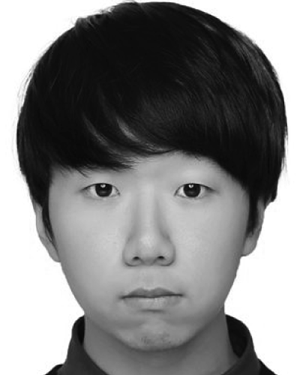 Qianxiong Xu合作论文数S-Lab, Nanyang Technological University;School of Computer Science and Engineering, Nanyang Technological University11
 Chen Zhang (张晨)合作论文数Department of Industrial Engineering, School of Mechanical Engineering, Tsinghua University;Industrial Statistics and Data Analytics Lab, Department of Industrial Engineering, Tsinghua University9
 Zhao Zhang (张朝)合作论文数Faculty of Geographical Science, Beijing Normal University9
 Jingqing Ruan合作论文数Institute of Automation, Chinese Academy of Sciences8
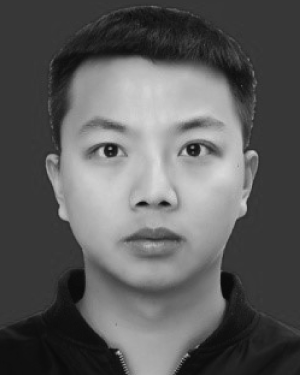 Liangliang Zhang合作论文数8
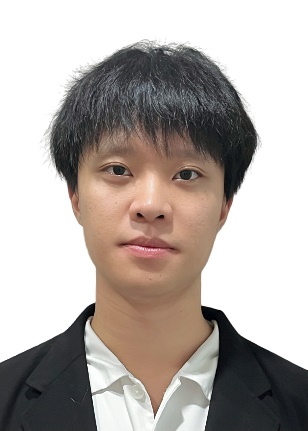 Yuchuan Luo (骆玉川)合作论文数School of Geographical Sciences, Southwest University7
 Wolfgang Ketter合作论文数Erasmus University Rotterdam7
 Haoyuan Jiang合作论文数Baidu Inc6
 Sun Yang合作论文数6Guoqing Du合作论文数6
 Hao Yan (闫浩)合作论文数School of Integrated Circuits, Southeast University;National ASIC System Engineering Research Center, Southeast University6
 Juan Cao (曹娟)合作论文数School of International Culture, Capital Normal University6
 Fulu Tao (陶福禄)合作论文数Institute of Geographic Sciences and Natural Resources Research, Chinese Academy of Sciences;College of Resources and Environment, University of Chinese Academy of Sciences6
 Bin Zhang合作论文数Complex Systems Cognition and Decision Making Lab, Institute of Automation, Chinese Academy of Sciences4Xiaoru Hu合作论文数4Man Li合作论文数4
 Miao Hao合作论文数Nanjing Forestry University4
 Guosheng Lin合作论文数School of Computer Science and Engineering, Nanyang Technological University4
 Hua Wei合作论文数School of Computing and Augmented Intelligence, Arizona State University4Junpeng Lin合作论文数3Jiaming Lu合作论文数3Xuantang Xiong合作论文数3
 Zhiwei Xu (徐志伟)合作论文数School of Artificial Intelligence, Shandong University3
 Wei Zeng (曾伟)合作论文数The Hong Kong University of Science and Technology (Guangzhou)3
 Lanyun Zhu (祝澜耘)合作论文数Rapid-Rich Object Search Lab, Nanyang Technological University3
 Jing Zhang (张晶)合作论文数Faculty of Geographical Science, Beijing Normal University3
 Qingyuan Gong (宫庆媛)合作论文数Research Institute of Intelligent Complex Systems, Fudan University3
 Feng Zhu (朱烽)合作论文数SenseTime Group Ltd.3Lingzheng Zhang合作论文数2Yihong Chen合作论文数2Shiwei Shi合作论文数2
 Hui Ruan合作论文数2
 Chenxi Liu合作论文数2Dedong Li合作论文数SenseTime Research2Tian Lan合作论文数2Jichong Han合作论文数2Yunhao Nie合作论文数2
 Tianpeng Bao合作论文数Dept Automat, Tsinghua Univ2
 Pengxin Guo合作论文数2
 Lijun Sun (孙立君)合作论文数2
 Yan Zhao (赵艳)合作论文数University of Electronic Science and Technology of China2
 Yisheng Lv (吕宜生)合作论文数Institute of Automation, Chinese Academy of Science;University of Chinese Academy of Sciences2




