A series of methodologies are proposed to transform conventional waveform measurements from legacy power quality meters into synchro-waveforms. This study is motivated by the presence of thousands of legacy power quality meters in operation worldwide that provide event-triggered waveform measurements but lack time-synchronization among their data. Consequently, the waveform measurements from these legacy meters cannot be directly used as synchro-waveforms, limiting their applicability in the promising synchro-waveform applications that have been introduced in the literature in recent years. We address this issue without requiring legacy power quality meters to be equipped with GPS receivers or other time-synchronization hardware. Our data-driven methods operate in two steps: first, they perform optimization-based event signature alignment, and then they use the results to estimate a synchronization operator between any two legacy meters. The proposed methods are accurate, robust, and computationally efficient. All case studies presented in this paper are based on real-world waveform measurements.
Recent advancements in synchronized sensor technologies has introduced an unprecedented level of visibility in power distribution systems. Apart from the Distribution-level Phasor Measurement Units (D-PMUs), a.k.a. micro-PMUs, that have been widely used in recent years, other synchronized sensors have also been developed in this field, including Harmonic Phasor Measurement Units (H-PMUs) and Waveform Measurement Units (WMUs). However, in practice, it is common for these sensors to lose time synchronization over some periods of time and for different reasons. In this paper, we propose new and customized solutions to tackle loss of time synchronization in D-PMUs, H-PMUs, and WMUs, whereby addressing the unique challenges in each case. Our focus is on solving the event location identification problem, for different types of steady-state and transient events. We show that, our methods can maintain high accuracy in event location identification, despite losing time synchronization, whether we use D-PMUs, H-PMUs, or WMUs.
Synchronized waveform measurements, also known as synchro-waveforms, are gaining increasing attention in advanced power systems monitoring in recent years. However, there is a major gap in this field in practice. Although many utilities do have an existing infrastructure to measure voltage and current waveforms, such as by using conventional power quality sensors, those existing waveform measurements are not time-synchronized. In this paper, we propose novel methods to achieve data-driven time-synchronization among the conventional power quality sensors solely based on the analysis of the time-series of waveform measurements using statistical and optimization techniques. This will enable utilities to take advantage of the emerging applications of synchro-waveforms without the need to replace or retrofit their existing sensors. Experimental results confirm the high performance of the proposed methods.
Continuous streaming of synchro-waveforms, i.e., time-synchronized waveform measurements, can provide a comprehensive record of the status of the power system. The key to unmask the value of such massive data recording is to extract the most informative aspects of the data. In this paper, we develop and test new methods to detect and characterize subcycle events in continuous streaming of synchro-waveforms. The measurements in this study are collected by the authors in a practical test-bed in California. The measurements are made at low-voltage circuits under two different substations, using GridSweep devices with GPS time stamping. Over 40 billion data points were collected during one month. Several practical challenges are addressed, including the computational complexity due to the enormous size of data, the need for realignment between waveform samples and cycles, and the challenges in extracting differential waveforms to reveal the event signatures.
Prior studies have shown that most phasor measurement units (PMUs) in practice suffer from some level of time synchronization loss at least once every day. We address this issue in the context of distribution-level PMUs, i.e., micro-PMUs, and with focus on the application of micro-PMUs in event location identification in situational awareness. We show that a state-of-the-art method that is highly successful in identifying the correct event location when the micro-PMUs are synchronized, fails when time synchronization is lost among the micro-PMUs. An alternative method is proposed to identify the location of events not only when the micro-PMUs are time synchronized but also when micro-PMUs lose time synchronization. The proposed model works for different scenarios for losing time synchronization among some or all micro-PMUs.
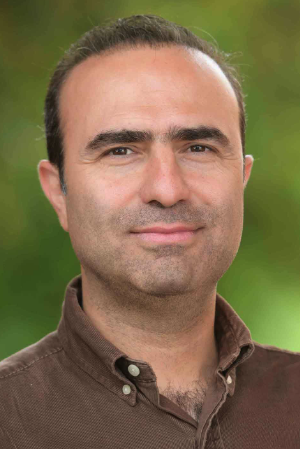 Hamed Mohsenian-Rad合作论文数Department of Electrical and Computer Engineering, University of California, Riverside;Winston Chung Global Energy Center5
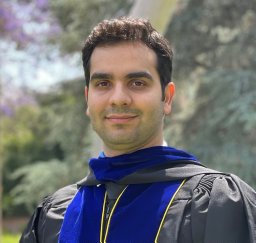 Mohammad Farajollahi合作论文数2. Professor of Department of Medical Biotechnology, Faculty of Allied Medicine &Cellular and Molecular Research Center, Iran University of Medical Sciences;Alborz Food &Drug Laboratory, Fardis;Faculty of Allied Medicine & Cellular and Molecular Research Center, Iran University of Medical Sciences2
 Fatemeh Ahmadi-Gorjayi合作论文数1
 Milad Izadi合作论文数University of California at Riverside1
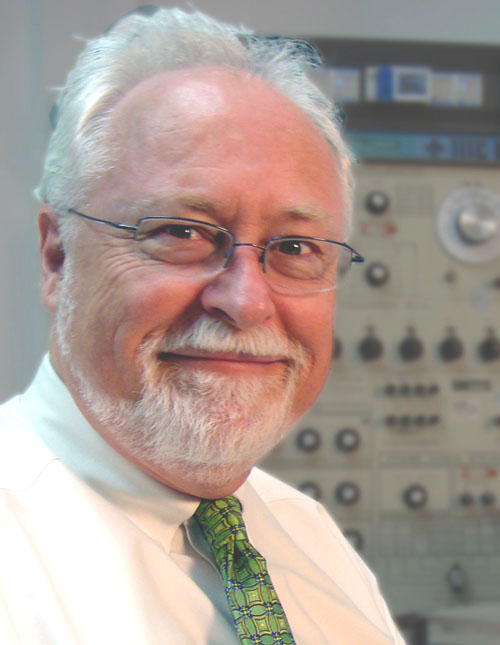 Alex McEachern合作论文数McEachern Laboratories Inc.1




