The ring opening of 2α,3α- and 2β,3β-epoxy-5α-androstan-17-one with halide reagents (AlCl3, TMSCl, LiCl, and LiBr) was investigated using imidazolium ionic liquids in the dual role of solvent and catalyst. The application of the ionic liquid was shown to result in an increase in the amount of the unusual diequatorial halohydrins especially at temperatures above 100 °C. With a careful choice of reaction conditions, the latter derivatives could be produced with 43-96% selectivity depending on the nature of the halide ion. Moreover, the usual diaxial products could also be isolated in 70-85% yields by a proper change in the reaction conditions. The reusability of the ionic liquid was demonstrated in both types of reactions. The structures of the products were proved unequivocally by nuclear magnetic resonance (NMR) measurements including two-dimensional (2D) techniques as well as high-resolution mass spectrometry (HRMS). Based on quantum chemical calculations, the effect of the ionic liquid could be explained by the stabilization of the transition state leading to the diequatorial product.
Background: Aryl-methoxybenzaldehydes substituted in various positions may serve as valuable starting materials for the synthesis of biologically active compounds. Methods: Biaryl-methoxybenzaldehydes and pyridyl-aryl-methoxybenzaldehydes were synthesized by the Suzuki-Miyaura cross-coupling reactions as intermediates of potential drug substances. Three different catalytic approaches were compared. The classical Suzuki method utilising tetrakis(triphenylphosphine)palladium and sodium ethoxide, the protocol applying palladium acetate and tri(o-tolyl)phosphine, and the method using tetrakis(triphenylphosphine)palladium and cesium carbonate, were studied. Results: The selected boronic acids were the classical phenylboronic acid, as well as 4-pyridine-and 3-pyridineboronic acids. 26 New biaryl-methoxybenzaldehydes or pyridyl-phenyl-methoxybenzaldehydes have been synthesized, which may be intermediates for pharmaceutically active compounds. Conclusion: The method of Anderson et al. was preferred, because it provides satisfactory results in all cases.
Some Vinca alkaloids (eg, vinblastine, vincristine) have been widely used as antitumor drugs for a long time. Unfortunately, vindoline, a main alkaloid component of Catharanthus roseus (L.) G. Don, itself, has no antitumor activity. In our novel research program, we have prepared and identified new vindoline derivatives with moderate cytostatic activity. Here, we describe the effect of conjugation of vindoline derivative with oligoarginine (tetra-, hexa-, or octapeptides) cell-penetrating peptides on the cytostatic activity in vitro and in vivo. Br-Vindoline-(l)-Trp-OH attached to the N-terminus of octaarginine was the most effective compound in vitro on HL-60 cell line. Analysis of the in vitro activity of two isomer conjugates (Br-vindoline-(l)-Trp-Arg(8) and Br-vindoline-(d)-Trp-Arg(8) suggests the covalent attachment of the vindoline derivatives to octaarginine increased the antitumor activity significantly against P388 and C26 tumour cells in vitro. The cytostatic effect was dependent on the presence and configuration of Trp in the conjugate as well as on the cell line studied. The configuration of Trp notably influenced the activity on C26 and P388 cells: conjugate with (l)-Trp was more active than conjugate with the (d)-isomer. In contrast, conjugates had very similar effect on both the HL-60 and MDA-MB-231 cells. In preliminary experiments, conjugate Br-vindoline-(l)-Trp-Arg(8) exhibited some inhibitory effect on the tumor growth in P388 mouse leukemia tumor-bearing mice. Our results indicate that the conjugation of modified vindoline could result in an effective compound even with in vivo antitumor activity.
The benzyloxy-benzyl moiety is a valuable building block in medicinal chemistry, e.g. in case of the voltage gated sodium channel blockers Safinamide and Ralfinamide. To prepare further derivatives a series of (iodobenzyl)oxybenzaldehydes (3a-3i) useful intermediates for the synthesis of biologically active compounds were synthesized in high yields by O-benzylation of 2-, 3- and 4- hydroxybenzaldehydes (2a-2c) with a variety of iodobenzylbromides (1a-1c). The title compounds were obtained in 77-100 % yield in 2-5 hours. Longer reaction time or addition of water favoured the formation of aldol-type by-products, mainly 4-hydroxy-4-{[(iodophenyl)methoxy]phenyl}butan-2-one derivatives (5a-5g), which contained the iodine group and the 4-hydroxy-butan-2-one moiety in various positions. In one case (3E-)-4-{3-[(2-iodophenyl)methoxy]phenyl}but-3-en-2-one (6c) with a double bond has been isolated. These side-reactions could be avoided by using acetonitrile as solvent. The structures of the new products were established by high resolution MS and NMR measurements, where 1H-1H, direct 1H-13C, long-range 1H-13C scalar spin-spin connectivities were established from 1D 1H, 13C, 2D gHSQCAD, zTOCSY and gHMBCAD NMR experiments.
Halogenation reactions of vindoline and 14,15-dihydrovindoline and its hydrochloric salt were investigated and the anomalous reductions were discussed. Performing the hydrogenation in the presence of chlorine-containing solvent, e.g. dichloromethane, hydrogenolysation reaction of chlorine also took place. In this case unexpected chlorinated product could be observed. Performing the hydrogenation reaction only in the presence of methanol, the expected reduced derivative was obtained. Upon bromination of vindoline with excess NBS, oxidation products with ring contraction and developing an oxygen bridge were isolated. The fluorination reactions of vinblastine using Selectfluor (R) and xenon difluoride as the fluorination reagents were unsuccessful because of the decomposition of the starting material. Reactions of vindoline with Selectfluor (R) a mixture of products were obtained. Using xenon difluoride as fluorination agent resulted in a pure quinoidal product containing the fluorine atom in the bridgehead carbon atom of the indole ring. The fluorination of catharanthine gave an anomalous indolenine type product.Dedicated to the memory of Professor Csaba Szantay who passed away on January 17, 2016.
In this chapter, we describe the NMR- and MS-based structure elucidation of a new impurity of the bisindole alkaloid vincristine (VCR). Owing to its size and internal conformational dynamics, VCR and its derivatives are highly "NMR-unfriendly" even if they are available in pure form and adequate quantity. For a VCR-related impurity, typically neither of these conditions holds, and therefore the structure determination of such an impurity can be a daunting task, requiring a "holistic" collaboration between NMR and MS. Here, we outline the subtleties and Mental Traps associated with such a collaboration in the case of an interesting impurity, which, after several apparently convincing but misleading deductions, turned out to be a novel iminium salt of VCR. Hitherto, this derivative was mentioned in the literature merely as a hypothetical intermediate in the peroxidase-catalyzed oxidative metabolism of VCR. The experiences described here illustrate, on the one hand, the reality and dangers of the don't-look-any-further effect, professional chauvinism, and warped team dynamics; on the other hand, they also demonstrate the triumphs resulting from overcoming these hidden human factors.
Vinorelbine condensed with a cyclopropane ring in the position 14 and 15 of the vindoline monomer part was synthesized and was found to have excellent antitumor activity. Further derivatives of cyclopropano-vinorelbine were prepared, the vincristine-like derivative, the N-1-formyl-cyclopropano-vinorelbine, and the hydrated vinorelbine analogue, i.e. 5'-desmethylene-cyclopropano-vinblastine.
A new type of vinblastine and vincristine derivatives was synthesized.The carbon carbon double bond in position 14 and 15 of the vindoline ring was cyclopropanated.In the course of the synthetic work 14,15-cyclopropanovindoline was coupled with catharanthine, resulting in the cyclopropanated anhydrovinblastine as a key intermediate to 14,15-cyclopropano-vinblastine andvincristine.
AbstractCyclopropano‐vinblastine (Ia) has significant tumor cell inhibiting effect in leukemia, non‐small‐cell lung cancer, colon cancer, melanoma, and breast cancer.
Two-dimensional representation of a molecular structure is in some cases misleading, since it may not correctly represent important details and may not provide adequate information on the electronic structure of the molecule. In such cases the physical-chemical properties of the molecule will not be properly interpreted on the basis of the molecular formula. For example, the NMR spectrum will differ significantly from what would be intuitively expected on the basis of this formula and one can deduce the correct electronic and steric structure of the molecule from the obtained spectra instead. In this article the NMR and quantum chemical analysis of the title compound 3-(2-methly-2-phenylhydrazinyl)cyclohex-2-en-1-one will be presented. The unusual NMR spectra and surprising protonation site of this compound will be explained based on the delocalization of the π-symmetric orbitals of its molecules. The proposed electronic structure and the observed but unexpected physical-chemical properties have been confirmed by quantum chemical calculations.
10-Bromovindoline and its 14,15-dihydro- and 14,15-cyclopropano derivatives were coupled in the position 16 with (L)- and (D)-tryptophan methyl esters. The tryptophan derivatives of vindoline were synthesized starting from the 16-carboxylic acid hydrazides via the corresponding azides which were allowed to react with the amino acid esters. The new compounds showed antitumor activity against human leukemia (HL-60) cells in vitro.
In this review our aim is to look back on how the structure elucidation of bisindoles, especially with focus placed on vinblastine and vincristine analogues, has evolved alongside with the development of MS and NMR over the last 60 years from the perspective of our present-day use of state-of-the-art MS and NMR instrumentation and on the basis of our own accumulated views and experience in the field.
In the course of the reaction between galanthamine and diazomethane in the presence of a catalyst, such as palladium(II) acetate or copper(I) bromide, methylene insertion into the aromatic ring was observed instead of the expected cyclopropanation of the carbon-carbon double bond.
In the course of developing a new, improved process at Gedeon Richter for the production of the “bisindole” alkaloids vinblastine (VLB) and vincristine (VCR), some novel VLB/VCR-related trace impurities were detected by analytical HPLC at the production site. Repeated attempts to isolate and purify these unknown impurities by preparative liquid chromatography yielded small amounts of materials whose main components were the unknown impurities, but were still contaminated with other VLB/VCR-related compounds. In spite of these difficulties, by using a combination of high-resolution (LC–)MS/MS and off-line 1D and 2D ultra high-field NMR techniques and leaning on the relevant spectroscopic data for VLB and VCR as discussed in Part 1 [1], we could unambiguously solve the structures of, and could give a complete spectral characterization for, the trace impurities. Among these, although “cyclo-VCR” (impurity-2), “[VCR]-C(16)-COOEt” (impurity-4) and “[VLB]-C(16)-COOEt” (impurity-5) are known synthetic VLB/VCR-derivatives, and “[VLB]-C(14′)-OH(α)” is a known natural alkaloid (leurocolombine), they are new VLB/VCR impurities, and “[VCR]-N(4′)-C(21′)-iminium-salt” (impurity-3) is also a new chemical structure which provides direct proof of a hypothetic metabolic pathway of VLB/VCR. The structure determination of impurity-4 and impurity-5, and the rationalization of their origin was a particularly challenging task: since VCR is produced by the oxidation of VLB, it may be assumed that [VCR]-C(16)-COOEt (impurity-4) originates from the oxidization of [VLB]-C(16)-COOEt (impurity-5). This is consistent with the finding that [VLB]-C(16)-COOEt (impurity-5) could be detected by LC–MS/MS in the raw VLB samples in similar amounts as [VCR]-C(16)-COOEt (impurity-4) in the final VCR product. Our investigations indicate that [VLB]-C(16)-COOEt (impurity-5) does not form directly from VLB during extraction or chromatographic separation, suggesting that it may be a new natural product.
Demethoxy-lycoraminone (8) was prepared in several steps starting from the appropriate benzo[c]azepine dione derivative (9). Ketone (9) was protected as a ketal group followed by methylation on the azepine nitrogen atom. After reduction of the imide carbonyl groups, deprotection, demethylation and ring closure were carried out as a one-pot reaction in methanesulfonic acid in the presence of racemic methionine.
It is important that the reduction with lithium aluminum hydride is conducted prior to the cyclization step.
Attempted cyclisation of N-methylated Spiro benzazepine-cyclohexenone (5) into the corresponding N-methyl tetracyclic unit of galanthamine-type alkaloids (6) instead gave an unexpected rearrangement to yield a cyclopentanoisoquinolinone derivative (7). Methylation of the tetrahydrobenzofurobenzazepine tetracycle resulted in the expected N-methyl derivative 6, and the anomalous product 8, with structure similar to that of 7. (C) 2010 Elsevier Ltd. All rights reserved.
S PUBLICATED IN JOURNAL 2002 dUTPase-dependent preventive DNA repair via exclusion of uracil : J. Kovári, A. Békési, O. Barabás, Zs. Dubrovay, I. Zagyva, E. Takács, P. Szabó, T. Imre, A. Erdei, A. Perczel and B. G. Vértessy, Eur. J. Biochem 269 PS1 41. 2002 Structural Studies of Drosophila melanogaster dUTPase: O. Barabás, Zs. Dubrovay, V. Harmat, J. Kovári, E. Takács, I. Zagyva, G. Náray-Szabó, B. G. Vértessy Acta Cryst. A58 (supplement), C96. 2005 Same fold but altered responsivity in the evolution of dUTPase homotrimer: E. Takács, O. Barabás, D. Svergun, Zs. Dubrovay, V. K. Grolmusz, B. G. Vértessy FEBS JOURNAL 272, 100
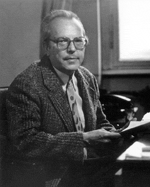 Csaba Szántay合作论文数Central Research Institute for Chemistry of the Hungarian Academy of Sciences12
 László Hazai合作论文数12Háda Viktor合作论文数10Keglevich Péter合作论文数8Zsuzsanna Sánta合作论文数5Dékány Miklós合作论文数5
 Klara Herke合作论文数Department of Organic Chemistry and Technology, University of Technology and Economics4Zsofia Lengyel-Zhand合作论文数Dept Chem, Syracuse Univ2Áron Szigetvári合作论文数2
 Andras Keglevich合作论文数2
 György Keglevich合作论文数Department of Organic Chemistry and Technology, Faculty of Chemical Technology and Biotechnology, Budapest University of Technology and Economics2
 Zoltan Banoczi合作论文数Hungarian Academy of Sciences, Eötvös Loránd University2
 Hedvig Bolcskei合作论文数2
 Péter G. Szalay合作论文数Institute of Chemistry, ELTE Eötvös Loránd University;Department of Physical Chemistry, ELTE Eötvös Loránd University;Laboratory of Theoretical Chemistry, ELTE Eötvös Loránd University2
 Ildiko Szabo合作论文数Dip. Scienze Biomediche Sperimentali, Centro CNR per le Biomembrane Via Trieste 752
 Beata G. Vertessy合作论文数Genome Metabolism and Biostruct Laboratory, Budapest University of Technology and Economics;Department of Applied Biotechnology, Budapest University of Technology and Economics2Álmos Gorka-Kereskényi合作论文数2
 Zoltan Gaspari合作论文数Institute of Chemistry, Eötvös Loránd University2
 András Perczel合作论文数Department of Organic Chemistry, Inst. Of Chemistry, ELTE;MTA-ELTE Protein Model. Res. Group and Laboratory of Structural Chemistry and Biology2Veronika Pongrácz合作论文数1Lilla Maksó合作论文数1Zita Hegedűs合作论文数1Anita Horvath合作论文数1Alexandra Wachtler合作论文数1Kristóf Bolla合作论文数1Péter Kovács合作论文数1Ivan Ranđelović合作论文数1
 Mate Papp合作论文数1Ana Martins合作论文数Biol Res Ctr, Eotvos Lorand Res Network ELKH1
 Pál Szabó合作论文数Instrumentation Centre, Research Centre for Natural Sciences1Béni Zoltán合作论文数1
 Thomas Mueller合作论文数Solar Energy Research Institute of Singapore, National University of Singapore1
 Beáta G. Vértessy合作论文数Department of Applied Biotechnology and Food Sciences, Budapest University of Technology and Economics;Institute of Enzymology, Hungarian Academy of Sciences1Zagyva Imre合作论文数Institute of Enzymology, Research Centre for Natural Sciences of Hungarian Academy of Sciences1
 Angela Bekesi合作论文数1Kovári Júlia合作论文数1Kóti János合作论文数1
 Ferenc Hudecz合作论文数Hungarian Acad Sci, Eotvos Lorand Univ1Aranyi Antal合作论文数1Gulyás Zoltán合作论文数1Galambos János合作论文数1Lakó-Futó Agnes合作论文数1
 Orsolya Barabas合作论文数National Institute of Diabetes and Digestive and Kidney Diseases, National Institutes of Health1Erika Orbán合作论文数Hungarian Academy of Sciences, Eötvös Loránd University1Rita Skoda-Földes合作论文数Department of Organic Chemistry, University of Veszprém1Michal Dallos合作论文数1
 Jozsef Tovari合作论文数Department of Experimental Pharmacology, National Institute of Oncology1
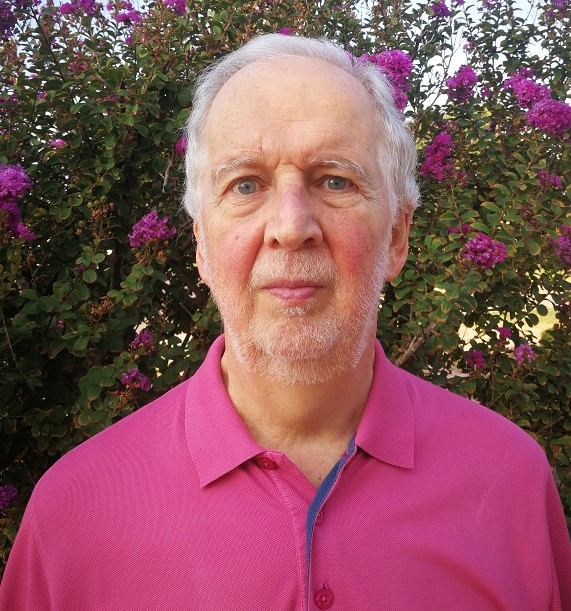 Hans Lischka合作论文数Department of Chemistry & Biochemistry, Texas Tech University1
 László Hegedűs合作论文数Hungarian Academy of Sciences, Budapest University of Technology and Economics1




