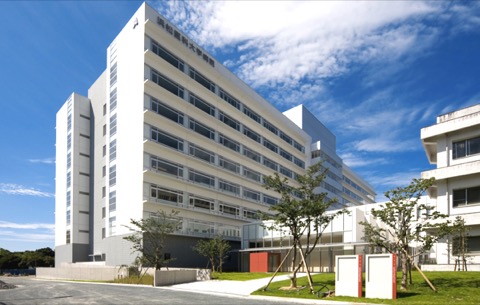
Hamamatsu University School of Medicine (浜松医科大学, Hamamatsu Ika Daigaku) is a national university in Hamamatsu, Shizuoka, Japan, founded in 1974..

γδ T cells represent a distinct subset of immune cells that play pivotal roles in maintaining cutaneous immune homeostasis and regulating inflammatory responses. Accumulating evidence has established neuro–immune interactions as critical modulators of skin inflammation and allergic reactions, with γδ T cells emerging as a key cellular link between the nervous and immune systems. This review summarizes recent advances in our understanding of how γδ T cells coordinate neuroimmune crosstalk in inflammatory and allergic skin diseases. γδ T cells are characterized by rapid effector responses and pronounced functional heterogeneity, enabling them to sense neuronal cues and, in turn, modulate sensory neuron activity. Through the production of cytokines such as IL-17, IL-22 and IL-3, γδ T cells influence neuronal excitability, neuropeptide release, and itch transmission, thereby shaping both inflammatory intensity and sensory outcomes. Conversely, subsets of γδ T cells express receptors for neurotransmitters, allowing them to directly respond to signals derived from sensory neurons. This bidirectional communication positions γδ T cells as critical regulators linking neural sensing to innate and adaptive immune responses in the skin. Furthermore, we discuss the current blind spots in γδ T cell–related neuro–immune research, as well as potential perspectives and future directions for the field. A deeper understanding of γδ T cell subset specialization, neuron–immune coupling specificity, and tissue-context–dependent regulation will be essential for translating these insights into precise interventions for inflammatory and allergic skin disorders.
To investigate the frequency of visually ill-demarcated small pancreatic ductal adenocarcinomas (PDACs) and compare their clinicopathologic and MRI characteristics with those of well-demarcated tumors. This multicenter retrospective study enrolled 210 patients with surgically confirmed small PDACs (≤ 20 mm) who underwent preoperative unenhanced MRI. Clinical and pathological data were collected. Two radiologists independently evaluated the following MRI features: (a) tumor delineation (well-demarcated or ill-demarcated), (b) tumor signal intensity, and (c) secondary signs, including distal parenchymal signal intensity, parenchymal atrophy, main pancreatic duct (MPD) stenosis and dilatation, and small retention cyst. Clinicopathologic features and MRI findings were compared between well-demarcated and ill-demarcated PDACs using the Mann–Whitney and Fisher’s exact tests. Multivariate logistic regression analysis was performed to identify independent factors associated with ill-demarcated PDAC. Visually ill-demarcated tumors accounted for 46.7
Alcohol consumption is a common risk factor for esophageal squamous cell carcinoma (ESCC) and hepatic fibrosis. Mac-2 binding protein glycosylated isomer (M2BPGi), a sensitive marker of fibrosis, may predict postoperative skeletal muscle loss by reflecting the metabolic link between liver function and muscle maintenance. Eighty-nine patients with ESCC undergoing esophagectomy (June 2021–July 2024) with alcohol use and pretherapeutic M2BPGi levels were included; the cutoff was 0.66. Muscle mass was assessed by bioelectrical impedance analysis. The study population was stratified by M2BPGi levels into low (n = 59) and high (n = 30) groups. No significant differences were observed in sex, clinical stage, preoperative skeletal muscle mass, surgical approach, or intraoperative fluid balance. The high M2BPGi group showed lower preoperative albumin levels (4.2 vs. 4.0 g/dL, p = 0.01) and higher CRP (0.1 vs. 0.4 mg/dL, p < 0.01) and ICG R15 values (9.2
BACKGROUND:To evaluate the dissemination and real-world implementation of recommendations from the 5th Edition of the Japanese Esophageal Cancer Practice Guidelines and to inform development of the upcoming 6th Edition, the Guideline Committee of the Japanese Esophageal Society conducted a nationwide Quality Indicator (QI) survey in Japan. METHODS:A nationwide, cross-sectional, web-based questionnaire survey was distributed to 381 certified institutions participating in the 2023 National Registry of Esophageal Cancer in Japan. Conducted in November 2024, the survey covered six domains-epidemiology, surgery, endoscopy, chemotherapy, radiation therapy, and pathology-reflecting key recommendations of the 5th Edition. Responses were summarized descriptively at the institutional level. RESULTS:Valid responses were obtained from 190 institutions (49.9%). Smoking cessation guidance was implemented in more than 90% of institutions, and over 90% also provided guidance on alcohol abstinence or moderation, although complete alcohol abstinence was less uniformly recommended. Minimally invasive, including robot-assisted, esophagectomy was adopted by over 90% of institutions. The proportion of institutions performing prophylactic cervical lymph node dissection varied by tumor location and stage, reflecting contemporary staging concepts. The DCF regimen was the predominant neoadjuvant therapy for stage II/III disease (94.7%), and immune checkpoint inhibitor-based chemotherapy was widely used for unresectable or recurrent disease. Advanced endoscopic diagnostic modalities, including magnifying and image-enhanced endoscopy, were widely adopted. CONCLUSIONS:This nationwide QI survey demonstrates broad adherence to guideline-based multidisciplinary management of esophageal cancer in Japan and provides an evidence base for refining recommendations in the 6th Edition of the Japanese Esophageal Cancer Practice Guidelines.
Precise, early diagnosis of liver metastasis improves clinical outcomes in patients with pancreatic cancer. While gadoxetate sodium-enhanced magnetic resonance imaging (EOB–MRI) may offer additional benefits in detecting liver metastases in patients with pancreatic cancer, it is still unclear whether the addition of this imaging modality to contrast-enhanced computed tomography (CE–CT) confers clinical benefits regarding prognosis and access to appropriate treatments. The objective is to evaluate the treatment pathway of patients with or without EOB–MRI after a pancreatic cancer diagnosis and examine whether the addition of EOB–MRI is associated with improved survival. A retrospective cohort study was conducted using a Japanese hospital-based administrative database. Patients aged ≥ 18 years and diagnosed with pancreatic cancer between 2011 and 2021 with any record of CE–CT or MRI were included. Patients were stratified based on a record of EOB–MRI (EOB–MRI vs. non-EOB–MRI). Main outcomes were treatment pathway and overall survival (OS). OS was compared between the EOB–MRI and non-EOB–MRI groups using Cox proportional hazard regression models in the propensity-score-matched cohort. A total of 39,624 patients were included. The proportion of neoadjuvant chemotherapy increased to 13.4





