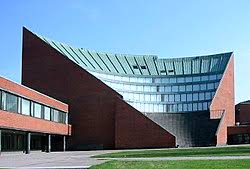

“Beauty”, “Light”, “Time”, “Memory”, “Universality”, “Wisdom”, “Sacred” and “Essentiality” are the themes of the eight meditations by two enlightened architects and two kindred spirits, capable of uniting the North and South of Europe with their wise reflections: Juhani Pallasmaa and Alberto Campo Baeza. Eight meditations on themes that cut across time and fashion. Eight meditations by two learned architects whose readings have been assimilated and declined with respect to architecture. Eight meditations that emphasise how praxis must always be united with theoretics. Eight meditations by two architects who are convinced that successful architecture is the result of culture and reflection, not extemporaneity. Eight meditations that show how to be contemporary architects it is necessary to confront the past by considering it present.
While a relatively large body of research exists on many aspects of psychedelic therapy, articles describing a complete, successful treatment process are rarely found. This article therefore presents a case of a woman in her early forties with early complex trauma due to domestic violence, sexual abuse and poverty in her childhood, resulting in approximately three decades of treatment resistant depression. Antidepressive medications did not alleviate her depression but resulted in adverse effects and an eventual discontinuation of the medications. Eventually the woman resorted to 'mixed-method' underground small-group sessions that utilized breathing exercises, cold exposure, physical exercises, music, and psilocybin mushrooms. Psilocybin appeared to interrupt trauma-related dissociation, producing an 'anti-dissociative' effect, allowing the woman to re-experience, in a controlled setting, dissociated physical sensations produced by earlier overwhelming events. After a period of approximately 1.5 years, during which time she had six psilocybin sessions, either individually, in the small group, or with friends, she achieved a remission of her depression. A follow-up interview 2.5 years later indicated permanence of the result. Information was acquired from semi-structured retrospective interviews with a total duration of approximately eight hours. This case study may facilitate an improved understanding of the requirements for and the process of alleviating or resolving treatment-resistant depression with psychedelics. Recent clinical trials have utilized one or two doses of psilocybin. This case illustrates the need for adopting a multi-dose strategy over an extended period of time in order to achieve remission.
In medicine, psychedelics were initially considered as a tool for clinicians to understand psychotic states. Based on the presented case data, a reversal of that concept is proposed: psychedelics could be conceptualized as a tool for people chronically anxious and depressed since early childhood to understand ordinary states of mind (e.g. calmness, hopefulness, relaxation, and joy). The case concerns a young man who suffered from early-onset complex trauma due to daily abuse by his comprehensive school teacher and other pupils, resulting in severe anxiety and depression. He refused anti-depressive medication. Supportive psychotherapy failed to alleviate the situation, and interaction with psychiatric personnel subjectively experienced as rejection escalated his symptoms. At the age of 19, he resorted to unsupervised self-treatment with psilocybin. Occasional high-dose psilocybin sessions alone did not produce permanent outcomes in a constantly retraumatizing environment. After becoming unemployed at the age of 25, he dedicated himself to working with psychedelics more intensively, with gradually declining doses. The essence of his method was to relive the originally overwhelming traumatic events, maintaining a conscious focus on somatic sensations and avoiding getting overwhelmed again. In his own estimation, by the age of 30, he had resolved most of his early trauma but had been sensitized to the prevalence of trauma and its consequences (e.g. violence, racism) in the society, and his exposure to these continued to cause him suffering. Regardless, he had gained 'a foundational feeling of peace or stability that could provide safety in the middle of all this'. The information for this case study was acquired in the course of semi-structured retrospective interviews 2.5 years apart. The case illustrates that chronic treatment-resistant depression together with an unsupportive social environment may present a challenge for psychedelic therapy. As with ketamine, chronic administration may be necessary in some cases.
Gaussian probability distributions are the workhorse in Bayesian scientific computing, providing a well understood subclass of distributions that often allow closed form solutions to inference problems. Not only do the Gaussian distributions play a role similar to that of linear operators in analysis and in inverse problems in particular, as pointed out earlier, but there is an even deeper connection between these two classes, as seen in this chapter. We start by deriving the general form of conditional distributions for jointly Gaussian random variables. Let $$Z\in {\mathbb R}^N$$ be a Gaussian random variable, and assume that its first n components are unknown, $$0
According to the explicit propositions by Clausius, in the original publications in the 1850’s, the temperatures of the “reservoirs” are irrelevant for the “second fundamental equation” of the “mechanical theory of heat” to hold true. It is shown that entropy being history independent, i.e., “path independent”, “state function”, is contradictory to “reversibility”, i.e., contradictory to the “second fundamental equation” of the “mechanical theory of heat” holding true for “reversible” phenomena, only. This result is corroborated by experimental evidence. This result only removes the unnecessary restriction posed by “reversibility”, causes no adverse practical consequences, and offers the possibility to unify and simplify continuum entropy modeling. For example, the result removes the dilemma due to “reversibility” from engineering calculations for real physical phenomena, none of which are “reversible”.





