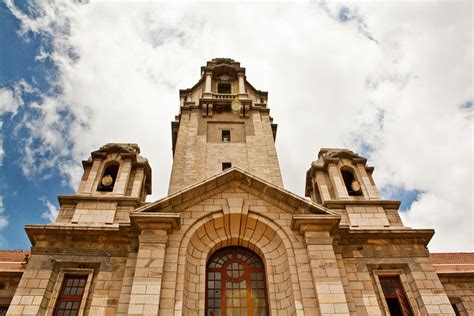
The Indian Institute of Science (IISc) is a public, deemed, research university for higher education and research in science, engineering, design, and management. It is located in Bangalore (Bengaluru), in the Indian state of Karnataka. The institute was established in 1909 with active support from Jamsetji Tata and thus is also locally known as the "Tata Institute". It was granted the deemed to be university status in 1958 and the Institute of Eminence status in 2018. In 2019, IISc launched its brand statement: "Discover and Innovate; Transform and Transcend; Serve and Lead".

Let F be a family of graphs. A graph is called F-free if it does not contain any member of F. Generalized Turán problems aim to maximize the number of copies of a graph H in an n-vertex F-free graph. This maximum is denoted by ex(n,H,F). When H≅K2, it is simply denoted by ex(n,F). Erdős and Gallai established the bounds ex(n,Pk+1)≤n(k−1)2 and ex(n,C≥k+1)≤k(n−1)2. Luo extended these results to generalized Turán problems by proving that ex(n,Ks,Pk+1)≤nk(ks) and ex(n,Ks,C≥k+1)≤n−1k−1(ks). Let N(G,Ks) denote the number of copies of Ks in G. In this paper, we use the vertex-based localization framework introduced by Adak and Chandran to generalize Luo's bounds. In a graph G, for each v∈V(G), define p(v) to be the length of the longest path that contains v. We show thatN(G,Ks)≤∑v∈V(G)1p(v)+1(p(v)+1s)=1s∑v∈V(G)(p(v)s−1). We strengthen the cycle bound of Luo as follows: in a graph G, for each v∈V(G), let c(v) be the length of the longest cycle that contains v, or 2 if v is not part of any cycle. We prove thatN(G,Ks)≤(∑v∈V(G)1c(v)−1(c(v)s))−1c(u)−1(c(u)s), where c(u) denotes the circumference of G. Furthermore, we characterize the class of extremal graphs that attain equality for these bounds. We provide full proofs for the cases s=1 and s≥3, while the case s=2 follows from the corresponding vertex-based localization result of Adak and Chandran.
Digital protective relays are the primary protection in most power systems applications and now interface with cyber layers in modern grids, improving observability and control. However, this integration also introduces cybersecurity risks, as digital relays are digital computers, vulnerable to cyber-attacks and malicious code. A compromised frequency relay can cause false tripping of generators, transformers, or undesired load shedding, potentially leading to blackouts. This paper presents the development of FPAA-based next-generation static frequency relays (over/under frequency and ROCOF) that are inherently resilient to cyber-attacks. The proposed relay operates in parallel with existing digital frequency relays, enhancing the cybersecurity of current protection systems. It is modelled for the Western Interconnection, compliant with NERC PRC-024-3 standards, and tested under multiple scenarios. Hardware testing is performed using the AN231K04-QUAD FPAA board. Results confirm the relay’s dependability and selectivity, supporting its potential to improve the cyber-resilience of existing frequency protection schemes.
Dynamic parameter estimation of power plants became increasingly challenging and important in rapidly evolving power grid. Despite significant advancements, legacy generators continue to struggle to meet standard compliance requirements, necessitating the use of advanced measurement devices for mandatory model validation. To address these challenges, legacy generators should undergo systematic model validation programs supported by the point on wave measurements through the existing devices. This paper utilizes the short duration relay records to estimate the synchronous machine and excitation system parameters using an enhanced scattered search method. The proposed algorithm has a high probability of finding the global minima to achieve accurate parameter estimation in cases of high-dimensional and non-linear conditions with fewer tunable parameters. The proposed approach is demonstrated using data from a 247 MVA, 15.75 kV generator in a thermal power plant using its practical protective relay records. The proposed method is found to be accurate and reliable for parameter estimation using synthetic and practical measurement data.
From a cellular perspective, senescence has been considered a binary state, wherein cells are either senescent or not. This reductionist notion, often defined as irreversible growth arrest, has guided efforts to identify universal biomarkers and senolytics, but both have consistently eluded us. This outcome is not surprising, given that the biological nature of senescence may not be strictly irreversible; the accumulated evidence suggests that growth arrest can become unstable over time, with cells acquiring alterations, occasionally regaining proliferative capacity, or undergoing partial reprogramming, and exhibiting a heterogeneous spectrum of phenotypes (“senotypes”) influenced by tissue types, stressors, temporal dynamics, and disease states. We propose that such a shift towards a dynamic spectrum of cellular states, is necessary to develop tailored strategies for context-specific signatures rather than a hypothetical state of cells that qualify for universal markers. The future of senescence research should thus focus on mapping, understanding, and utilising the spectrum of senescence states to mitigate its onset or modulate its progression.





