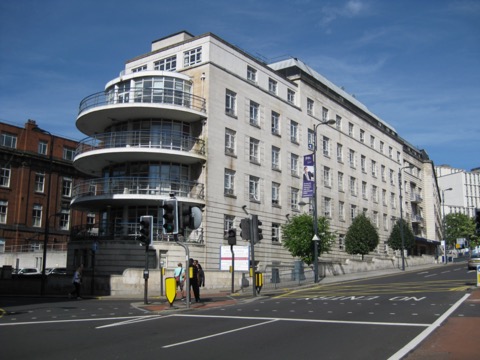
Leeds General Infirmary, also known as the LGI, is a large teaching hospital based in the centre of Leeds, West Yorkshire, England, and is part of the Leeds Teaching Hospitals NHS Trust. Its previous name The General Infirmary at Leeds is still sometimes used.The LGI is a specialist centre for a number of services, including the Major Trauma Centre and hand transplants. It also provides many general acute services like A&E, intensive care and high dependency units, maternity and state-of-the-art operating theatres.

The use of multimodal artificial intelligence (AI) in plastic surgery is steadily increasing. Whether a general-purpose multimodal AI tool can, from photographs alone, assess facial aging and facelift candidacy at a level comparable to board-certified specialist plastic surgeons remains unknown. To determine if ChatGPT-5 (OpenAI, San Francisco, CA, USA) can identify facial aging features, stratify severity, and judge facelift candidacy from photographs alone, compared with board-certified plastic surgeons. Two-center observational pilot. Twenty-two volunteers (mean age 42.0 ± 16.8 years; median 34 years; range 24–80) provided standardized four-view facial composite photographs. Five board-certified plastic surgeons independently completed an eight-item questionnaire per case. ChatGPT-5 assessed the same images with identical wording. Assessments were image-only and blinded (no demographics/history). Surgeon consensus was defined by plurality. Primary outcomes were agreement and Cohen’s κ; for ordinal items, weighted κ, Spearman’s ρ, and mean absolute error (MAE) were reported. McNemar’s test assessed discordance for binary items. For facelift candidacy, agreement was 95.5 www.springer.com/00266 .
Background Intrasaccular devices have broadened treatment options for wide necked aneurysms. This study presents the preliminary experience with the Artisse 2.0 device.Methods Innovative NeurovaScular Product SurveIllance REgistry (INSPIRE) is a non-randomized, multicenter, real world clinical study with treatment arms for aneurysms (INSPIRE-A) and acute ischemic stroke (INSPIRE-S). This interim analysis included 87 patients enrolled from November 2022 to April 2024 in the INSPIRE-A Artisse cohort across 16 Europoean centers. Procedures followed standard clinical care, with 6 months of follow-up. Safety and efficacy endpoints included major stroke, neurological death, serious adverse events (SAEs), aneurysm occlusion, and retreatment rates. An independent core laboratory assessed imaging, and all SAEs were reviewed by a clinical events committee. The Artisse steering committee provided independent oversight of the data.Results The Artisse device achieved an overall successful implantation rate of 96.6% (84/87), with satisfactory placement rates of 98.7% (74/75) for unruptured and 88.9% (8/9) for ruptured aneurysms. Following the procedure, 46.2% of unruptured aneurysm patients were receiving antiplatelet therapy (APT), predominantly aspirin monotherapy, while no ruptured aneurysm patients received APT. Device related SAE rate was 1.3% (1/87), and the overall stroke rate was 2.3% (2/87), including both ruptured and unruptured aneurysms. At 6 months, 80.0% (28/35) of patients with unruptured aneurysms showed complete obliteration, with no recurrences or retreatments.Conclusions Preliminary experience with the Artisse 2.0 device demonstrated high technical success, favorable safety, and efficacy in aneurysm obliteration at 6 months. Larger studies with longer follow-up periods are needed to confirm these findings.
BACKGROUND:Percutaneous coronary intervention (PCI) is increasingly used for revascularization of unprotected left main coronary artery disease. Whether intravascular ultrasonographic (IVUS) guidance during PCI results in better clinical outcomes than conventional angiographic guidance alone is uncertain. METHODS:In an international, multicenter, open-label trial, we randomly assigned patients with unprotected left main coronary artery disease in a 1:1 ratio to undergo either IVUS-guided PCI or angiography-guided PCI. The primary end point was a patient-oriented composite of any stroke, any myocardial infarction, any revascularization, or death from any cause at the longest follow-up. RESULTS:A total of 806 patients underwent randomization; 401 were assigned to undergo IVUS-guided PCI and 405 to undergo angiography-guided PCI. The mean (±SD) age of the patients was 71.4±10.7 years, 78.4% of the patients were men, and 34.7% had diabetes. At a median follow-up of 2.9 years, a primary end-point event had occurred in 135 patients (33.7%) in the IVUS-guided PCI group and in 125 patients (30.9%) in the angiography-guided PCI group (hazard ratio, 1.11; 95% confidence interval, 0.87 to 1.42; P = 0.40). The incidence of death, myocardial infarction, or revascularization appeared to be similar in the two groups. The percentages of patients with procedure-related and overall safety events also appeared to be similar in the two groups. CONCLUSIONS:Among patients with unprotected left main coronary artery disease, IVUS-guided PCI showed no additional benefit over angiography-guided PCI with respect to the incidence of stroke, myocardial infarction, any revascularization, or death from any cause at a median follow-up of 2.9 years. (Funded by Philips Image Guided Therapy Devices and Boston Scientific; OPTIMAL ClinicalTrials.gov number, NCT04111770.).
Introduction Lung cancer screening (LCS) with low-dose CT offers a teachable moment for smoking cessation (SC), but the optimal way to implement SC within LCS is unclear. The Yorkshire Enhanced Stop Smoking (YESS) study assessed the efficacy of a personalised stop-smoking intervention delivered alongside LCS.Methods Opt-out, co-located SC support, comprising nicotine replacement therapy/e-cigarettes/pharmacotherapy and behavioural support, was offered to all individuals who currently smoked attending for LCS. Four weeks later, participants were offered recruitment to a randomised controlled trial of continued standard best practice (SBP) versus a personalised SC support package, including a booklet containing CT images of participants' own heart and lungs, annotated where appropriate to highlight emphysema or coronary artery calcification and scripted communication delivered by a smoking cessation practitioner.Results 1003 people were recruited; 52.5% were allocated to the intervention group. Validated 7-day point prevalent (PP) abstinence rates were 33.6% and 30.0% in the intervention versus SBP groups, respectively (OR 1.17, 95% CI 0.90 to 1.54) at 3 months and 29.2% versus 28.6% (OR 1.03, 95% CI 0.78 to 1.36) at 12 months post-screening. Subgroup analyses indicated a significant increase in 7-day PP abstinence at 3 months with the intervention in women (33.9% intervention, 23.1% SBP, OR 1.70, 95% CI 1.15 to 2.53) but not in men (33.3% intervention, 37.8% SBP, OR 0.82, 95% CI 0.57 to 1.19).Conclusion Around one-third of study participants were abstinent from smoking at 3 months post-screening irrespective of study arm, but adding the personalised intervention did not increase quit rates. Further research is needed exploring possible sex differences in efficacy of personalised SC support. The high overall quit rate reinforces the value of SC support delivered alongside LCS.Trial registration number ISRCRN 63825779 and NCT03750110.
Background: Idiopathic normal-pressure hydrocephalus (iNPH) is primarily treated with cerebrospinal fluid shunt surgery, which can improve gait, cognition, and continence in selected patients. However, outcome reporting remains highly heterogeneous, limiting evidence synthesis, trial comparison, and guideline development. We conducted a systematic review to map outcomes reported after iNPH shunt surgery and quantify their variability, providing an empirical foundation for core outcome set (COS) development. Methods: MEDLINE, Embase, and Web of Science were searched from inception to 31 December 2025 for primary studies reporting outcomes after surgical cerebrospinal fluid diversion in adults with iNPH. Studies required ≥ 10 operated patients. Study selection and data extraction were performed in duplicate. Reported outcomes were catalogued, harmonised, and mapped to COMET-aligned domains. Descriptive statistics summarised study characteristics, outcome measures, and follow-up duration. No meta-analysis was performed because the review focused on outcome reporting rather than treatment effect. Results We included 645 studies published between 1971 and 2025, comprising > 175,000 operated patients across 48 countries. Most were prospective cohorts (52.2%) or retrospective cohorts (43.4%); 2.8% were randomised trials. Median follow-up was 12 months. After de-duplication, 567 unique outcomes were harmonised into 285 standardised outcome measures across 16 domains and 75 subdomains. Commonly reported domains included multidomain iNPH grading scales, adverse events/complications, cognitive/neuropsychological outcomes, and gait/balance outcomes. In contrast, urinary-specific outcomes and health-related quality of life were reported in fewer than 10% of studies, and societal/carer impact outcomes were rare. Substantial heterogeneity persisted in instruments, definitions, and assessment timepoints, although use of validated instruments increased over time. Conclusions Outcome reporting after iNPH shunt surgery remains fragmented and incompletely patient-centred. These findings provide a comprehensive empirical basis for COS development, including stakeholder prioritisation of minimum outcomes and timepoints to improve comparability, reduce reporting bias, and strengthen future iNPH research.





