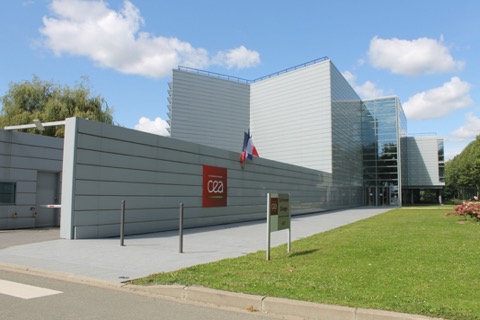
The Paris-Saclay University (French: Université Paris-Saclay) is a research university in France. It is part of the Paris-Saclay project, which is a research-intensive academic campus and business cluster being developed on the Plateau de Saclay near Paris, and is expected to become the main center for training and research within the technology cluster of Paris-Saclay. The University integrates several leading grandes écoles, leading public universities, faculties and research centers that are part of the world's top research organizations in various fields.The University System's first academic year started in September 2015. In January 2020, it replaced University of Paris-Sud (Paris XI) and in 2025, Université de Versailles-Saint-Quentin-en-Yvelines (UVSQ) and Université d’Évry-Val-d’Essonne (UEVE) will merge with it as well.The Paris-Saclay University was ranked 14th in the world in the 2020 Academic Ranking of World Universities (ARWU) ranking. In subject rankings, it was placed first in the world for Mathematics and 9th in the world for Physics (1st in Europe), as well as receiving a top 25 place for Medicine and Agriculture.

Acetylation of lysine residues in the tail domain of histone H3 is well characterised, but lysine residues in the histone globular domain are also acetylated. Histone modifications in the globular domain have regulatory potential because of their impact on nucleosome stability but remain poorly characterised. In this study, we report the genome-wide distribution of acetylated H3 lysine 115 (H3K115ac), a residue on the lateral surface at the nucleosome dyad, using chromatin immunoprecipitation. In mouse embryonic stem cells, we find that detectable H3K115ac is enriched at the transcription start site of active CpG island promoters, but also at polycomb-repressed promoters prior to their subsequent activation during differentiation. By contrast, at enhancers, H3K115ac enrichment is dynamic, changing in line with gene activation and chromatin accessibility during differentiation. Most strikingly, we show that H3K115ac is detected as enriched on ‘fragile’ nucleosomes within nucleosome-depleted regions at promoters and active enhancers, where it coincides with transcription factor binding, and at CTCF-bound sites. These unique features suggest that H3K115ac correlates with, and could contribute to, nucleosome destabilisation and that it might be a valuable marker for identifying functionally important regulatory elements in mammalian genomes.
Detecting relevant changes is a fundamental problem of video surveillance. Because of the high variability of data and the difficulty of properly annotating changes, unsupervised methods dominate the field. Arguably one of the most critical issues to make them practical is to reduce their false alarm rate. In this work, we develop a non-semantic, method-agnostic, weakly supervised a-contrario validation process, based on high-dimensional statistical modeling of deep features using a Gaussian mixture model, that can reduce the number of false alarms of any change detection algorithm. We also raise the insufficiency of the conventionally used pixel-wise evaluation, as it fails to precisely capture the performance needs of most real applications. For this reason, we complement pixel-wise metrics with component-wise metrics and evaluate the impact of our approach at both pixel and object levels, on six methods and several sequences from different datasets. Our experimental results reveal that the a-contrario theory can be applied to a statistical model of the background of a scene and largely reduce the number of false positives at both pixel and component levels.
Galaxy morphologies and shape orientations are expected to correlate with their large-scale environments, since they grow by accreting matter from the cosmic web and are subject to interactions with other galaxies. We extracted cosmic filaments in projection from the Euclid Quick Data Release 1 (covering 63.1 mathrm deg ^2) at $0.5 10^ M_⊙) in the projected cosmic web is analysed as a function of morphology measured from VIS data. Specifically, the 2D alignment of galaxy shapes with large-scale filaments is quantified as a function of Sérsic indices and masses. We find the known trend that more massive galaxies are closer to filament spines. At fixed stellar masses, morphologies correlate both with densities and distances to large-scale filaments. In addition, the large volume of this data set allows us to detect a signal indicating that there is a preferential alignment of the major axis of massive early-type galaxies along projected cosmic filaments. Overall, these results demonstrate our capabilities to carry out detailed studies of galaxy environments with Euclid, which will be extended to higher redshift and lower stellar masses with the future Euclid Deep Survey.





