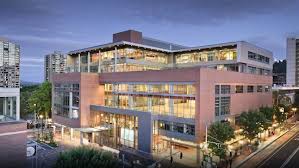
Portland University was a private, Methodist post-secondary school in Portland, Oregon, United States. Founded in 1891 in a split from Willamette University, the school closed in 1900. The campus was located in what is now the University Park neighborhood and later became home of the University of Portland. The original campus building, West Hall, still stands and is listed on the National Register of Historic Places.

While teacher education researchers debate whether organizing teacher learning opportunities around practices sidelines pedagogical reasoning, limited empirical research has investigated this concern. Using video stimulated recall interviews (VSRI) with grades 4-8 literacy teachers across their engagement in a two-year, practice-based, professional development (PBPD) program focused on facilitating text-based discussions, this study investigates teachers' pedagogical reasoning. Findings indicate that while teachers' PBPD was anchored in practices, teachers' instructional goals went through striking shifts alongside their practices. The most striking shift was in the goals that teachers abandoned, rather than the ones they adopted. Results suggest that focusing on practices does not necessarily displace a focus on purposes.
Purpose The purpose of this study is to examine the audit efficiency and timeliness of Big 4 auditors relative to non-Big 4 auditors, where audit efficiency is defined as the auditor’s ability to conduct an audit more quickly or with fewer resources while still achieving effective outcomes. Design/methodology/approach The authors use audit report lags (also referred to as audit delay) as a proxy for audit timeliness and efficiency, controlling for audit quality and audit fees (audit input). The authors use a propensity-score matching (PSM) approach to construct a pseudorandom sample in which each non-Big 4 client is matched with a similar Big 4 client based on their characteristics and audit quality, to control for potential endogeneity related to self-selection bias in this setting. Findings The authors find that non-Big 4 auditors are associated with shorter audit delays than Big 4 auditors. Additional analysis of the matched sample reveals that non-Big 4 auditors charge lower fees than Big 4 auditors do after controlling for the Big 4 premium. These findings do not support the notion that Big 4 auditors conduct audits more efficiently than non-Big 4 auditors do. Originality/value These results could be of interest to the management of public firms, audit committees, investors and regulators; provide valuable insights into the performance of audit firms in varying client environments; and contribute to a better understanding of audit timeliness and efficiency.
Abstract Thwaites Glacier is one of the fastest‐changing ice‐ocean systems in Antarctica. Basal melting beneath Thwaites' floating ice shelf, especially around pinning points and at the grounding line, sets the rate of ice loss and Thwaites' contribution to global sea‐level rise. The rate of basal melting is controlled by the transport of heat into and through the ice–ocean boundary layer toward the ice base. Here we present the first turbulence observations from the grounding line of Thwaites Eastern Ice Shelf. We demonstrate that contrary to expectations, the turbulence‐driven vertical flux of heat into the ice–ocean boundary layer is insufficient to sustain the basal melt rate. Instead, most of the heat required must be delivered by lateral fluxes driven by the large‐scale advective circulation. Lateral processes likely dominate beneath the most unstable warm‐cavity ice shelves, and thus must be fully incorporated into parameterizations of ice shelf basal melting.
An increase in the intensity and frequency of extreme environmental conditions due to anthropogenic climate change impacts coral reefs through myriad stressors, from elevated sea-surface temperatures to increased storm activity. A reef's response to these disturbances can be influenced by factors including taxonomic composition, life history strategies, or spatial patterning of the reef community members. We explored the disturbance-specific responses of coral reefs by following changes in benthic cover of major functional groups, community assemblage, and the response of common coral taxa at six islands across the central Pacific over the course of two years. We observed a decrease in average coral cover at four of the six islands, with differing underlying shifts in assemblage structure. Reefs with the highest pre-disturbance benthic coverage of Montipora spp. displayed significant increases in average hard coral cover compared to those where Acropora spp. was in the highest abundance; Acropora-dominated reefs showed significant declines in coral cover especially when exposed to the physical stress associated with a cyclone. Change in total coral cover was variable between islands within the same region, even among adjacent islands facing similar disturbance. These results highlight the importance of assemblage composition in influencing how benthic communities respond to major disturbance events such as thermal stress or cyclones. Improving our understanding of the drivers of differential community responses to disturbance will be important in predicting future changes in reef structure under changing ocean conditions.
Erotic webcam sites with live broadcasters who provide interactive experiences to viewers represent a rapidly increasing form of sexual entertainment. This study explores the perceptions and emotions of erotic webcam viewers by analyzing 1225 open-ended comments from a closed-end survey of 10,570 viewers of a leading webcam platform. Respondents articulated complex, often contradictory experiences shaped by the dialectical tension between connection and commodification, empowerment and exploitation. A content analysis revealed four main themes: webcams as positive for viewers, webcams as negative for viewers, webcams as positive for performers, and webcams as negative for performers. Positive aspects included enhanced sexual knowledge, emotional relationships with performers, and beneficial sexual experiences for viewers with physical or social limitations. Negative themes emphasized viewers' addiction, guilt, and financial exploitation. Viewers appreciated the safety and income opportunities webcams can provide for performers, but expressed concerns about exploitative practices in global markets and potential mental health impacts. The findings suggest that webcam use can serve as a positive alternative to offline intimacy and a space where emotional authenticity and transactional dynamics intertwine, but also lead to psychological dependence and financial exploitation of both viewer and performer. Due to their powerful potential to shape sexual and emotional relationships, sextech platforms deserve continued attention from researchers with the goal of insight into a greater variety of webcam user and performer experiences.





