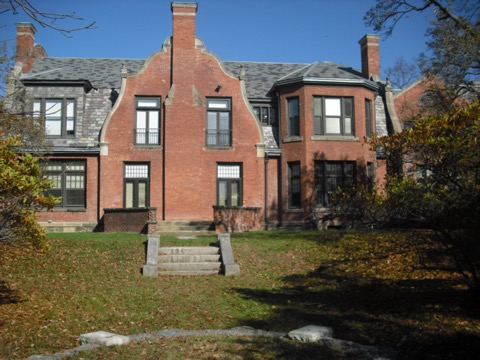
Ramapo College of New Jersey (RCNJ) is a public liberal arts college in Mahwah, New Jersey. It is part of New Jersey's public system of higher education. As of the fall 2021 semester, there were a total of 5,732 students enrolled at the college, including 576 graduate students and 11 doctorate students.

We study how poor hand-to-mouth and wealthy hand-to-mouth households in the United States form their expectations as compared to unconstrained households. To do so, we use monthly household data for the period 2005:2 to 2013:6 with information on the exact survey day for each household within a month. Utilizing a timeline of financial crisis events along with changes in stock market values and uncertainty in the days around those events, we assess the response of these households' expectations regarding inflation, unemployment, and the interest rate. Our estimates imply differences in the formation of expectations for liquidity-constrained households relative to unconstrained households. Wealthy hand-to-mouth households tend to revise their inflation expectations downwards substantially so that they make lower forecast errors following adverse financial crisis events that lower the actual future inflation rate, while other households appear inattentive to these shocks. This suggests that the wealthy hand-to-mouth households decipher these financial events' noisy signal regarding lower future inflation more accurately than other households, in line with having a greater incentive to do so.
While humpback whale songs are known for their complexity, a quantitative understanding of their temporal structure remains elusive. We apply Multifractal Detrended Fluctuation Analysis (MFDFA) to a large historical dataset of songs spanning four dec-ades (1950s-1990s). Our analysis confirms the songs are robustly multifractal but reveals significant heterogeneity, with distinct sig-natures strongly correlated with the recording year. Notably, 1992 recordings exhibit a markedly different dynamic higher complexity (omega) and strong persistence (alpha(0)>1:0) in stark contrast to the anti- persistent nature (alpha(0)<0:5) of 1950s recordings. These differences are partially confounded by variations in recording quality (SNR), as our characterisation of the ambient background shows it to be a highly persistent, yet strictly monofractal, process. This work thus provides quantitative evidence for long-term shifts in song dynamics, while highlighting the critical challenge of disentangling an anti-persistent, multifractal biological signal from persistent, monofractal environmental noise.
The integration of artificial intelligence (AI) into social work education continues to have some resistance. Through a cross-sectional survey of social work instructors, we explore attitudes, barriers to, and characteristics of AI adoption, while addressing the unique ethical and professional considerations specific to social work education. Overall, our findings suggest a readiness paradox where high familiarity with AI coexists with moderate confidence in adaptation, creating thoughtful innovation while preserving core professional values. More specifically, the findings indicate that AI adoption in social work education is individually motivated, driven primarily by specific pedagogical or scholarly benefits; is policy influenced, shaped more by the clarity and perceived helpfulness of institutional guidance than by its mere existence; and is not socially driven, with adoption largely unaffected by perceived peer norms or visible professional trends. These findings reflect a landscape of isolated innovators rather than a coordinated movement, underscoring the need for strategies that can scale adoption. To move beyond scattered experimentation, institutions should prioritize creating opportunities for visibility, peer learning, and community-building, such as faculty showcases, peer-led workshops, and communities of practice, while also providing clear, supportive, and actionable policies.
This paper analyses the relationship between nationalism and cross-border shopping behaviour of households in a region with a history of bi-communal conflict. Traditional economic theories predict that households optimize their well-being, so patriotic feelings should be irrelevant in their consumption decisions. However, the theory of economic nationalism would predict lower cross-border activities in regions with high levels of nationalism. We test these opposing hypotheses using monthly data on gasoline sales, relative prices and the total number of border crossings on the island of Cyprus. Our results indicate that individual economic incentives prevail over nationalism. The cheaper the price of gasoline is on the 'other' side of the island relative to their own side, the higher the number of Greek Cypriots who cross borders. This result does not imply that those who cross are less nationalist but suggests that economic incentives might motivate a willingness to interact even with those whose nationalistic feelings would normally preclude it. According to contact theory, these economic interactions - especially when supported by political and social reconciliation efforts - have the potential to foster more peaceful relations.





