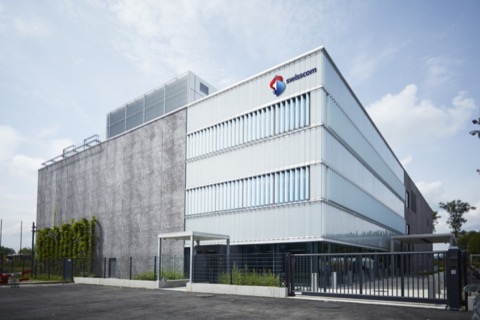
瑞士电信(Swisscom)又名瑞士电讯,是瑞士领先的电信供应商,拥有约540万手机用户。
Agentic systems require secure and efficient delegation of privileges across multiple collaborating agents. Existing approaches fall into two categories. Some propagate user identities directly to agents, obscuring accountability and creating persistent over-privilege risks that are amplified by the non-deterministic behaviour of AI agents. Others rely on continuous synchronization with a central Identity and Access Management (IAM) provider, introducing additional latency and communication overhead. We present CAPMAS, a novel architecture for secure end-to-end query execution in multi-agent systems. CAPMAS newly combines a contrastive learning-based semantic scoping pipeline that maps natural-language queries to bounded privilege sets before execution with expressive Macaroon-based tokens that enable offline, tamper-evident delegation with monotonic privilege reduction across agents. By decoupling authentication and delegation enforcement from agent reasoning, CAPMAS enables practical agentic execution while enforcing strict least-privilege guarantees. By eliminating synchronous delegation exchanges with the IAM, CAPMAS yields 30 times faster delegation operations, 2 times less delegation-oriented latency and up to 3 times lower bandwidth usage than the OAuth 2.0 Token Exchange (RFC 8693). Its semantic scoping pipeline achieves over 90
Quantum computers have made huge progress in recent years. In this tutorial paper, we explain why they pose a threat to encryption methods that are used in today’s communication networks. As there is the unique opportunity of 6G becoming the first cellular standard where post-quantum security could be considered from the very beginning, we present approaches to achieve post-quantum secure communications. Benefits and drawbacks of quantum key distribution (QKD) and post-quantum cryptography (PQC) are compared. Suggestions are made on how these approaches can be considered resulting in a post-quantum-safe 6G standard.
We propose a reduced-order method to estimate the near-field radiation of leaky feeder cables (LFCs) in free space. Because LFCs extend over hundreds of metres, practical observation points lie in the near field, rendering far-field approximations unsuitable while full-wave analysis of long, slotloaded cables remains computationally prohibitive. The approach assumes that slotting does not significantly perturb the phase of the internal TEM mode, with amplitude governed by the longitudinal loss. A single-slot radiation pattern obtained from full-wave simulation is assigned to each slot with positiondependent phase shifts, while mutual coupling is represented using equivalent electric polarisation currents. Superposition of the resulting embedded patterns yields the field. We report the received power at the port of a half-wavelength dipole alongside the cable and normalise absolute levels to datasheet values. Simulations of two representative LFCs show polarisationdependent near-field behaviour: two components decay slightly sub-quadratically within 50 m, whereas the third decays more rapidly. The model enables link-budget analysis for systems employing LFCs and can be extended to tunnel environments using ray-tracing techniques.
Network change validation remains a critical yet predominantly manual, time-consuming, and error-prone process in modern network operations. While formal network verification has made substantial progress in proving correctness properties, it is typically applied in offline, pre-deployment settings and faces challenges in accommodating continuous changes and validating live production behavior. Current operational approaches typically involve scattered testing tools, resulting in partial coverage and errors that surface only after deployment. In this paper, we present Aether, a novel approach that integrates Generative Agentic AI with a multi-functional Network Digital Twin to automate and streamline network change validation workflows. It features an agentic architecture with five specialized Network Operations AI agents that collaboratively handle the change validation lifecycle from intent analysis to network verification and testing. Aether agents use a unified Network Digital Twin integrating modeling, simulation, and emulation to maintain a consistent, up-to-date network view for verification and testing. By orchestrating agent collaboration atop this digital twin, Aether enables automated, rapid network change validation while reducing manual effort, minimizing errors, and improving operational agility and cost-effectiveness. We evaluate Aether over synthetic network change scenarios covering main classes of network changes and on past incidents from a major ISP operational network, demonstrating promising results in error detection (100
Microservice applications rely heavily on DNS for internal service discovery in ephemeral environments. Unlike traditional public DNS, cloud-native DNS operates as a core infrastructure component with strict requirements for correctness, low latency, and adaptation to frequent record changes. There is a gap between existing DNS research focused mainly on performance in public environments and the unexplored resilience of internal, cloud-native DNS systems, especially those supporting private zones in containerized environments.This paper addresses this gap by examining the role of private DNS in cloud-native systems and applying resilience testing techniques to systematically evaluate its behavior. First, this work analyzes public cloud incident post-mortems and finds that DNS is rarely the primary root cause of outages, and incidents disproportionately affect private DNS over public DNS. Secondly, we design and evaluate a resilience testing strategy for a multi-cluster cloud-native DNS system published by Swisscom AG, the biggest telecommunications provider in Switzerland. The proposed strategy uses chaos injection and DNS traffic generation to evaluate availability, latency, accuracy, and recovery behavior under different disruption scenarios. We find that the system operates within acceptable limits in most scenarios and resilience testing can reliably capture the impact of caching, resolution inconsistencies, and failure-handling weaknesses across test cases.




