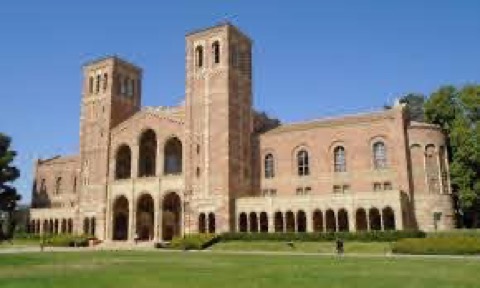
The University of California, Los Angeles (UCLA) is a public land-grant research university in Los Angeles, California. UCLA’s academic roots were established in 1882 as a teachers college then known as the southern branch of the California State Normal School (now San José State University). This school was absorbed with the official founding of UCLA as the Southern Branch of the University of California in 1919, making it the second-oldest of the 10-campus University of California system (after UC Berkeley).UCLA offers 337 undergraduate and graduate degree programs in a wide range of disciplines, enrolling about 31,600 undergraduate and 14,300 graduate and professional students. UCLA had 168,000 undergraduate applicants for Fall 2021, including transfers, making the school the most applied-to university in the United States.The university is organized into the College of Letters and Science and 12 professional schools. Six of the schools offer undergraduate degree programs: the School of the Arts and Architecture, Samueli School of Engineering, Herb Alpert School of Music, School of Nursing, Luskin School of Public Affairs and School of Theater, Film and Television. Three others are graduate-level professional health science schools: the David Geffen School of Medicine, School of Dentistry and Fielding School of Public Health. The School of Education & Information Studies, Anderson School of Management and School of Law round out the university.UCLA is considered one of the country's Public Ivies, and is frequently ranked among the best universities in the world by major college and university rankings. As of October 2021[update], 27 Nobel laureates, five Turing Award winners, two Chief Scientists of the U.S. Air Force and one Fields Medalist have been affiliated with UCLA as faculty, researchers or alumni. Among the current faculty members, 55 have been elected to the National Academy of Sciences, 32 to the National Academy of Engineering, 41 to the National Academy of Medicine and 167 to the American Academy of Arts and Sciences. The university was elected to the Association of American Universities in 1974.UCLA student-athletes compete as the Bruins in the Pac-12 Conference. The Bruins have won 119 NCAA team championships, second only to Stanford University's 128 team titles. In total, 410 Bruins have made Olympic teams, winning 270 Olympic medals: 136 gold, 71 silver, and 63 bronze. UCLA has been represented in every Olympics since the university's founding with one exception (1924) and has had a gold medalist in every Olympics the U.S. participated in since 1932.S.S.S.S.S.S.S.S.S.S.S.S.S.S.S.S.S.S.S.S.S.
While many problems in machine learning focus on learning mappings between finite-dimensional spaces, scientific applications require approximating mappings between function spaces, i.e., operators. We study the problem of learning collections of operators and provide both theoretical and empirical advances. We distinguish between two regimes: (i) multiple operator learning, where a single network represents a continuum of operators parameterized by a parametric function, and (ii) learning several distinct single operators, where each operator is learned independently. For the multiple operator case, we introduce two new architectures, MNO and MONet, and establish universal approximation results in three settings: continuous, integrable, or Lipschitz operators. For the latter, we further derive explicit scaling laws that quantify how the network size must grow to achieve a target approximation accuracy. For learning several single operators, we develop a framework for balancing architectural complexity across subnetworks and show how approximation order determines computational efficiency. Empirical experiments on parametric PDE benchmarks confirm the strong expressive power and efficiency of the proposed architectures. Overall, this work establishes a unified theoretical and practical foundation for scalable neural operator learning across multiple operators.
We investigate the quantitative unique continuation properties of solutions to second order elliptic equations with bounded lower order terms. In particular, we establish quantitative forms of the strong unique continuation property for solutions to generalized Schrödinger equations of the form $- \nabla \cdot (A \nabla u) + W \cdot \nabla u + V u = 0$, where we assume that $A$ is bounded, elliptic, symmetric, and Lipschitz, while $W$ and $V$ belong to $L^\infty$. We also study the global unique continuation properties of solutions to these equations, establishing results that are related to Landis' conjecture concerning the optimal rate of decay at infinity. Versions of the theorems in this article have been previously proved using Carleman estimates, but here we present novel proof techniques that rely on frequency functions.
Collective behaviors that emerge from interactions are fundamental to numerous biological tems. To learn such interacting forces from observations, we introduce a measure-valued network that infers measure-dependent interaction (drift) terms directly from particle-trajectory observations. The proposed architecture generalizes standard neural networks to operate on ability measures by learning cylindrical features, using an embedding network that produces scalable distribution-to-vector representations. On the theory side, we establish well-posedness of the resulting dynamics and prove propagation-of-chaos for the associated interacting-particle system. We further show universal approximation and quantitative approximation rates under low-dimensional measure-dependence assumption. Numerical experiments on first-and second order systems, including deterministic and stochastic Motsch-Tadmor dynamics, two-dimensional attraction-repulsion aggregation, Cucker-Smale dynamics, and a hierarchical multi-group system, demonstrate accurate prediction and generalization to initial distributions not encountered training.
In this note, we prove that the Daugavet property implies the polynomial Daugavet property, solving a longstanding open problem in the field. Our approach is based on showing that a geometric characterization of the Daugavet property due to Shvidkoy, originally formulated in terms of the weak topology, remains valid when the weak topology is replaced by the weak polynomial topology. Using similar techniques, we further establish that every linear Daugavet center is also a polynomial Daugavet center, and that the weak operator Daugavet property implies its polynomial counterpart. As an application of the latter result, we present new examples of Banach spaces whose N-fold symmetric tensor products satisfy the Daugavet property.
In this paper, we generalize classic mass partition results dealing with partitions using spheres, parallel hyperplanes, or axis-parallel wedges to the setting of mass assignments. In a mass assignment problem, we assign mass distributions continuously to all k-dimensional subspaces of Rd, and seek to guarantee the existence of a particular subspace in which more masses can be bisected than those by analyzing the problem in Rk. We prove new mass assignment results for spheres, parallel hyperplanes, and axis-parallel wedges. The proof techniques rely on new Borsuk-Ulam type theorems on spheres and Stiefel manifolds. (c) 2026 Elsevier Ltd. All rights are reserved, including those for text and data mining, AI training, and similar technologies.