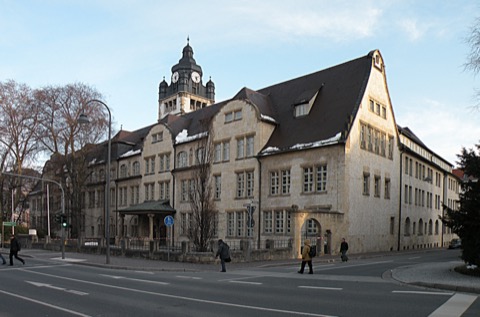
耶拿·弗里德里希·席勒大学(Friedrich-Schiller-Universität Jena,拉丁语为“ Alma Mater Jenensis”),简称耶拿大学(Universität Jena),始建于1558年,是德国最为传统,古老的大学之一。为纪念德国著名诗人席勒,在1934年,耶拿大学改名为弗里德里希·席勒大学(Friedrich-Schiller-Universität Jena) 。 耶拿大学位于被誉为“光学之城”的耶拿市(图林根州),著名的卡尔·蔡司光学公司所在地。耶拿不仅是一座德国典型的大学城,同样也是一座研究之城。德国国家研究机构马克斯-普朗克研究所在此分别设立了生物地质化学研究所、化学生态学研究所以及人类历史科学研究所 ,与耶拿大学保持着良好的科研关系。至2017年,共6位诺贝尔奖得主曾在耶拿大学求学、任教或研究,位居世界前列。 作为全德最优秀的研究型高校之一,耶拿大学与海德堡大学、哥廷根大学等其他四所德国高校入选科英布拉集团。2019年-2026年最新一批精英集群中,耶拿大学的微观平衡项目(Balance of the Microverse)成功入选 。古老传统与现代精神并存的耶拿大学,入选“2017泰晤士报欧洲最具创新的100所大学”。

This study explores the relationships between adults' childhood nature exposure (NE), current NE, and mental well-being. Correlational data from two countries (Australia and Germany) found positive relationships between both childhood and current NE and numerous mental well-being indicators. However, the contribution of childhood NE was indirect, through its relationship to current NE. The German study also assessed ecological behavior and connectedness to nature, and although childhood NE maintained a marginal relation to both these variables, current NE was also precedent in these domains. The relationships between NE and mental well-being and ecological behavior were both mediated by connectedness to nature. Thus, for the mental well-being of humans and protection of the earth, nature exposure should be encouraged and maintained later in life.
The Hildebrand solubility parameter is a cornerstone descriptor for predicting thermodynamic compatibility in polymer-solvent systems, yet its determination for polymers remains experimentally challenging, and traditional group contribution estimates lack accuracy and transferability. Here, we present an integrated framework that combines atomistic molecular dynamics (MD) simulations with machine learning (ML) to predict solubility parameter values across diverse molecular and polymeric systems. Solubility parameter values derived from MD simulations provide training targets for ML models built on molecular, quantum-chemical, and chain-specific descriptors. By systematically applying feature-selection strategies, Pearson correlation filtering, principal component analysis, and recursive feature elimination, we construct optimized descriptor subsets tailored to each learning algorithm. Benchmarking across regression methods reveals that Gaussian process regression with recursive feature elimination achieves the best performance, with R-2 = 0.94, MAE = 0.54, and RMSE = 0.96 MPa1/2 on the test set, consistently outperforming both empirical group-contribution methods and conventional regressors. Our results highlight the critical role of descriptor curation and nonlinear models in capturing the complexity of polymer thermodynamics. This hybrid MD-ML strategy establishes a generalizable and computationally efficient pathway for predicting solubility parameters, enabling rapid screening of solubility and miscibility for both known and novel molecules and polymers.
In this work, we evaluated the biological and geological contributions to the formation and preservation of the oxidation zones in & Lcaron;ubietov & aacute;-Podlipa, & Lcaron;ubietov & aacute;-Sv & auml;todu & scaron;n & aacute;, Poniky-Farbi & scaron;te and & Scaron;pania Dolina-Piesky. This case study highlights the importance of the biological contribution to weathering processes of ore deposits. It may be extended to other similar sites in order to assess the magnitude of biological input. Using U-Pb dating, secondary minerals from Podlipa were dated to 22 +/- 6 and 19 +/- 4 Ma (Lower Miocene). At this time, this region experienced deep weathering under a humid and warm climate and tectonic quiescence. The isotopic (O, H) composition of the secondary minerals shows that they formed from Lower Miocene meteoric water under surface temperatures. The delta C-13(PDB) values in malachite (-19 to -17 parts per thousand) document a biological source of C, from soil CO2. The delta O-18(VSMOW) values of the PO4 groups in the accessory fluorapatite in the host rocks (1.8 +/- 1.7 parts per thousand, 1 sigma) and pseudomalachite in the oxidation zone (12.1 +/- 2.9 parts per thousand, 1 sigma) show substantial biological P input into the oxidation zone. A biogenic source of both C and P agrees well with the palaeoclimatic constraints based on the radiometric dating. The oxidation zones at Podlipa, Sv & auml;todu & scaron;n & aacute; and Farbi & scaron;te are contemporaneous with kaolin crusts in the same area; they were all preserved only where they were covered by young (14-12 Ma) volcanic rocks and exposed recently by erosion. The other oxidation zones in the Tatric and Veporic units, if they existed, were destroyed by the Pliocene uplift of these units. The oxidation zone at Piesky is younger, dated to 2.5 Ma (Early Pleistocene) when the global temperatures in interglacials were similar to the present, decreasing in glacials by similar to 4 degrees C. The different climate at this time is manifested by scattered delta C-13 values, reflecting surface temperature and vegetation fluctuations at this time.
The Gram-positive, filamentous soil bacterium Streptomyces mirabilis P16B-1 has been shown to tolerate high environmental concentrations of Ni. The extremely high metal tolerance is partly provided through biomineralization, observed for both Mg bearing struvite and Ni-struvite where Ni ions replace Mg in the mineral lattice. The minerals showed different morphologies. This led us to assume that excreted substances may have the capacity to influence the mineral formation process that occurs at a distance to the cells. Here, we could show with metabolomics and proteomics studies that 23 metabolites as well as 18 proteins potentially co-precipitate with the minerals. Secreted secondary metabolites reduced in the supernatant after mineralization were identified as ergothioneine, diacetyllegionaminic acid, nevaltophin F, and diaminonaphthalene. The compounds phenylacetaldehyde and margaric acid also reduced after mineral precipitation did not alter mineral macromorphology. In addition, ten proteins that co-precipitated with statistical significance were predicted to be secreted. Among those, a specific nickel binding protein, NikA, was reduced in high amounts from the supernatant upon crystal formation. The potential of secreted organic molecules and proteins to bind specific surfaces of the mineral thereby redirecting crystal growth in a microbially influenced biomineralization process. Implications for biotechnological metal-struvite use are discussed.
Non-coding DNA, long considered “junk”, is now recognized as a central regulator of genome architecture. Highly repetitive satellite DNA sequences shape heterochromatin and are essential for chromosome stability, segregation, and gene regulation. Pericentromeric heterochromatic variants, or chromosomal heteromorphisms (CHs), have emerged as modulators of human fertility, potentially affecting gametogenesis and early embryonic development. Despite their ubiquity, the functional and clinical significance of CHs remains largely enigmatic. Molecular reference genomes fail to fully capture these repetitive domains, and cytogenetic assessment has shown critical inconsistencies due to the lack of standardized evaluation criteria. To address this gap, we proposed a comparison-based scoring system to reliably identify and characterize CHs. By applying this framework to 300 individuals with idiopathic reproductive disorders and 155 fertile controls, we observed a significantly higher CH frequency in the infertile cohort (2.4-fold increase; p < 0.001). Chromosome 9 variants were the most prevalent (5.3





