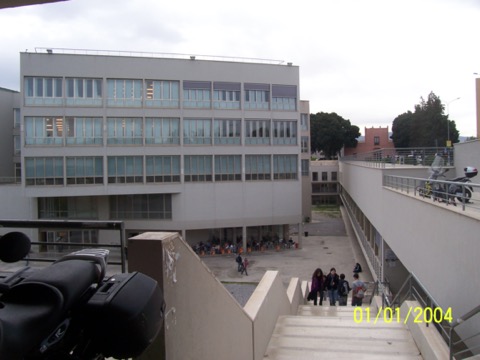
The University of Palermo (Italian: Università degli Studi di Palermo) is a university located in Palermo, Italy, and founded in 1806. It is organized in 12 Faculties.

This work investigates how toxin-mediated interactions and directed movements shape the emergence of coherent structures in plant–herbivore systems. The analysis focuses on a two-compartment model enclosing a toxin-dependent functional response and a cross-diffusion term that represents ecologically plausible herbivores’ movement towards, or away from, vegetation. Two distinct dynamical regimes arise depending on toxicity strength. Under weak toxicity, the system admits at most one biologically feasible coexistence equilibrium, which may lose stability through a Hopf bifurcation generating small-amplitude temporal oscillations. Under strong toxicity, the nonlinear functional response becomes non-monotonic, allowing for multiple coexistence equilibria and abrupt regime shifts. The influence of cross-diffusion on stability is also examined, identifying the conditions under which Turing instabilities and mixed spatiotemporal patterns occur. Near the corresponding bifurcation thresholds, Stuart-Landau amplitude equations are derived via weakly nonlinear analysis, providing a unified framework for the modulation of oscillatory, stationary, and combined Turing–Hopf modes. Numerical simulations corroborate the theoretical predictions, illustrating transitions from spatially uniform states to oscillations, spatial patterns, and mixed behavior. Overall, this manuscript highlights how chemical defences, nonlinear feedbacks, and movement strategies jointly determine the emergence, selection, and robustness of coherent structures in plant–herbivore systems.
In the present study, the combined use of hydrothermal carbonization (HTC) technology and photocatalytic reforming is proposed as a promising strategy for the generation of energy-dense solid biofuel and green hydrogen (H2), starting from lemon (LP) and grapefruit (GP) peel waste. For the aim, HTC of LP and GP was carried out at temperatures between 180 and 260 degrees C, fixed reaction time of 0.5 h, and solid to liquid mass ratio of 10%. LP and GP hydrochars, recovered after HTC, were characterized in terms of mass yield, proximate and elemental composition, surface chemistry via FTIR-ATR, calorific values, and combustion properties via thermogravimetric analysis. HTC aqueous liquid residues (PWs) were characterized in terms of pH, total organic carbon (TOC) content, and chemical composition via HPLC. Hydrochars showed an increasing coalification character with process temperature (decreasing H/C and O/C atomic ratios) and a higher heating value (HHV) increase up to 26.3 and 26.6 MJ/kg, for LP and GP samples produced at 260 degrees C. Photocatalytic reforming of LP and GP PWs, using Pt-TiO2 under UV light, enabled the production of H2 with a concentration ranging between 0.13 and 0.30 mM, depending on the starting material and HTC process temperature. This work demonstrates that HTC of citrus residues and photocatalytic reforming of process waters by-products could ensure the complete valorization of typical lignocellulosic waste biomass, serving as a proof of concept for valuable biofuels generation and agro-industrial sustainability.
The presence of submerged vegetated islands on riverbeds influences hydrodynamics in aquatic ecosystems. A better understanding of interactions between the vegetated islands and the neighboring flow is crucial, especially in river restoration. While most studies in this field refer to straight channels-which are relatively rare in nature-and to emergent rigid vegetation, in this study we focus on river bends with finite vegetation patches, particularly flexible and submerged. The analysis is performed with the aid of data collected in a high-sinuosity meandering flume with squared patches (percentage of coverage of 10%) of fully submerged flexible vegetation (Cauchy number Ca = 14.5) on the bed. Attention is focused on the bend-apex area of the flume. Results indicate the formation of a reduced-velocity region downstream of each patch's exit edge, along with a reverse flow on the vertical plane. In contrast to what is observed in straight channels, the extension of this region decreases as the local radius of curvature decreases. High values of the Reynolds stress and the turbulent kinetic energy clearly occur especially close to the lateral edges of the patches, where the vegetation becomes a sink of turbulent motion. The presence of vegetated patches alters the typical curvature-induced circulation motion and the streamwise velocity distribution at the apex section. Two cores of high velocity form in the central part of the water depth and accelerated streamwise flow velocities are clearly visible between the two patches. This pattern influences the exchange and dispersion processes not only within the vegetated areas but also in the lateral patch-adjacent area.
Fluid-structure interaction (FSI) is crucial in the numerical simulation of cardiovascular phenomena, where pulsatile blood flow dynamically interacts with highly deformable tissues. High-fidelity FSI approaches have become essential to enhance the understanding of potentially lethal pathologies, assisting diagnosis and development of novel therapeutic solutions. This work presents and experimentally validates a new, totally meshless FSI approach, specifically designed for cardiovascular applications. The method is based on the Lagrangian smoothed particle hydrodynamics (SPH), employing a unified physics to represent both blood and deformable walls, avoiding FSI interfaces. A key advantage of this method lies in its ability to overcome the SPH complex issue in contour management, a common challenge that typically increases the complexity of this methodology in FSI applications. Deformable walls are immersed in the fluid domain, and a buffer region of fluid is defined to handle the structural deformation. For validation, a new FSI benchmark is proposed and analyzed with the particle image velocimetry technique. Tailored to entail the typical complexities of relevant cardiovascular situations, the benchmark involves pulsatile flow interacting with a chamber with deformable curved walls, moving through both filling and emptying phases. Despite its simplified geometry, designed to allow a reliable experimental validation, the structure experiences a field of three-dimensional strains and large volume variations, thereby replicating complexities often associated with more intricate models. Numerical and experimental results show good agreement in terms of fluid velocity field and structural deformation, establishing the proposed totally meshless FSI approach as a reliable tool for complex cardiovascular modeling.
Fruit processing generates substantial by-products like peels, pomace, seeds, and pulp. The improper management of this by-products poses significant environmental and economic challenges. At the same time, numerous scientific studies have demonstrated that these by-products are a noteworthy source of bioactive compounds, including dietary fibers and phenolic compounds, with potential applications in the food and nutraceutical sectors. From a circular economy perspective, this review explores the conversion of Mediterranean agro-industrial residues into functional flours. By focusing on by-products such as citrus peels, vinification residues, olive oil, pomegranate, prickly pear, and carob processing streams, we assess their potential for use in confectionery and baked goods (e.g., bread, biscuits, muffins, cakes, and panettone). These food matrices, despite being widely consumed worldwide, are often characterized by a high content of rapidly digestible carbohydrates and a lack of fiber and micronutrients. Supplementation with agro-industrial by-products could represent an effective strategy, not only to increase the nutritional and functional profile of final products, but also to improve their techno-functional, sensorial, and, in some cases, antimicrobial properties. Specifically, the goal is to promote the development of high-value health foods, both wheat-based and gluten-free, in line with the sustainability and innovation needs of the food sector.





