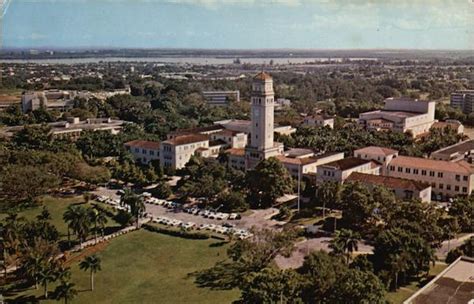
The University of Puerto Rico (UPR) is the main public university system in the U.S. Commonwealth of Puerto Rico and a government-owned corporation. The system consists of 11 campuses and has approximately 58,000 students and 5,300 faculty members. UPR has the largest and most diverse academic offerings in the island, with 472 academic programs of which 32 lead to a doctorate. It is classified among "R2: Doctoral Universities – High research activity".

Objectives The objective of this study is to assess temporal change in vertebral size and shape in macaques born on Cayo Santiago from 1951 to 2002 in order to clarify patterns of temporal change identified in the cranium, appendicular skeleton, and body mass.Materials and Methods We assessed overall size, vertebral body height, and overall shape using a published dataset of 3D coordinate data representing six vertebrae from 132 female and 78 male Rhesus macaques from Cayo Santiago. We performed multiple linear regression with year of birth and age at death as independent variables, and assessed differences between early (1950-1965) and late (1985-2002) cohorts using standard statistical methods.Results We found decreases in overall size and vertebral body height over time across vertebrae. Females decreased more than males, resulting in greater sexual dimorphism over time. We found no evidence of vertebral shape change. Incidentally, we found that thoracolumbar vertebral body height is not sexually dimorphic in this group and that males largely maintain vertebral body height over time.Discussion Our results are consistent with an overall reduction of the skeleton in this population rather than localized reductions in specific body regions or in soft tissue mass. Females displayed more extreme changes than males, and this pattern may suggest that females are under stronger selection for environmental reasons, possibly due to the physiological demands of pregnancy. Female-male differences may also reflect early female age at first birth, which occurs prior to full skeletal maturation and may directly affect female growth. Objetivos El objetivo de este estudio es evaluar cambios temporales en el tama & ntilde;o y forma de las v & eacute;rtebras de los macacos nacidos en Cayo Santiago entre 1951-2002, para clarificar los patrones de cambio temporales observados en el cr & aacute;neo, el esqueleto apendicular, y en el peso.Materiales y M & eacute;todos Evaluamos tama & ntilde;o general, altura vertebral, y forma general utilizando datos publicados de coordenadas 3D, que representan seis v & eacute;rtebras de 132 hembras y 78 machos de Cayo Santiago. Llevamos a cabo regresi & oacute;n m & uacute;ltiple lineal con el a & ntilde;o de nacimiento y la edad al morir como variables independientes, y evaluamos diferencias entre cohortes tempranos (1950-1965) y tard & iacute;os (1985-2002) utilizando m & eacute;todos estad & iacute;sticos est & aacute;ndar.Resultados Encontramos reducciones generales en tama & ntilde;o y altura vertebral a trav & eacute;s del tiempo. Las hembras tuvieron reducciones mayores a las de los machos, lo que result & oacute; en m & aacute;s dimorfismo sexual. No encontramos evidencia de cambios en la forma de las v & eacute;rtebras. Incidentalmente, encontramos que la altura vertebral no es sexualmente dim & oacute;rfico en las v & eacute;rtebras toracolumbares, y que los machos en general mantienen la medida de altura vertebral a trav & eacute;s del tiempo.Discusi & oacute;n Nuestros resultados son consistentes con una reducci & oacute;n general en el tama & ntilde;o del esqueleto en esta poblaci & oacute;n, y no reducciones localizadas a regiones espec & iacute;ficas o a los tejidos blandos. Las hembras mostraron cambios m & aacute;s extremos que los machos, lo que puede sugerir que las hembras est & aacute;n bajo mayor selecci & oacute;n por razones ambientales, posiblemente por los requisitos fisiol & oacute;gicos del embarazo. Las diferencias entre los machos y las hembras tambi & eacute;n pueden reflejar la temprana edad de las hembras en su primer parto, que ocurre antes de la maduraci & oacute;n esquel & eacute;tica completa de las mismas y puede afectar directamente su crecimiento.
Aqueous tin (Sn) metal batteries have attracted growing attention for energy storage; however, the drastic Sn2+ hydrolysis reaction has significantly hindered their development. Currently, strong alkaline and acidic solutions prevail as the leading method to suppress hydrolysis and stabilize Sn2+ electrolytes. Nevertheless, this approach incurs critical issues, including the self-corrosion of Sn metal, parasitic hydrogen evolution, and inferior efficiency under harsh conditions. Herein, we rationally designed an inexpensive and moderately concentrated electrolyte of 0.2 m SnSO4 + 5 m (NH4)(2)SO4, which overcomes the hydrolysis challenge by strengthening H2O molecules and regulating Sn2+/H2O interactions. Importantly, our electrolyte features a mild pH environment (pH = 3.2) and outperforms the aggressive alkaline (pH > 14) and acidic (pH<0) electrolytes. Consequently, exceptional electrode/electrolyte compatibility is achieved, leading to high-efficiency Sn plating behavior (99.95% at 1 mA cm(-2)) and robustness against harsh conditions, including exceptionally low currents (0.1 mA cm(-2), 99.8%; 0.01 mA cm(-2), approximate to 98.6%), long storage (1 month, 93.8% retention), and extreme temperatures (-10-+80 degrees C, >98.7%). We also demonstrated high-capacity Sn & Vert;S batteries (approximate to 2300 mAh g(-1), sulfur-based) and long-cycling Sn & Vert;KNiFe(CN)(6) batteries (7,500 cycles). This work offers new insights into advanced Sn2+ electrolytes and Sn plating chemistry for energy storage.
Current sustainability discourse promotes sustainable yard practices as a means for residents to contribute to urban environmental health and soil conservation. Social-ecological research suggests that yard practices are shaped by multiscale social drivers, including social contagion, whereby visible expressions of individuality in front yard design are copied by nearby neighbors. This study evaluated residential areas within the R & iacute;o Piedras Watershed (RPWS) in the San Juan metropolitan area to assess evidence of social contagion in front yard configuration and vegetation structure, and to examine whether these variables were associated with socio-demographic and economic characteristics when spatial effects were considered. A total of 6858 front yards across six highly urbanized sites were analyzed using Google Earth Street View imagery. Housing lot sizes were quantified, and yards were classified into eight landscape configurations based on green and gray cover elements. Woody vegetation structures, including trees, shrubs, and palms, were also quantified to generate estimates of functional diversity and a front yard quality index. Significant differences in yard characteristics were observed among sites. Spatial analyses revealed significant clustering at distances of 65-80 m, particularly for front yard configuration, while clustering of woody vegetation density was weaker. Local clustering patterns and the distribution of outliers varied across sites. Spatial lag models indicated that lot area positively influenced yard configuration and quality, and the density and diversity of woody vegetation. While socio-economic variables were not significant predictors of yard quality, their effects cannot be discarded. Overall, results are consistent with social contagion processes but also highlight neighborhood design as a key driver of clustering, alongside widespread conversion of green to paved front yards, with implications for soil and green infrastructure loss as well as environmental and human health in the RPWS.
There are few prospective studies of mycophenolate mofetil (MMF) versus cyclophosphamide (CYC) for pediatric lupus nephritis (pLN) and none evaluating rituximab (RTX). The Prospective Pediatric Lupus Nephritis Registry (ProPeL-R) enrolled patients < 21 years within 4 weeks of an initial kidney biopsy diagnostic of pLN. Demographic, clinical, and laboratory data were collected prospectively at enrollment, 3 months, 6 months, and then every 6 months thereafter for up to 5 years of follow-up. For this study, we compared patients receiving initial therapy with corticosteroids (CS) and either MMF (n = 33) vs. CYC (n = 18), and those treated with CS, either MMF or CYC, with RTX (n = 20) vs. without RTX (n = 51). Histology consisted of 18





