Millimeter-sized crystals of sodium hexafluorosilicate Na2SiF6 have been grown by the hydrothermal method. X-ray diffraction analysis revealed that Na2SiF6 samples are twinned according to the merohedral law and crystallize in the sp. gr. Р321 with the following unit-cell parameters at 295 K: 〈a〉 = 8.8582(12) Å, 〈c〉 = 5.0396(11) Å, 〈V〉 = 342.47(17) Å3 (averaged results of repeated measurements). A multitemperature diffraction study of Na2SiF6 was performed; the results obtained were used to calculate the temperature dynamics of the optical properties of crystals. Structural similarity was revealed between Na2SiF6 crystals and crystals of the langasite family La3Ga5SiO14. This made it possible to explain the optical activity of Na2SiF6 by considering the electron density helices similar to those in langasite, twisted around the threefold symmetry axis passing through the origin of the Na2SiF6 cell. The kinks in the temperature dependences of the refractive index and rotation of the plane of polarization of light are explained taking into account the anomalous features of interatomic interactions along the threefold axis of the unit cell, passing through the Si2(2d) site with the coordinates (1/3, 2/3, z). It was found that main factor affecting the temperature dynamics of optical parameters is the Si2(2d)–F2(6g) distance, which increases abnormally upon cooling.
The spectra of transmisson coefficients and absorption indices of single-domain and multidomain LaBGeO5 samples have been measured. It is shown that, to measure more exactly the optical rotation ρ, it is necessary to use the spectra of transmission coefficients not only for the cases of parallel and crossed polarizers but also at other angles between them. The obtained ρ values for both samples are described quite well by only dispersion using the Drude formula. This is in agreement with the fact that the ρ value should not change during transition to the single-domain state of the crystal at a given symmetry (P31 in the ferroelectric phase and P3121 in the paraelectric phase). It is shown that the Cherenkov-type second harmonic generation (SHG) is observed only in a polydomain sample, while the second-harmonic radiation is not polarized. The domain structure of the samples was observed by scanning electron microscopy and piezoelectric force microscopy. The presence of a labyrinth-like domain structure was shown for the multidomain sample, whereas for a single-domain sample no changes in contrast were observed within the scanned region.
The spectral dependences of transmission and absorption in the wavelength range of 200–2500 nm were measured for Ca3TaGa3Si2O14 crystals cut perpendicular to the optical axis in the initial state (without annealing) and after isothermal annealing in vacuum and in air. It was found that annealings in vacuum and air lead, respectively, to decrease and increase in the absorption band intensity. A spectrophotometric method for measuring and calculating the specific rotation angle ρ of the plane of polarization of light in gyrotropic crystals from the transmission coefficient spectra at different angles between the polarizer and analyzer is considered. The transmission spectra were normalized to eliminate the spectral shifts associated with measurement features. Spectral dependences of ρ, approximated by the extended Drude formula, were obtained for all three samples; the influence of the annealing atmosphere on the coefficients of this formula is established.
The structure and optical properties of crystals from the langasite family (La1 - xNdх)3Ga5SiO14 with different Nd content were investigated. The rotation of the light polarization plane, ρ, was calculated for these crystals from measured transmission spectra in polarized light. It is shown that for small values of ρ (~3-5 degrees/mm), it is necessary to use transmission spectra not with parallel and crossed polarizers, as is usually done, but at different angles between them, for example ±45°, to obtain better results. Circular dichroism measurements of these crystals were performed. Using Kramers-Kronig relations, the connection between the circular dichroism bands and the rotation of the light polarization plane in the absorption band region was determined. Dispersion curves of ρ values were calculated, taking into account absorption in the wavelength range of 400–1000 nm for crystals (La0.6Nd0.4)3Ga5SiO14, (La0.4Nd0.6)3Ga5SiO14, Nd3Ga5SiO14, and compared with the dispersion of ρ for langasite crystal La3Ga5SiO14. Average refractive indices and optical activity parameters of these crystals were calculated from structural data. It is shown that the dependence of the average refractive indices and ρ values on the parameters of the elementary cell, calculated under the assumption of no absorption, is linear. However, such a linear dependence is not observed for experimental ρ values, which is associated with the influence of absorption and the peculiarities of the structure (nonlinear change in the geometry of optically active regions of electron density upon replacing part of La with Nd).
The optical properties of Sr3NbFe3Si2O14, Ba3NbFe3Si2O14, and Ba3TaFe3Si2O14 single crystals (promising multiferroics belonging to the langasite family (sp. gr. P321, Z = 1)) have been investigated. The crystals have been grown by floating zone melting. The measured and calculated refractive indices of these crystals are compared. The optical activity parameters are calculated based on the structural data. The atomic structures are compared proceeding from the precise X-ray diffraction analysis data. A correlation is established between the structural features and optical properties of the crystals.
The structure and optical properties of langasite family crystals (La 1– x Nd x ) 3 Ga 5 SiO 14 with different Nd contents have been studied. The optical rotation ρ for these crystals has been calculated from the measured polarized-light transmission spectra. It is shown that, at a small ρ value (~3–5 deg/mm), the transmission spectra recorded at different angles between polarizers (e.g., ±45°) should be used to obtain the best results, rather than the transmission spectra at parallel and crossed polarizers, as is generally accepted. The circular dichroism of these crystals has been measured. The relationship between the circular-dichroism bands and the change in the optical rotation near the absorption bands has been determined using the Kramers–Kronig relations. Variances of the parameter ρ with allowance for absorption in the wavelength range of 400–1000 nm have been calculated for (La 0.6 Nd 0.4 ) 3 Ga 5 SiO 14 , (La 0.4 Nd 0.6 ) 3 Ga 5 SiO 14 , and Nd 3 Ga 5 SiO 14 crystals and compared with the variance of ρ for a La 3 Ga 5 SiO 14 langasite crystal. The mean refractive indices and parameters of optical activity of these crystals have been calculated from the structural data. It is shown that the dependences of the mean refractive index and parameter ρ, calculated within the no-absorption approximation, on the unit-cell parameters are linear. Note that the dependence observed for experimental ρ values is not linear, which is related to the influence of absorption and structural features (nonlinear change in the geometry of optically active regions of the electron density when La is partially replaced with Nd).
Some optical and mechanical properties of a number of langasite family crystals have been compared. It is shown that electron-density regions in the form of helices, twisted in the opposite directions for the right- and left-handed crystals, make a structural basis of the optical activity. The characteristic surfaces of Young’s modulus have been calculated for some langasite family crystals, and the difference between them is explained from the structural point of view. The fracture anisotropy under Berkovich indentation of the (0001) basal plane has been considered for five crystals. It is shown that crystallographic cracks (straight-line ones and those formed exactly at the indenter angles) are obtained at indenter rotations with a step of 60° from the position in which the indenter angles coincide with the 〈 $$\bar {1}$$ 010〉 directions. The structural basis of piezoelectricity of langasites is established, and a difference in the piezoelectric properties of the right- and left-handed crystals (which is important for manufacture of piezoelectric devices) are shown.
The temperature dependence of the static electrical conductivity σdc(T) of a single crystal of lanthanum gallium silicate (langasite) La3Ga5SiO14 activated with an impurity of Mn (1000 ppm) has been studied by impedance spectroscopy. Impedance measurements of La3Ga5SiO14 (sp. gr. P321, Z = 1) were carried out along crystallographic axes a (double symmetry axis) and c (triple symmetry axis). It was found that the values of σ||a are significantly higher than the electrical conductivity σ||с, the anisotropy of the electrical conductivity is σ||a/σ||c = 170 at 773 K. The activation energy of electrotransport is Eσ = 0.75 ± 0.05 and 1.09 ± 0.02 eV along the a and c axes, respectively. The electrical conductivity mechanism has an ionic nature and an impurity character; oxygen vacancies VO•• are the most probable current carriers.
Examples of electric properties of various crystalline materials, insulators and semiconductors, liquid crystals, films, and nanostructures are presented. Among crystals, particular attention is paid to piezoelectrics, pyroelectrics, and ferroelectrics, whose dielectric properties depend strongly on the external electric field and temperature. The electro-optic properties of these materials, as well as the photovoltaic effect and photorefraction, are considered. Liquid crystals, whose optical properties depend strongly on applied electric field, are considered separately. The electric properties of materials are widely used in most diverse fields of science and technology.
The temperature dependence of the static electrical conductivity sigmadc(T) of a single crystal of lanthanum gallium silicate (langasite) La3Ga5SiO14 activated with an impurity of Mn (1000 ppm) has been studied by impedance spectroscopy. Impedance measurements of La3Ga5SiO14 (sp. gr. P321, Z=1) were carried out along crystallographic axes a (double symmetry axis) and c (triple symmetry axis). It was found that the values of sigma|| a are significantly higher than the electrical conductivity sigma|| c, the anisotropy of the electrical conductivity is sigma|| a/sigma|| c=170 at 773 K. The activation energy of electrotransport is Esigma=0.75±0.05 and 1.09±0.02 eV along the a and c axes, respectively. The electrical conductivity mechanism has an ionic nature and an impurity character; oxygen vacancies VOoo are the most probable current carriers. Keywords: lanthanum gallium silicate, langasite family, single crystal, electrical conductivity, anisotropy.
The anisotropy of microhardness and fracture of the (0001) basal plane of langasite crystal has been studied using Berkovich indentation under a load of 100 g at different indenter positions. The formation of “crystallographic” microcracks (straight-line and emerging exactly from the impression angles), which propagate in six directions, spaced by 60°, is observed. It is suggested that the observed specific features of microcrack formation are based structurally on the presence of a mixed cation site. As follows from the structural model of a multicell, fractures propagate along the direction of polyhedra with mixed cation occupancy, and the fracture line pushes apart unit cells of different chemical compositions. The Young’s modulus of langasite crystal has been calculated for different crystallographic planes.
Examples of manifestation of magneto-optical Faraday, Cotton–Mouton, and Kerr effects in some crystals and artificial materials are considered. Most attention is paid to the Faraday effect: optical activity manifesting itself in an external magnetic field. Cases of diamagnetic, paramagnetic, and magnetically ordered crystals are considered. The largest values of magneto-optical effects are observed in artificial structures, such as various magnetic films, magnetic photonic crystals, plasmonic crystals, and graphene.
The spectral intensity of Raman scattering in quartz crystals has been calculated in a wide temperature range including the point of the α–β phase transition. It is established that a central peak is present in the scattered radiation spectrum at different temperatures with allowance for the interaction between the fundamental soft mode and an additional low-frequency oscillator. The intensity and half-width of the central peak are calculateed in a wide temperature range.
The possibilities of manifestation of optical activity in different media (photonic crystals, metamaterials, and liquid crystals) are considered. Some interesting examples of optically active crystals are demonstrated; particular attention is paid to the relationship between the optical activity and crystal structure. Examples of manifestation of optical activity in the X-ray spectral region are presented. Specific features of the optical activity of natural organic compounds, which are related to the asymmetry of their molecules, are analyzed.
 T. G. Golovina合作论文数46E. A. Evdishchenko合作论文数34B. V. Nabatov合作论文数20
 Константин Константинов合作论文数19
 Alexander Dudka合作论文数15A. V. Butashin合作论文数10V. P. Orekhova合作论文数9Bn Grechushnikov合作论文数8La Korostel合作论文数7K. B. Imangazieva合作论文数6S. G. Kirsch合作论文数5g i utkin合作论文数5NA KULAGIN合作论文数5
 A. S. Kaminskii合作论文数5a yu tronin合作论文数4GR OTABAEV合作论文数4IT ULUKHANOV合作论文数4
 V. M. Kasimova合作论文数National University of Science and Technology “MISiS”,4EA KRIVANDINA合作论文数4
 Kozlova Nina S合作论文数4B. P. Sobolev合作论文数4
 E. V. Zabelina合作论文数Moscow State Institute of Steel4E. A. Evdischenko合作论文数3ZB PEREKALINA合作论文数3Ulukhanov Ibrohim Tukhtakhuzhayevich合作论文数3Vladimir Gorelik合作论文数Lebedev Institute of Physics, Russian Academy of Sciences3Boris V Mill合作论文数3
 Lyudmila Sizova合作论文数3T. M. Glushkova合作论文数3E. V. Fedotov合作论文数2V. S. Chudakov合作论文数2T. Yanagitani合作论文数2An Stepanov合作论文数2v i stroganov合作论文数2l a korostel合作论文数2A. Shirokava合作论文数2Vv Volkov合作论文数2
 Boris Umanskii合作论文数2T. Uematsu合作论文数2H Yagi合作论文数2M Musha合作论文数2
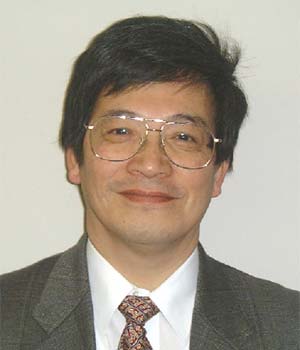 Ken-Ichi Ueda (植田憲一)合作论文数Institute for Laser Science, University of Electro-Communications;Hamamatsu Photonics2
 Sergei Sulyanov合作论文数2J. Lu合作论文数2A. A. Urusovskaya合作论文数2K. A. Kaldybaev合作论文数2T. V. Oreshnikova合作论文数2K. Takaichi合作论文数2G. G. Knab合作论文数2




