Памяти Николая Николаевича Сибельдина, Арсеев П.И., Горбацевич А.А., Демихов Е.И., Кведер В.В., Колачевский Н.Н., Красильник З.Ф., Крохин О.Н., Кукушкин И.В., Месяц Г.А., Сурис Р.А., Тимофеев В.Б., Щербаков И.А.
Александр Александрович Каплянский (к 90-летию со дня рождения), Агранович В.М., Александров Е.Б., Багаев С.Н., Грехов И.В., Забродский А.Г., Иванов С.В., Ивченко Е.Л., Кведер В.В., Новиков Б.В., Сурис Р.А., Тимофеев В.Б., Щербаков И.А.
Academy of Sciences Yurii Moiseevich Kagan passed away on June 4, 2019. Quite recently, on July 6, 2018, Yurii Moiseevich celebrated his 90th birthday. In this connection, the journal Uspekhi Fizicheskikh Nauk published a Personalia column (Usp. Fiz. Nauk 188 799 [Phys. Usp. 61 714 (2018)]) in which colleagues and friends heartily congratulated Yurii Moiseevich on this anniversary and recounted the main stages of his life and his most important achievements. Yu M Kagan was born in Moscow in 1928. In the hard war years, young Yu M Kagan worked at a plant and attended an evening school for working youth. When he was 16, he entered the Moscow Aviation Institute. He has then transferred to the Engineering Physics Faculty of theMoscow Mechanical Institute and graduated from it in 1950 with honors. At the same time, he passed all the exams of the famous `Theorminimum' of L D Landau, who invited him to the postgraduate course. However, he was sent to work on the USSR Atomic Project at the Ural Electrochemical Plant. Here, Yu M Kagan developed the general theory of the separation of isotopic gas mixtures in porous media. He suggested the idea of replacing the medium by a heavy `wall' gas. In 1954, YuMKagan defended his Candidate of Sciences thesis. He delivered a classified special course at the Ural Polytechnical Institute (Sverdlovsk). In 1956, he was invited to Moscow, to the Institute of Atomic Energy (IAE). After that time, the scientific life of Yu M Kagan was connected with the Russian Research Center, `Kurchatov Institute'. In 1959, he defended his thesis for the degree of Doctor of Sciences in Physics and Mathematics. Here, YuMKagan formulated the kinetic theory of gases with rotational degrees of freedom.He constructed the theory of transport phenomena in external fields and explained the nature of kinetic coefficients variations in a magnetic field (the Sentfleben effect). The results were included in textbooks and initiated extensive studies. The terms `Kagan vector' and `Kagan polarization' appeared. The latter effect was observed 25 years later at the Leiden laboratory. In the 1960s, Yu M Kagan began his research in the field of solid state physics. He developed the microscopic theory of nontransition metals and showed the decisive role of an electron liquid for their properties. The theory explained the nature of interion forces and predicted the appearance of singularities in the phonon spectrum. The results were confirmed experimentally. For this series of works, YuMKagan, alongwith his pupil and co-author EGBrovman, was awarded theMVLomonosov Prize of the USSR Academy of Sciences (1975). Yu M Kagan's studies of metallic hydrogen are widely known. He proved the existence of a metastable phase and analyzed its crystalline structure and vibrational spectrum. He found the equation of state, estimated the pressure of the transition to the metallic phase, and showed that only anisotropic structures are quasi-stable and that with increasing pressure the tendency appeared to form a liquid phase. He estimated the temperature of the high-pressure superconducting transition. A special place belongs to the studies of coherent phenomena in resonant interaction between nuclear radiation and crystals. In a series of studies carried out by Yu M Kagan and A M Afanasyev, the notion of collective excitation (a nuclear exciton) was introduced. The `Kagan± Uspekhi Fizicheskikh Nauk 189 (9) 1011 ± 1012 (2019) DOI: https://doi.org/10.3367/UFNr.2019.07.038631 Translated by M V Tsaplina PERSONALIA PACS number: 01.60.+q
Experimental results on the properties of a recently discovered new collective state, the magnetofermionic condensate, are summarized herein. Condensation occurs in a fermionic system, a quantum Hall insulator (filling factor nu = 2), as a result of the formation of a dense ensemble of long-lived spin cyclotron magnetoexcitons, composite bosons. At temperatures below 1 K, the exciton ensemble exhibits a sharp enhancement in its response to an external electromagnetic field due to the formation of a super-absorbing state that interacts coherently with the electromagnetic field. Simultaneously, the electrons below the Fermi level rearrange to form a new non-equilibrium radiative recombination channel. The condensate shows a sharp decrease in viscosity and the ability to spread over macroscopically large distances, on the order of a millimeter, at a speed of approximate to 103cms-1. Due to this rapid long-distance spin transfer, new opportunities in the field of spintronics have been opened up.
theoretical physicists of the Soviet postwar generation, Academician of the Russian Academy of Sciences, Yurii Moiseevich Kagan. Yu M Kagan was born in Moscow in 1928. His father, Moisey Aleksandrovich, was a lawyer. He graduated from St. Petersburg University before the revolution. His mother, Rahil Solomonovna, was a physician. Yu M Kagan's early youth passed during the hard war years. In 1943, he began working in a war plant and attended a young workers' evening school. In autumn 1944, as a 16-year old boy, he entered the Moscow Aviation Institute. In February 1946, he was transferred to the second course of the Engineering Physics Faculty of the Moscow Mechanical Institute, which was founded for training specialists for the Atomic Project. He graduated from there in 1950 with honors. At the same time, he forwarded all the exams of the famous Theorminimum to L D Landau, who invited him to his postgraduate course. However, on graduating from the institute, he was sent to work on the USSR Atomic Project at the Ural Electrochemical Plant near Sverdlovsk. The plant was targeted at industrial production of uranium isotopes separated by the gasdiffusion method. When Yu M Kagan was working at the Central Laboratory of the plant, he developed the general theory of the separation of isotopic gas mixtures in porous media for the whole range of pressures from the Knudsen regime to the hydrodynamic one. Decisive here was his original idea of replacing a porous medium by a heavy `wall' gas with certain scattering characteristics. The problem of separating the n-component mixture on porous media was, in fact, reduced to the general diffusion problem for an (n 1)-component mixture in free space. (Notably, several years later a similar idea was published by American physicists, but this time the heavy gas was referred to as `dustlike'.) In 1954, YuMKagan defended his Candidate of Sciences thesis. The same year, he was invited to deliver lectures at the specialized faculty of the Ural Polytechnical Institute. For three years he would go once a week to Sverdlovsk to give a classified course of lectures. In 1956, Yu M Kagan was invited to Moscow to the Institute of Atomic Energy (now the Russian Research Center `Kurchatov Institute'). Since that time to the present day, his scientific activity has been connected with this Institute. In 1959, he defended his thesis for the degree of Doctor of Phys.-Math. Sciences. Continuing to be engaged in the physics of molecular gases, Yu M Kagan formulated the kinetic theory of gases with rotational degrees of freedom. The introduction of the rotational moment vector to the theory, along with the velocity vector, radically changed the entire structure of the classical kinetic theoryofgases.TogetherwithLAMaksimov, he formulated the general theory of transport phenomena in molecular gases in external fields, which suggested, in particular, an explanation for the Senftleben effect (a change in the kinetic coefficients of a neutral molecular gas in a magnetic field), known since the 1930s. The theory initiated a wide scope of research in this country and abroad. Its resultsÐwhich, in fact, became classicalÐwere included in monographs and textbooks. The vector composed of the velocity vector and the rotational moment pseudovector, which is playing an essential role in the theory, is referred to as the `Kagan vector'. It is of interest that the alignment of rotational moments of molecules in a gas flow, referred to as `Kagan polarization', was directly measured experimentally in the Leiden laboratory 25 years after its theoretical prediction. Uspekhi Fizicheskikh Nauk 188 (7) 799 ± 800 (2018) DOI: https://doi.org/10.3367/UFNr.2018.06.038365 Translated by M V Tsaplina PERSONALIA PACS number: 01.60.+q
Russian physicist, Full Member of the Russian Academy of Sciences (RAS), member of the Bureau of the Physical Sciences Division of RAS, and Doctor of Physical and Mathematical Sciences celebrated his 80th birthday on 12 December 2017. Sergei Mikhailovich Stishov is a world-renowned specialist in the field of high-pressure physics and technology, condensed matter physics, and the physics of phase transitions. He exhibits undiminished interest in physical problems, great erudition, a remarkable mastership of experiment, and deep physical intuition. S M Stishov was born on 12 December 1937 in Moscow and, having finished secondary school in 1955, entered the Faculty of Geology of Lomonosov Moscow State University (MSU). As a student, he began his active scientific work and published a number of papers on the nature of color centers in different minerals. After graduating fromMSU with honors, S M Stishov entered the graduate program, where his interest in the internal structure of Earth and planets stimulated the origin of experimental activity in high-pressure physics. The name Stishov became well known when, in 1961, he obtained and examined a new dense modification of Earth silicon, which was soon found in an Arizona meteorite crater and called `stishovite' after him. With the results of this work, S M Stishov defended his Candidate's thesis. Further, for many years S M Stishov's scientific activity was connected with the Institute of Crystallography RAS, where he progressed from a Junior Researcher to Head of a large laboratory. For over 20 years, from 1993 to 2016, Sergei Mikhailovich Stishov was Director of the Institute of High Pressure Physics (IHPP) RAS, where he is a scientific supervisor to this day. The work done by S M Stishov in the field of phase transitions and high-pressure physics received wide international recognition, first and foremost due to the study of a superdense modification of Earth's silicon and investigations into melting transitions. S M Stishov showed experimentally that the transition of silicon to sixfold coordination at high pressures makes it possible to create a consistent model of Earth's lower mantle. Thus, S M Stishov was the first to obtain experimental proof of the decisive role of phase transitions in the formation of the structure of Earth and the planets. In the early 1960s, S M Stishov discovered and examined temperature peaks in the melting curves of a number of substances under pressure. This work initiated the study of `phase transformations' in liquids, a problem now being intensely developed. Investigating the equations of state and melting of simple substances, S M Stishov revealed universal behavior of thermodynamic quantities under melting. It was shown that under melting the relative jump of volume and the jump of entropy tend to finite values in the limit of superhigh compression. This fact was decisive in concluding that repulsive forces are dominant in melting±crystallization phenomena. From the study of simple isotropic liquids, S M Stishov moved to examining liquid crystals, where he discovered a new type of polycritical point. Later on, S M Stishov and colleagues also performed a series of precision experiments on investigation of tricritical phenomena in crystal ferroelectrics. S M Stishov, in fact, developed the experimental static megabar pressures technique using diamond anvil chambers in our country, and a number of outstanding scientific results were obtained. In particular, the equation of state of deuterium up to 300 kbar was analyzed for the first time, and the phenomenon of `chemical degeneracy' under megabar pressurewas revealed.Under the guidance of SMStishov, pioneering studies of the equations of state and the Raman spectra of superhard materialsÐdiamond, boron cubic nitride, and silicon carbideÐwere carried out. The data Uspekhi Fizicheskikh Nauk 187 (12) 1403 ± 1404 (2017) DOI: https://doi.org/10.3367/UFNr.2017.11.038243 Translated by M V Tsaplina PERSONALIA PACS number: 01.60.+q
Александр Александрович Каплянский (к 80-летию со дня рождения), Александров Е.Б., Алферов Ж.И., Багаев С.Н., Басиев Т.Т., Забродский А.Г., Кведер В.В., Келдыш Л.В., Новиков Б.В., Осико В.В., Сурис Р.А., Тимофеев В.Б., Щербаков И.А.
Юрий Моисеевич Каган (Рє 80-летию СЃРѕ РґРЅСЏ рождения), Андреев Рђ.Р¤., Беляев РЎ.Рў., Велихов Р•.Рџ., Горьков Р›.Рџ., Ковальчук Рњ.Р’., Максимов Р›.Рђ., РћСЃРёРїСЊСЏРЅ Р®.Рђ., Питаевский Р›.Рџ., Румянцев Рђ.Р®., Тимофеев Р’.Р‘., Черноплеков Рќ.Рђ., Рлиашберг Р“.Рњ.
Памяти Юрия Андреевича Осипьяна, Андреев А.Ф., Алферов Ж.И., Алдошин С.М., Бредихин С.И., Велихов Е.П., Гантмахер В.Ф., Кведер В.В., Ковальчук М.В., Кулаковский В.Д., Матвеев В.А., Месяц Г.А., Тимофеев В.Б.
Научная сессия Отделения физических наук Российской академии наук, посвященная 60-летию Казанского физико-технического института им. Е.К. Завойского Казанского научного центра РАН (9 февраля 2006 г.), Горбунов А.В., Тимофеев В.Б., Чекалин С.В., Салихов К.М., Маненков А.А., Смирнов А.И., Гарифуллин И.А.
Бозе-конденсация межъямных экситонов и пространственная структура люминесценции в латеральных ловушках, Горбунов А.В., Тимофеев В.Б.
A scientific session of the Physical Sciences Division of the Russian Academy of Sciences (RAS) dedicated to the 60th anniversary of the Zavoisky Kazan Physical-Technical Institute of the Kazan Scientific Center, Russian Academy of Sciences, was held in the Conference Hall of the Zavoisky Kazan Physical-Technical Institute on 19 December 2005. following reports were presented at the session: (1) Krokhin O N (Lebedev Physics Institute, RAS, Moscow) 50 years of quantum electronics; (2) Gorbunov A V, Timofeev V B (Institute of Solid State Physics, RAS, Chernogolovka, Moscow region) condensation of interwell excitons and spatial structure of luminescence in lateral traps; (3) Chekalin SV(Institute of Spectroscopy, RAS, Troitsk, Moscow region) The unique femtosecond spectrometric complex as an instrument for ultrafast spectroscopy, femto-chemistry, and nanooptics; (4) Salikhov K M (Zavoisky Kazan Physical-Technical Institute of the Kazan Scientific Center, RAS) EPR spectroscopy of nonequilibrium spin systems produced during spin-dependent photophysical and photo-chemical processes in condensed media; (5) Manenkov A A (Prokhorov General Physics Institute, RAS, Moscow) The role of electron paramagnetic resonance in the development of quantum electronics: facts and comments; (6) Smirnov A I (Kapitza Institute for Physical Problems, RAS, Moscow) resonance modes in spin-gap magnets; (7) Kochelaev B I (Kazan State University) Evolution of antiferromagnetic cuprates in high-temperature superconductors; (8) Garifullin I A (Zavoisky Kazan Physical-Technical Institute of the Kazan Scientific Center, RAS) The superconductor/ferromagnet proximity effect and its potential application in spintronics. main propositions of O N Krokhin's report were published in Usp. Phys. Nauk 174 1117 (2004) [Phys. Usp. 47 1045 (2004)]. A brief presentation of reports 2 — 6 and 8 is given below. • Bose condensation of interwell excitons and spatial structure of luminescence in lateral traps, A V Gorbunov, V B Timofeev Physics-Uspekhi, 2006, Volume 49, Number 6, Pages 629–634 • unique femtosecond spectrometric complex as an instrument for ultrafast spectroscopy, femtochemistry, and nanooptics, S V Chekalin Physics-Uspekhi, 2006, Volume 49, Number 6, Pages 634–641 • Time-resolved EPR spectroscopy of nonequilibrium spin systems produced during spin-dependent photophysical and photochemical processes in condensed media, K M Salikhov Physics-Uspekhi, 2006, Volume 49, Number 6, Pages 641–645 • role of electron paramagnetic resonance in the development of quantum electronics: facts and comments, A A Manenkov Physics-Uspekhi, 2006, Volume 49, Number 6, Pages 645–649 • Magnetic resonance modes in spin-gap magnets, A I Smirnov Physics-Uspekhi, 2006, Volume 49, Number 6, Pages 649–652 • superconductor/ferromagnet proximity effect and its potential application in spintronics, I A Garifullin Physics-Uspekhi, 2006, Volume 49, Number 6, Pages 652–655
Всеволод Феликсович Гантмахер (к семидесятилетию со дня рождения), Абрикосов А.А., Андреев А.Ф., Горьков Л.П., Долгополов В.Т., Иорданский С.В., Кведер В.В., Левинсон И.Б., Осипьян Ю.А., Рашба Э.И., Тимофеев В.Б., Хмельницкий Д.Е., Элиашберг Г.М.
 Igor V. Kukushkin合作论文数Institute of Solid-State Physics Chernogolovka, Russian Academy of Sciences15
 Vladimir D Kulakovskii合作论文数11Aleksandr F Andreev合作论文数10G. M. Eliashberg合作论文数7
 A. V. Gorbunov合作论文数5
 Vitaly Kveder合作论文数Russian Academy of Sciences Institute of Solid State Physics Chernogolovka5Ivan A Shcherbakov合作论文数4
 Robert A Suris合作论文数Institute of Radioengineering & Electronics, RAS4Valerii T Dolgopolov合作论文数4Vsevolod F Gantmakher合作论文数4
 Lev Pitaevskii合作论文数4Aleksandr F. Andreev合作论文数3Lev Gor'kov合作论文数Florida State University3Sergei V. Iordanskii合作论文数3
 Oleg V Misochko合作论文数Russian Academy of Sciences Institute of Solid State Physics Chernogolovka3Виталий Владимирович Кведер合作论文数2Viktor A. Matveev合作论文数2Evgenii P. Velikhov合作论文数2e s itskevich合作论文数2Lv Keldysh合作论文数2Bk Vainshtein合作论文数2Aa Abrikosov合作论文数2Ib Levinson合作论文数2Oleg N Krokhin合作论文数2V. I. Sergienko合作论文数2
 B. V. Novikov合作论文数St. Petersburg State University Institute of Physics2Valerian I. Nikitenko合作论文数2Zh. I. Alferov合作论文数Saint Petersburg Academic University/Ioffe Physical-Technical Institute, Russian Academy of Sciences/Saint-Petersburg State Institute of Technology2Yu. N. Zhuravlev合作论文数2Emmanuel I. Rashba合作论文数2Leonid V Keldysh合作论文数2V. A. Akulichev合作论文数2N. G. Skryabin合作论文数2
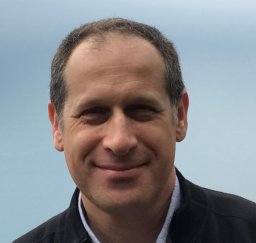 L. V. Gasparov合作论文数2. Physikalisches Institut, Institute for Solid State Physics2
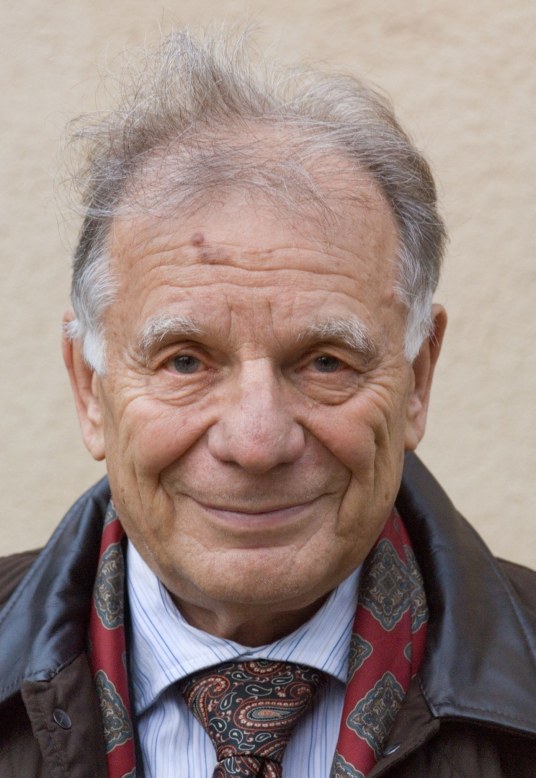 Zhores I. Alferov (若列斯·阿尔费罗夫)合作论文数Saint Petersburg Academic University2V. Yu. Glushchenko合作论文数2
 Mikhail V Sadovskii合作论文数Institute for Electrophysics, Russian Academy of Sciences2Sergei V Gaponov合作论文数2Kev M Salikhov合作论文数Physical-Technical Institute Kazan, Russian Academy of Sciences Kazan2E G Ponyatovskiĭ合作论文数2D. V. Kulakovskii合作论文数2V. Sh. Shekhtman合作论文数2
 Leonty Miroshnichenko合作论文数Instituto de Geofisica2
 Gennadii Andreevich Mesyats合作论文数Lebedev Physical Institute, Russian Academy of Sciences2Aleksandr I. Smirnov合作论文数2Mikhail I. Eremets合作论文数2
 Ilgiz A. Garifullin合作论文数Zavoisky Physical-Technical Institute Kazan2A. Yu Rumyantsev合作论文数2




