Estimations of counting rates of neutron spectrometers in experiments on controlled fusion with magnetic confinement, as well as calculations of energy resolved flux densities of fusion neutrons from plasma to the walls of a reactor require spatial integration of the local, usually anisotropic function of the neutron source. The integrated modeling consists of three main stages. First, sources of fast particles in beam- or wave-heated plasma are calculated. The next stage deals with spatial, energetic, and angular velocity distributions of plasma ions. Finally, double differential rate coefficients of nuclear fusion reactions are computed. This article describes calculations of spatial distributions of nuclear fusion reaction rates in classical and spherical tokamaks and the anisotropy of the neutron yield and spectra. The results are based on analytical formulas for energetic and angular distributions of the local source of fusion products in plasma. Examples of energetic spectral densities of neutron fluxes on first walls are presented, as well as energy resolved counting rates of collimated neutron spectrometers for perpendicular and tangential lines of sight.
Velocity distributions of fuel nuclei enter the formulae for distributions of products of fusion reactions in plasma. The formulae contain multiple integration, which is a computationally heavy task. Therefore, simplifications of the integrand are advantageous. One of possible simplifications is the use of closed-form analytical distributions of fast deuterons and tritons, accounting for slowing down and pitch-angle scattering and neglecting the speed diffusion. The plausibility of such a model has been studied from the viewpoint of its influence on the calculated spectra of fusion neutrons. Calculations have shown that the speed diffusion effect on suprathermal ion distribution tails does not significantly alter the qualitative behaviour of energy and angle distributions of fusion products in a beam-heated plasma.
Mathematical modelling of heating and current drive as well as yields and distributions of fusion products in a magnetically confined plasma subject to neutral beam injection requires, in turn, modelling of distributions of fast ions, which is a complex task including calculations of the source of suprathermal particles, i.e., the number of fast ions occurring in unit volume during unit time owing to the injection of fast atoms. The knowledge of the magnetohydrodynamic equilibrium, beam injection geometry and spatial distribution of the magnetic field are the necessary prerequisites. Explicit general analytical formulae for the source of fast ions have been obtained by two different methods. In addition, a method of statistical modelling is presented. Calculations of spatial and angular distributions of the fast ion source for a tokamak and verifications of the obtained results have been performed by a number of methods.
This work presents a new two-step approach for elementary particle tracking that combines the advantages of both local and global tracking algorithms. On the first stage, where the graph of possible track-candidates is too big to fit into memory, a recurrent neural network model TrackNETv3 is used for building track candidates. On the second stage there is a graph neural network GraphNet needed for clearing the graph from the fake segments. The results of testing the proposed approach on the 3,2 GeV Ar+Pb simulation for the BM@N RUN7 are presented.
Particle tracking is an essential part of any high-energy physics experiment. Well-known tracking algorithms based on the Kalman filter are not scaling well with the amounts of data being produced in modern experiments. In our work we present a particle tracking approach based on deep neural networks for the BM@N experiment and future SPD experiment. We have already applied similar approaches for BM@N RUN 6 and BES-III Monte-Carlo simulation data. This work is the next step in our ongoing study of tracking with the help of machine learning. Revised algorithms - combination of Recurrent Neural Network (RNN) and Graph Neural Network (GNN) for the BM@N RUN 7 Monte-Carlo simulation data, and GNN for the preliminary SPD Monte-Carlo simulation data are presented. Results of the track efficiency and processing speed for both experiments are demonstrated.
The reconstruction of charged particle trajectories in tracking detectors is a key problem in the analysis of experimental data for high-energy and nuclear physics. The amount of data in modern experiments is so large that classical tracking methods, such as the Kalman filter, cannot process them fast enough. To solve this problem, we developed two neural network algorithms based on deep learning architectures for track recognition in pixel and strip-based particle detectors. These are TrackNETv3 for local (track by track) and RDGraphNet for global (all tracks in an event) tracking. These algorithms were tested using the GEM tracker of the BM@N experiment at JINR (Dubna) and the cylindrical GEM inner tracker of the BESIII experiment at IHEP CAS (Beijing). The RDGraphNet model, based on a reverse directed graph, showed encouraging results: 95% recall and 74% precision for track finding. The TrackNETv3 model demonstrated a recall value of 95% and 76% precision. This result can be improved after further model optimization.
The applicability of neutral particle diagnostics for studying plasma parameters and additional methods of heating in the Tokamak with Reactor Technologies is analyzed. Options for the arrangement of diagnostic equipment, which includes three analyzers of charge-exchange atoms (neutral particle analyzers) for different energy ranges of recorded atomic fluxes, are given. It is shown that the diagnostic complex of analyzers makes it possible to measure the distribution functions of plasma thermal ions and to obtain information on the isotopic ratio of the main plasma ion component in the deuterium–tritium mode of facility operation. In addition, the proposed geometry of the analyzer arrangement makes it possible to measure the energy distribution of fast ions, which arise during neutral beam injection and ion cyclotron heating of plasma.
Triplet loss function is one of the options that can significantly improve the accuracy of the One-shot Learning tasks. Starting from 2015, many projects use Siamese networks and this kind of loss for face recognition and object classification. In our research, we focused on two tasks related to vegetation. The first one is plant disease detection on 25 classes of five crops (grape, cotton, wheat, cucumbers, and corn). This task is motivated because harvest losses due to diseases is a serious problem for both large farming structures and rural families. The second task is the identification of moss species (5 classes). Mosses are natural bioaccumulators of pollutants; therefore, they are used in environmental monitoring programs. The identification of moss species is an important step in the sample preprocessing. In both tasks, we used self-collected image databases. We tried several deep learning architectures and approaches. Our Siamese network architecture with a triplet loss function and MobileNetV2 as a base network showed the most impressive results in both above-mentioned tasks. The average accuracy for plant disease detection amounted to over 97.8 % and 97.6 % for moss species classification.
Tracking is an important task in the field of High Energy physics. Modern experiments produceenormous amounts of data, and classical tracking algorithms cannot reach required computingefficiency. This lead to the need to develop new methods, some of them use neural network models.In our work we present modifications of previously developed model, TrackNetV2. This model and itsdescendants showed great results for Monte-Carlo simulations of experiments with microstrip-basedGEM detectors: BESIII and BM@N RUN6. In this work we adapt it to more complex scenario forBM@N RUN7. The work showed limitations in architecture and training procedure, which arereworked later.
The recognition of particle trajectories (tracks) from experimental measurements plays a key role in the reconstruction of events in experimental high-energy physics. Knowledge about the primary vertex of an event can significantly improve the quality of track reconstruction. To solve the problem of primary vertex finding in the BESIII inner tracking detector we applied the LOOT program which is a deep convolutional neural network that processes all event hits at once, like a three-dimensional image. We used mean absolute error to measure the quality of the trained model, but a thorough analysis of the results showed that this metric by itself is inadequate without considering output distributions of the vertex coordinates. Correcting all errors allowed us to propose special corrections to the loss function that gave quite acceptable results. The process of our problem investigation and itsoutcomes are presented.
Particle tracking is a fundamental part of the event analysis in high energy and nuclear physics (HENP). Events multiplicity increases each year along with the drastic growth of the experimental data which modern HENP detectors produce, so the classical tracking algorithms such as the well-known Kalman filter cannot satisfy speed and scaling requirements. At the same time, breakthroughs in the study of deep learning open an opportunity for the application of high-performance deep neural networks for solving tracking problems in a dense environment of experiments with heavy ions. However, there are no well-documented software libraries for deep learning track reconstruction yet. We introduce Ariadne, the first open-source library for particle tracking based on the PyTorch deep learning framework. The goal of our library is to provide a simple interface that allows one to prepare train and test datasets and to train and evaluate one of the deep tracking models implemented in the library on the data from your specific experiment. The user experience is greatly facilitated because of the system of gin-configurations. The modular structure of the library and abstract classes let the user develop his data processing pipeline and deep tracking model easily. The proposed library is open-source to facilitate academic research in the field of particle tracking based on deep learning.
Modern machine learning (ML) tasks and neural network (NN) architectures require huge amounts ofGPU computational facilities and demand high CPU parallelization for data preprocessing. At thesame time, the Ariadne library, which aims to solve complex high-energy physics tracking tasks withthe help of deep neural networks, lacks multi-GPU training and efficient parallel data preprocessing onthe CPU.In our work, we present our approach for the Multi-GPU training in the Ariadne library. We willpresent efficient data-caching, parallel CPU data preprocessing, generic ML experiment setup forprototyping, training, and inference deep neural network models. Results in terms of speed-up andperformance for the existing neural network approaches are presented with the help of GOVORUNcomputing resources.
Academician A. D. Sakharov’s idea concerning the emission of atomic flux from hot plasma (1951) inspired scientists of A. F. Ioffe Physico-Technical Institute to create the first in the world instrument called Neutral Atom Analyzer in 1960 and then in 1961 to use it successfully on the Alpha device (USSR, 1958–1963). Now the analysis of fluxes of fast atoms referred to as Neutral Particle Analysis (NPA) is one of the main diagnostic methods for the ion component of plasma in tokamaks, stellarators, and other devices. NPA provides a unique opportunity for studying the ion distribution functions, ion temperatures and hydrogen isotope ratio in hot plasma. Neutral particle analyzers developed at the Ioffe Institute were widely used in the USSR until the late 1970s, and afterwards began to be employed worldwide. Since then, most of the information on the ion distribution functions and the behavior of fast ions in fusion plasma is obtained from NPA measurements on all leading magnetic confinement fusion systems worldwide. The specialized complex of atom analyzers currently being created at the Ioffe Institute is included in the primary list of ITER diagnostics. The integration of this complex on ITER is expected to begin in 2025.
Particle tracking in modern high-energy physics experiments is a challenging task. Well-proven algorithms are no longer capable of providing satisfactory results in terms of processing throughput due to an enormous amount of data being produced through the detector's environments. At the same time, Graph Neural Networks (GNN) have shown great potential, namely the GNN approach, which was introduced by the HEP.TrkX project at LHC. We have already applied such approach for the BM@N experiment of the NICA megaproject and, despite the fact that the straightforward adaptation of the original approach did not achieve significant results for the simulated data from the BM@N GEM detector, we proposed a novel Line Digraph approach with the usage of GNN model, which demonstrated a big potential in the BM@N GEM detector's fixed target environment. Because of such success, we decided to adapt our algorithm to experiments with the collider environment, such as BES-III experiment in China. The overall potential of Line Digraph approach generalization is demonstrated: we achieved encouraging results in terms of tracking efficiency and processing speed on Monte-Carlo simulated data.
Deep learning models named transformers achieved state-of-the-art results in a vast majority of NLP tasks at the cost of increased computational complexity and high memory consumption. Using the transformer model in real-time inference becomes a major challenge when implemented in production, because it requires expensive computational resources. The more executions of a transformer are needed the lower the overall throughput is, and switching to the smaller encoders leads to the decrease of accuracy. Our paper is devoted to the problem of how to choose the right architecture for the ranking step of the information retrieval pipeline, so that the number of required calls of transformer encoder is minimal with the maximum achievable quality of ranking. We investigated several late-interaction models such as Colbert and Poly-encoder architectures along with their modifications. Also, we took care of the memory footprint of the search index and tried to apply the learning-to-hash method to binarize the output vectors from the transformer encoders. The results of the evaluation are provided using TREC 2019-2021 and MS Marco dev datasets.
The SPD (Spin Physics Detector) is a planned spin physics experiment in the second interaction pointof the NICA collider that is under construction at JINR. The main goal of the experiment is the test ofbasic of the QCD via the study of the polarized structure of the nucleon and spin-related phenomena inthe collision of longitudinally and transversely polarized protons and deuterons at the center-of-massenergy up to 27 GeV and luminosity up to 1032 1/(cm2 s). The data rate at the maximum designluminosity is expected to reach 0.2 Tbit/s. Current approaches to SPD computing and offline softwarewill be presented. The plan of the computing and software R&D in the scope of the SPD TDRpreparation will be discussed.
The track recognition process (tracking) plays a key role in the event reconstruction in high energy physics. Our study is devoted to tracking for the proposed inner detector of the BES-III experiment, which has only three cylindrical GEM stations. This means, if a particle is registered only at two out of three stations, then its track in the magnetic field cannot be restored without additional information. Such information can be the coordinates of the primary event vertex, from which all tracks exit. Knowing the location of the primary vertex would also help to improve the precision in determining the particle momentum. Besides, it leads to the significant reduction of the algorithmic complexity during the track-candidate search – from O(n2) to O(n), and can improve the overall track reconstruction efficiency. It should also be noted that tracking is especially complicated for strip GEM detectors due to their design specifics, which leads to the appearance of two orders of magnitude more fake hits in addition to useful ones. To solve the problem of vertex finding for the inner detector of the BES-III experiment, we chose a deep convolutional neural network model Look Once On Tracks (LOOT), which processes the whole event at once, as an image, and after proper training can predict the coordinates of the primary vertex location. In this work, the preliminary results of primary vertex prediction on the BES-III simulated data using the LOOT model are presented.
The BESIII experiment is a multi-purpose detector operating at the beams of the electron-positron collider BEPCII in Beijing. Particle tracking is a fundamental part of data analysis for this experiment. The inner part of the BESIII tracker suffers from a strong beam-related background, which significantly reduces tracking efficiency for low-pT tracks and the physics performance of the experiment. The inner part of the tracker will be replaced with the CGEM detector, which is expected to have a better performance in the presence of a strong background. At the same time, it will produce a large number of fake hits. Traditional algorithmic solutions rely on hand-engineered features and metrics, do not parallelize easily, and scale poorly with detector occupancy. In this paper we present our solution for identification and reconstruction of tracks based on deep neural network called TrackNETv2. This model is lightweight, efficient and can be trained using Monte-Carlo simulation. TrackNETv2 was proposed for another experiment BM@N and proved its usefulness for task of particle tracking. Due to architectural restrictions we added some new blocks for this model developing it to TrackNetv2.1. In this paper we evaluated these ideas on simulated data and discussed its strengths and limitations for application in the BESIII tracking challenge.
We introduce the Plant Disease Detection Platform (PDDP) that allows users to send photos of sick plant leaves or textual descriptions of their appearance to obtain information about an infection that hit the vegetation and treatment tips. The backend of the platform in terms of deep learning includes image classification and text similarity models. The image classification model has two parts: feature extractor and classifier. The feature extractor was trained using the triplet loss function along with transfer learning when the weights of the network are initialized from the MobileNetV2 pretrained on the ImageNet dataset. The classifier is a simple multilayer perceptron. The test on 100 random plant images from the Internet shows 98% of the classification accuracy. We did the post-training static quantization in order to reduce the overall model size and increase the inference performance. The final model has a size of 7 Mb and works 5 times faster than the initial model without significant loss of accuracy. The text similarity model is a BERT-based transformer for obtaining vector representation of input texts for further similarity calculation between user requests and disease descriptions on the PDDP.
Crop losses due to plant diseases isa serious problem for the farming sector of agricultureand the economy. Therefore, a multi-functional Plant Disease Detection Platform (PDDP) was developed in the LIT JINR. Deep learning techniques are successfully used in PDDP to solve the problem of recognizing plant diseases from photographs of their leaves. However, such methods require a large training dataset. At the same time, there are number of methods used to solve classification problems in cases of a small training dataset, asfor example,domain adaptation(DA)methods.In this paper, a comparative study of three DA methods is performed:Domain-Adversarial Training of Neural Networks (DANN), two-steps transfer learning and Unsupervised Domain Adaptation with Deep Metric Learning (M-ADDA).The advantage of the M-ADDA methodwas shown, which allowed toachieve 92% ofclassification accuracy.
 Tsuneyuki Ozaki合作论文数Laboratoire Pour la Production d’Impulsions Laser Energétiques et Isolées Dans le Régime de l’Attoseconde, Institut National de la Recherche Scientifique61
 S. Sudo合作论文数57
 Naoyuki Tamura合作论文数38
 Masaki Osakabe (長壁正樹)合作论文数National Institute for Fusion Science, National Institute of Natural Sciences35
 S Murakami合作论文数33
 Yasuhiko Takeiri合作论文数31Sasao M合作论文数29Kazuo Kawahata合作论文数29
 Mitsutaka Isobe (磯部光孝)合作论文数National Institute for Fusion Science29Hisamichi Funaba合作论文数28k narihara合作论文数26
 t seki合作论文数26Takashi Mutoh合作论文数26
 y nagayama合作论文数Natl Inst Fus Sci25
 Osamu Motojima合作论文数The National Institute for Fusion Science, National Institutes of Natural Sciences25
 Tokihiko Tokuzawa合作论文数25
 Satoru Sakakibara (榊原悟)合作论文数Research Department, National Institute for Fusion Science;High-Temperature Plasma Physics Research Division, The Graduate University for Advanced Studies, SOKENDAI;Department of Helical Plasma Research, National Institute for Fusion Science;Graduate Institute for Advanced Studies, The Graduate University for Advanced Studies, SOKENDAI25t shimozuma合作论文数24
 Hideya Nakanishi合作论文数Natl Inst Fus Sci24
 M. Emoto合作论文数24
 Satoshi Ohdachi (大舘暁)合作论文数High density plasma research division, National Institute for Fusion Science24V. Yu. Sergeev合作论文数23
 Naoko Ashikawa合作论文数National Institute for Fusion Science23TOI K合作论文数National Institute for Fusion Science,23
 Mikirou Yoshinuma (吉沼幹朗)合作论文数National Institute for Fusion Science23
 Shigeru Inagaki合作论文数Research Institute for Applied Mechanics, Kyushu University23Ryuhei Kumazawa合作论文数23Nobuyoshi Ohyabu合作论文数23
 IDA, Katsumi合作论文数National Institute for Fusion Science;Particle Measurement Research Section, High-Temperature Plasma Physics Research Division, The Graduate University for Advanced Studies23
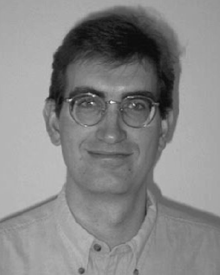 BJ Peterson合作论文数22
 Mikio Shoji合作论文数Dementia reserch Center, Geriatrice Research Institute and Hopspital22T. Saida合作论文数22
 Junichi Miyazawa合作论文数22M. Yokoyama合作论文数22
 Suguru Masuzaki合作论文数Department of Helical Plasma Research, National Institute for Fusion Science22T Notake合作论文数21S Kubo合作论文数21Y. Narushima合作论文数21T Kobuchi合作论文数21R. Sakamoto合作论文数21
 Akio Sagara (相良明男)合作论文数Helical Fusion Co., Ltd.;Department of Quantum Science and Energy Engineering, Graduate School of Engineering, Tohoku University;SOKENDAI;National Institute for Fusion Science21Y. Oka合作论文数21T Watari合作论文数21A. Komori合作论文数20
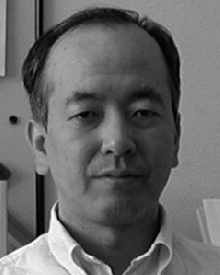 T. Morisaki合作论文数20
 O. Kaneko合作论文数20
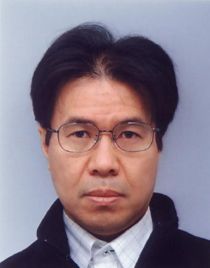 Kiyomasa Y. Watanabe (渡邊清政)合作论文数High Density Plasma Physics Research Devision, National Institute for Fusion Science, National Instsitutes of Natural Siences;Energy Engineering Department, Graduate School of Engineering, Nagoya University20S. Muto合作论文数20Yoshio Yoshimura合作论文数20




