A spherical tokamak (ST) with an internal transport barrier (ITB) has the potential to be an ideal fusion power reactor because it not only offers high beta performance and blanket replaceability, but also enables self-sustaining operation through a high bootstrap (BS) current. This paper investigates the downsizing of an ST using high-temperature superconductors (HTSs) and ITB. Plasma parameters are evaluated using a set of plasma burning equations, including the BS current equation and time-dependent 0D energy and particle balance equations, assuming that the energy confinement time is given by HH multiplied by the IPB98y2 scaling law. In reactors using Nb3Sn magnets, the minimum achievable size is determined by the beta limit due to the lower maximum magnetic field. In contrast, HTS reactors can operate at higher magnetic fields, providing a greater margin for beta, so the minimum size is determined by confinement conditions such as the HH factor, impurity concentration, and alpha power density. As a case study, we present a conceptual design for an HTS-based ST reactor named JUST-3 (R= 2.9 m, A = 1.7, Bt = 2.6 T, IBS = 17.6 MA, Pf = 1 GW).
A concept for a Steady-state Superconducting Advanced Spherical Tokamak Reactor (SASTR) with a slim-CS is proposed. This is a spherical tokamak (ST) with an internal transport barrier (ITB) and superconducting magnets. The ITB allows for sufficient bootstrap (BS) current to sustain the plasma. The feasibility of a self-sustained SASTR is investigated by using a set of plasma burning equations. We find that the toroidal magnetic field and the confinement enhancement factor are key parameters to meet the beta limit and density limit criteria, respectively. We estimate the dependence of the cost of electricity (COE) on the aspect ratio and reactor size. We present a conceptual design of a 0.8 GWe SASTR power reactor with a major radius of 4.5 m, an aspect ratio of 1.8, a toroidal field of 2.67 T generated by Nb3Sn superconducting magnets, and a plasma current of 24.5 MA driven fully by the BS current.
An O-mode microwave imaging reflectometry system has been installed in a spherical tokamak named TST-2. The illumination wave frequency is 23 - 32 GHz, which corresponds to the cutoff electron density of 0.65 - 1.3 x 10(19) m(-3). The microwave image of the scattered wave is formed on an imaging detector named horn-antenna millimeter-wave imaging detector by imaging optics that consist of an ellipsoidal aluminum mirror, a Teflon lens, and a dielectric plate. The detected channel numbers are 6 (poloidal) x 6 (toroidal) x 2 (radial). The data of power and phase of the scattered wave are sampled every 0.5 mu s and are stored by the LABCOM system at the National Institute for Fusion Science via a private network named SNET. The scattered wave quickly fluctuates (similar to 5 mu s) and has a large amplitude (>100 times). From the time evolution of the phase at the internal reconnection event, it is inferred that the reduction in amplitude may be owing to the phase mixing of scattered wave in each detector channel. (C) 2020 The Japan Society of Plasma Science and Nuclear Fusion Research
Two different directions of scale-to-scale energy transfer that corresponds to forward and inverse energy cascades, respectively, were clarified in toroidal plasma turbulence by means of experimental analysis. In the present work we first report the evidence that the turbulence dominated by broad wavenumber spectrum was developed under the action of forward (direct) energy cascade in a reversed field pinch (RFP) plasma, while the generation of GAM zonal flow (ZF) was related with the energy concentrating into low frequency region from higher frequency region due to inverse energy cascade in a tokamak plasma. The two evidences are compared. The results indicate a modulation mechanism in turbulence which is relative to the generation or development of specific turbulent flows. This hints a correlation between energy transfer and the development of toroidal plasma turbulence.
Progress in microwave and millimeter-wave technologies has made possible advanced diagnostics for application to various fields, including radio astronomy, alien substance detection, plasma diagnostics, airborne and space-borne imaging radars called as synthetic aperture radars, and living body measurements. Transmission, reflection, scattering, and radiation processes of electromagnetic waves are utilized as diagnostic principles. The diagnostics are classified as active and passive systems. Specifically, active radar reflectometry has become of importance in various applications due to the possibility of high localization and accessibility of the measurements as well as the non-invasive nature of the systems. In this paper, recent development and application of radar reflectometers are described. The key words are profile reflectometry, fluctuation reflectometry, imaging radar (optics imaging and synthetic aperture imaging), and radio-optics fusion technology in order to improve the spatial resolution.
A multi-channel phase calibration is simplified by installation of direct-conversion receiver into ultra-wideband (UWB) microwave mammography system for early breast cancer screening. The system works as a multi-channel frequency-modulated (FM) interferometer at the frequency range of 1 to 6 GHz. The phase calibration method under construction will be useful to get precise medical images beyond the diffraction limit.
Progress in microwave and millimeter-wave technologies has made possible advanced diagnostics for application to various fields, including radio astronomy, alien substance detection, plasma diagnostics, airborne and space-borne imaging radars called as synthetic aperture radars, and living body measurements. Transmission, reflection, scattering, and radiation processes of electromagnetic waves are utilized as diagnostic principles. The diagnostics are classified as active and passive systems. Specifically, active radar reflectometry has become of importance in various applications due to the possibility of high localization and accessibility of the measurements as well as the non-invasive nature of the systems. In this paper, recent development and application of radar reflectometers are described. The key words are profile reflectometry, fluctuation reflectometry, imaging radar (optics imaging and synthetic aperture imaging), and radio-optics fusion technology in order to improve the spatial resolution.
Antenna for the microwave CT mammography is under development. Matching between FDTD simulation and measurement is investigated on the antipodal Vivaldi antenna that is formed on a 1.6 mm thick FR4 printed-circuit-board substrate. The result suggests that FDTD simulation and measurement can be matched by considering the mesh size, the frequency dispersion of permittivity, and removal of reflections.
A new electron cyclotron emission imaging antenna was designed and installed outside the torus on LHD. To improve the signal quality, we developed a local oscillator integrated antenna array (LIA), in which each channel has an internal local oscillation supply from a frequency-multiplier-integrated circuit. The labyrinth structure of the optical system comprises five mirrors to protect the LIA from plasma neutron emission. The initial results were obtained from the 2017 LHD experimental campaign. The MHD fluctuations and their fluctuation profiles were observed. (C) 2018 The Japan Society of Plasma Science and Nuclear Fusion Research
The two-dimensional (2-D) Horn-antenna Millimeter-wave Imaging Device (HMID) has been developed for the O-mode Microwave Imaging Reflectometry (O-MIR) in the Large Helical Device (LHD). The detectable frequency range of the HMID is 23-33 GHz, which corresponds to the cutoff electron density of 0.8-1.5 X 10(19) m(-3) in the O-MIR. The HMID is a 2-D imaging device that improves on the horn-antenna mixer array, which had been developed for the X-mode MIR in the LHD. In the HMID, the signal (RF) wave from the horn antenna is transmitted to the microstrip line by the finline transmitter, and this is mixed by the double-balanced-mixer with the local oscillation wave that is fed by a coaxial cable. By using the HMID, the MIR optical system can be significantly simplified. Published by AIP Publishing.
As the finalization of a hydrogen experiment towards the deuterium phase, the exploration of the best performance of hydrogen plasma was intensively performed in the large helical device. High ion and electron temperatures, T-i and T-e, of more than 6 keV were simultaneously achieved by superimposing high-power electron cyclotron resonance heating onneutral beam injection (NBI) heated plasma. Although flattening of the ion temperature profile in the core region was observed during the discharges, one could avoid degradation by increasing the electron density. Another key parameter to present plasma performance is an averaged beta value . The high regime around 4% was extended to an order of magnitude lower than the earlier collisional regime. Impurity behaviour in hydrogen discharges with NBI heating was also classified with a wide range of edge plasma parameters. The existence of a no impurity accumulation regime, where the high performance plasma is maintained with high power heating > 10 MW, was identified. Wide parameter scan experiments suggest that the toroidal rotation and the turbulence are the candidates for expelling impurities from the core region.
Author(s) Toi, K.; Watanabe, F.; Tokuzawa, T.; Ida, K.; Morita, S.; Ido, T.; Shimizu, A.; Isobe, M.; Ogawa, K.; Spong, D. A.; Todo, Y.; Watari, T.; Ohdachi, S.; Sakakibara, S.; Yamamoto, S.; Inagaki, S.; Narihara, K.; Osakabe, M.; Nagaoka, K.; Narushima, Y.; Watanabe, K. Y.; Funaba, H.; Goto, M.; Ikeda, K.; Ito, T.; Kaneko, O.; Kubo, S.; Murakami, S.; Minami, T.; Miyazawa, J.; Nagayama, Y.; Nishiura, M.; Oka, Y.; Sakamoto, R.; Shimozuma, T.; Takeiri, Y.; Tanaka, K.; Tsumori, K.; Yamada, I.; Yoshinuma, M.; Kawahata, K.; Komori, A.
We report the first observation of the formation of a magnetic island before the occurrence of mode locking in helical plasma. New analysis and observation techniques applied to the ECE signal and poloidal flow in LHD experiments yield the following results. (i) A magnetic island structure is present, rotating at the end of the rotating phase. (ii) The rotation speed of the island is not uniform in space and time. The rotation of the island changes significantly at the end of the rotating phase, and the deformation increases until the mode is locked.
Electron cyclotron emission (ECE) imaging is a passive radiometric technique that measures electron temperature fluctuations; and microwave imaging reflectometry (MIR) is an active radar imaging technique that measures electron density fluctuations. Microwave imaging diagnostic instruments employing these techniques have made important contributions to fusion science and have been adopted at major fusion facilities worldwide including DIII-D, EAST, ASDEX Upgrade, HL-2A, KSTAR, LHD, and J-TEXT. In this paper, we describe the development status of three major technological advancements: custom mm-wave integrated circuits (ICs), digital beamforming (DBF), and synthetic diagnostic modeling (SDM). These have the potential to greatly advance microwave fusion plasma imaging, enabling compact and low-noise transceiver systems with real-time, fast tracking ability to address critical fusion physics issues, including ELM suppression and disruptions in the ITER baseline scenario, naturally ELM-free states such as QH-mode, and energetic particle confinement (i.e. Alfven eigenmode stability) in high-performance regimes that include steady-state and advanced tokamak scenarios. Furthermore, these systems are fully compatible with today's most challenging non-inductive heating and current drive systems and capable of operating in harsh environments, making them the ideal approach for diagnosing long-pulse and steady-state tokamaks.
Nationally coordinated research on spherical tokamak is being conducted in Japan. Recent achievements include: (i) plasma current start-up and ramp-up without the use of the central solenoid by RF waves (in electron cyclotron and lower hybrid frequency ranges), (ii) plasma current start-up by AC Ohmic operation and by coaxial helicity injection, (iii) development of an advanced fuelling technique by compact toroid injection, (iv) ultra-long-pulse operation and particle control using a high temperature metal wall, (v) access to the ultra-high-β regime by high-power reconnection heating, and (vi) improvement of spherical tokamak plasma stability by externally applied helical field.
 Kazuo Kawahata合作论文数235
 Shigeru Inagaki合作论文数Research Institute for Applied Mechanics, Kyushu University179
 Tokihiko Tokuzawa合作论文数172t shimozuma合作论文数121S Kubo合作论文数113Nobuyoshi Ohyabu合作论文数112
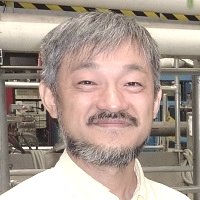 Hideya Nakanishi合作论文数Natl Inst Fus Sci111
 IDA, Katsumi合作论文数National Institute for Fusion Science;Particle Measurement Research Section, High-Temperature Plasma Physics Research Division, The Graduate University for Advanced Studies110k narihara合作论文数109
 Yasuhiko Takeiri合作论文数108
 M. Emoto合作论文数107
 Masaki Osakabe (長壁正樹)合作论文数National Institute for Fusion Science, National Institute of Natural Sciences107
 Satoru Sakakibara (榊原悟)合作论文数Research Department, National Institute for Fusion Science;High-Temperature Plasma Physics Research Division, The Graduate University for Advanced Studies, SOKENDAI;Department of Helical Plasma Research, National Institute for Fusion Science;Graduate Institute for Advanced Studies, The Graduate University for Advanced Studies, SOKENDAI107
 Suguru Masuzaki合作论文数Department of Helical Plasma Research, National Institute for Fusion Science106A. Komori合作论文数105
 S. Sudo合作论文数105Takashi Mutoh合作论文数104
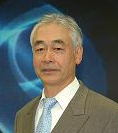 Osamu Motojima合作论文数The National Institute for Fusion Science, National Institutes of Natural Sciences100
 Junichi Miyazawa合作论文数100Hisamichi Funaba合作论文数97
 Kiyomasa Y. Watanabe (渡邊清政)合作论文数High Density Plasma Physics Research Devision, National Institute for Fusion Science, National Instsitutes of Natural Siences;Energy Engineering Department, Graduate School of Engineering, Nagoya University95
 BJ Peterson合作论文数94R. Sakamoto合作论文数93
 T. Morisaki合作论文数92
 O. Kaneko合作论文数91
 Satoshi Ohdachi (大舘暁)合作论文数High density plasma research division, National Institute for Fusion Science89
 Mikio Shoji合作论文数Dementia reserch Center, Geriatrice Research Institute and Hopspital87Ryuhei Kumazawa合作论文数87
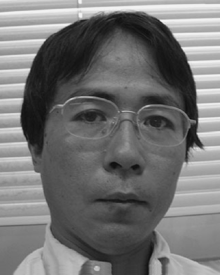 Yamada Ikuya合作论文数84Yoshio Yoshimura合作论文数83
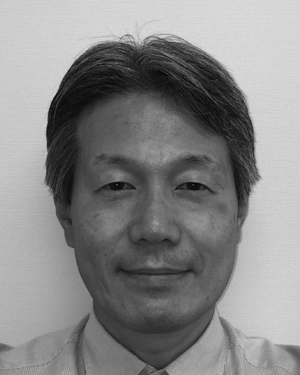 S Murakami合作论文数82
 Hiroshi Idei合作论文数82
 Naoko Ashikawa合作论文数National Institute for Fusion Science81TOI K合作论文数National Institute for Fusion Science,80H Yamada合作论文数79Kiyohiko Nishimura合作论文数79Naoyuki Tamura合作论文数79Y. Oka合作论文数76
 K. Tsumori合作论文数74N. Noda合作论文数74
 t seki合作论文数74
 Akio Sagara (相良明男)合作论文数Helical Fusion Co., Ltd.;Department of Quantum Science and Energy Engineering, Graduate School of Engineering, Tohoku University;SOKENDAI;National Institute for Fusion Science72T Watari合作论文数72
 M. Goto合作论文数National Institute for Fusion Science71M. Yokoyama合作论文数71S. Morita合作论文数70Sasao M合作论文数70Kunizo Ohkubo合作论文数70Kenji Ikeda合作论文数70




