Nuclear astrophysics is an interdisciplinary research field.It composes of nuclear physics,which studies micro phenomena,and astrophysics which studies macroscopic phenomena in our world.The main research goals of nuclear astrophysics are:(1) how,when and where chemical elements are synthesized and what is their final abundance distribution in the universe;(2) how nuclear processes (reactions induced by charged particles,neutrons,photons and neutrinos,beta decays and electron capture processes) determine the evolution and the ultimate fate of stars.At present,nuclear astrophysics has been developed into a new prosperous stage with a huge number of experimental and theoretical progresses.This paper summarized the current progress of nuclear astrophysics in China,in the subfiels of direct and indirect measurement of key reactions,measurement of mass and decay,as well as the theoretical calculation and network simulation.In present paper,the prospects to solve the key scientific nuclear astrophysics problems are represented.These key problems include (1) direct measurement of important reactions at astrophysical energies in the laboratory on the earth surface and in the underground laboratory;(2)extrapolation of cross sections at higher energies for the reactions induced by charged particles;(3)indirect measurement of key reactions in the hydrostatic and explosive nuclear processes;(4) study of the mass,the properties of decay and resonant states for the nuclides far from the stability line in explosive astrophysical events;(5) establish and improve the database for nuclear astrophysics,and develop network simulation codes,and systematically study astrophysical sites and abundance distribution of nucleosynthesis;(6) origin of the elements heavier than iron in the universe.
The proton decay of 53Com(3174.1 keV; 19/2−) was investigated via the fragmentation of a 58Ni primary beam. The proton-decay energy was determined with an improved precision to be 1558(8) keV. With this new result and the mass of 53Com, the 52Fe mass excess was derived to be −48330(8) keV, which is in good agreement with the AME12 value. A new recommended value of −48331.6(49) keV is given.
The 22 Na secondary beam was produced via the 1 H(22 Ne ,22 Na)n reaction at the CNS Radioactive Ion Beam separator (CRIB) in University of Tokyo .After the separation and purification with the electric‐magnetic system of the separator ,a high‐quality 22 Na secondary beam was delivered with energy of (78.3 ± 1.0) MeV ,intensity of about 2.5 × 10⁵ s-1 and purity better than 90% .The 22 Na secondary beam has been used for the study of the resonant scattering of 22 Na+α,w hich is related to the neon‐extraordinary problem in nuclear astrophysics .
用Q3D磁谱仪测量了15N(7Li,6Li)16N布居16N基态和前三个激发态的角分布。通过对实验数据的扭曲波玻恩近似(Distorted wave Born approximation,DWBA)分析,导出这些态的谱因子和渐进归一化系数(Asymptotic normalization coefficient,ANC),进而用新的谱因子得到15N(n,γ)16N的天体物理反应率。结果表明,尽管15N为中子满壳核,但16N中转移中子处于2s1/2轨道的两个能级并不是很好的单粒子能级,与壳模型的理论预言结论相反。
Lithium isotopes have attracted an intense interest because the abundances of both Li-6 and Li-7 from big bang nucleosynthesis (BBN) are the puzzles in nuclear astrophysics. Many investigations of astrophysical observation and BBN calculations have been carried out in order to solve the puzzles. Several nuclear reactions involving lithium have been determined at HI-13 tandem accelerator, Beijing, China. The BBN model calculations are then performed to investigate the primordial Lithium abundance. The result shows that these nuclear reactions have minimal effect on the primordial abundances of Li-6 and Li-7.
The angular distribution of 1 H( 6 He,p) 6 He elastic scattering has been measured at E c.m. = 4.3 MeV by using a thick-target inverse kinematic method. The experimental differential cross sections are reproduced by the distorted-wave Born approximation calculation utilizing the CH89 global optical potential parameter set. The real part of CH89 is reduced comparing with other potentials, which may be attributed to the couplings necessary for the weakly bound nuclei.
The 13C(α,n)16O reaction is believed to be the main neutron source reaction for the s-process in asymptotic giant branch (AGB) stars. The astrophysical S-factors of this reaction have been determined based on an evaluation of the α spectroscopic factor of the 1/2+ subthreshold state in 17O (Ex=6.356 MeV) by using the 13C(11B,7Li)17O α transfer reaction. Our result confirms that the 1/2+ subthreshold resonance is dominant for the 13C(α,n)16O reaction at low energies of astrophysical interest.
The 13C(7Li, 6He)14N reaction is measured at E(7Li) = 34 MeV with the Q3D magnetic spectrometer of HI-13 tandem accelerator. Angular distributions at forward angles for proton transfer to the ground and the first excited states in 14N are obtained. In addition, angular distribution for 7Li + 13C elastic scattering is also measured. The optical potential parameters for the entrance and exit channels of the transfer reactions are derived by fitting the 7Li + 13C and 6Li + 14N elastic scattering experimental data, and their angular distributions are well reproduced by the distorted wave Born approximation calculations. A phase shift of about 2° between the calculations and the experiment data has been found in the earlier (7Li, 6He) study, whereas no such phase shift is observed in the present work.
Angular distributions for the 7Li(6Li, 7Li)6Li elastic-transfer reaction have been measured with the Q3D magnetic spectrograph at the HI-13 tandem accelerator of Beijing, China. The neutron spectroscopic factors of 7Li are derived by comparing the calculated differential cross sections, which are obtained through the distorted-wave Born approximation (DWBA) calculation, to the experimental data. And these spectroscopic factors are then used to deduce the direct capture cross sections in 6Li(n, γ)7Li at energies of astrophysical relevance.
正大质量贫金属恒星的演化与其产生的CNO核数目紧密相关,快速αp俘获过程是产生CNO种子核的重要过程之一,它可改变大质量恒星的命运。12N(p,γ)13O反应是快速αp过程中的一个重要分支点。本工作首次测量了Ec.m.=8.4MeV的2H(12N,13O)n质子转移反应角分布。基于Johnson-Soper
The 13C(7Li, 6He) 14 N0,1 reactions were measured at E (7Li) = 34 MeV with the Q3D magnetic spectrometer of the HI-13 tandem accelerator, and the first peaks of the angular distributions were obtained for the first time. The 14N0,1 proton spectroscopic factors were extracted to be 0.67±0.09 and 0.73±0.10 , respectively. Using the 13C(p, γ) 14N direct capture S dc(E) factors derived by the spectroscopic factors, the direct measurement data for both 1− and 0− resonances were well fitted via updating the resonance parameters, and then the total astrophysical 13C(p, γ) 14N S(E) factors and reaction rates were determined at stellar energies. The present work offers an independent examination to the existing results of the 13 C(p, γ) 14N reaction.
The radiative capture reaction plays an important role in nuclear astrophysics. We have indirectly measured the astrophysical S(E) factors for some proton capture reactions and reaction rates for several neutron capture reactions with one nucleon transfer reactions at HI-13 tandem accelerator in recent years. Some of them are compiled into IAEA EXFOR database and JINA REACLIB project, and used in the network calculations of Big Bang nucleosynthesis and type-I X-ray bursts.
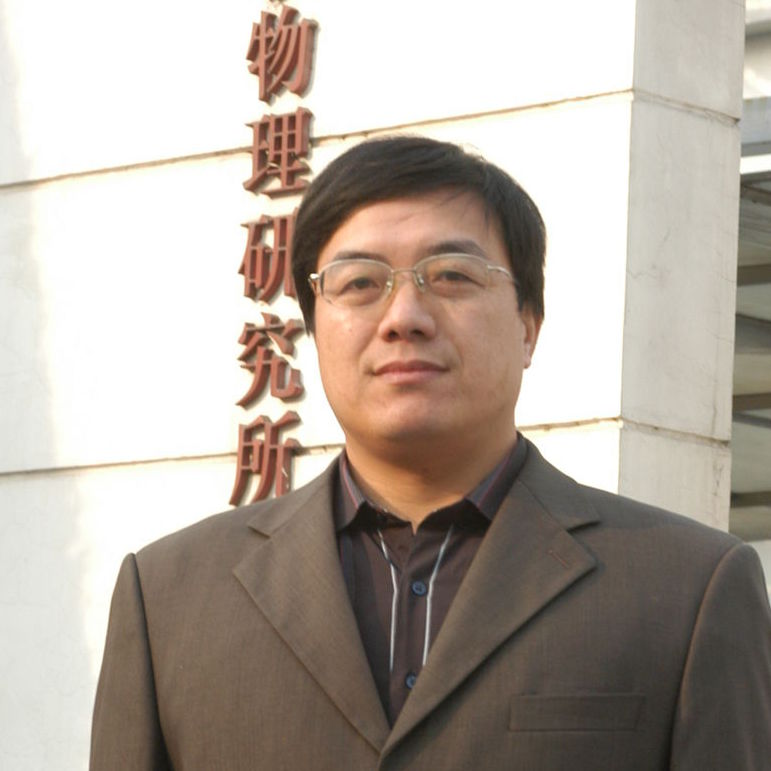
 Weiping Liu (柳卫平)合作论文数China Institute of Atomic Energy93
 Zhihong Li (李志宏)合作论文数中国原子能科学研究院86
 Bing Guo (郭冰)合作论文数China Institute of Atomic Energy79
 Y. B. Wang合作论文数Department of Mechanics;Lanzhou University;Department of Mechanics, Lanzhou University69
 Shengquan Yan (颜胜权)合作论文数China Institute of Atomic Energy65Wang Bao-Xiang (王宝祥)合作论文数60Li Yun-Ju合作论文数56
 Jun Su (苏俊)合作论文数School of Physics and Astronomy, Beijing Normal University55Cheng Ceng (曾晟)合作论文数40
 Ertao Li合作论文数36Zeng Sheng (曾晟)合作论文数33
 Yongshou Chen (陈永寿)合作论文数China Institute of Atomic Energy26Zhichang Li.合作论文数23Nc Shu合作论文数21
 Sunjun Jin (金孙均)合作论文数19Liu Jiancheng合作论文数15
 Qiwen Fan合作论文数13Qin Xing合作论文数13
 Gang Lian (廉刚)合作论文数Institute of Crystal Materials, Shandong University12Chao Jiang (蒋超)合作论文数10Shuhua Zhou合作论文数8AnLi Li (李安利)合作论文数7
 Baoxiang Wang (王保祥)合作论文数School of Mathematical Sciences, Peking University7Wuzhen Huang (黄悟真)合作论文数7
 Yinlu Han合作论文数China Institute of Atomic Energy7WeiJuan Zhao (赵维娟)合作论文数6
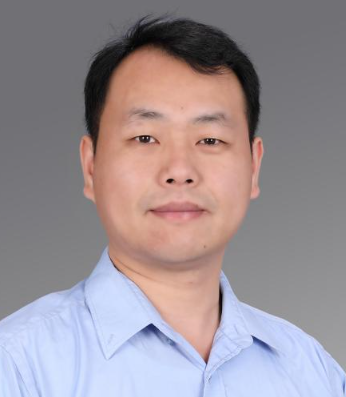 Danyang Pang (庞丹阳)合作论文数School of Physics, Beihang University6
 Liyang Jiang合作论文数5Guo Bing (郭 冰)合作论文数5Su Jun (苏 俊)合作论文数5Xin Liu合作论文数5Zhidan WU (吴志丹)合作论文数5Xiao Fang合作论文数5Kaisu Wu (吴开谡)合作论文数College of Science, Beijing University of Chemical Technology5Xianchao Du合作论文数4yun lu (陆昀)合作论文数4JiuChang Qin (秦久昌)合作论文数4
 Xiaodong Tang (唐晓东)合作论文数Institute of Modern Physics, Chinese Academy of Sciences4
 Jianjun He (何建军)合作论文数College of Nuclear Science and Technology, Beijing Normal University;Institute of Modern Physics, Fudan University4Zhanwen Ma合作论文数4
 s. Kubono合作论文数3xu jincheng合作论文数3youbao wang (王友宝)合作论文数3
 Naohito Iwasa合作论文数3D. Kahl合作论文数3Wang Yo-Bao合作论文数3




