For fully automated heavy-duty truck platoons, the uncertain behavior of surrounding traffic participants makes platooning control and stability extremely complex. This may lead to a deterioration in fuel efficiency and could even result in collisions. To mitigate the impact of traffic participants’ uncertainty and enhance fuel economy, this paper proposes an energy-efficient speed planning method for automated truck platoons considering uncertainty-aware trajectory prediction. In trajectory prediction uncertainty modeling, perceptual uncertainty is incorporated into the loss function of the prediction module to reduce overconfidence in long-horizon predictions. To generate accurate long-horizon platoon speed trajectories that better align with vehicle dynamic characteristics, vehicle response delays are identified and and integrated into the planning process. With varying levels of prediction uncertainty and response delays, the platoon speed planning method adapts more safely and proactively to multi-vehicle interaction scenarios. Experimental results from two representative traffic flow conditions demonstrate that the proposed method effectively enhances both safety and energy efficiency in complex traffic conditions, particularly in cut-in events.
Intelligent vehicles and autonomous driving systems rely on scenario engineering for intelligence and index (I I), calibration and certification (C C), and verification and validation (V V). To extract and index scenarios, various vehicle interactions are worthy of much attention, and deserve refined descriptions and labels. However, existing methods cannot cope well with the problem of scenario classification and labeling with vehicle interactions as the core. In this paper, we propose VistaScenario framework to conduct interaction scenario engineering for vehicles with intelligent systems for transport automation. Based on the summarized basic types of vehicle interactions, we slice scenario data stream into a series of segments via spatiotemporal scenario evolution tree. We also propose the scenario metric Graph-DTW based on Graph Computation Tree and Dynamic Time Warping to conduct refined scenario comparison and labeling. The extreme interaction scenarios and corner cases can be efficiently filtered and extracted. Moreover, with naturalistic scenario datasets, testing examples on trajectory prediction model demonstrate the effectiveness and advantages of our framework. VistaScenario can provide solid support for the usage and indexing of scenario data, further promote the development of intelligent vehicles and transport automation.
Human-leading automated truck platooning has been an effective technique to improve traffic capacity and fuel economy and eliminate uncertainties of the traffic environment. Aiming for a tradeoff between the dynamic response of car following and energy-efficient platooning control, a predictive information multiagent soft actor–critic (PI-MASAC) control framework is proposed for a human-leading automated heavy-duty-truck platoon. In this framework, predictive information of environmental dynamics is modeled as the state representation of a deep reinforcement learning algorithm to address the uncertainties of a partially observable environment. In the truck model, the impact of intraplatoon aerodynamic interactions is modeled, which is used to design a constant spacing policy for platooning control. We demonstrate the effectiveness of our approach by testing the human-leading truck platoon under multiple scenarios compared to proximal policy optimization, an intelligent driver model, and linear-based cooperative adaptive cruise control. Our results show that the PI-MASAC learns a novel car-following strategy of peak shaving and valley filling and therefore significantly enhances energy savings by reducing high-intensity accelerations and decelerations. In addition, the PI-MASAC demonstrates its adaptability to various initial scenarios and exhibits good generalization to a larger platoon size.
Autonomous driving related researches require the analysis and usage of massive amounts of driving scenario data. Compared to raw data collected by sensors, scenario data provide a preliminary abstraction of driving tasks and processes, explicitly integrate information about the road environment and the dynamic and static attributes of traffic participants, making it easier to conduct task understanding and decision making. However, many existing driving scenario datasets have the following two problems. First, it is not clear which data fields need to be recorded for driving scenarios. The data storage formats and organization standards are inconsistent. Second, the datasets cannot establish driving scenario indexing effectively. Existing datasets are sparsely annotated and difficult to index, which is detrimental to data sampling and extraction for machine learning process, thus hindering efficient fusion and reuse. In this paper, we propose MetaScenario, a framework for driving scenario data. We describe driving scenarios and design the centralized and unified data framework for the storage, processing, and indexing of scenario data based on relational database. The concept of atom scenario is proposed and characterized using semantic graphs. We also annotate and classify behaviors and interactions of traffic participants in atom scenarios by extracting the spatiotemporal evolution of semantic information. The annotation facilitates the indexing and extraction of data. The scenario datasets are further evaluated via the data distribution and annotation statistics. MetaScenario can provide researchers with convenient tools for scenario data extraction and important analytical references.
Deep reinforcement learning (RL) is a powerful approach for solving optimal control problems. However, RL-trained policies often suffer from the action fluctuation problem, where the consecutive actions significantly differ despite only slight state variations. This problem results in mechanical components' wear and tear and poses safety hazards. The action fluctuation is caused by the high Lipschitz constant of actor networks. To address this problem, we propose a neural network named LipsNet. We propose the Multi-dimensional Gradient Normalization (MGN) method, to constrain the Lipschitz constant of networks with multi-dimensional input and output. Benefiting from MGN, LipsNet achieves Lipschitz continuity, allowing smooth actions while preserving control performance by adjusting Lipschitz constant. LipsNet addresses the action fluctuation problem at network level rather than algorithm level, which can serve as actor networks in most RL algorithms, making it more flexible and user-friendly than previous works. Experiments demonstrate that LipsNet has good landscape smoothness and noise robustness, resulting in significantly smoother action compared to the Multilayer Perceptron.
Model-based policy gradient (MBPG) has been employed to seek an approximate solution to the optimal control problem. However, there is coupling between adjacent states due to temporal dependencies, making the training time grow linearly with the time horizon. This paper reshapes the training process of MBPG with the time-splitting technique to establish a time-independent algorithm called Training Through Time-Splitting (T3S). First, copy the coupled variables to obtain two independent variables. Meanwhile, an extra variable together with an equivalence constraint is introduced for problem consistency. Then, the transformed problem divides into subproblems with carefully derived loss functions. Subproblems own decoupled variables and shared policy networks, which means they can be optimized concurrently. Guided by the algorithm design, this paper further proposes an asynchronous parallel training scheme to accelerate training efficiency. Numerical simulation shows that the T3S algorithm outperforms the MBPG algorithm by 83.6% in wall-clock time with a trajectory tracking task.
Self-evolution is indispensable to realize full autonomous driving. This paper presents a self-evolving decision-making system based on the Integrated Decision and Control (IDC), an advanced framework built on reinforcement learning (RL). First, an RL algorithm called constrained mixed policy gradient (CMPG) is proposed to consistently upgrade the driving policy of the IDC. It adapts the MPG under the penalty method so that it can solve constrained optimization problems using both the data and model. Second, an attention-based encoding (ABE) method is designed to tackle the state representation issue. It introduces an embedding network for feature extraction and a weighting network for feature fusion, fulfilling order-insensitive encoding and importance distinguishing of road users. Finally, by fusing CMPG and ABE, we develop the first data-driven decision and control system under the IDC architecture, and deploy the system on a fully-functional self-driving vehicle running in daily operation. Experiment results show that boosting by data, the system can achieve better driving ability over model-based methods. It also demonstrates safe, efficient and smart driving behavior in various complex scenes at a signalized intersection with real mixed traffic flow.
Recent years have seen the rapid development of autonomous driving systems, which are typically designed in a hierarchical architecture or an end-to-end architecture. The hierarchical architecture is always complicated and hard to design, while the end-to-end architecture is more promising due to its simple structure. This paper puts forward an end-to-end autonomous driving method through a deep reinforcement learning algorithm Dueling Double Deep Q-Network, making it possible for the vehicle to learn end-to-end driving by itself. This paper firstly proposes an architecture for the end-to-end lane-keeping task. Unlike the traditional image-only state space, the presented state space is composed of both camera images and vehicle motion information. Then corresponding dueling neural network structure is introduced, which reduces the variance and improves sampling efficiency. Thirdly, the proposed method is applied to The Open Racing Car Simulator (TORCS) to demonstrate its great performance, where it surpasses human drivers. Finally, the saliency map of the neural network is visualized, which indicates the trained network drives by observing the lane lines. A video for the presented work is available online, https://youtu.be/76ciJmIHMD8 or https://v.youku.com/v_show/id_XNDM4ODc0MTM4NA==.html .
We propose a robust object tracking algorithm for distance keeping. Taking advantage of a context-based region of interest, we are able to maximize the performance of each sensor, and reduce the computation time since we only focus on the targets inside the region. Tracking targets in road coordinates enables finding the distance-keeping target on any curved road, while a commercial Adaptive Cruise Control (ACC) system works best on straight roads. We demonstrate that the overall performance of the proposed algorithm is better than that of a commercial ACC system. The distance-keeping target can either be used for lane following for a standalone ACC system or an autonomous vehicle. Our object tracking algorithm can also be extended to find the target of interest for lane changing or ramp merging for an autonomous vehicle.
In this paper, we propose a novel planning framework that can greatly improve the level of intelligence and driving quality of autonomous vehicles. A reference planning layer first generates kinematically and dynamically feasible paths assuming no obstacles on the road, then a behavioral planning layer takes static and dynamic obstacles into account. Instead of directly commanding a desired trajectory, it searches for the best directives for the controller, such as lateral bias and distance keeping aggressiveness. It also considers the social cooperation between the autonomous vehicle and surrounding cars. Based on experimental results from both simulation and a real autonomous vehicle platform, the proposed behavioral planning architecture improves the driving quality considerably, with a 90.3% reduction of required computation time in representative scenarios.
We present a motion planning framework for autonomous on-road driving considering both the uncertainty caused by an autonomous vehicle and other traffic participants. The future motion of traffic participants is predicted using a local planner, and the uncertainty along the predicted trajectory is computed based on Gaussian propagation. For the autonomous vehicle, the uncertainty from localization and control is estimated based on a Linear-Quadratic Gaussian (LQG) framework. Compared with other safety assessment methods, our framework allows the planner to avoid unsafe situations more efficiently, thanks to the direct uncertainty information feedback to the planner. We also demonstrate our planner's ability to generate safer trajectories compared to planning only with a LQG framework.
We present an autonomous driving research vehicle with minimal appearance modifications that is capable of a wide range of autonomous and intelligent behaviors, including smooth and comfortable trajectory generation and following; lane keeping and lane changing; intersection handling with or without V2I and V2V; and pedestrian, bicyclist, and workzone detection. Safety and reliability features include a fault-tolerant computing system; smooth and intuitive autonomous-manual switching; and the ability to fully disengage and power down the drive-by-wire and computing system upon E-stop. The vehicle has been tested extensively on both a closed test field and public roads.
“Socially cooperative driving” is an integral part of our everyday driving, hence requiring special attention to imbue the autonomous driving with a more natural driving behavior. In this paper, an intention-integrated Prediction- and Cost function-Based algorithm (iPCB) framework is proposed to enable an autonomous vehicle to perform cooperative social behavior. An intention estimator is developed to extract the probability of surrounding agents' intentions in real time. Then for each candidate strategy, a prediction engine considering the interaction between host and surrounding agents is used to predict future scenarios. A cost function-based evaluation is applied to compute the cost for each scenario and select the decision corresponding to the lowest cost. The algorithm was tested in simulation on an autonomous vehicle cooperating with vehicles merging from freeway entrance ramps with 10,000 randomly generated scenarios. Compared with approaches that do not take social behavior into account, the iPCB algorithm shows a 41.7% performance improvement based on the chosen cost functions.
Two series of ternary europium complexes of Eu(BZA)3Phen and Eu(BA)3Phen were synthesized in absolute ethanol with europium(Eu3+),benzoylacetone(BZA),benzoic acid(BA)and 1,10-phenanthroline(Phen)as agents.The UV spectrum and IR spectrum analyses of the complexes showed the coordination of the ligand with Eu ions and the successful synthesis of ternary europium complexes.The fluorescent properties of the rare earth europium complexes were studied.The result indicated that the relative fluorescence intensity of Eu(BZA)3Phen was greater than that of Eu(BA)3Phen.Fluorescent falsification-resistant ink was prepared with the synthesized Eu(BZA)3Phen and its fluorescence spectrum was measured.The emission wavelengths of the printing ink and that of the fluorescent agent are of the same values of 612,nm.Fluorescent falsification-resistant ink is colorless in visible lights,and it becomes visible red silver under the ultraviolet lamp,so it is suitable for falsification-resistant packaging printing.
 John M. Dolan合作论文数Institute for Complex Engineered Systems, Carnegie Mellon University;The Robotics Institute, School of Computer Science, Carnegie Mellon University;Vision and Autonomous Systems Center, Carnegie Mellon University11
 Bakhtiar Litkouhi合作论文数General Motors;Intelligent Transportation Society of Michigan7
 Jarrod M. Snider合作论文数4Wenda Xu合作论文数2
 Ragunathan "Raj" Rajkumar合作论文数Department of Electrical and Computer Engineering, College of Engineering, Carnegie Mellon University;USDOT Mobility21 National University Transportation Center, Carnegie Mellon University1
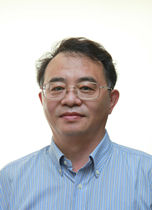 Hongbin Zha (查红彬)合作论文数School of Intelligence Science and Technology, Peking University;Institute for Artificial Intelligence, Peking University1
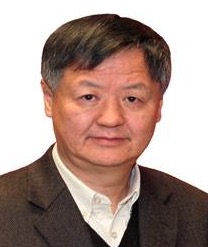 Jun Wang (王鈞)合作论文数Department of Computer Science, College of Science and Engineering, City University of Hong Kong;School of Data Science, City University of Hong Kong1Yan Shen合作论文数1
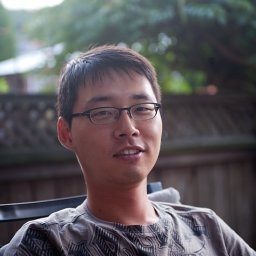 Junsung Kim合作论文数Carnegie Mellon University1
 Tianyu Gu合作论文数1




