Using fluorescence spectroscopy, the two-photon absorption cross sections of aqueous solutions of the styryl dye trans-4-[4-(dimethylamino)styryl]-1-methylpyridinium iodide (DASPI) and its inclusion complexes with cucurbit[n]urils (CB[n] n = 6–8) have been measured. A nonmonotonic dependence of the cross section on the excitation wavelength and on the cavitand cavity size has been revealed. Compared to the free dye, a sevenfold increase in the two-photon absorption cross section has been observed in DASPI inclusion complexes with CB[8] at an excitation wavelength of 980 nm.
The complexation of the styryl dyes 1-ethyl-4-(E)-2-[4-(methylthio)phenyl]vinylpyridinium perchlorate (1) and 1-ethyl-4-[(E)-2-(4-methoxyphenyl)vinyl]pyridinium perchlorate (2) with cucurbit[6]uril (CB[6]) in aqueous solutions has been studied using steady-state and time-resolved fluorescence spectroscopy. The binding constant of the 1 : 1 inclusion complex of 1 and CB[6] is logK = 6.28, with fluorescence increasing threefold, and the 1 : 1 complex of 2 and CB[6] has logK = 5.99, with fluorescence increasing by four times. The fluorescence decay of the dyes and their complexes has two characteristic times, the short one of 2–3 ps and the long one on the order of ten picoseconds. In inclusion complexes, the latter is greater than in the free dyes. The mechanism of photobleaching of the studied dyes and their complexes with cucurbit[6]uril is considered.
This study is devoted to an optoacoustic study of the features of laser radiation absorption in an aqueous solution of the styryl-dye inclusion complex in cucurbituril. The research was performed on an experimental setup where a femtosecond regenerative amplifier based on chromium forsterite (Cr:F) was used as a pumping laser. The third harmonic of radiation with a wavelength of 420 nm and a pulse duration of 130 fs was used. Optoacoustic generation was produced in a quartz cuvette with the investigated solution, and the receiver of acoustic signals was a flat piezoceramic plate with a resonant frequency of 1 MHz. Optoacoustic signals were compared in a solution of pure Kr.1 styryl dye and the same dye in the presence of complexes with cucurbituril. With the same optical density of solutions, complexation leads to a more than twofold decrease in the optoacoustic response.
Sufficient conditions for the validity of the quasi-steady-state approximation widely used in chemical kinetics are considered by means of the qualitative geometric theory of differential equations with small parameters.
Photoprocesses in aqueous solutions of the styryl dye 1-ethyl-4-{( E )-2-[4(methylthio)phenyl]vinyl}pyridinium perchlorate ( 1 ) and its complexes with cucurbit[ n ]urils (CB[ n ], n = 6–8) have been studied using the methods of stationary and time-resolved optical spectroscopy. The fluorescence intensity increases by approximately 3 times in 1 : 1 complexes of 1 and CB[6], whereas CB[7] has almost no effect on the fluorescence intensity. In 2 : 1 complexes with CB[8], the photocycloaddition reaction does not occur, with strong fluorescence quenching being associated with the formation of nonreactive dimers. The fluorescence decay kinetics of 1 has two characteristic times, 1.4 and ~130 ps, and changes little in the complexes. The photoinduced intramolecular charge transfer in 1 is an order of magnitude smaller than in the well-known dye DASPI.
Published data on the ultrafast (in the picosecond range) relaxation of electronically excited inclusion complexes between macrocyclic cavitands consisting of n glycoluril units ( n = 5–8), cucurbit[ n ]urils (CB[ n ]), and styryl dyes are considered. The relaxation process is accompanied by the translational movement of the dye cation deep into the cavity of cucurbiturils. In the 1 : 1 complexes with CB[6], this movement occurs along the central axis of the cavitand with a characteristic time of 1–2 ps at room temperature. By definition, such supramolecular systems are called molecular machines. In supramolecular 2 : 1 complexes with CB[8], the [2 + 2] photocycloaddition reaction of styryl dyes is possible. A physically clear model of the movement of electronically excited dye cations in the cavity of cucurbiturils is considered, which gives an estimate of the characteristic operating time of the molecular machine that is in good agreement with the experiment.
A facility for generating a supercontinuum in Al 2 O 3 and CaF 2 crystals using a femtosecond laser, which is based on a chromium–forsterite (Cr : F) crystal, is described. The supercontinuum spectra under pumping at four wavelengths of 310, 413, 620, and 1240 nm were determined. A continuous spectrum of a supercontinuum from 324 to 1000 nm was obtained in the visible region, thus making it possible to study various samples using the pump–probe system. In the UV spectrum region, the shortest wavelength of a supercontinuum (225 nm) was obtained on the CaF 2 crystal when pumped with pulses at a wavelength of 310 nm.
The complexation of styryl dyes 4-[(E)-2-(3,4-dimethoxyphenyl)]-1-ethylpyridinium perchlorate and trans-4-[4-(dimethylamino)styryl]-1-methylpyridinium iodide with cucurbit[n]urils (CBn) (n = 6, 7) in aqueous solutions in the presence of sodium sulfate with a concentration of 0 to 1 mol/L has been studied by stationary and time-resolved optical spectroscopy, electrochemical, and quantum chemical methods. Adding the electrolyte to the solution decomposes 1 : 1 inclusion complexes with the dyes (D+ · CBn) due to competitive formation of complexes of the cavitand with sodium cations: Na+ · CBn and Na+ · CBn · Na+. Their total formation constants have been determined to be β = 2760 and 168 600 M−2 for CB7 and CB6, respectively, which agrees with the results of quantum chemical calculations. At the same time, no evidence of the presence of Na+ · CBn · D+ type complexes has been found in solutions.
[2+2] Photocycloaddition of a series of styryl dyes ( a , b , and c , see text) in the cavity of cucurbit[8]uril (CB8) in aqueous solutions has been studied by optical spectroscopy. The complex formation constants were calculated for the 1 : 1 and 2 : 1 complexes of the styryl dyes with CB8. The optimal CB8 to dye molar ratios that correspond to the highest concentrations of the 2 : 1 complexes in the solution have been determined as 0.5, 0.3, and 1 for dyes a , b , and c , respectively. The quantum yields of photocycloaddition have been calculated from the results of dye photolysis in the presence of CB8: 0.06, 0.02, and 0.04 for a , b , and c , respectively. The fluorescence decay kinetics has been studied on the picosecond timescale. The lifetimes found are 1–2 ps, which correspond to the characteristic time of the solvation shell effect on the redistribution of the dye charge in the excited state. The long component of the fluorescence decay on the order of tens of picosecond is also observed. This component decreases in the presence of CB8, indicating the formation of dimeric state.
An instrument for recording photoinduced-absorption spectra using the pump–probe method with femtosecond time resolution is described, in which a regenerative amplifier based on a chromium-doped forsterite crystal with a fundamental harmonic of 1240 nm is used as the laser system. Two optical schemes with pumping at a wavelength of 620 nm and a wavelength of 413 nm that are described in detail allow measurements in the spectral range of 280–1000 nm. The time resolution of the system is 250 fs.
The relaxation mechanism of electronically excited states of host-guest complexes between cucurbiturils (CB) and pyridinium styryl dyes is considered in detail on the basis of the recent results obtained by the up-conversion fluorescence technique. The addition of CB to aqueous dye solutions increases the longest fluorescence decay times from about 50 ps for the free dyes to 100-150 ps for the bound ones. This is attributed to the braking of intramolecular rotations around the single bonds of the styryl moiety that is provided by guest's displacement inside the cavity, whose driving force is a Coulombic interaction of the styryl dye cation and negatively charged CB portals. This displacement, a translational movement along the CB axis, is associated with the observed decay time of about 1 ps. There is also a characteristic time of about 100 fs, attributed to vibrational relaxation. In fact, such complexes can operate as a molecular machine, the molecular switch.
An apparatus for measuring luminescence lifetimes using the femtosecond up-conversion method is presented. A laser system based on a chromium–forsterite crystal with a lasing wavelength of 1250 nm is used to generate ultrashort pulses. Luminescence is excited in a sample by optical harmonics that are generated in nonlinear optical crystals. The width of the instrument function of the system is 200 fs. Methods for optimizing the signal-to-noise ratio in measurements are discussed. The results of measurements of the fluorescence- decay dynamics and the anisotropy of aqueous solutions of an inclusion complex of the 4-DASPI styrene dye in cucurbit[6]uril on short (5 ps) and long (500 ps) time scales are presented.
 M.V. Alfimov合作论文数41
 Dimitri Ivanov合作论文数25A. D. Svirida合作论文数18Sergey P Gromov合作论文数Photochemistry Center, Russian Academy of Sciences16Igor V. Kryukov合作论文数15Yu. A. Shandarov合作论文数10И. В. Крюков合作论文数8Hubert Staerk合作论文数7N. A. Aleksandrova合作论文数6
 A.A. Ivanov合作论文数Budker Institute for Nuclear Physics6Elena V Stenina合作论文数6Liana N Sviridova合作论文数6M. N. Gulakov合作论文数5V. N. Borisenko合作论文数5Ю. А. Шандаров合作论文数5
 Simone Techert合作论文数5
 Vitaly Avakyan合作论文数5Artem I. Vedernikov合作论文数5G. Busse合作论文数4Ivanov Denis A合作论文数4Aleksandr K Chibisov合作论文数4N F Chebotarev合作论文数4S. Ya. Pshezhetskii合作论文数4B. Frederichs合作论文数3S. K. Sazonov合作论文数3
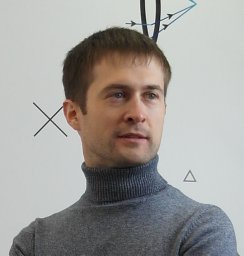 Alexey Odinokov合作论文数Photochemistry Center, Russian Academy of Sciences3Arndt Wiessner合作论文数3
 Natalia Lobova合作论文数Photochemistry Center, Russian Academy of Sciences3
 Torsten Fiebig合作论文数Fiebig Consulting LLC3D. A. Voznyak合作论文数2Michael V Basilevsky合作论文数2Yu. I. Kozlov合作论文数2A. V. Starostin合作论文数2
 Vladimir P. Fedin合作论文数Nikolaev Institute of Inorganic Chemistry, Russian Academy of Sciences2M. S. Zavakhina合作论文数2Anatoly A. Ivanov合作论文数1A. S. Chebotarev合作论文数1В. Г. Авакян合作论文数1El Frankevich合作论文数1
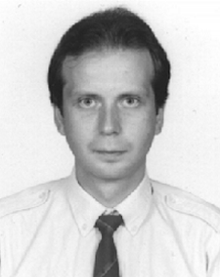 Ab Fedotov合作论文数1
 Nikita Olegovich Dubinets合作论文数1
 Olga Klimchuk合作论文数1Basilevsky M V合作论文数1
 Mikhail Budyka合作论文数1E. L. Frankevich合作论文数1M. V. Bazilevskii合作论文数1Tatiana N. Gavrishova合作论文数1
 E. A. Nikitina合作论文数Industrial Association Élektrokhimicheskii Zavod Russia Russia1Wolfgang Kuhnle合作论文数1




