Vector quantization (VQ) is a prevalent and fundamental technique that discretizes continuous feature vectors by approximating them using a codebook. As the diversity and complexity of data and models continue to increase, there is an urgent need for high-capacity, yet more compact VQ methods. This paper aims to reconcile this conflict by presenting a new approach called LooC, which utilizes an effective Low-dimensional codebook for Compositional vector quantization. Firstly, LooC introduces a parameter-efficient codebook by reframing the relationship between codevectors and feature vectors, significantly expanding its solution space. Instead of individually matching codevectors with feature vectors, LooC treats them as lower-dimensional compositional units within feature vectors and combines them, resulting in a more compact codebook with improved performance. Secondly, LooC incorporates a parameter-free extrapolation-by-interpolation mechanism to enhance and smooth features during the VQ process, which allows for better preservation of details and fidelity in feature approximation. The design of LooC leads to full codebook usage, effectively utilizing the compact codebook while avoiding the problem of collapse. Thirdly, LooC can serve as a plug-and-play module for existing methods for different downstream tasks based on VQ. Finally, extensive evaluations on different tasks, datasets, and architectures demonstrate that LooC outperforms existing VQ methods, achieving state-of-the-art performance with a significantly smaller codebook.
Optical-resolution photoacoustic microscopy (OR-PAM) offers high lateral resolution for imaging fine tissue structures, such as tissue vasculature and cancerous tumour margins. However, its volumetric imaging capability is limited by optical scattering, which degrades resolution with increasing imaging depth. While deconvolution methods have been proposed to enhance resolution, they typically assume a static system point spread function (PSF) and fail to account for depth-dependent degradation caused by tissue scattering. To address this, we propose a physics-informed deconvolution framework that incorporates depth-varying PSFs based on tissue optical properties. We use Monte Carlo eXtreme (MCX) to model optical fluence and the MATLAB k-Wave toolbox to simulate the response function of an ultrasound transducer to produce depth-dependent PSFs. These are then incorporated as prior knowledge in a Richardson-Lucy algorithm applied to three-dimensional PAM images. This framework leads to almost two-fold resolution recovery in a three-dimensional OR-PAM image, demonstrating its potential for extending high-resolution OR-PAM imaging beyond the ballistic regime.
Translating real portrait video into anime is an application of interest to both consumers and researchers. However, anime differs considerably from portraits, making portrait-to-anime translation challenging. Existing StyleGAN-based portrait stylization works assume that the portrait and stylized generators share the same latent space, but this assumption fails in the style of anime due to the large domain gap. Moreover, directly applying them to each video frame often leads to undesirable temporal inconsistencies. In this paper, we argue that two latent spaces with a large domain gap cannot be shared but can be related by a transformation, and develop a cyclic transformation network to connect the two spaces with two cycle constraints. This provides high-quality translation for each frame. We extend our framework to video transformation by proposing a novel frame interpolation constraint which ensures that in-between frames can be interpolated from their neighboring frames, guaranteeing temporal coherence across translated frames. Together with latent code smoothing regularization, this provides temporally coherent video-to-anime translation. Extensive experiments demonstrate that our framework outperforms state-of-the-art methods both qualitatively and quantitatively.
Universal medical image segmentation aims to unify heterogeneous datasets or annotation protocols within a single adaptable framework. However, existing prompt-based universal models often overlook background context, neglect hierarchical task dependencies, and struggle to generalize to unseen annotation granularities. These challenges are particularly pronounced in OCT-based retinal layer segmentation, where annotation schemes differ significantly across studies. To this end, we here propose UniOCTSeg++, a universal OCT segmentation framework that (1) introduces a Refined Hierarchical Prompting Strategy (RHPS) to reconstruct task-aware prompts into foreground-background paired embeddings, explicitly encoding fine-to-coarse anatomical relationships; and (2) adopts a Bi-directional Progressive Consistency Learning (BPCL) scheme that enforces mutual constraints between fine- and coarse-grained predictions under a training schedule with gradually increasing task difficulty, improving stability and mitigating pseudo-label noise. Moreover, we construct the Hierarchical Retinal OCT Segmentation Benchmark (HROCT-Bench), comprising 4.86 million OCT B-scans collected from eleven public datasets across eight annotation granularities, providing a unified evaluation protocol for universal OCT segmentation. Extensive experiments demonstrate that UniOCTSeg++ achieves state-of-the-art adaptability, reaching 90.06% DSC/ 1.38 HD95 on internal datasets and 86.83% DSC / 2.00 HD95 on external datasets. We further demonstrate UniOCTSeg++’s strong label efficiency: when trained with only 30% labeled data and supplemented with large-scale unlabeled data, UniOCTSeg++ approaches the performance of its fully supervised counterpart, highlighting its practical value for real-world deployment. The benchmark and code will be released at https://github.com/Halcyon1010/UniOCTSeg++.
Recent video inpainting methods have achieved encouraging improvements by leveraging optical flow to guide pixel propagation from reference frames, either in the image space or feature space. However, they would produce severe artifacts when the masked area is too large and no pixel correspondences could be found. Recently, denoising diffusion models have demonstrated impressive performance in generating diverse and high-quality images, and have been exploited in a number of works for image inpainting. These methods, however, cannot be applied directly to videos to produce temporal-coherent inpainting results. In this paper, we propose a training-free framework, named VipDiff, for conditioning diffusion model on the reverse diffusion process to produce temporal-coherent inpainting results without requiring any training data or fine-tuning the pre-trained models. VipDiff takes optical flow as guidance to extract valid pixels from reference frames to serve as constraints in optimizing the randomly sampled Gaussian noise, and uses the generated results for further pixel propagation and conditional generation. VipDiff also allows for generating diverse video inpainting results over different sampled noise. Experiments demonstrate that our VipDiff outperforms state-of-the-art methods in terms of both spatial-temporal coherence and fidelity.
Unified understanding and generation is a highly appealing research direction in multimodal learning. There exist two approaches: one trains a transformer via an auto-regressive paradigm, and the other adopts a two-stage scheme connecting pre-trained understanding and generative models for alignment fine-tuning. The former demands massive data and computing resources unaffordable for ordinary researchers. Though the latter requires a lower training cost, existing works often suffer from limited task coverage or poor generation quality. Both approaches lack the ability to parse input meta-information (such as task type, image resolution, video duration, etc.) and require manual parameter configuration that is tedious and non-intelligent. In this paper, we propose Unison which adopts the two-stage scheme while preserving the capabilities of the pre-trained models well. With an extremely low training cost, we cover a variety of multimodal understanding tasks, including text, image, and video understanding, as well as diverse generation tasks, such as text-to-visual content generation, editing, controllable generation, and IP-based reference generation. We also equip our model with the ability to automatically parse user intentions, determine the target task type, and accurately extract the meta-information required for the corresponding task. This enables full automation of various multimodal tasks without human intervention. Experiments demonstrate that, under a low-cost setting of only 500k training samples and 50 GPU hours, our model can accurately and automatically identify tasks and extract relevant parameters, and achieve superior performance across a variety of understanding and generation tasks.
Recent advancements in diffusion models have led to significant improvements in the generation and animation of 4D full-body human-object interactions (HOI). Nevertheless, existing methods primarily focus on SMPL-based motion generation, which is limited by the scarcity of realistic large-scale interaction data. This constraint affects their ability to create everyday HOI scenes. This paper addresses this challenge using a zero-shot approach with a pre-trained diffusion model. Despite this potential, achieving our goals is difficult due to the diffusion model's lack of understanding of ”where” and ”how” objects interact with the human body. To tackle these issues, we introduce AvatarGO, a novel framework designed to generate animatable 4D HOI scenes directly from textual inputs. Specifically, 1) for the ”where” challenge, we propose LLM-guided contact retargeting, which employs Lang-SAM to identify the contact body part from text prompts, ensuring precise representation of human-object spatial relations. 2) For the ”how” challenge, we introduce correspondence-aware motion optimization that constructs motion fields for both human and object models using the linear blend skinning function from SMPL-X. Our framework not only generates coherent compositional motions, but also exhibits greater robustness in handling penetration issues. Extensive experiments with existing methods validate AvatarGO's superior generation and animation capabilities on a variety of human-object pairs and diverse poses. As the first attempt to synthesize 4D avatars with object interactions, we hope AvatarGO could open new doors for human-centric 4D content creation.
Text-to-image generation has made significant advancements with the introduction of text-to-image diffusion models. These models typically consist of a language model that interprets user prompts and a vision model that generates corresponding images. As language and vision models continue to progress in their respective domains, there is a great potential in exploring the replacement of components in text-to-image diffusion models with more advanced counterparts. A broader research objective would therefore be to investigate the integration of any two unrelated language and generative vision models for text-to-image generation. In this paper, we explore this objective and propose LaVi-Bridge, a pipeline that enables the integration of diverse pre-trained language models and generative vision models for text-to-image generation. By leveraging LoRA and adapters, LaVi-Bridge offers a flexible and plug-and-play approach without requiring modifications to the original weights of the language and vision models. Our pipeline is compatible with various language models and generative vision models, accommodating different structures. Within this framework, we demonstrate that incorporating superior modules, such as more advanced language models or generative vision models, results in notable improvements in capabilities like text alignment or image quality. Extensive evaluations have been conducted to verify the effectiveness of LaVi-Bridge. Code is available at https://github.com/ShihaoZhaoZSH/LaVi-Bridge.
We present DreamAvatar, a text-and-shape guided framework for generating high-quality 3D human avatars with controllable poses. While encouraging results have been reported by recent methods on text-guided 3D common object generation, generating high-quality human avatars remains an open challenge due to the complexity of the human body's shape, pose, and appearance. We propose DreamAvatar to tackle this challenge, which utilizes a trainable NeRF for predicting density and color for 3D points and pretrained text-to-image diffusion models for providing 2D self-supervision. Specifically, we leverage the SMPL model to provide shape and pose guidance for the generation. We introduce a dual-observation-space design that involves the joint optimization of a canonical space and a posed space that are related by a learnable deformation field. This facilitates the generation of more complete textures and geometry faithful to the target pose. We also jointly optimize the losses computed from the full body and from the zoomed-in 3D head to alleviate the common multi-face ”Janus” problem and improve facial details in the generated avatars. Extensive evaluations demonstrate that DreamAvatar significantly outperforms existing methods, establishing a new state-of-the-art for text-and-shape guided 3D human avatar generation.
Multimodal large language models (MLLMs) have emerged as a prominent area of interest within the research community, given their proficiency in handling and reasoning with non-textual data, including images and videos. This study seeks to extend the application of MLLMs to the realm of autonomous driving by introducing DriveGPT4, a novel interpretable end-to-end autonomous driving system based on LLMs. Capable of processing multi-frame video inputs and textual queries, DriveGPT4 facilitates the interpretation of vehicle actions, offers pertinent reasoning, and effectively addresses a diverse range of questions posed by users. Furthermore, DriveGPT4 predicts low-level vehicle control signals in an end-to-end fashion.These advanced capabilities are achieved through the utilization of a bespoke visual instruction tuning dataset, specifically tailored for autonomous driving applications, in conjunction with a mix-finetuning training strategy. DriveGPT4 represents the pioneering effort to leverage LLMs for the development of an interpretable end-to-end autonomous driving solution. Evaluations conducted on the BDD-X dataset showcase the superior qualitative and quantitative performance of DriveGPT4. Additionally, the fine-tuning of domain-specific data enables DriveGPT4 to yield close or even improved results in terms of autonomous driving grounding when contrasted with GPT4-V.
Embodied agents equipped with GPT as their brains have exhibited extraordinary decisionmaking and generalization abilities across various tasks. However, existing zero-shot agents for vision-and-language navigation (VLN) only prompt GPT-4 to select potential locations within localized environments, without constructing an effective "global-view" for the agent to understand the overall environment. In this work, we present a novel map-guided GPT-based agent, dubbed MapGPT, which introduces an online linguistic-formed map to encourage global exploration. Specifically, we build an online map and incorporate it into the prompts that include node information and topological relationships, to help GPT understand the spatial environment. Benefiting from this design, we further propose an adaptive planning mechanism to assist the agent in performing multi-step path planning based on a map, systematically exploring multiple candidate nodes or sub-goals step by step. Extensive experiments demonstrate that our MapGPT is applicable to both GPT-4 and GPT-4V, achieving state-of-the-art zero-shot performance on R2R and REVERIE simultaneously (similar to 10% and similar to 12% improvements in SR), and showcasing the newly emergent global thinking and path planning abilities of the GPT.
Recent advancements in large-scale pre-trained text-to-image models have led to remarkable progress in semantic image synthesis. Nevertheless, synthesizing high-quality images with consistent semantics and layout re-mains a challenge. In this paper, we propose the adaPtive LAyout-semantiC fusion modulE (PLACE) that harnesses pre-trained models to alleviate the aforementioned issues. Specifically, we first employ the layout control map to faithfully represent layouts in the feature space. Subsequently, we combine the layout and semantic features in a timestep-adaptive manner to synthesize images with realistic details. During fine-tuning, we propose the Semantic Alignment (SA) loss to further enhance layout alignment. Additionally, we introduce the Layout-Free Prior Preservation (LFP) loss, which leverages unlabeled data to maintain the priors of pre-trained models, thereby improving the visual quality and semantic consistency of synthesized images. Extensive experiments demonstrate that our approach performs favorably in terms of visual quality, semantic consistency, and layout alignment. The source code and model are available at PLACE.
We tackle the issue of generalized category discovery (GCD). GCD considers the open-world problem of automatically clustering a partially labelled dataset, in which the unlabelled data may contain instances from both novel categories and labelled classes. In this paper, we address the GCD problem with an unknown category number for the unlabelled data. We propose a framework, named CiPR, to bootstrap the representation by exploiting Cross-instance Positive Relations in the partially labelled data for contrastive learning, which have been neglected in existing methods. To obtain reliable cross-instance relations to facilitate representation learning, we introduce a semi-supervised hierarchical clustering algorithm, named selective neighbor clustering (SNC), which can produce a clustering hierarchy directly from the connected components of a graph constructed from selective neighbors. We further present a method to estimate the unknown class number using SNC with a joint reference score that considers clustering indexes of both labelled and unlabelled data, and extend SNC to allow label assignment for the unlabelled instances with a given class number. We thoroughly evaluate our framework on public generic image recognition datasets and challenging fine-grained datasets, and establish a new state-of-the-art. Code: https://github.com/haoosz/CiPR
Personalized text-to-image generation using diffusion models has recently emerged and garnered significant interest. This task learns a novel concept (e.g., a unique toy), illustrated in a handful of images, into a generative model that captures fine visual details and generates photorealistic images based on textual embeddings. In this paper, we present ViCo, a novel lightweight plug-and-play method that seamlessly integrates visual condition into personalized text-to-image generation. ViCo stands out for its unique feature of not requiring any fine-tuning of the original diffusion model parameters, thereby facilitating more flexible and scalable model deployment. This key advantage distinguishes ViCo from most existing models that necessitate partial or full diffusion fine-tuning. ViCo incorporates an image attention module that conditions the diffusion process on patch-wise visual semantics, and an attention-based object mask that comes at no extra cost from the attention module. Despite only requiring light parameter training (~6% compared to the diffusion U-Net), ViCo delivers performance that is on par with, or even surpasses, all state-of-the-art models, both qualitatively and quantitatively. This underscores the efficacy of ViCo, making it a highly promising solution for personalized text-to-image generation without the need for diffusion model fine-tuning. Code: https://github.com/haoosz/ViCo
Blind image restoration (IR) is a common yet challenging problem in computer vision. Classical model-based methods and recent deep learning (DL)-based methods represent two different methodologies for this problem, each with their own merits and drawbacks. In this paper, we propose a novel blind image restoration method, aiming to integrate both the advantages of them. Specifically, we construct a general Bayesian generative model for the blind IR, which explicitly depicts the degradation process. In this proposed model, a pixel-wise non-i.i.d. Gaussian distribution is employed to fit the image noise. It is with more flexibility than the simple i.i.d. Gaussian or Laplacian distributions as adopted in most of conventional methods, so as to handle more complicated noise types contained in the image degradation. To solve the model, we design a variational inference algorithm where all the expected posteriori distributions are parameterized as deep neural networks to increase their model capability. Notably, such an inference algorithm induces a unified framework to jointly deal with the tasks of degradation estimation and image restoration. Further, the degradation information estimated in the former task is utilized to guide the latter IR process. Experiments on two typical blind IR tasks, namely image denoising and super-resolution, demonstrate that the proposed method achieves superior performance over current state-of-the-arts.
Recently, text-guided 3D generative methods have made remarkable advancements in producing high-quality textures and geometry, capitalizing on the proliferation of large vision-language and image diffusion models. However, existing methods still struggle to create high-fidelity 3D head avatars in two aspects: (1) They rely mostly on a pre-trained text-to-image diffusion model whilst missing the necessary 3D awareness and head priors. This makes them prone to inconsistency and geometric distortions in the generated avatars. (2) They fall short in fine-grained editing. This is primarily due to the inherited limitations from the pre-trained 2D image diffusion models, which become more pronounced when it comes to 3D head avatars. In this work, we address these challenges by introducing a versatile coarse-to-fine pipeline dubbed HeadSculpt for crafting (i.e., generating and editing) 3D head avatars from textual prompts. Specifically, we first equip the diffusion model with 3D awareness by leveraging landmark-based control and a learned textual embedding representing the back view appearance of heads, enabling 3D-consistent head avatar generations. We further propose a novel identity-aware editing score distillation strategy to optimize a textured mesh with a high-resolution differentiable rendering technique. This enables identity preservation while following the editing instruction. We showcase HeadSculpt's superior fidelity and editing capabilities through comprehensive experiments and comparisons with existing methods.
Recently, text-to-image generation has exhibited remarkable advancements, with the ability to produce visually impressive results. In contrast, text-to-3D generation has not yet reached a comparable level of quality. Existing methods primarily rely on text-guided score distillation sampling (SDS), and they encounter difficulties in transferring 2D attributes of the generated images to 3D content. In this work, we aim to develop an effective 3D generative model capable of synthesizing high-resolution textured meshes by leveraging both textual and image information. To this end, we introduce Guide3D, a zero-shot text-and-image-guided generative model for 3D avatar generation based on diffusion models. Our model involves (1) generating sparse-view images of a text-consistent character using diffusion models, and (2) jointly optimizing multi-resolution differentiable marching tetrahedral grids with pixel-aligned image features. We further propose a similarity-aware feature fusion strategy for efficiently integrating features from different views. Moreover, we introduce two novel training objectives as an alternative to calculating SDS, significantly enhancing the optimization process. We thoroughly evaluate the performance and components of our framework, which outperforms the current state-of-the-art in producing topologically and structurally correct geometry and high-resolution textures. Guide3D enables the direct transfer of 2D-generated images to the 3D space. Our code will be made publicly available.
In this paper, we introduce DiffusionMat, a novel image matting framework that employs a diffusion model for the transition from coarse to refined alpha mattes. Diverging from conventional methods that utilize trimaps merely as loose guidance for alpha matte prediction, our approach treats image matting as a sequential refinement learning process. This process begins with the addition of noise to trimaps and iteratively denoises them using a pre-trained diffusion model, which incrementally guides the prediction towards a clean alpha matte. The key innovation of our framework is a correction module that adjusts the output at each denoising step, ensuring that the final result is consistent with the input image's structures. We also introduce the Alpha Reliability Propagation, a novel technique designed to maximize the utility of available guidance by selectively enhancing the trimap regions with confident alpha information, thus simplifying the correction task. To train the correction module, we devise specialized loss functions that target the accuracy of the alpha matte's edges and the consistency of its opaque and transparent regions. We evaluate our model across several image matting benchmarks, and the results indicate that DiffusionMat consistently outperforms existing methods. Project page at~\url{https://cnnlstm.github.io/DiffusionMat
Compositional zero-shot learning (CZSL) aims at learning visual concepts (i.e., attributes and objects) from seen compositions and combining concept knowledge into unseen compositions. The key to CZSL is learning the disentanglement of the attribute-object composition. To this end, we propose to exploit cross-attentions as compositional disentanglers to learn disentangled concept embeddings. For example, if we want to recognize an unseen composition “yellow flower”, we can learn the attribute concept “yellow” and object concept “flower” from different yellow objects and different flowers respectively. To further constrain the disentanglers to learn the concept of interest, we employ a regularization at the attention level. Specifically, we adapt the earth mover's distance (EMD) as a feature similarity metric in the cross-attention module. Moreover, benefiting from concept disentanglement, we improve the inference process and tune the prediction score by combining multiple concept probabilities. Comprehensive experiments on three CZSL benchmark datasets demonstrate that our method significantly outperforms previous works in both closed- and open-world settings, establishing a new state-of-the-art. Project page: https://haoosz.github.io/ade-czsl/
This paper addresses the problem of face video inpainting. Existing video inpainting methods target primarily at natural scenes with repetitive patterns. They do not make use of any prior knowledge of the face to help retrieve correspondences for the corrupted face. They therefore only achieve sub-optimal results, particularly for faces under large pose and expression variations where face components appear very differently across frames. In this paper, we propose a two-stage deep learning method for face video inpainting. We employ 3DMM as our 3D face prior to transform a face between the image space and the UV (texture) space. In Stage I, we perform face inpainting in the UV space. This helps to largely remove the influence of face poses and expressions and makes the learning task much easier with well aligned face features. We introduce a frame-wise attention module to fully exploit correspondences in neighboring frames to assist the inpainting task. In Stage II, we transform the inpainted face regions back to the image space and perform face video refinement that inpaints any background regions not covered in Stage I and also refines the inpainted face regions. Extensive experiments have been carried out which show our method can significantly outperform methods based merely on 2D information, especially for faces under large pose and expression variations. Project page: https://ywq.github.io/FVIP.
 Kai Han (韩锴)合作论文数Department of Statistics & Actuarial Science, Faculty of Science, The University of Hong Kong24
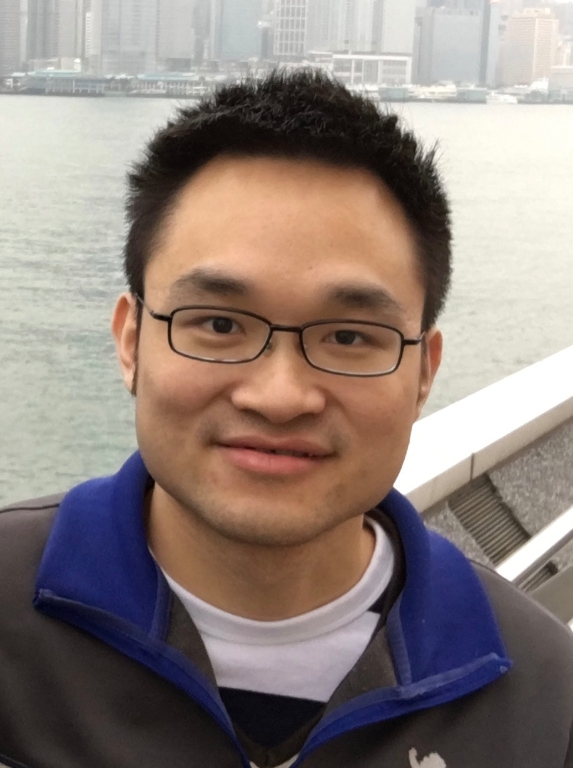 Chaofeng Chen (陈超锋)合作论文数School of Artificial Intelligence, Wuhan University14
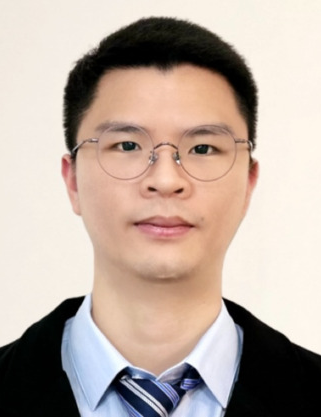 Guanying Chen (陈冠英)合作论文数School of Cyber Science and Technology, Sun Yat-sen University12
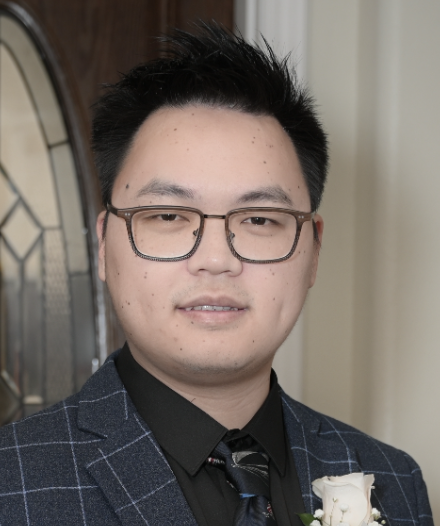 Zhenfang Chen (陈振方)合作论文数MIT-IBM Watson AI Lab11
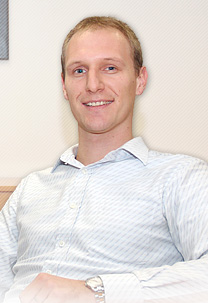 Dirk Schnieders合作论文数Department of Computer Science, School of Computing and Data Science, The University of Hong Kong10
 Shu-Fai Wong合作论文数Citadel LLC10
 Miaomiao Liu合作论文数School of Computing, Australian National University9
 Roberto Cipolla合作论文数Department of Engineering, University of Cambridge;Cambridge Research Laboratory, Toshiba Europe Ltd9
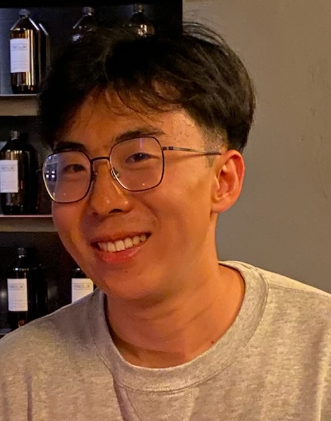 Shaozhe Hao (郝绍哲)合作论文数Department of Computer Science, School of Computing and Data Science, The University of Hong Kong;Tencent8
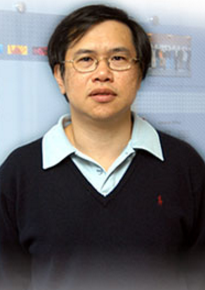 K.P. Chow合作论文数Center for Information Security and Cryptography, Department of Computer Science, University of Hong Kong8
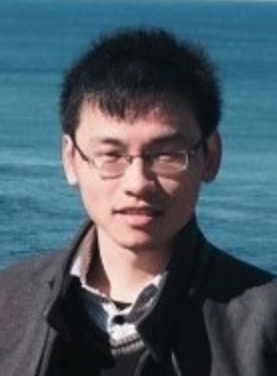 Xiao Tan合作论文数Department of Computer Vision Technology, Baidu Inc.7
 Chen Liang合作论文数7Ronald H. Y. Chung合作论文数Amazon Web Services7
 Zhanghui Kuang (旷章辉)合作论文数Industrial Intelligent Manufacturing Group, SenseTime Group Limited7
 Yukang (Raikkonen) Cao (操雨康)合作论文数Multimedia Laboratory, S-Lab for Advanced Intelligence, Nanyang Technological University6Wei Liu合作论文数6
 Hui Zhang合作论文数Video Process. & Anal. Group, Philips Res. Labs., Eindhoven6
 Francis Y.L. Chin合作论文数Department of Computer Science, The University of Hong Kong;DeepTranslate Limited6Wenqi Yang合作论文数5
 Pui Yin Jason Cheung合作论文数Department of Orthopaedics and Traumatology, Li Ka Shing Faculty of Medicine, The University of Hong Kong5
 Yasuyuki Matsushita合作论文数Microsoft Research Asia5
 Xiaolong Zhu合作论文数Huawei Shanghai Research Institute, Shanghai, China5
 Zhihu Chen (陈志虎)合作论文数5
 Gary KW Tsui合作论文数4Shihao Zhao合作论文数4
 Pui Wai Alex Lee (李沛威)合作论文数Department of Medicine & Therapeutics, Faculty of Medicine, The Chinese University of Hong Kong;Li Ka Shing Institute of Health Sciences, The Chinese University of Hong Kong;Prince of Wales Hospital, Hospital Authority4
 Jacky S.C. Yuk合作论文数4
 Boxin Shi (施柏鑫)合作论文数Institute for Artificial Intelligence, Peking University4
 Xuhui Jia合作论文数Google DeepMind4
 Teng Zhang合作论文数Department of Gastroenterology and Hepatology, St George Hospital;St George Clinical School, University of New South Wales;St George Clinical School, University of New South Wales4
 Guoqiang Zhang合作论文数University of Exeter4
 Lei Zhang (张磊)合作论文数Department of Computing, Faculty of Computer and Mathematical Sciences, The Hong Kong Polytechnic University4
 Yangyang Xu (徐洋洋)合作论文数School of Intelligence Science and Engineering, Harbin Institute of Technology, Shenzhen3PRS Mendonca合作论文数3Kwan Yee合作论文数3
 Thomas Ka-Luen Lui合作论文数Dept Med, Univ Hong Kong3
 Ping Luo (羅平)合作论文数Department of Computer Science, School of Computing and Data Science, The University of Hong Kong3Jin Chun-Na合作论文数3
 Malcolm Underwood合作论文数Prince of Wales Hospital Hong Kong, Prince of Wales Hospital3
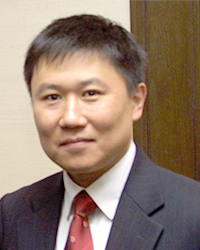 Song Wan (萬松)合作论文数Department of Surgery, Faculty of Medicine, The Chinese University of Hong Kong3
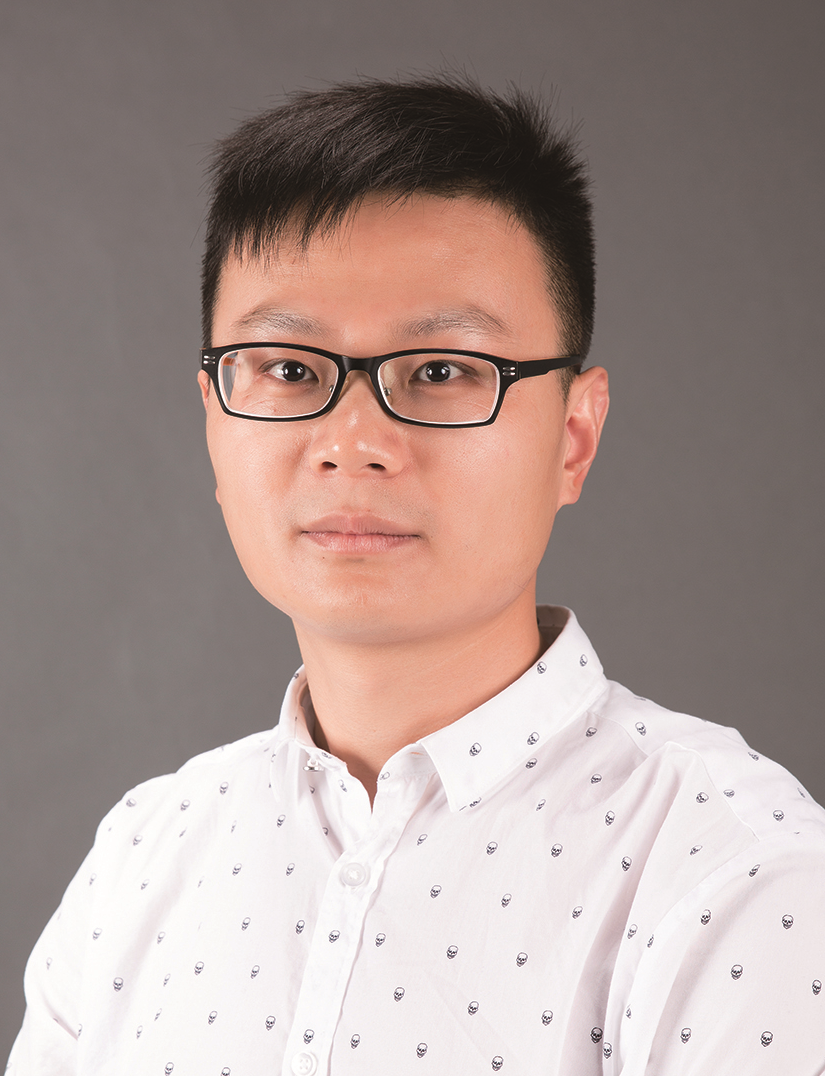 Lin Ma合作论文数Meituan3
 Cheuk-Man Yu (余卓文)合作论文数The Chinese University of Hong Kong3
 Wai Keung Leung (梁伟强)合作论文数LKS Faculty of Medicine, The University of Hong Kong;Department of Medicine, School of Clinical Medicine, The University of Hong Kong3
 Jing Ping Sun合作论文数3
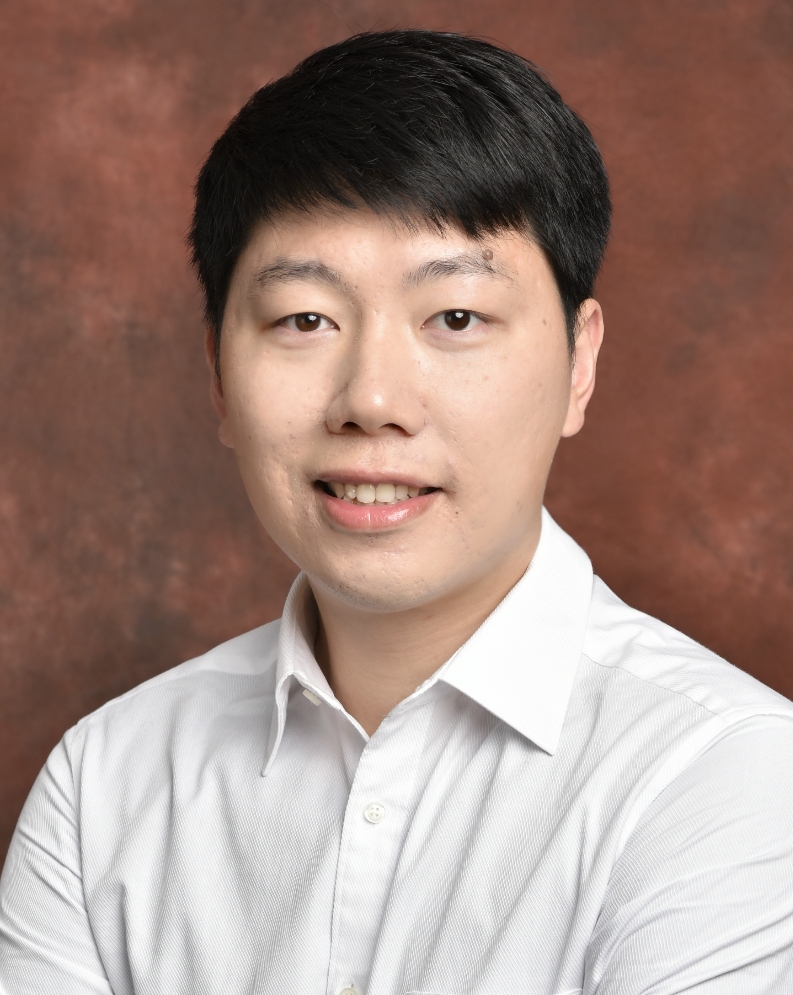 Shengfeng He (何盛烽)合作论文数School of Computing and Information Systems, Singapore Management University3Jacky S. -C Yuk合作论文数3
 Hung Leung Randolph Wong (黃鴻亮)合作论文数Department of Surgery, Faculty of Medicine, The Chinese University of Hong Kong3Fyl Chin合作论文数2Richard W Choy合作论文数2




