The effect of 2-ethyl-3-hydroxy-6-methylpyridine nitroxy succinate (1) on heart, brain, and liver tissues of experimental animals (C57/b1 mice) was studied by EPR. It was shown that compound 1, like nicorandil, increases the nitric oxide production in cells and, like mexidol, protects iron-sulfur clusters of the mitochondrial respiratory chain in heart, brain, and liver tissues of animals against oxidative damage. Experimental evidence was obtained that under oxidative conditions, mitochondrial iron-sulfur clusters are maintained in the reduced functional state due to the presence of succinate (as nitroxy succinic acid), as a metabolite of the tricarboxylic acid cycle, in compound 1.
The effect of citrulline and ammonium chloride on the nitric oxide formation by peritoneal macrophages and liver tissue cells was studied using ESR spectroscopy. In ex vivo models, the incubation of cells capable of expressing inducible NO synthase (iNOS) with interferon-γ resulted in a moderate increase in the amount of hemoglobin–nitric oxide nitrosyl complexes (Heme–NO NCs), whereas incubation with l-citrulline and ammonium chloride increased the amount of Heme–NO NCs by an order of magnitude. It was assumed that a separate cycle of L-arginine and nitric oxide synthesis exists in the peritoneal macrophages and liver cells, with the major participants of the cycle being the inducible NO synthase enzyme (iNOS) and enzymes that synthesize L-arginine from L-citrulline and a nitrogen source. Functioning of this cycle makes immunocompetent cells with iNOS able to produce NO for a long time and in large amounts.
One of the early manifestations of atherosclerotic lesions is endothelial dysfunction developing under conditions of reduced nitric oxide production, hyperhomocysteinemia, and oxidative stress. Bearing in mind high interest shown to gender-specific peculiarities of cardiovascular diseases, it appears important to study the relationship between these features in men and women with stable forms of coronary heart disease (CHD). Material and methods. The study included 102 patients with sable COPD divided into 2 groups (men and women) and 40 practically healthy subjects. Plasma homocysteine levels were measured by high-resolution gas-liquid chromatography with fluorescent detector with the use of Eko-Novo Milikhrom A-02 apparatus (Russia). Standard methods were used to measure plasma lipids, products of their peroxidation (dienic conjugates and products reacting with 2-thibarbituric acid), antioxidant enzymes (glutathioneperoxidase, and superoxide dismutase in erythrocytes), activity of the ceruloplasmin-transferrin system (by electron paramagnetic resonance method), final metabolites of nitric oxide using the Gries reaction. The endothelial function was studies by ultrasound with the evaluation of endothelium-dependent vasodilation. Results. The mean levels of homocystein and final NO metabolites in men with stable CHD were 1.5 times higher (р=0,01) and 12% lower (р = 0,03) than in women. Endothelial dysfunction was more pronounced in men (р< 0,05). Conclusion. Patients with CHD exhibit significant gender-specific differences in blood levels of of homocystein and final NO metabolites as well as in endothelium-dependent vasoreactivity associated with intensification of lipid peroxidation and impairment of antioxidative protection.
The gender-specific features of cardiovascular diseases (CVD) are actively being discussed which puts on the agenda the development of a differentiated approach to the treatment of cardiac diseases in men and women. Аim. To assess the gender-specific features of the antioxidant status and antioxidative activity of atorvastatin in patients with stable forms of coronary heart disease (CHD) and dyslipidemia (DLP). Material and methods. The study included 102 patients with stable forms of CHD divided into 2 groups according to sex and 40 healthy individuals. The generally accepted methods were used to determine plasma lipids, products of their peroxidation (diene conjugates, DC) and the products reacting with 2-thiobarbituric acid (TBA-RP), the antioxidant enzymes glutathione peroxidase (GP) and superoxide dismutase (SOD) in erythrocytes; the activity of the ceruloplasmin/transferrin antioxidant system (AOA AOS CP/TF) in blood plasma was measured by electron paramagnetic resonance and the final metabolites of nitric oxide with the use of the Griss reagent. The endothelial function was studied by ultrasound with the assessment of endothelium-dependent vasodilatation as described by D. Celermajer et al. (1992). All parameters were evaluated before and 6 months after the onset of the treatment. Results. The men with CHD, unlike women, underwent a reduction of AOA AOS CP/TF by 10%, SOD by 12% and GP by 19% (p<0.05) as well as excessive accumulation of DC up to 9% and TBA-RP to 11% (p<0.05). The homocysteine level in men, was 1.5 times higher (p=0.01), and that of final nitric oxide metabolites 12% lower (p=0.03) than in women. Atorvastatin administered for 6 months as a component of combined cardiac therapy more significantly increased the activity of AOS CP/TF and endothelium-dependent vasodilatation in men than in women. Conclusion. CHD is associated with significant sex differences in processes of lipid peroxidation - antioxidant protection, metabolism of nitric oxide, found, dilatation and anti-oxidation effect of atorvastatin.
AIM:To investigate an effect of hypoxia on the formation of nitric oxide (NO) in the brain and blood of rats and an influence of L-NNA, the NO-synthase inhibitor, and sodium nitrite on NO generation in separate and simultaneous introduction of these compounds in the animal body.MATERIAL AND METHODS:Experiments were conducted on 42 rats of Krushinsky-Molodkina (K-M) line without adaptation to hypoxia and short-term adaptation to hypobaric hypoxia. Animals were intraperitoneally injected with sodium nitrite (0.5 mg/100 g) and the non-specific inhibitor of NO-synthase L-NNA (2.5 mg/100 g) at different times. Changes in NO content were assessed using electron paramagnetic resonance (EPR) by the intensity of nitrosyl Hb-NO complexes in ERP blood spectra.RESULTS AND CONCLUSION:The production of NO in the brain, compared with that in the blood, was significantly reduced, not only under physiological conditions, but also after the administration of moderate doses of NaNO2. In the short-term hypobaric hypoxia, there was the intensification of the processes of the reduction of NO2- to NO and the formation of nitrosyl heme-NO complexes not only in the blood but also in the mammalian brain.
The method of electron paramagnetic resonance was used to study the influence of Mexidol (2-ethyl-6-methyl-3-hydropyridine succinate) on the heart and liver tissues of experimental animals. It has been shown that Mexidol protects the iron sulphur centres of the respiratory chain of the heart mitochondria in the composition of integral animal tissues from oxidising damage and increases nitric oxide formation in cells and the degree of hemoglobin oxygenation. It has been suggested that the maintenance of the mitochondrial iron sulphur centres in the reduced working state (under oxidation conditions) is most likely to be due to the presence of succinate, a metabolic component of the cycle of tricarboxylic acids, in the composition of Mexidol.
The NO-synthase inhibitor LNNA (2,5 mg/100 g) abolished the protective effects of short-term adaptation to hypoxia (1 hour, 5000 m above sea level) on the development of stress-induced disorders on the model of acoustic stress in the Krushinsky—Molodkina rats genetically predisposed to audiogenic seizures. Using electronic spine resonance method (ESR) we also demonstrated an increase in NO production during short-term hypoxia in the blood and spleen. The results suggest that NO plays a positive role in protective effects of short-term adaptation to hypoxia.
Combinations of the known cytostatic cyclophosphamide (cyclophosphan) with hydroxamic acids (asparagylhydroxamic and salicylhydroxamic), nitric oxide donor (sodium nitrate), and an original hybrid non-steroidal anti-inflammatory compound, viz. , diclofenachydroxamic acid nitrate salt (DHA·HNO 3 ), were studied. The use of cyclophosphan in combination with these substances increases the efficiency of chemotherapy and elongates the life of animals with leukemia P-388. The dynamics of changes in the signal from cytochrome P-450 in the liver samples after the administration of DHA·HNO 3 to the animals was studied by ESR spectroscopy. The mechanism of the action of DHA·HNO 3 enhancing the chemotherapeutic effect of cyclophosphan was proposed.
It has been showed that the introduction of nitrocompounds (as nitic oxide donors) in to the compositions of cyclophosphamide and hydroxamic acids for curing animals having leukemia P-388 increased duration of life by 290%. Thereby 40% of animals have recovered. The therapeutic dose cyclophosphamide have been reduced by 6 times.
The aim of the work was to study the role of atorvastatin in the correction of oxidative stress manifestations in patients with coronary heart disease and dyslipidemia (DLP). It included 122 patients with stable forms of CHD and 20 practically healthy subjects. Plasma lipids and products of lipid peroxidation (dienic conjugates and compounds reacting with 2-thiobarbituric acid), erythrocyte antioxidative enzymes glutathione peroxidase and superoxide dismutase were determined by standard methods; activity of the ceruloplasmin/transferrin antioxidant system) was measured by electron paramagnetic resonance. The patients underwent 24 hr ECG Holter monitoring. Atorvastatin at a dose of 20 mg/d given during 6 months exerted antioxidative and antiperoxidative effects in 90% of the patients. It normalized parameters of lipid peroxidation and antioxidant protection thereby improving the clinical course of CHD.
Taking into account the data on oxidative transformation of hydroxamic acids to form nitric oxide and the similarity of their structure to the hydroxyarginine group being involved in the NO synthesis, we performed the study of biotransformation of salicylhydroxamic acid and N(4)-hydroxyasparagine in the liver tissues. According to the data from ESR spectroscopy, the compounds under study are inefficient NO donors in a biological system and their biological activities are mainly defined by the ability to chelate metal ions.
Using electronic paramagnetic resonance (EPR), we studied the effect of the peptide cortexin on the content of hemoglobin nitrozyl complexes (Hb-NO-complexes) and other paramagnetic centers (transferrin, methemoglobin) in the blood of rats of Krushynsky-Molodkina line in the experimental hemorrhagic stroke induced by acoustic stress. After the acoustic exposure, the level of Hb-NO-complexes have increased by more than 6 times. The intensity of the EPR signal of the plasma peptide transferrin increased by 1,5 times. The level of blood methemoglobin was also elevated, though not significantly, after the acoustic stress. Cortexin substantially reduces the formation of Hb-NO-complexes and, therefore, the level of nitride oxide while the contents of transferrin and methemoglobin remain intact.
The NO-synthase inhibitor L-NNA (2.5 mg/100 g) abolished the protective effects of short-term adaptation to hypoxia (1 h, 5000 m above sea level) on the development of stress-induced disorders on the model of acoustic stress in the Krushinskii-Molodkina rats genetically predisposed to audiogenic seizures. Using the electronic spine resonance method (ESR) we also demonstrated an increase in NO production during short-term hypoxia in the blood and spleen. The results suggest that NO plays a positive role in protective effects of short-term adaptation to hypoxia.
 Z. V. Kuropteva合作论文数41V. S. Kuzenkov合作论文数14
 Valentin Reutov合作论文数Gor'kii14A L Krushinskiĭ合作论文数11
 Vladimir Borisovich Koshelev合作论文数11Bogatyrenko T N合作论文数9Vsevolod G Pinelis合作论文数9
 Elena G Sorokina合作论文数9Fadiukova O E合作论文数7O L Belaia合作论文数6L. Kh. Komissarova合作论文数6L A Volodina合作论文数6Nina P Konovalova合作论文数6T T Zhumbaeva合作论文数5л х комисарова合作论文数5V. R. Bogatyrenko合作论文数5
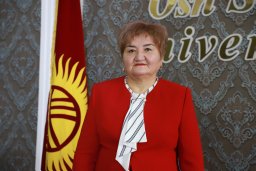 Taasilkan Toktomamatovna Zhumabaeva合作论文数Institute of Biochemical Physics ul. Kosygina, Russian Academy of Sciences5V L Sharygin合作论文数4Kositsin N S合作论文数4
 Olga Leonidovna Belaya合作论文数4Sashenkova T E合作论文数4M. K. Pulatova合作论文数4T. S. Isichenko合作论文数4I G Fomina合作论文数3A. L. Krushinsky合作论文数3V G Sharf合作论文数2K. Yu. Bondar合作论文数2ME Kudryavtsev合作论文数2L. S. Baleva合作论文数2N S Kositsyn合作论文数2L I Markova合作论文数2Artamoshina N E合作论文数2Burbaev D Sh合作论文数2Riasina T V合作论文数2Korman D B合作论文数2Victor B. Luzhkov合作论文数2
 Oleg Granstrem合作论文数Dept. of Neurology and Neurosurgery, “IP Pavlov” State Medical University2Boris S Fedorov合作论文数2V I Kalmykova合作论文数1N. S. Kositzyn合作论文数1De Filatov合作论文数1A. E. Sipyagina合作论文数1Ma Smotryaeva合作论文数1L A Bliumenfel'd合作论文数1dosymzhan sh burbaev合作论文数1D E Filatov合作论文数1B. A. Medynya合作论文数1A. E. Radzevich合作论文数1L S Vartanian合作论文数1




