Currently, new skills and various types of "new literacies" relevant to the modern world are becoming issues of growing importance. One of them is economic literacy; however, there are only few assessment instruments that fulfil the academic requirements for its assessment among university students. One of such internationally established instruments is the Test of Understanding in College Economics (TUCE), which is a popular tool in empirical studies of economic literacy in many countries around the world. Despite its advantages, the currently available version of the TUCE designed for American colleges back in 2006, is prone to cheating and provides limited opportunities for formative feedback. The purpose of this paper is to present the Updated Test of Understanding in College Economics (U-TUCE). In developing the U-TUCE, we utilized the capabilities of contemporary psychometrics, which offer sufficient advances in overcoming all limitations of the original TUCE mentioned before. First, we present a revised theoretical framework of the U-TUCE, highlighting that the test measures different types of mastery of economic literacy. Second, we describe the approaches used for modifying the TUCE items and developing new items. A half of the original test items have been replaced or redesigned to reflect the economic context that has changed since 2006. Third, we utilize the logic of automatic item generation algorithms to increaseg the level of test protection against cheating. We made all changes in such a way as to maintain comparability with the previous versions of the TUCE test if necessary. Finally, the use of the Item Response Theory (IRT) is paired up with that of Cognitive Diagnostic Modeling (CDM) to ensure the quality of the U-TUCE and enhance its formative value. We show that IRT can be used to estimate the construct as a whole (which is of interest to researchers, administrators, and policy makers), while CDM provides information relating to each of the construct components, which are of interest to educational practitioners and students themselves. The results of the data analyses show that the test can be used for both purposes simultaneously.
A key focus for this workshop was the interaction between authorities, operators and other corporate actors involved in public transport, with particular reference to how long-established contracting practices are surviving. Interorganisational relationships were considered from a broader perspective to provide a theoretical rationale for the scope of renegotiation and contractual flexibility, for example against the background of technical transitions and external shocks like COVID-19. The workshop outcomes are presented along three main headlines: collaboration vs coordination, contractual arrangements in times of transition and uncertainty, and understanding different organisations forms and inter-mediaries. Collectively, they lead to a proposed tentative policy-oriented framework which could be used to structure further discussions at subsequent conferences. Policymakers are recommended to clearly distinguish (and adapt policies) between risks under legally binding agreements and genuinely unforeseen contingencies in incomplete contracts. While risks may be expressed as probabilities (with an attached calculated cost) and can be shared and put in a contract (as long as they are not too costly), uncertainties may instead have to be treated outside the contract. As presented in the framework, this will have governance implications at the strategic, tactical and operational levels in public transport.
Радаев Вадим Валерьевич - доктор экономических наук, первый проректор, профессор факультета социальных наук, руководитель Лаборатории экономико-социологических исследований Национального исследовательского университета «Высшая школа экономики». E-mail: radaev@hse.ru Медведев Сергей Александрович - кандидат исторических наук, профессор факультета социальных наук Национального исследовательского университета «Высшая школа экономики». E-mail: smedvedev@hse.ru Талалакина Екатерина Викторовна - кандидат педагогических наук, доцент департамента иностранных языков Национального исследовательского университета «Высшая школа экономики». E-mail: etalalakina@hse.ru Дементьев Андрей Викторович - старший преподаватель факультета экономических наук Национального исследовательского университета «Высшая школа экономики». E-mail: dementiev@hse.ru Адрес: 101000, Москва, ул. Мясницкая, 20.Дискуссия «Пять моих главных вызовов в преподавании» - первая встреча в рамках программы повышения квалификации для преподавателей и научных сотрудников НИУ ВШЭ «Teach for HSE - Преподаем в Вышке». Программа нацелена на совершенствование преподавательского мастерства, она представляет собой рабочий инструмент, который позволит заинтересованному преподавателю либо разработать новый учебный курс и спроектировать его с нуля, либо перепроектировать тот курс, который уже читается. Участники будут обсуждать модели преподавания, которые реализуются в ведущих вузах. В начинающемся годовом цикле внимание будет сосредоточено на проблемно ориентированном обучении. При этом организаторы рассчитывают, что программа будет способствовать развертыванию широкой дискуссии о преподавании. В данной публикации журнал представляет вниманию читателей четыре рефлексии личного опыта преподавания. Они принадлежат преподавателям, работающим в очень разных областях - социологии, экономике, политологии, преподавании английского языка. Несмотря на то что они не первый год выходят на университетскую кафедру, перед ними каждый день встают вопросы: чему учить, как учить, для чего учить, кого они учат?
This paper builds a theory of deregulation and roll-out of on-road competition in the public transport sector. Focusing on the dimensions of competition, ownership and authorisation, we identify five distinct regulatory regimes: public monopoly, regulated monopoly, unregulated monopoly, outsourcing to private monopoly and competition in the market. Our generalised theoretical framework allows for the direct comparison in the social welfare terms of the monopolies' outcomes and the fragmented market structure after deregulation. We formulate a set of parameter restrictions that make competition in the market preferable to public monopoly and competition for the market in the form of outsourcing. We also show the theoretical possibility of a 'revised' regulatory cycle forming a sequential transition between these identified regulatory regimes. Our model predicts possible policy reversals and the bypassing of certain phases of the cycle, that can occur due to technological advances, changes in fiscal constraints and institutional capacity improvements.
The discussion on My Five Major Challenges as a Teacher was the first meeting within professional development program for HSE faculty, namely, Teach for HSE. The program is designed to improve teaching skills and represents a working tool that will allow any committed teacher to either design a new course from scratch or to redesign an existing one. Participants will discuss teaching models adopted by the leading universities. In the first cycle, the focus will be placed on problem-based learning. The organizers hope that the program will stimulate an ever wider discussion on teaching to evolve. In this paper the reader is introduced to four personal reflections on teaching experiences by teachers in widely different domains: sociology, economics, political science, and English as a foreign language. Even though they have been teaching to college students for many years, every day they have to answer questions regarding what to teach, how to teach, what to teach for, and whom they teach.
Радаев Вадим Валерьевич - доктор экономических наук, первый проректор, профессор факультета социальных наук, руководитель Лаборатории экономико-социологических исследований Национального исследовательского университета «Высшая школа экономики». E-mail: radaev@hse.ru Медведев Сергей Александрович - кандидат исторических наук, профессор факультета социальных наук Национального исследовательского университета «Высшая школа экономики». E-mail: smedvedev@hse.ru Талалакина Екатерина Викторовна - кандидат педагогических наук, доцент департамента иностранных языков Национального исследовательского университета «Высшая школа экономики». E-mail: etalalakina@hse.ru Дементьев Андрей Викторович - старший преподаватель факультета экономических наук Национального исследовательского университета «Высшая школа экономики». E-mail: dementiev@hse.ru Адрес: 101000, Москва, ул. Мясницкая, 20.Дискуссия «Пять моих главных вызовов в преподавании» - первая встреча в рамках программы повышения квалификации для преподавателей и научных сотрудников НИУ ВШЭ «Teach for HSE - Преподаем в Вышке». Программа нацелена на совершенствование преподавательского мастерства, она представляет собой рабочий инструмент, который позволит заинтересованному преподавателю либо разработать новый учебный курс и спроектировать его с нуля, либо перепроектировать тот курс, который уже читается. Участники будут обсуждать модели преподавания, которые реализуются в ведущих вузах. В начинающемся годовом цикле внимание будет сосредоточено на проблемно ориентированном обучении. При этом организаторы рассчитывают, что программа будет способствовать развертыванию широкой дискуссии о преподавании. В данной публикации журнал представляет вниманию читателей четыре рефлексии личного опыта преподавания. Они принадлежат преподавателям, работающим в очень разных областях - социологии, экономике, политологии, преподавании английского языка. Несмотря на то что они не первый год выходят на университетскую кафедру, перед ними каждый день встают вопросы: чему учить, как учить, для чего учить, кого они учат?
This paper studies the organisational structure of contracting out transportation operations to a vertical partnership between local authorities and a vertically integrated monopoly. Pricing decisions are delegated to the partnership operating in the downstream market as a socially concerned firm that maximises a weighted sum of social welfare and profits. The price for essential input required to produce each unit of the transportation service is determined by the monopoly in the upstream market for rolling stock and crew leasing. A forward ownership interest in the vertical partnership held by the monopoly yields a partial rebate of the downstream margin. In turn, the local authorities can extract the upstream monopoly rent via a franchise fee which can be determined ex post. Our theoretical model predicts that local authorities with a relatively high share in the partnership should decrease the net transfer from the budget by increasing the franchise fees if the upstream profit margins are high. The empirical evidence for the impact of the ownership structure on contractual regime is found in the panel data for 25 suburban passenger companies in Russia in 2011–2015, where partial cost recovery and inappropriate compensation plays the role of pseudo-franchising contracts.
We present a rationale for the delegation of regulatory functions in public transport to a partnership that rebalances social and commercial interests according to an agreed and predetermined objective function. This allows for the improvement of economic efficiency providing a constructive commitment to tariff and subsidy policies. Using a simple model, we determine the optimal corporate structure for such a partnership between the local government and any regulated monopoly. The government's strategic option of using its stake in the partnership to generate budget revenue from sale proceeds and/or dividends encourages the relevant authorities to increase the commercial attractiveness of the joint enterprise by setting appropriate tariffs. We show that such a strategic partnership can lead to improvements in welfare if the local cost of public funds is relatively high. These theoretical findings are then examined through the prism of suburban railway transport reform in Russia.
We build a model of endogenous organizational transformation in the public sector. The two key players – regulatory authorities and monopoly service provider – can be voluntary engaged in the strategic partnership which may be further privatized. The corporate structure of the established joint venture reflects the sharing rule for both risks and rewards and can be motivated by the exit strategy of the public agent. In particular, an option to generate revenues from privatization of the government’s stake in the partnership provides the regulator with incentives to increase commercial attractiveness of the enterprise. However, being a benevolent social welfare maximizer the regulator faces a certain trade-off: the higher its involvement in the partnership and relatively greater concern about consumer surplus the lower profitability and expected gains from privatization. The optimal structure of the partnership emerges endogenously at the first stage of a bargaining regulatory game. At the second stage the government takes into account the availability and cost of public funds and may execute an option to sell its stake in the partnership. These strategic considerations of future privatization may shed some light on the diversity of organizational forms in the public sector.
The paper addresses the existing cross-regional diversity of delivery models in the sector of suburban passenger transportation in Russia by building a formal model of endogenous organisational choice. We develop a conceptual game-theoretic framework that allows for the trusting partnership to have become equilibrium in a regulatory bargaining game with delegation. The monopoly service provider initiates a more cooperative relationship with regional authorities by offering a share in the joint venture. The latter being benevolent welfare maximiser either accepts or rejects the offer taking into account transportation market characteristics, local budget constraints, information structure, as well as socio-economic and political factors. Once the partnership is formed the private information of the parties is revealed and information rent is eliminated creating the room for welfare improvement. However, ex ante rational organisational choice to form a trusting partnership may not lead to welfare improvement ex post. In the extended model we consider how concessionary passengers and fare-dodgers affect the bargaining outcomes. Our results can be generalized to characterize the diversity of organizational choices in the public sector.
The paper addresses the existing cross-regional diversity of delivery models in the sector of suburban passenger transportation in Russia by building a formal model of endogenous organisational choice. We develop a conceptual game-theoretic framework that allows for a trusting partnership to have become equilibrium in a regulatory bargaining game with delegation. The monopoly service provider initiates a more cooperative relationship with regional authorities by offering a share in the joint venture. The latter being benevolent welfare maximiser either accepts or rejects the offer taking into account transportation market characteristics, local budget constraints, information structure, as well as socio-economic and political factors. Once the partnership is formed the private information of the parties is revealed and information rent is eliminated creating the room for welfare improvement. However, ex ante rational organisational choice to form a trusting partnership may not lead to welfare improvement ex post. In the extended model we consider how concessionary passengers and fare-dodgers affect the bargaining outcomes. Our results can be generalized to characterize the diversity of organizational choices in the public sector.
This paper discusses how transport authorities worldwide seek for the delivery mechanisms that would tie the service provider objectives to public policy needs while maintaining incentives to innovate. A potential conflict of interests between public purchaser and private provider of transport services may at least partially be smoothed if they co-operate at the tactical level and build a partnership relationship. In this light the ongoing reform of suburban railway transport in Russia provides a relevant case study material to analyze the creation of Suburban Passenger Companies (SPCs) in the form of joint ventures between local authorities and regional divisions of Russian Railways (RZD). This specific form of public private partnership (PPP) aims at internalizing the conflicting objectives of the public partner (local authorities) and service provider (RZD). Though the latter is a 100% state-owned joint-stock company its corporate objectives and declared state policy goals make it possible to consider the company as a private profit maximizer rather than common public service provider. The nature of the conflict results from the fact that local authorities de jure have Public Service Obligation (PSO) to provide transportation services but have very limited budgets to fully finance the purchase of such services from the monopoly operator which is regional division of RZD. However, local authorities can influence the regulator’s decision to set tariffs at the ‘socially acceptable’ level which can’t often cover the cost incurred by RZD. Moreover, numerous passengers eligible for federal and regional benefits when traveling on suburban trains enjoy concessionary fares by law. Thus RZD produces losses which regional authorities may at least partially cover pursuant to so called ‘Compensatory Agreements’ which by design appeared to be incomplete from the contractual point of view and poorly enforced. In the absence of clear procedures for cost structure determination on the railway transport in Russia local authorities may not trust the information on cost reported by RZD. However at a local level only 14 regions (out of 70) agreed to fully compensate for the concessions determined locally.
This paper describes how railway reform in Russia aims at opening the room for competition. The paper assesses the impact effect of new tariff structure on-track competition and investigates its’ state at the early stage of reform. It shows how the lack of tariff flexibility makes the emerged industry structure unsustainable when vertically integrated state-owned infrastructure company serves the downstream market. This provides strong incentives for the infrastructure owner to establish “daughter” (unregulated) train operating companies in order to prevent cream-skimming by competitive fringe. Thus the industry gravitates toward complete vertical separation with access to infrastructure charged likewise Ramsey formula and the final services becoming unregulated.
In the formal model we analyze the cost and benefits of vertical divestiture under different assumptions about the toughness of competition in the rail industry. We found that the welfare gain from the vertical divestiture may depend on the type of regulation applied to the vertically-integrated railway monopolist (RZD) and be conditioned by the nature of downstream competition. JEL classifications: L51, L22
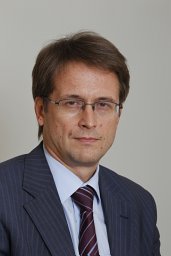 Vadim Radaev合作论文数Chair of Economic;Sociology State University;School of Economics;School of Economics, Sociology State University3
 anfisa loboyko合作论文数2Ekaterina Talalakina合作论文数2
 Denis Federiakin合作论文数Higher Sch Econ, Natl Res Univ1
 Elena Kardanova合作论文数Higher Sch Econ, Natl Res Univ1Gunnar Alexandersson合作论文数1
 Sergey a Medvedev合作论文数Keldysh Institute;Russian Academy of Sciences;Keldysh Institute, Russian Academy of Sciences1




